




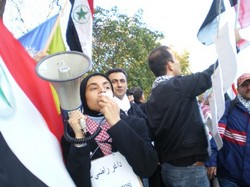
 Ahwazi Arab feminists have condemned the Iranian regime's bullying tactics over the enforcement of strict dress codes on women.
Many Iranian women associate the hejab (Islamic headscarf) with an "alien" Arabic culture, but Ahwazi Arab women's rights activists insist that no woman should be compelled by the government to wear it. They have also hit out against the Iranian regime's increased restrictions on women's clothing. The Iranian airport police are preventing women from travelling on airlines if they are dressed in an "un-Islamic" fashion and have issued over 17,000 official warnings to Iranian women and convicted a further 80. This month, the Iranian police launched an extensive campaign against violations of the uniforms women are forced to wear.
The regime has been ruthless against Ahwazi Arab women deemed to be "poorly covered". According to reports received by the British Ahwazi Friendship Society (BAFS), a woman in the Kut-abdulla district of Ahwaz City was harassed by police and her hair was cut off because her fringe was showing. In response, the woman's family fought with the police. Some Ahwazi activists complain that ethnic minorities face worse treatment because they are less able to raise their voice against the authorities. News on the regime's brutal treatment of women tends to concentrate on women in Tehran.
A London-based Ahwazi women's rights activist said: "I am wearing Hijab because I have chosen to do it, even being in a free society such as the UK, but I strongly condemn the Iranian plan to implement their interpretation of Islamic obligations. Women should have a choice to chose, not forced to obey. This kind of action will tarnish Islam, this government should understand that Ahwazi women consider Hejab as a part of their Arab culture, so they don't need to teach us how to cover ourselves."
Labels: women
permalink
keywords: ahvaz ahwaz ahwazi arabistan khuzestan khuzistan khuzestani arab arabistan iran iranian human rights security oil news ahmadinejad ethnic cleansing
.......................................................................................
24 May, 2007
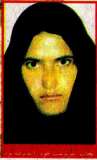
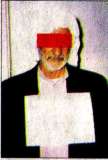 Iran's refusal to appoint an Arab head women's affairs in the Khuzestan provincial government and its suppression of Ahwazi civil society is helping to sustain honour killings of Arab women, according to the Ahwazi Arab Women's Network.
The claims come after Iran's Ham-Mihn newspaper reported the case of an Ahwazi woman who was buried alive by her father in April (both pictured above). Villagers had accused her of having an extra-marital affair after she divorced her husband, prompting her father to kill her for the sake of family honour. He admitted killing his 22 year old daughter Nejat, but claimed she agreed to be buried alive and even helped to dig her own grave. After Nejat's mother learnt of the killing, her husband threatened to bury her alive if she reported the murder to the authorities. Nejat's two year old daughter has since been taken to an orphanage in Ahwaz City.
Ahwazi women's rights activists condemned the murder, but laid the blame on Khuzestan's provincial government for failing to empower Arab women. It has never employed an Arab women to head the women's affairs, although Arabs are the largest ethnic group in the province. Most appointed to the role are middle-class Persian women from Tehran who have no understanding of Ahwazi culture.
One rights activist told the British Ahwazi Friendship Society (BAFS): "Nejat's story is heart-breaking, but is sadly a common practice due to Ahwazis' poor education and economic backwardness.
"The Iranian regime has forbidden any sort of civil society and NGOs in raising awareness of these kinds of crimes. Ahwazi culture is not barbaric, it is retarded by political oppression and economic marginalisation. Al-Ahwaz has been suffering from under-development since the Iranians imposed direct control from Tehran in 1925. For more than 80 years Iranian authorities haven't attempted to understand the Ahwazi society in order to combat these bad practices.
"Nejat's story is just one example of how women are being killed by their relatives due to baseless gossip. Honour killing should be challenged everywhere. It is even happening in the UK and all over the Middle East. Whereas the British authorities are tackling the problem, the Iranians appear to be encouraging it.
"An Ahwazi woman should be appointed to set up education programmes to combat this criminal practice and Ahwazi NGOs should be encouraged to assist in ending the practice. But so long as the provincial government discriminates against Arabs in government appointments and so long as it represses civil society, honour killings will continue."
Labels: women
permalink
keywords: ahvaz ahwaz ahwazi arabistan khuzestan khuzistan khuzestani arab arabistan iran iranian human rights security oil news ahmadinejad ethnic cleansing
.......................................................................................
27 April, 2007
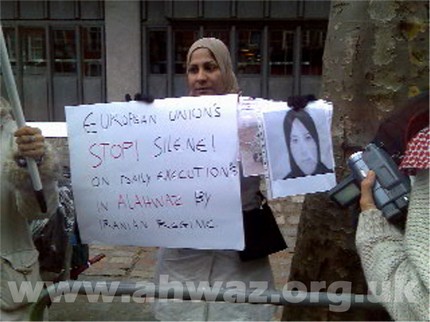 Ahwazi Arab women's rights activist Pooran Saki has called for an end to the Iran regime's treatment of women as second class citizens and called for the repeal of "unacceptable" Islamic laws.
Women in Iran are "severely oppressed", according to Mrs Saki. "As a result of backwardness and discrimination against woman in the area of education and jobs, women do not have the power to ask for freedom."
In a report for the British Ahwazi Friendship Society (BAFS), she condemned the Islamic laws introduced after the 1979 Iranian Revolution.
"Some of the laws relating to woman are unacceptable, like being forced to wear the hijab (veil), blood money, consent for divorce, and arranged marriages," she said. "Wearing the hijab is part of Islamic beliefs and some woman it because they believe it protects them. But now wearing the hijab has become law and the government forces women to wear this type of veil, but many women do not want to be forced to wear it."
She also criticised the Iranian regime's ban on women filing for divorce without the consent of their husbands: "This causes many problems and many women suffer harm in abusive marriages because of this law. Additionally, if a woman gets divorced, she is not allowed to keep her children. Both children and women suffer under this law."
Women in Iran are also forced into marriages by their parents, even when they are children. Many of these marriages are not successful and some women are subjected to domestic violence, but they are not protected by the law.
At an Ahwazi event in London to mark International Women's Day , speakers drew attention to the persecution suffered by Ahwazi women who are oppressed on the basis of both gender and ethnicity.
One Ahwazi woman told the meeting: "The international community should shoulder its responsibility towards Ahwazi and non-Persian women rights in Iran and should not remain indifferent, silent and ignorant about their oppression. They are subjected to racial and sexual discrimination under the Iranian regime due to its belief that women are second-class and that Ahwazi Arabs are second degree citizens."
Labels: women
permalink
keywords: ahvaz ahwaz ahwazi arabistan khuzestan khuzistan khuzestani arab arabistan iran iranian human rights security oil news ahmadinejad ethnic cleansing
.......................................................................................
20 March, 2007
By Pooran Saki
Arab people in Khuzestan are suffering immensely from unnecessary deaths and subsequent bereavement as a result of the non-availability of basic health facilities. People in Khuzestan still do not have basic essential such as a sufficient number of doctors, if any at all, and medicines and hospitals.
In most of the cities in this province, like Bostan, Hovazeh and Dasht Azadegan, the local people do not have any hospitals or specialist Doctor. In these cities, sick people frequently die needlessly during emergencies such as accidents or in childbirth.
In Ahwaz, the capital city of Khouzestan province, there are two kind of hospitals some are private, and the others are state-supported, free for people on low incomes. The latter hospitals are unhygienic, without sufficient Doctors or medicines and the death rates, are unacceptably high.
In the Iran-Iraq war, numerous people contracted the HIV virus through being injected with infected blood which came from other countries. This category of patients are living in hospitals without any facilities or medicines and the government doesn't disclose the death rates, so no bady knows the exact figure of patients who have been attacked by this virus.
The area is still very contaminated by chemicals from wartime chemical gases and diseases increasing in this area.
In the area of Women's Health, many women go through childbirth without specialist doctors and unnecessary deaths occur far too frequently. Few women are allowed by religious law to be attended by a male Doctor, and there are not enough female doctors.
Children's Departments are empty of any specialists and lack many essential medicines so that child mortality is common.
Throughout the province, the e sewerage system is very old and not up to the required standard. All sewerage is dumped into the main River Karoon which supplies all the Ahwaz Citys water. This has polluted the water and many diseases are caught through the water.
Labels: environment , features , women
permalink
keywords: ahvaz ahwaz ahwazi arabistan khuzestan khuzistan khuzestani arab arabistan iran iranian human rights security oil news ahmadinejad ethnic cleansing
.......................................................................................
08 March, 2007
 London's Ahwazi Arab community marked International Women's Day today with an event that included talks and films on the experience of Ahwazi women under the Iranian regime.
The event was organised by the Ahwaz Community Association of the UK, which represents Ahwazi Arabs and organises community events and religious festivals.
An Ahwazi woman told the audience: "The International Women's Day is the story of the struggle of half of society to obtain equal rights with the other half. Women's history is about their desire to participate with men on an equal footing to build the community and fight against sexual discrimination alongside the fight against ethnic discrimination. This is what the Ahwazi woman suffers and she has not yet been rescued from discrimination.
"Although the Nobel Peace Prize was awarded to Shirin Ebadi, an Iranian women, she has made no mention of the suffering of Ahwazi Arabs in general and Ahwazi women struggle in particular. But despite this, Ahwazi women alone break social, economic and politics system's barriers which were put in their way by successive Iranian regimes on the one hand and customs and traditions on the other hand. This has meant that Ahwazi women are fighting on different fronts, which has exposed them to horrific levels of pressure.
"The international community should shoulder its responsibility towards Ahwazi and non-Persian women rights in Iran and should not remain indifferent, silent and ignorant about their oppression. They are subjected to racial and sexual discrimination under the Iranian regime due to its belief that women are second-class and that Ahwazi Arabs are second degree citizens. The international community should not be in collusion with this regime by focusing on the nuclear program while remaining silent on other human right violations, especially women's rights and the issues of non-Persian nations in Iran.
"Today is an opportunity to evaluate the role of Ahwazi women. It is also an opportunity to remember Ahwazi women right activists who sacrificed their lives, their sons, fathers and their husbands for struggle of our just cause."
Click here to download a leaflet on Ahwazi Arab women


permalink
keywords: ahvaz ahwaz ahwazi arabistan khuzestan khuzistan khuzestani arab arabistan iran iranian human rights security oil news ahmadinejad ethnic cleansing
.......................................................................................
03 June, 2006
The following is an excerpt from a statement by Makhale Tshifhiwa on behalf of the Unrepresented Nations and Peoples Organization (UNPO) and in association with Ahwazi Human Rights Organization (AHRO) at the United Nations Permanent Forum on Indigenous Issues (15 â 26 May 2006)under Item 4 c) Ongoing priorities and themes: "Indigenous Children, Youth and Women":
Ahwazi women are not only being denied these basic rights and experiencing a lack of space opportunity to conduct peaceful political activities an atmosphere conducive to positive change, but also, following recent episodes, they fear being arrested without charge and held in detention with no access to legal assistance. Instances during the last months and weeks, reported by several human rights organizations, clearly demonstrate the violation of the basic rights of indigenous Ahwazi women and their children. A number of Ahwazi women, among them some pregnant and with their children, have been held for longer periods without access to legal aid or due process. So far, the health of Ms. Sakina Naisi is in danger after harsh treatment led to forced abortion. Ms. Hawashem is still being detained along with her two children. Ms. Masouma Kaabi was also arrested with her child Imad, and Ms. Soghra Khuddayrawai imprisoned along with her son Zeydan. Furthermore, Ms. Fahima Isma'ili recently gave birth to her child Sal'ma whilst held in detention. It is essential to note that the arrested women were all wives and relatives of politically active men.
On behalf of UNPO I express concern at how these indigenous women have suffered ill-treatment and been held unlawfully with their children in custody. We appeal to the Permanent Forum to urge Iran to develop specific non-discriminatory policies towards women; to enhance the situation of women in Iran and in particular indigenous Ahwazi women; to provide and ensure that their basic rights are respected and that these women do not suffer the arbitrary arrest and detention based on the activities of their husbands; that women and men alike are free to voice political dissent when expressed through non-violent and legitimate means; Whilst we appeal for the urgent release of indigenous women, we call upon the Permanent Forum to gather data and information about the situation of indigenous women in Khuzestan and the larger region; and to distribute this information to lay the basis for further recommendations for the authorities in Iran.
Labels: UN , women
permalink
keywords: ahvaz ahwaz ahwazi arabistan khuzestan khuzistan khuzestani arab arabistan iran iranian human rights security oil news ahmadinejad ethnic cleansing
.......................................................................................
05 May, 2006
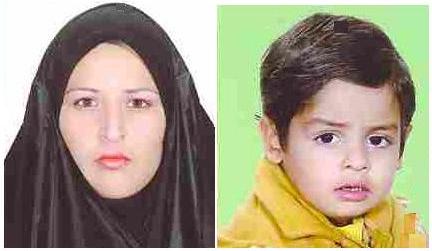
Habib Nabgani has confirmed the release on bail of his wife Masouma Kaabi and their four-year-old son Aimad, who are members of Iran's persecuted Ahwazi Arab minority.
Masouma and Aimad were arrested on 8 March and were imprisoned in Sepidar prison in an effort to force Habib, a leading member of the moderate Wefagh Party, to return to Iran. Habib had been told that his wife and child would be tortured and executed if he did not return to face trial and possible execution on trumped-up charges by the regime. They were released from custody on 28 April.
A number of other wives and children of Ahwazi opposition figures remain in prison, including: Hoda Hawashem and her sons Ahmad (4) and Osameh (2), Soghra Khudayrawi and Zeidan (4) and Fahima Ismail Badawi and her baby daughter Salma, who was born in prison on 25 March. Sakina Naisi is also still in prison where she has had an abortion due to her poor treatment by her captors.
The incarceration of women and children by the regime in an attempt to terrorise opposition activists has largely backfired, leading to widespread international condemnation and helping to unify the Ahwazi anti-government opposition. It has been a public relations disaster for the regime as well as a rallying point for the Ahwazi movement, which is highlighting the abuse and persecution of some 4.5 million Arabs in southwest Iran.
The release of Masouma and Aimad on undisclosed bail conditions is seen as a breakthrough by the Ahwaz Human Rights Organisation (AHRO), which had championed the cause of Ahwazi women and children held in Iranian custody. The British Ahwazi Friendship Society (BAFS) had also brought international attention to their cause, working with Ahwazi groups to stage a series of public demonstrations in the UK and winning over the support of senior European politicians and human rights activists. Amnesty International has also condemned the imprisonment of Ahwazi women and children as a result of AHRO's campaign efforts.
The Wefagh Party, led by former member of parliament Jasem Shadidzadeh, has campaigned for Arab rights but remains opposed to separatism, marking out a moderate and democratic middle-way between the Islamic Republic and Arab separatist groups. Habib had applied to stand for election in the 2004 parliamentary elections, but his candidacy was rejected by the powerful Council of Guardians. The government's refusal to allow the emergence of democratic Arab parties has fuelled unrest in Al-Ahwaz (Khuzestan).
Habib is widely regarded as a moderate in the Ahwazi community. The arrest of his wife and son has been a major obstacle in efforts by the regime to forge a deal with tribal leaders in the province, with talks facilitated by local member of parliament Dr Nasser Sudani and former defence minister Ali Shamkhani, both of whom are among the few Ahwazi Arabs trusted by the regime. However, progress towards serious negotiations is only possible when all political prisoners are released and a ban on the right to protest and form political parties is lifted. In the mean time, unrest is likely to continue.
BAFS spokesman Nasser Bani Assad said: "We are delighted with Masouma and Aimad's release from prison. This is a victory for those groups that have taken up the pen and not the gun in the campaign for Ahwazi Arab rights. This is a vindication of the campaign efforts of AHRO and BAFS and shows that achievements can be won without the force of arms.
"Iran should now immediately release all remaining Ahwazi prisoners of conscience, particularly children. The abuse of human rights only serves to isolate Iran further and child abuse simply will not be tolerated either by Ahwazis or by the international community.
"If Iran is serious about dialogue with the Ahwazis, it should first take the necessary steps to respects the rights granted to them by the UN Conventions that Iran itself has ratified and Iran's own constitution. Secondly, it must start taking seriously Ahwazi demands for equality, devolution of power, democracy, human and cultural rights, redistribution of oil wealth and an end to land confiscation.
"We do not believe that the regime will survive in its current form if it goes down this road and we do not believe that President Ahmadinejad or his allies are serious about compromise with Ahwazi Arabs. But in the long-term, Iran's rulers have the option of adapting to the demands of Iran's democratic currents, including the Ahwazi movement, or be toppled by the gathering uprising. The Ahwazi issue is pivotal to the future of Iran."
Labels: human rights , women
permalink
keywords: ahvaz ahwaz ahwazi arabistan khuzestan khuzistan khuzestani arab arabistan iran iranian human rights security oil news ahmadinejad ethnic cleansing
.......................................................................................
29 April, 2006
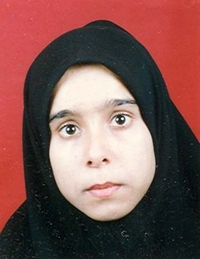 Ahwazi human rights groups are campaigning for the release of the world's youngest political prisoner, Salma, who was born in an Iranian prison on 25 March 2006.
Fahima Ismail Badawi (26), pictured, gave birth to Salma after she was taken into custody by the Iranian authorities. Fahima is a teacher from the Kot Abdoudalla district and is the wife of Ali Madouri-Zadeh, an Ahwazi opposition activist and founding member of Hizb al-Wifaq (National Party) who is in prison at an unknown location. She graduated in mathematics from Dezful University in 2001. She was arrested on 28 February has not been charged with any crime.
The regime has reportedly demanded Fahima pay three billion rials (US$330,000), divorce her husband and change the baby's name, which is deemed too Arabic by the authorities. In an attempt to psychologically torture Fahima, her captors have also told her that her husband has disowned her and the baby, does not care if they are killed and claims she is suffering from mental illness.
Fahima and Salma are just two Ahwazi hostages taken by the Iranian regime. Others include Masouma Kaabi and her four year old son Aimad, Hoda Hawashem and her two sons Ahmad (4) and Osameh (2), Soghra Khudayrawi and her son Zeidan (4), and Sakina Naisi who was pregnant when she was arrested but has since had an abortion due to complications caused by her treatment in prison. Click here for more information .
These are the wives and sons of Ahwazis who have opposed the political activists who oppose the regime. The men have fled the country, fearing for their lives following a series of executions and killings by the regime. They have been pursued by regime agents who have threatened them and the lives of the families.
Nasser Bani Assad, spokesman for the British Ahwazi Friendship Society, said: "Salma is the world's youngest political prisoner, held in custody since birth. She is a symbol of the Ahwazi people and their suffering under this cruel and racist regime.
"At little more than a month old, Salma has done nothing to deserve this punishment and neither has her mother. Fahima's family cannot afford the ransom demanded for the release of mother and child and Fahima has no legal obligation to divorce her husband or change Salma's name. This is an act of hostage taking, an act of terrorism.
"The international community must intervene to release the baby political prisoners taken hostage by the regime."
Labels: human rights , women
permalink
keywords: ahvaz ahwaz ahwazi arabistan khuzestan khuzistan khuzestani arab arabistan iran iranian human rights security oil news ahmadinejad ethnic cleansing
.......................................................................................
02 April, 2006


The British Ahwazi Friendship Society is called on UNICEF to intervene to stop the continued kidnapping and detention of young Ahwazi children and their mothers.
Last week, the wife and two young children of Ahwazi Arab opposition activist Habib Faraj-allah were kidnapped and taken into custody by the Iranian regime.
Hoda Hawashem (24) (pictured left), four year old Ahmed (centre) and two year old Osameh (right) are now in custody, along with other Ahwazi women and children.
Sakina Naisi, a 40 year old woman taken into custody in February when she was three months pregnant, has reportedly had to have an abortion after suffering physical and emotional abuse at the hands of her torturers. Sakina is the wife of Ahmad Naisi, a prominent political activist wanted by the authorities. Following her arrest, the authorities destroyed her husband's family home in the Sho'aybiyeh district of Ahwaz with bulldozers.
Sakina was among five people, including three women and two children, mentioned in a recent Amnesty International urgent action appeal, which called for their immediate release. Soghra Khudayrawi and her four year old son Zeidan and Masoumeh Kaabi and her four year old son Aimad have been in custody since February to punish their husbands for engaging in political activism ( click here for further details ).
Nasser Bani-Assad, spokesman for the British Ahwazi Friendship Society, said: "The detention of Ahwazi women and children amounts to kidnapping. None of them have committed any crime. It is a way of punishing political opposition to the Iranian regime. The Iranian regime is one of the most cruellest governments on earth, but the European Commission has failed to address these grotesque human rights abuses.
"The detention of children is in breach of the UN Convention on the Rights of the Child, which is legally binding on Iran. President Ahmadinejad is breaking all the rules and must be brought to account by the international community for crimes committed by his government."
Leaflet: Release Ahwazi Children and Women
permalink
keywords: ahvaz ahwaz ahwazi arabistan khuzestan khuzistan khuzestani arab arabistan iran iranian human rights security oil news ahmadinejad ethnic cleansing
.......................................................................................
26 March, 2006
 Amnesty International has launched an appeal for the release of Ahwazi children and pregnant women from Iranian custody.
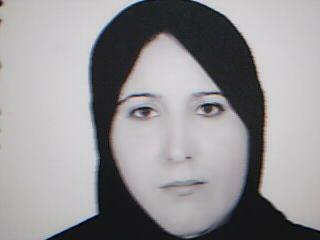
The detention without trial of three women - Masoumeh Kaabi (28), Sakina Naisi (40) and Soghra Khudayrawi - and two four-year-old boys - Masoumeh's son Aimad and Soghra's son Zeidan - was first reported by the British Ahwazi Friendship Society (BAFS) earlier this month.
Masoumeh (pictured left with her son Aimad) is the wife of political activist Habib Nabgan, who has fled the country. He has received threats that his family will be tortured or killed if he does not return to Iran. Soghra's husband, Khalaf Derhab Khudayrawi, is also wanted by the authorities in connection with his political activities.
 Sakina (right)was three months at the time of her arrest on 27 February and there are concerns for her health. She is the wife of Ahmad Naisi, a prominent political activist wanted by the authorities. Following her arrest, the authorities destroyed her husband's family home in the Sho'aybiyeh district of Ahwaz with bulldozers.
In its urgent action appeal on behalf of the women and children, Amnesty International said it "believes all five are very likely to be prisoners of conscience held solely in order to force their husbands and fathers to give themselves up to the Iranian authorities. As such they should be released immediately and unconditionally."
On 11 March, Ahwazis demonstrated outside the European Commission's offices in London, calling for their release ( click here for pictures ). The European Commission and European Parliament were given details on the treatment of Ahwazi women and children in Iranian custody, but the Commission and the European Parliament's delegation for Iran have refused to condemn the government's use of kidnap as a weapon against opponents.
BAFS spokesman Nasser Bani Assad said: "The EU and UN should send investigators to Al-Ahwaz immediately to assess the situation there. We believe that the UNCHR should refer Iran to the UN Security Council over the gross human rights violations and ethnic cleansing suffered by the Ahwazi Arabs. It is a situation that cannot be allowed to continue and the UN Convention on Human Rights must be upheld."
Labels: Amnesty , women
permalink
keywords: ahvaz ahwaz ahwazi arabistan khuzestan khuzistan khuzestani arab arabistan iran iranian human rights security oil news ahmadinejad ethnic cleansing
.......................................................................................
11 March, 2006
Ahwazi Arab women suffer a double persecution by the Iranian regime due to their ethnicity and their gender. The Ahwazi Arab homeland has more oil than the United Arab Emirates and more poverty than Palestine, due to the Iranian regime's policy of forced displacement, land confiscation, "ethnic restructuring" and Persianisation.
Groups representing Ahwazis are highlighting the plight of Ahwazi women currently imprisoned by the regime: Masouma Kaabi, Sakina Niassi, Fahima Ismail Badawi and Soghra Khdhirawi.
Fahimah, a teacher from the Kot Abdoudalla district, is another pregnant woman being held in prison. She is four months pregnant and is extremely ill with many fearing she could suffer a miscarriage. She is the wife of detainee Ali Madouri-Zadeh.
Meanwhile, 40-year-old Sakina (pictured), an imprisoned pregnant Ahwazi woman also being held in Sepidar prison, appears to have suffered a miscarriage as a result of her treatment in prison. Her life is at risk as she is reportedly receiving little or no medical treatment.
Soghra is being held with her four-year-old son Zeydan. She is in prison after her husband Khalaf Dehrab was murdered by the Iranian regime.
Masouma, 28, is being held in the notorious Sepidar prison with her four-year-old son Aimad (both pictured). The woman and baby have been imprisoned to punish Ahwazi political activist Habib Nabgani, Masouma's husband and Aimad's father, but Aimad is reported to have fallen ill due to poor prison conditions.
None of the women have been charged with any crime. The imprisonment of women and children is a tactic used by the regime to silence opposition among Ahwazi Arabs, who have staged a number of large anti-government demonstrations since last April's Ahwazi intifada when the regime lost control over parts of Al-Ahwaz in south-western Iran.
We demand that Ahwazi women and children be freed by the Iranian regime!
We demand that the European Union acts to protect Ahwazi women from oppression!
WE DEMAND AN END TO THE FASCIST ABUSE OF AHWAZI WOMEN!
WE DEMAND AN END TO THE EUROPEAN UNION'S SILENCE!
Ahwazi groups are staging a demonstration outside the European Commission's offices in Storey's Gate, London, on Saturday, 1pm-3pm
Click here to download a leaflet
Labels: human rights , women
permalink
keywords: ahvaz ahwaz ahwazi arabistan khuzestan khuzistan khuzestani arab arabistan iran iranian human rights security oil news ahmadinejad ethnic cleansing
.......................................................................................
10 March, 2006
Ahwazi activists will be holding a demonstration on Saturday outside the European Commission's offices in London to bring attention to the oppression of Ahwazi women under the Iranian regime. The demonstration will begin at 1pm at 8 Storey's Gate ( ).
Ahwazi women suffer persecution on the basis of their ethnicity as well as their gender. Al-Ahwaz (Khuzestan), the Ahwazi Arab homeland, has more oil than the United Arab Emirates and more poverty than Palestine.
Groups representing Ahwazis are seeking to bring attention to the plight of two Ahwazi women currently imprisoned by the regime: Masouma Kaabi and Sakina Niassi. Masouma, 28, is being held in custody with her four-year-old son Aimad (both pictured above) and her mother-in-law. The women and baby have been imprisoned to punish Ahwazi political activist Habib Nabgani, Masouma's husband and Aimad's father, but Aimad is reported to have fallen ill due to poor prison conditions.
Meanwhile, 40-year-old Sakina Niasi, an imprisoned pregnant Ahwazi woman, appears to have suffered a miscarriage as a result of her treatment in prison. Her life is at risk as she is reportedly receiving little or no medical treatment.
The imprisonment of women and children is a tactic used by the regime to silence opposition among Ahwazi Arabs, who have staged a number of large anti-government demonstrations since last April's intifada when the regime lost control over parts of Khuzestan province.
Click here to download a leaflet calling for Masouma and Sakina's freedom
permalink
keywords: ahvaz ahwaz ahwazi arabistan khuzestan khuzistan khuzestani arab arabistan iran iranian human rights security oil news ahmadinejad ethnic cleansing
.......................................................................................
06 March, 2006
Ahwazi activists are continuing to press for the release of 28-year-old Masouma Kaabi, her four-year-old son Aimad and her mother-in-law from prison. The women and baby have been imprisoned to punish Ahwazi political activist Habib Nabgani, Masouma's husband and Aimad's father, but Aimad is reported to have fallen ill due to poor prison conditions.
Human rights activists are also concerned about the well-being of 40-year-old Sakina Naisi, an imprisoned pregnant Ahwazi woman who appears to have suffered a miscarriage as a result of her treatment in prison. Her life is at risk as she is reportedly receiving little or no medical treatment.
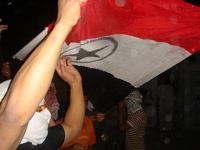 There have been a number of other reports of children under 16 as well as women being held in prison by the regime. The imprisonment of women and children is a tactic used by the regime to silence opposition among Ahwazi Arabs, who have staged a number of large anti-government demonstrations since last April's intifada when the regime lost control over parts of Khuzestan province.
Executions of Ahwazis have also risen, accompanied by forced confessions broadcast on the provincial television channel. Last week, two Ahwazi Arabs - Mehdi Nawaseri and Muhammad-Ali Afrawi - were publically hung in Ahwaz City accused of being responsible for bomb attacks in Ahwaz ( click here for further information ). The regime claimed they were Sunni extremists working for the British. Basiji militants loyal to the ruling mullahs chanted "Death to Israel! Death to America!" while watching the executions. The executions were followed by a bomb attack in the Kianpars district of Ahwaz City and rioting in the Hay Althwra (Shilangabad), Hay Zerghan, Zowyeh, Malasheyah and Koot Abdoula districts. Three other Ahwazis were executed in Karoon Prison two days previously.
The hangings were condemned by a number of human rights organisations, including the Arab Commission for Human Rights. Non-governmental organisations also criticised the men's trials, which they say failed to meet minimum international standards. Amnesty International, which opposes the death penalty, had led a campaign to prevent the men's execution.
The British Ahwazi Friendship Society (BAFS) has obtained exclusive pictures of Masouma and Aimad (above) and is distributing them to the United Nations, European Commission and British parliament to attract international attention to human rights abuses against Ahwazi Arabs.
BAFS spokesman Nasser Bani Assad said: "The EU and UN should send investigators to Al-Ahwaz immediately to assess the situation there. We believe that the UNCHR should refer Iran to the UN Security Council over the gross human rights violations and ethnic cleansing suffered by the Ahwazi Arabs. It is a situation that cannot be allowed to continue and the UN Convention on Human Rights must be upheld."
Labels: human rights , women
permalink
keywords: ahvaz ahwaz ahwazi arabistan khuzestan khuzistan khuzestani arab arabistan iran iranian human rights security oil news ahmadinejad ethnic cleansing
.......................................................................................
01 March, 2006
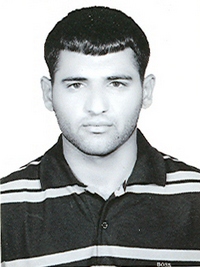 Reports from Iran claim that three Ahwazi Arabs were executed on the morning of 28 February and two are set to be publically executed on 2 March. Meanwhile, a critically ill pregnant woman and a four year old in ill health along with his mother and grand-mother are among those Ahwazis suffering Iran's over-crowded prisons, where the regime extracts confessions through torture.
Atef Nour Mosawi, Anwar Nour Mosawi and Jalal Nasser Al-Nasser were executed in Karoon Prison. The two awaiting execution are Mehdi Nawaseri (pictured) and Muhammad-Ali Afrawi, whose cases have been publicised by the British Ahwazi Friendship Society (BAFS). They are accused of carrying out the 15 October bombings in Ahwaz City and have been convicted of "waging war on God". Khuzestan province's deputy governor Mohsen Farokh-Nejad claims that they are "individuals with Wahabi and Salafist tendencies", an accusation that normally infers Saudi involvement. He has previously claimed that those responsible for the bombings were British agents, although the regime has not published any proof to support its allegations.
Amnesty International and the Unrepresented Nations and Peoples Organisation (UNPO) have both sent appealed for executions in Ahwaz to be halted. According to reports from Iran, the two men will be hung in Naderi Street in Ahwaz City. Five others - Aouda Afrawi (a medical doctor), Aliredha Salman Delfi, Ali Manbouhi, Raisan Sawari and Jafar Sawari - are also set for long prison sentences.
The regime claims they are the culprits for bomb attacks in Ahwaz, although human rights groups, former prisoners and relatives of prisoners claim that they have suffered torture. The regime has instructed the local television station to broadcast confessions made by the men during their incarceration.
Abuse of Ahwazi women and children - shame on the mullahs
Ahwazi activists are highlighting the cases of two female Ahwazi political prisoners: Sakina Naisi and Mousma Kaabi. Sakina is 40 years old and pregnant and reportedly bleeding, which suggests that she is in danger of a miscarriage and possible death due to her prison conditions.
Masouma is 28 years old and is the wife of Habib Nabgani, an Ahwazi political activist. She is in prison with her four year-old son Aimad, who is reportedly ill due to poor conditions, and her mother-in-law.
BAFS spokesman Nasser Bani Assad said: "The Iranian regime is depraved. It treats Ahwazi Arab women as less than dogs. Anyone in the regime with any sense of decency should release Sakina, Mousma, Aimad and Mousma's mother-in-law immediately and see that they receive adequate medical treatment. It must stop executions and torture and release all Ahwazi political prisoners immediately. The UNCHR and the European Commission must send fact-finding teams to Al-Ahwaz to assess the human rights situation there.
"The world is obsessed with Iran's nuclear programme, but is ignoring the human rights of the people of Iran and ignoring the brutal ethnic cleansing of Ahwazi Arabs. What options are the Ahwazis left with when their appeals go unheeded and their women are brutalised by the Iranian regime's policy of state terrorism and ethnic cleansing?"
Labels: death penalty , women
permalink
keywords: ahvaz ahwaz ahwazi arabistan khuzestan khuzistan khuzestani arab arabistan iran iranian human rights security oil news ahmadinejad ethnic cleansing
.......................................................................................
