




The following is an excerpt concerning the imminent execution of six Ahwazi Arabs from an Amnesty International public statement on executions in Iran The report also details imminent executions of Kurds, women and children, including those accused of murder. The Ahwaz Human Rights Organisation (AHRO) this week appealed to UN Human Rights Commissioner Louise Arbour to intervene to prevent the execution of the six Ahwazis.
Amnesty International today expressed alarm at the new wave of executions in Iran and said that it has already recorded almost 250 executions since the beginning of 2007, although the true total of those put to death could be significantly higher [...]
Amnesty is gravely concerned at reports that six members of Iran's Arab minority are also at risk of imminent execution. According to their families, Rasool 'Ali Mezrea', 65, Hamza Sawari, 20, Zamel Bawi, 'Abdul-Imam Za'eri, Nazem Bureihi and Ahmad Marmazi, 35, all held in Karoun Prison, Khuzestan, have been moved to a cell reserved for those soon to be executed.
Rasool 'Ali Mezrea' is a member of the Ahwazi Liberation Organization (ALO) and is recognized as a refugee by the United Nations High commissioner for Refugees (UNHCR) and had been accepted for resettlement in a third country, but was forcibly returned to Iran from Syria on 16 May 2006.
Hamza Sawari, Zamel Bawi, 'Abdul-Imam Za'eri and Nazem Bureihi had their death sentences confirmed on 10 June 2006 by Branch 3 of the Revolutionary Court in Ahwaz, Khuzestan. At the end of July 2006 the Supreme Court upheld the sentences of Abdul-Imam Za'eri and Nazem Bureihi.
The five men have reportedly been accused of being "mohareb" (at enmity with God) which can carry the death penalty. Other charges include "destabilising the country," "attempting to overthrow the government," "possession of home made bombs," "sabotage of oil installations," and carrying out bombings in Ahvaz, which took place between June and October 2005 and caused the deaths of at least six people and wounded more than a hundred others.
Nazem Bureihi has reportedly been in custody since 2000 having been arrested on charges of "insurgency". Though he was serving a 35 year prison sentence, he was among nine men shown on Khuzestan Provincial television on 1 March 2006, "confessing" to involvement in the October 2005 bombings.
Zamel Bawi was reportedly convicted of hiding seven home-made time bombs, which he allegedly defused before his arrest.
Amnesty International recognizes the right and responsibility of governments to bring to justice those suspected of criminal offences, but opposes the death penalty as the ultimate cruel, inhuman and degrading punishment. The organisation is calling on the Iranian authorities to commute all death sentences with a view to establishing a moratorium.
In view of the irreversible nature of the death penalty, the organisation is once again urging Iran's judiciary to review all cases of those sentenced to death to ensure that the all international standards protecting the right to a fair trial were scrupulously observed in these cases.
In light of Amnesty International's long-standing concerns relating to the administration of justice in Iran, the organisation urges the judicial authorities to ensure that all safeguards and due process guarantees set out in international standards applicable during pre-trial, trial and appellate stages must be fully respected.
Amnesty International reminds the Iranian authorities that Article 6(2) of the International Covenant on Civil and Political Rights, to which Iran is a state party, states that the sentence of death may be imposed only for the most serious crimes in accordance with the law in force at the time of the commission of the crime, and that this means that crimes punishable by death should not go beyond intentional crimes with lethal or other extremely grave consequences and that all mitigating factors must be taken into account.
Labels: Amnesty , death penalty
permalink
keywords: ahvaz ahwaz ahwazi arabistan khuzestan khuzistan khuzestani arab arabistan iran iranian human rights security oil news ahmadinejad ethnic cleansing
.......................................................................................
17 October, 2007
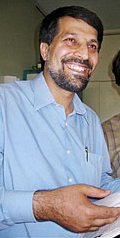 Amnesty International has condemned the imprisonment of leading Iranian human rights campaigner, Emaddedin Baghi, for condemning the execution of Ahwazi Arabs, who he claimed were not given fair trials.
Baghi's lawyer told Amnesty that the charges against the prisoners' rights campaigner related to "media interviews and letters to the authorities regarding Ahwazi Arabs sentenced to death in connection with lethal bomb explosions in Khuzestan province." He was detained on 14 October when he attended a session before Branch 14 of the Revolutionary Court in Tehran. The charges against him include meeting and colluding to commit offences against national security and propaganda against the system for the benefit of foreign and opposition groups.
In February, Emad Baghi issued his strongest condemnation of the Iranian regime's treatment of Ahwazi Arabs. In an article published in French on his website , Baghi stated that the regime itself is responsible for creating the conditions for ethnic Arab unrest, including bomb attacks in Ahwaz.
He reiterated his call for understanding of Arabs' plight, rather than executions, would help quell unrest and also restated his opposition to the death penalty. He said: "They are individuals who live on the black gold of the oil-bearing province of Khuzestan, but have only known poverty and misery. There are among them individuals who believed in the reform, who fought by peaceful means to assert their rights while trying to elect representatives to the municipal councils of their cities and to Parliament. These efforts were in vain, leading to despair.
"There came a feeling of political and social obstruction. Misery, scarcity, humiliation and despair can only generate one of two reactions: depression and passivity or aggressiveness. And what did we who owe our wellbeing with the oil revenue do? Would these attacks have taken place if we had not remained silent over these inequalities and denounced discrimination?"
He had previously suggested that the executions of Ahwazi Arabs would heighten and injure ethnic sensibilities and create more problems than they would solve ( click here for more information ).
During the Revolutionary Court hearing on 14 October, Baghi's lawyers were not allowed to attend the session with him. Although bail of 50 million Iranian Touman (US$53,619) was reportedly set for his release, when his family attempted to meet the bail, the judge apparently refused to accept it. Baghi's wife and daughter have also been sentenced to three years' imprisonment, suspended for five years, for their participation in a human rights conference held in the United Arab Emirates.
Amnesty International says it considers the charges against Emaddedin Baghi to be "politically motivated and aimed at silencing the human rights defender's criticism of the human rights situation in Iran. The organisation considers him a prisoner of conscience and is calling for his immediate and unconditional release."
Amnesty has also appealed on behalf of women's rights activists, trade unionists and Kurdish rights activists. Click here to download the report .
Labels: Amnesty , human rights
permalink
keywords: ahvaz ahwaz ahwazi arabistan khuzestan khuzistan khuzestani arab arabistan iran iranian human rights security oil news ahmadinejad ethnic cleansing
.......................................................................................
25 May, 2007
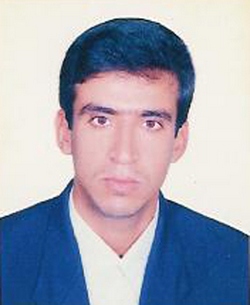 Amnesty International issued an appeal for the release of Ahwazi Arab journalist Mohammad Hassan Fallahiya, who has been given a three year prison sentence for criticising the Iranian regime.
Amnesty has declared that Fallahiya is a "prisoner of conscience detained solely for the peaceful exercise of his rights to freedom of expression and association" and has expressed concern that he is "at risk of torture or ill-treatment." Fallahiya suffers from sickle cell anaemia, a common condition among Ahwazi Arabs, as well as a heart condition but is reportedly being denied medical treatment. He requires constant treatment with antibiotics and access to medical examinations. His relatives fear he may die if he is not treated.
Since November 2006, he has been imprisoned in Section 209 of Evin Prison, which is run by the Ministry of Intelligence which uses it to torture political prisoners and conduct summary killings. A number of other prominent Ahwazis are being held in Section 209, including 60 year old Dutch national Faleh Abdullah al-Mansouri and UNHCR-registered refugees abducted from Syria last year.
On 21 April, he was reportedly sentenced to three years' imprisonment with hard labour. According to Amnesty International, "he was not afforded legal representation at any point in the judicial process, in violation of international fair trial standards."
Fallahiya is the managing editor of Aqlam al-Talaba ( The Students' Pens ), a publication issued by the students in Ahwaz University in
Khuzestan province. He is also a correspondent for several Arab television and radio broadcasting news agencies including Abu Dhabi TV and Radio, in the United Arab Emirates (UAE) and a journalist for the Lebanese al-Mustaqbal broadcasting
corporation.
Meanwhile, another prominent Ahwazi Arab journalist, Youssef Azizi Bani Torouf, is facing accusations by supporters of President Mahmoud Ahmadinejad that he is a pan-Arabist and is in contact with British and Israeli intelligence services. Ahwazi activists fear that he may soon be taken into custody due to the allegations against him and attempts to kidnap his son, a UNHCR-registered refugee in Syria.
Click here for Amnesty's appeal for Mohammad Hassan Fallahiya's release
Labels: Amnesty , human rights , media
permalink
keywords: ahvaz ahwaz ahwazi arabistan khuzestan khuzistan khuzestani arab arabistan iran iranian human rights security oil news ahmadinejad ethnic cleansing
.......................................................................................
27 April, 2007
 Amnesty International's latest statistics on the death penalty
indicate that last year Iran's execution rate nearly doubled compared to 2005, with at least 177 people killed. Across the world, at least 1,591 prisoners were executed by their own governments in 25 countries last year.
Amnesty International's latest statistics on the death penalty
indicate that last year Iran's execution rate nearly doubled compared to 2005, with at least 177 people killed. Across the world, at least 1,591 prisoners were executed by their own governments in 25 countries last year.
According to reports received by the British Ahwazi Friendship Society (BAFS), around 17 Ahwazi Arabs were executed by the Iranian regime. At least 10 of these were political prisoners. The executions of Ahwazi Arabs were carried out after secret one-day trials which were condemned as flawed by UN experts, the European Parliament, members of the British Parliament, Human Rights Watch, Amnesty International and various Arab and Iranian human rights organisations and activists. Click here for BAFS's reports on the execution of Ahwazis .
With the number of Ahwazis estimated at up to 4.5 million, an Ahwazi Arab is around 13 times more likely to be executed than the global average and 30 per cent more likely than the average Iranian. While Ahwazi Arabs account for just 0.08 per cent of the global population, Ahwazi Arabs comprised around one per cent of global executions.
Labels: Amnesty , death penalty
permalink
keywords: ahvaz ahwaz ahwazi arabistan khuzestan khuzistan khuzestani arab arabistan iran iranian human rights security oil news ahmadinejad ethnic cleansing
.......................................................................................
26 February, 2007
Below is a report by Amnesty International. Click here to download the original .
Amnesty International is greatly concerned by continuing violations of the rights of members of Iran's ethnic minorities, including Iranian Azerbaijanis, Kurds, Baluchis, and Arabs. Within the past two weeks, hundreds of Iranian Azerbaijani linguistic and cultural rights activists have been arrested in connection with demands that they should be allowed to be educated in their own language; Kurdish rights activists have been detained, and demonstrators killed or injured; and a Baluchi accused of responsibility for a bomb explosion on 14 February 2007 was executed just five days later.
As Iran's ethnic minorities face growing restrictions, Amnesty International is calling on the government to ensure that all Iranian citizens are accorded, both in law and practice, the linguistic and cultural rights set out in Iran's constitution as well as in international law, and are able peacefully to demonstrate in support of such rights. The Iranian authorities must also ensure that the police and other law enforcement agencies do not use excessive force, that all detainees are protected from torture or other ill-treatment, and that all reports of torture or other ill treatment, excessive use of force or killings by the security forces are investigated promptly, thoroughly and independently, with the methods and findings made public. Anyone suspected to be responsible for abuses should be brought to justice promptly in a trial that complies with international standards of fairness, and without recourse to the death penalty.
Iranian Azerbaijanis
The arrests of Iranian Azerbaijanis occurred in the run up to, and during, peaceful demonstrations on International Mother Language Day, an annual commemoration initiated by the United Nations Educational, Scientific and Cultural Organisation (UNESCO) on 21 February.
The demonstrations were held to support demands that their own language should be used as the medium of instruction in schools and places of education in those areas of north-west Iran where most Iranian Azerbaijanis reside. The protest organizers are reported to have sought official authorisation in advance, though it is not known whether it was granted. Most of those detained in advance of the demonstrations, which were held in Tabriz, Orumiye and other towns in the north-west, were soon released as of 26 February between 10-20 people may still be held.
Ebrahim Kazemi, Ja'afar 'Abedini and Mehdi Mola'i, were among a group of up to 12 people detained in Qom on or around 11 February 2007, at least two of whom were reportedly arrested for having painted slogans on walls, including 'Türk dilinde medrese' (Schooling in [Azerbaijani] Turkic). They were reportedly held for several days before being released on bail. Ja'afar 'Abedini and Mehdi Mola'i were reportedly ill treated while in detention by being forced by Ministry of Intelligence officials to drink liquids which caused them to vomit.
In Orumiye, up to 60 Iranian Azerbaijanis have reportedly been arrested, including Esmail Javadi, a journalist and Iranian Azerbaijani cultural rights activist. He was arrested on 18 February 2007 and may continue to be held in a Ministry of Intelligence detention facility in the Doqquz Pilleh district of the city.
At least 15 arrests are said to have been made in Zenjan, where a reportedly peaceful demonstration was held in the city's Sabze Square. Those detained include journalist Sa'id Metinpour, well-known locally for his human rights activities; he is said to have had blood on his lips when he was taken away raising concern that he may have been assaulted by police.
Ramin Sadeghi, who was detained in Ardabil on 19 February 2007, is one of approximately 20 who were detained in the city in connection with International Mother Language Day events. Only he remains in detention at the time of writing and his family are reportedly concerned about his medical condition.
Kurds
On 20 February 2007, Kurdish students held an event at Tehran University's Department of Literature. They called for the teaching of Kurdish in Iran's education system and at the University of Sanandaj, the capital of Kurdistan province. The students reportedly signed a public statement which stated, in part, that 'In today's multicultural climate in the world, based on the Universal Declaration of Human Rights and other humanitarian principles, every nation should have a right to develop and advance its language.'
In recent months, several Kurdish journalists and human rights defenders have been detained and some are facing trial. In addition, on 16 February 2007, three Kurds, including one woman, were reportedly killed in the course of a demonstration in Mahabad. An unconfirmed report states that a dispute between demonstrators and security forces resulted in the death of Bahman Moradi, aged 18, a woman called Malihe, whose surname is not known to Amnesty International, and one other. Dozens were reportedly injured in the course of the demonstration.
Iranian security forces have a history of the violent suppression of demonstrations by Kurds. For example, in February 2006 similar clashes between Kurdish demonstrators and the security forces in Maku and other towns reportedly led to at least nine deaths and scores, possibly hundreds, of arrests. In March 2006, Kurdish members of parliament (Majles) wrote to Iranian President Mahmoud Ahmadinejad demanding an investigation into the killings and calling for those alleged to be responsible to be brought to justice. An investigation was reportedly set up, but its findings are not known. Some of those detained later reportedly received prison terms of between three and eight months.
Baluchis
In the province of Sistan-Baluchistan, the circumstances surrounding the extremely summary trial and execution of an Iranian Baluchi man, Nasrollah Shanbeh-Zehi, who was executed on 19 February 2007, calls into question the standards of administration of justice enjoyed by minorities without discrimination. Among five people reportedly arrested following the 14 February bombing of a bus carrying Revolutionary Guard security officials, which to date has killed a total 14 and injured around 30, Nasrollah Shanbeh-Zehi was shown âconfessingâ to the bombing on Iranian television on behalf of an Iranian Baluchi armed opposition group, Jondallah, and was executed in public at the site of the bombing.
Jondallah, which has carried out a number of armed attacks on Iranian officials and has on occasion killed hostages, reportedly seeks to defend the rights of the Baluchi people, though government officials have claimed that it is involved in drug smuggling and has ties to terrorist groups and to foreign governments. In March 2006, Jondallah killed 22 Iranian officials and took at least seven hostage in Sistan-Baluchistan province. Following the incident, scores, possibly hundreds, of people were arrested; many were reportedly taken to unknown locations. In the months following the attacks, the number of executions announced in Baluchi areas increased dramatically. Dozens were reported to have been executed by the end of the year
Amnesty International condemns unequivocally the killing of hostages and urges Jondallah to desist from such and similar practices immediately. However, Amnesty International is concerned that Nasrollah Shanbeh-Zehi's "confession" may have been forced, and that the rapidity of his execution indicates that he did not receive a fair trial and was not permitted an adequate opportunity to appeal against his death sentence, if that was imposed by a court.
Arabs
In January and February 2007, Amnesty International deplored the execution of eight Iranian Arabs convicted after unfair trials of bombings in Khuzestan province in 2005. Other Iranian Arab prisoners are also at risk of execution after unfair trials.
Labels: Amnesty , death penalty , human rights , minorities
permalink
keywords: ahvaz ahwaz ahwazi arabistan khuzestan khuzistan khuzestani arab arabistan iran iranian human rights security oil news ahmadinejad ethnic cleansing
.......................................................................................
15 February, 2007
Below is a public statement by Amnesty International on the recent executions of four Ahwazis this week:
Amnesty International greatly deplores the execution of four Iranian Arabs on 14 February 2007 and is concerned that other prisoners are at risk of execution after unfair trials.
The organization is calling on the Iranian authorities to immediately halt executions and to ensure that all persons in detention are protected from torture or other ill-treatment. To date in 2007, Amnesty International has recorded no less than 28 executions in Iran, including the four on 14 February 2007.
One of the four men, Risan Sawari, a 32-year-old teacher, was reportedly executed yesterday in an unknown location in Khuzestan. His family was reportedly informed of his execution but his body is yet to be released for burial. Risan Sawari had reportedly been arrested in April 2005, released and arrested again in September 2005.
Although seven men were said to have been convicted of involvement in bomb attacks in October 2005 - which caused the deaths of at least six people and wounded more than a hundred others, in Ahvaz city, Khuzestan province - nine men, including Risan Sawari, were shown "confessing" on Khuzestan TV, a local government-controlled television station in Iran, on 1 March 2006. Among them were Mehdi Nawaseri and Ali Awdeh Afrawi, who were hanged in public the following morning.
On 10 June 2006 Branch 3 of the Revolutionary Court in Ahvaz had reportedly confirmed the death sentences against Risan Sawari along with nine other men. According to reports, the 10 men were accused of being mohareb (at enmity with God) which can carry the death penalty. Evidence against them reportedly included "destabilising the country", "attempting to overthrow the government", "possession of home made bombs", "sabotage of oil installations" and carrying out bombings in Ahvaz, which took place between June and October 2005. It is not known if the death sentence against Risan Sawari was upheld by the Supreme Court.
In a separate case, the other three men executed together - believed to be Abdulreza Sanawati Zergani, Qasem Salamat and Majed Alboghubaish - were reportedly convicted, together with seven others, of being mohareb (at enmity with God) on account of their alleged involvement in bomb attacks in 2005 in Ahvaz city, Khuzestan province. They are reported to have been held in solitary confinement for months during, and possibly after, their pre-trial detention and to have been convicted and sentenced after grossly unfair trials, which included denial of access to lawyers.
In an interview at the end of January 2006 with the Netherlands-based Radio Zamaneh, Iranian human rights defender, Emaddedin Baghi, who has been closely following the cases, stated that "they did not have access to lawyers and were kept in solitary confinement for months. They did not receive a fair trial."
On 13 November 2006, Khuzestan TV, broadcast a documentary film in which the three men executed yesterday and six of the seven others convicted in the same case, were shown "confessing" to involvement in causing bomb explosions. They were said to be members of Al-e, an Iranian Arab militant group that is not known to have been active since the time of the Iran-Iraq war in the 1980s.
On 10 January 2007, three leading UN human rights experts - Philip Alston, UN Special Rapporteur on extrajudicial, summary or arbitrary executions; Leandro Despouy, UN Special Rapporteur on the independence of judges and lawyers; and Manfred Nowak, UN Special Rapporteur on torture - jointly called on the government of Iran to "stop the imminent execution of seven men belonging to the Ahwazi Arab minority and grant them a fair and public hearing." The UN experts stated: "We are fully aware that these men are accused of serious crimes ... However, this cannot justify their conviction and execution after trials that made a mockery of due process requirements."
The seven individuals to whom the UN experts referred were Mohammad Jaab Pour, Abdulamir Farjallah Jaab, Alireza Asakreh and Khalaf Derhab Khudayrawi, all of whom were executed on 24 January 2007 and the three men who were executed earlier today.
Three other Iranian Arabs - named as Abdullah Suleymani, Malek Banitamim and Ali Matouri Zadeh - are reported to have been executed on 19 December 2006 in a prison in Khuzestan province.
At least 17 other Iranian Arabs are believed to be facing execution after unfair trials in which they were convicted of involvement in bombings in Khuzestan in 2005.
For further information please see: Iran: Four Iranian Arabs executed after unfair trials, MDE 13/005/2007, 24 January 2007
Labels: Amnesty , death penalty , human rights
permalink
keywords: ahvaz ahwaz ahwazi arabistan khuzestan khuzistan khuzestani arab arabistan iran iranian human rights security oil news ahmadinejad ethnic cleansing
.......................................................................................
11 December, 2006
The following report was published by IRIN, a UN humanitarian news and information service - click here for the original article
Ethnic Arab (Ahwazi) refugees from Iran now living in Damascus have expressed fear as news emerged that Syria has deported three more Ahwazi activists to Iran, where they face torture and execution.
Three Ahwazi activists, thought to be imprisoned in Damascus since their arrest in April, were deported to Iran in May, Sima Watling of Amnesty International's East Gulf team told IRIN on 6 December.
Watling said relatives of two of the men, Rasool Mazra - whose family has resettled in Norway - and Taher Mazra - whose family was prevented from leaving Syria for Sweden in October - had received telephone calls from the men to say they were being held in Karoun Prison, in Ahvaz, the capital of Khuzestan.
On 7 December, a source who spoke directly to the family of Taher Mazra told IRIN that Taher Mazra was, indeed, forcibly returned from Syria to Iran in May. The source, who spoke on condition of anonymity, said Rasool Mazra had also called his family in Khuzestan to say he was imprisoned and was facing imminent execution.
Both men had been recognised as refugees by the office of the UN High Commissioner for Refugees (UNHCR).
Laurens Jolles, acting head of the UNHCR in Damascus, said that despite numerous requests, the agency had been unable to obtain information about the status of the Ahwazis arrested in Syria.
"Syria is aware that its own constitution prevents the deportation of refugees to countries where they will face persecution, as do international laws," he said.
Both men are members of the Ahwazi Liberation Organization (ALO), the Ahwazis' leading political opposition movement, and according to their families they had been tortured since their recent captivity in Iran.
 The third Ahwazi, Jamal Obaidy (pictured), Chair of Ahwazi Student Union in Syria, is also believed to have been deported to Iran, though no contact has been made with his family. Neither Iran nor Syria have confirmed or denied any of the three returns.
The UNHCR in Damascus is currently unable to confirm that Rasool Mazra, Jamal Obaidy and Taher Mazra have been deported from Syria to Iran.
The news followed two similar cases of deportation.
Faleh Abdullah Mansuri, the 60-year-old head of the ALO who holds Dutch citizenship, was also arrested by Syrian security in April while he was visiting an Ahwazi friend in Damascus.
Syrian authorities confirmed earlier this year that Mansuri, also a UNHCR recognised refugee, was deported to Tehran in May at the request of Iran, just a few weeks before the two countries signed a landmark agreement on military and security cooperation.
Mansuri is now reportedly in prison in Tehran, facing a sentence of death by hanging imposed on him in 1988 by a military court, apparently in connection with his activities as a member of the ALO.
Saeed Saki, also a member of the ALO and a UNHCR refugee, had been due to be resettled in Norway when he was arrested and extradited to Tehran. Only high-level intervention from international officials prevented his execution, and he remains imprisoned in Iran.
Since an uprising by Ahwazis in April 2005 - a two-month campaign of civil unrest that culminated in a bomb attack on an oil installation east of Ahvaz - Iran has intensified its campaign against the Ahwazis, detaining more than 25,000, executing at least 131 while more than 150 have disappeared, according to the US-based Ahwazi Human Rights Organisation.
Amnesty International report that following the uprising hundreds of Khuzestan's Arabs were arrested, some were reportedly tortured, and at least two men were executed following unfair trials.
A source at the Iranian embassy in Damascus, speaking on condition of anonymity, denied that any prisoners of conscience had been extradited from Syria to Iran.
"There is an agreement between Syria and Iran that any Iranian who has been jailed in Syria for a crime can be transferred to complete his sentence in Iran," he said. "But no prisoners of conscience have been handed over to Iran by Syria."
Ahwazi refugees first began arriving in Iraq and Syria in the 1980s during the Iran/Iraq war as Tehran accused them of supporting Baghdad.
The past two years has seen concern rising about the deteriorating human rights situation in Khuzestan where activists estimate some 1.5 million Arabs have been driven off their land by a series of vast state-sponsored industrial projects, coupled to massive organised influxes of Persian workers and their families.
According to human rights organisations, individuals promoting Arab rights in Khuzestan have been targeted, and access to the region has been denied to foreign and local journalists.
Labels: Amnesty , Mansouri , refugees , UN
permalink
keywords: ahvaz ahwaz ahwazi arabistan khuzestan khuzistan khuzestani arab arabistan iran iranian human rights security oil news ahmadinejad ethnic cleansing
.......................................................................................
09 December, 2006
 This report is based on an article by Danya Chaikel, a Maastricht resident, in the on-line Crossroads magazine.
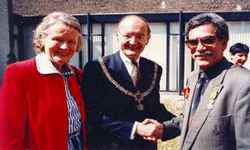
Dutch Foreign Minister Ben Bot has received assurances from his Iranian counterpart, Manouchehr Mottaki, currently on a visit in the Netherlands, that Ahwazi dissident and Dutch citizen Faleh Abdullah Al-Mansouri (pictured with the mayor of Maastricht) is still alive in Iran and that he will get an open trial.
Al-Mansouri, a UNHCR registered refugee and leader of the Ahwaz Liberation Organisation (ALO), was abducted by Syrian authorities while on a visit to Damascus in May and illegally deported to Iran, in contravention of the Geneva Conventions on Refugees. He is currently being held in Section 209 of Evin Prison, which is run by the Ministry of the Intelligence and where opposition activists are tortured by interrogators.
An open trial will mean that representatives of the Dutch embassy or consulate will be allowed in court. Mottari added that Al-Mansouri's family would be allowed to visit him in Iran. He did not however give any information about the visa application submitted by Al-Mansouri's Dutch lawyer Gerard Spong. Iran does not recognise Al-Mansouri's Dutch nationality.
According to Dagblad De Limburger, Amnesty International Maastricht spokesperson Sigrid Haenen comments that the human rights group is caustiously optimistic about this latest development, but that it will advise Al-Mansouri's family not to accept Iran's offer ( click here for report ). Al-Mansouri's son believes that his father's lawyer Gerard Spong would be more helpful to him at this point in Iran than his direct family ( click here for more information ).
Dagblad De Limburger further reports that Amnesty International Maastricht hopes that the city will send an official representative - "preferably Gerd Leers himself" - to Iran in order to ensure that Al-Mansouri, who is charged by Iranian authorities for "terrorist activities", receives a fair trial.
Al-Mansouri was a former high-ranking officer in the Iranian military who rebelled against the Islamic Republic during the Iran-Iraq War. He was sentenced to death by an Iranian military court in 1988, but escaped from custody and fled to Baghdad. He, his wife and four children were relocated to the Netherlands by the UNHCR in 1989 and later acquired Dutch citizenship.
It is unclear whether the Dutch government has accepted the methods by which Al-Mansouri was abducted and transferred to Iran or whether it is making representations to move the dissident from Section 209. The Iranian government has not given any assurance of open trials for four other Ahwazi refugees abducted from Damascus and it is unclear whether the Dutch government is pursuing these cases. The UNHCR has issued complaints on behalf of all five men.
Labels: Amnesty , Mansouri , refugees
permalink
keywords: ahvaz ahwaz ahwazi arabistan khuzestan khuzistan khuzestani arab arabistan iran iranian human rights security oil news ahmadinejad ethnic cleansing
.......................................................................................
09 August, 2006
 Amnesty International has launched a petition calling on states around the world to support the adoption of the UN Declaration on the Rights of Indigenous Peoples at the UN General Assembly in 2006.
August 9 marks International Day of the World's Indigenous People, yet Amnesty estimates that 370 million Indigenous women, men and children worldwide face racism, discriminatory laws and eviction from lands central to their cultures and livelihoods. These include 5.5 million Ahwazi Arabs, who have faced land confiscation and cultural and political repression since Tehran imposed central government control over their homeland in 1925.
The UN is edging towards approving global human rights standards to protect the rights of Indigenous peoples. The draft UN Declaration on the Rights of Indigenous Peoples was adopted by the UN Human Rights Council at its historic first meeting in June. The Declaration must now be adopted by the UN General Assembly in order to become part of the body of international human rights standards.
The draft Declaration is intended to inspire and inform measures to address the widespread discrimination and deeply entrenched racism faced by Indigenous peoples in every region of the world.
The Declaration affirms the right of Indigenous peoples to have meaningful control over their own lives, to maintain their distinct cultural identities for future generations, and to have secure access to the lands and natural resources essential to their ways of life.
Canada, United States, Russia, New Zealand and Australia have opposed the adoption of the Declaration. It's feared that the small group of states that have opposed the Declaration will put pressure on other governments to join them in voting against the Declaration when it comes before the General Assembly later this year.
In order to push through the declaration, Amnesty International has launched a petition to urge governments to approve human rights for Indigenous peoples. The British Ahwazi Friendship Society (BAFS) is one of the organisations backing the petition.
Click here to sign Amnesty International's petition supporting the UN General Assembly's approval of the draft UN Declaration on the Rights of Indigenous Peoples.
Labels: activism , Amnesty
permalink
keywords: ahvaz ahwaz ahwazi arabistan khuzestan khuzistan khuzestani arab arabistan iran iranian human rights security oil news ahmadinejad ethnic cleansing
.......................................................................................
06 August, 2006
Amnesty International Belgium held a demonstration outside the Syrian embassy in Brussels on Friday to protest at the detention of Ahwazi refugees in Damascus. Dutch national Faleh Abdullah Al-Mansouri (60), leader of the Ahwaz Liberation Organisation (ALO) which supports independence for Arab regions of Iran, has also been detained illegally by the Syrian authorities.

One detained Ahwazi, Saeed Awdeh al-Saki, who was due to be moved to Norway by the UNHCR, has been removed to Iran by the Syrian authorities where he faces torture and possible execution.
Over the past year, international NGOs and UN agencies have documented the persecution of Ahwazi Arabs in Iran. Many Arabs believe that the Syrian government's decision to detain Ahwazis indicates that President Bashar Al-Assad is willing to sacrifice solidarity with persecuted Arabs for the sake of his new-found allegiance to Tehran.
According to the Gulf Times, the Dutch government has demanded an explanation from Syria over Al-Mansouri's detention. Al-Mansouri has been a resident of Maastricht in the Netherlands since he fled to the country in 1989.

Photos submitted to BAFS by the Ahwaz Liberation Organisation .
Links
Statement by Amnesty Maastricht on the detention of Faleh Abdullah Al-Mansouri (in Dutch)
U.N. tells Syria not to extradite Ahwazi refugees - 7 June 2006, Ya Libnan
Amnesty International report on fear of forcible return and torture of Ahwazi refugees - 2 June 2006, Amnesty International
Syria releases three Ahwazis, but four remain in custody - 19 May 2006, BAFS
Syrian human rights activists arrested amid Ahwazi deportation scandal - 17 May 2006, BAFS
Syria's deportation scandal - 16 May 2006, BAFS
Syria arresting Ahwazi Arabs to please Iran - 16 May 2006, Ya Libnan
Labels: activism , Amnesty , Mansouri
permalink
keywords: ahvaz ahwaz ahwazi arabistan khuzestan khuzistan khuzestani arab arabistan iran iranian human rights security oil news ahmadinejad ethnic cleansing
.......................................................................................
17 May, 2006
The following is an urgent action published by Amnesty today regarding the detention and possible execution of members of Iran's persecuted Ahwazi Arab community.
At least 11 men, all members of Iran's Arab minority, are reportedly under sentence of death and at risk of execution. They are believed to have been accused of involvement in bomb explosions in the city of Ahvaz, in Khuzestan province, southwest Iran; distributing material against the state; having contact with dissident organizations operating abroad; and endangering state security. Amnesty International recognizes the rights and responsibilities of governments to bring to justice those suspected of criminal offences, but is unconditionally opposed to the death penalty as the ultimate violation of the right to life.
Brothers Zamel Bawi, 29, and Imad Bawi, 31, were reportedly arrested by security forces on 11 August 2005 along with their three other brothers and a cousin. Their father and uncle, Hajj Salem Bawi, a tribal leader and a businessman who runs a number of computer stores in Khuzestan province, was arrested by security forces after enquiring about where his sons and nephew were being detained. He was released on 28 August 2005 and had apparently met three of his sons while he was held in Amaniya Prison, in the city of Ahvaz. He could see that they had been ill-treated.
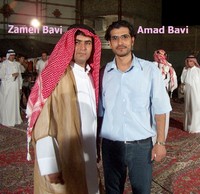 Zamel Bawi (pictured) is a businessman who owns shops in Ahvaz. He is married and has an 11 month-old son, Hareth. Imad Bawi was studying law at the Lebanese University of Beirut. He was visiting his family in Ahvaz during the summer holiday when the Iranian authorities banned him from returning to Lebanon. Amnesty International has no further information on the reasons for the ban.
At the end of October 2005, Amnesty International received reports that both Zamel and Imad had been sentenced to death. Further reports indicated that the brothers appeared before a Tehran court on 21 February 2006 accused of distributing material against the state, having contact with dissident organizations operating abroad, and endangering state security, possibly in connection with bomb explosions in Ahvaz city. These reports also suggested that they had not been allowed legal representation and that the court sessions took place behind closed doors. On 19 March 2006 the death sentence was reportedly confirmed for Zamel Bawi. No details of the hearing or the outcome were divulged. Amnesty International has no further information about Imad Bawi.
The nine remaining men, Dr Awdeh Afrawi, Nazem Bureihi, Aliredha Salman Delfi, Ali Helfi, Ali Manbouhi, Jaafar Sawari, Risan Sawari, Mohammad Ali Sawari, Moslem al-Haâi, may also have been sentenced to death for their alleged involvement in bomb explosions in the city of Ahvaz, which took place in October 2005. Seven of them have been shown "confessing" on local television, with one other mentioned as a participant in the bombings. Another has reportedly been convicted of the same offence. Two other men have already been executed.
There has been confusion over the convictions as the trials have been held behind closed doors. Government officials have also given conflicting statements on whether the nine men have been sentenced to death in relation to the bombings.
According to the Minister of Justice, 45 people have been arrested in connection with the October explosions. On 14 February 2006, the Minister of Justice told the state news agency IRNA that seven of them had been convicted on charges including "enmity with God and corruption on earth (moharebeh and ifsad fil-arz, for which the penalty is execution, cross amputation, crucifixion or banishment), and murder" and that their sentences would be announced shortly. On 20 February 2006, the Prosecutor General reportedly said that "some of those convicted in this case have been sentenced to death, including the two main culprits, whose presence in the recent Ahvaz incidents was proved and their execution verdict is definite". On 21 February, in a statement to IRNA commenting on this report, the Minister of Justice stated that only two had been sentenced to death and these sentences were under review by the Supreme Court. He noted that "the seven convicts have not all committed crimes that call for the death penalty."
Although seven men were said to have been convicted of involvement in the October bombings, nine men were shown "confessing" on Khuzestan Provincial TV on 1 March 2006. Among them were Mehdi Nawaseri and Ali Awdeh Afrawi, who were hanged in public the following morning; Dr Awdeh Afrawi (father of executed Ali Awdeh Afrawi), Risan Sawari, Jaafar Sawari, Aliredha Salman Delfi, Ali Manbouhi, Ali Helfi, and Nazem Burehi.
Dr Awdeh Afrawi, 52, is a psychologist at Ahvaz's Shahid Chamran hospital. He and and his son, Ali Awdeh Afrawi, were reportedly arrested in Ahvaz shortly after the October 2005 explosions.
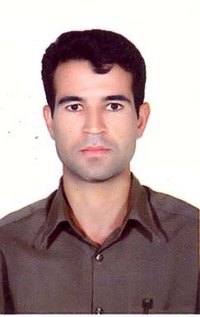 Teacher Risan Sawari, 30, (pictured) was reportedly arrested in April 2005, released and arrested again in September.
Jaafar Sawari and Aliredha Salman Delfi were reportedly arrested in September 2005. Mehdi Nawaseri was reportedly arrested on 19 October 2005 and teacher, Mohammad Ali Sawari, on or around 4 November 2005. Moslem al-Ha'i was mentioned during the "confessions" as a participant in the bombings, but it is not known when he was arrested.
Ali Manbouhi, Ali Helfi and Nazem Bureihi have reportedly been in custody since 2000, when they were arrested on charges of "insurgency" and were each sentenced to 35 years' imprisonment. However, they also featured in the "confessions" footage. In March 2006 there were unconfirmed reports that they were to face a retrial on charges of moharebeh and murder.
On 10 May 2006, according to E'temad newspaper, the Governor of Khuzestan, Amir Hayat Moqaddam, announced that the cases of an unspecified number of people suspected of involvement in the bombings had been transferred to the judiciary and would be tried soon. He said, "It is anticipated that, on account of the type of crime committed, a number of these people will be executed."
Links
Iran prepares for new round of executions in Ahwaz - 13 May
Executed: Young Men Hung by Iranian Tyrants - 2 March
Iran prepares to execute tribal family - 19 February
Iran sentences seven over Ahwaz bombings - 15 February
Iran increases repression in Ahwaz - 8 February
Ahwaz Bombings Come After Weeks of Unrest - 24 January
Labels: Amnesty , death penalty
permalink
keywords: ahvaz ahwaz ahwazi arabistan khuzestan khuzistan khuzestani arab arabistan iran iranian human rights security oil news ahmadinejad ethnic cleansing
.......................................................................................
13 April, 2006
Amnesty International has called on the Iranian government to show restraint in policing any demonstrations marking the anniversary of the Ahwazi Arab intifada in Ahwaz City, southwest Iran.
April 15th became known as "Black Friday" and was followed by days of unrest, in which more than 160 Arab civilians were killed by security forces. During the uprising, the regime lost control over parts of Al-Ahwaz (Khuzestan), an Arab homeland. Since then, security forces including the paramilitary Baseej have led a brutal crack-down on dissent. The regime has attempted to force Ahwazi opposition activists to surrender by kidnapping their wives and young children. The men are accused of "waging war on God", which carries the death penalty.
Over the past year, cultural and religious gatherings and peaceful demonstrations have been met by violent force from Iranian forces who used tear gas and live ammunition to disperse people. Recent reports on Radio Farda suggest that hundreds have been killed over the past year in lynchings and executions by the regime and around 28,000 Ahwazi Arabs have been arrested. Amnesty International says it has received the names of at least 448 Ahwazi Arabs who are reported to have been arrested since April 2005, but believes the true figure may be higher.
The source of unrest and anti-government agitation among Ahwazi Arabs is racial discrimination, land confiscation, state terrorism and high levels of poverty and unemployment, which are the consequences of a government programme of "ethnic restructuring". The programme was outlined in a letter by former Vice President Abtahi which was leaked from the office of the then President Khatami. The letter stated the government's intention to reduce the Arab population in Khuzestan from 70 per cent to 30 per cent through forced migration ( click here to read the letter and translation ).
Amnesty International report states: "Frustration and economic deprivation has spilled over in the past year into a cycle of violent protest and repression which seems likely to continue unless the Iranian authorities take the measures necessary to address the social, economic and other grievances that gave rise to the unrest."
Following a visit to Al-Ahwaz in July 2005, UNCHR's Special Rapporteur on Housing, Miloon Kothari, spoke of the forced relocation of Ahwazi Arabs: "We looked in detail in some areas on the issue of compensation and, for example, in Khuzestan the compensation being offered to the Arab villagers who were being displaced is sometimes one fortieth of the market value - and there's nothing they can do about it. It's a fait accompli. That's how it is. And all of these phenomena are continuing. It's something that is happening almost every day."
Amnesty International is calling on the Iranian authorities to:
- Release all prisoners of conscience immediately and unconditionally;- Review law and practice to ensure that no one is imprisoned as a prisoner of conscience or discriminated against solely on account of their political opinions, race, ethnicity, gender, or language;
- Review as a matter of urgency, through an independent judicial body, the cases of all political prisoners held without trial or convicted after unfair trials, and order the immediate release of all of those against whom there is no evidence that they have committed a recognizably criminal offence;
- Grant all such prisoners prompt and regular access to lawyers of their own choosing and their families and to appropriate medical care if necessary;
- Ensure that all trials, including in capital cases, respect, as a minimum standard, the relevant provisions of the ICCPR;
- Investigate all allegations of torture or ill-treatment promptly and thoroughly. The methods and findings of any such investigation should be made public. Anyone implicated in human rights violations should be brought to justice promptly and fairly and victims of torture and ill-treatment should be granted compensation;
- Take effective measures to eradicate the use of torture, including the full implementation in practice of Iran's own legislation and the ratification of the UN Convention against Torture and Other Cruel, Inhuman or Degrading Treatment or Punishment and complying with its provisions;
- Demonstrate its respect for the inherent right to life by ordering a moratorium on executions;
- Investigate all possible unlawful killings or extra-judicial executions promptly and fairly in accordance with the UN Principles on the Effective Prevention and Investigation of Extralegal, Arbitrary and Summary Executions, and bring to justice, fairly and promptly, any members of the security forces responsible for unlawful killings or other grave violations of human rights.
- End any policy of deliberate, discriminatory land expropriation or population transfer aimed at dispossessing minority populations from their traditional lands;
- Cease any practice of forced evictions: that is evicting people from land or housing without consultation, due process of law, and assurances of adequate alternative accommodation;
- Cease forced internal displacement linked to forced evictions and "land grabbing";
- Take immediate steps towards the elimination of de facto discrimination in the exercise of economic, social and cultural rights such as the rights to education, adequate housing, water and sanitation as well as in access to utilities such as electricity adopting special measures, such as multilingual education, as necessary.
Reports
"Iran: Need for restraint as anniversary of unrest in Khuzestan approaches" - Amnesty International statement, 13 April 2006
Iran: New government fails to address dire human rights situation - Amnesty International report, 16 February 2006
Release Ahwazi Women and Children! - BAFS leaflet
Interview with Human Rights Special Rapporteur on Adequate Housing, Miloon Kothari - IRIN, 9 August 2005
BAFS reports from April 2005
Names of those killed in Ahwaz
Ahwaz Intifada intensifies
A tragic week in the history of Ahwaz
Iran's "Bloody Friday" massacre in city of Ahwaz
Labels: Amnesty , intifada
permalink
keywords: ahvaz ahwaz ahwazi arabistan khuzestan khuzistan khuzestani arab arabistan iran iranian human rights security oil news ahmadinejad ethnic cleansing
.......................................................................................
26 March, 2006
Amnesty International has launched an appeal for the release of Ahwazi children and pregnant women from Iranian custody.
The detention without trial of three women - Masoumeh Kaabi (28), Sakina Naisi (40) and Soghra Khudayrawi - and two four-year-old boys - Masoumeh's son Aimad and Soghra's son Zeidan - was first reported by the British Ahwazi Friendship Society (BAFS) earlier this month.
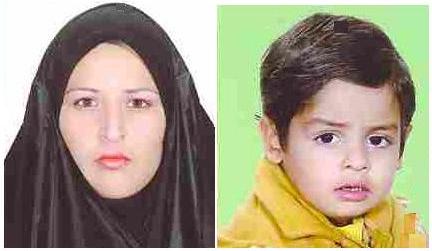 Masoumeh (pictured left with her son Aimad) is the wife of political activist Habib Nabgan, who has fled the country. He has received threats that his family will be tortured or killed if he does not return to Iran. Soghra's husband, Khalaf Derhab Khudayrawi, is also wanted by the authorities in connection with his political activities.
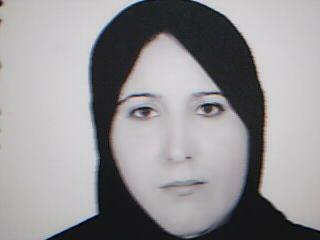 Sakina (right)was three months at the time of her arrest on 27 February and there are concerns for her health. She is the wife of Ahmad Naisi, a prominent political activist wanted by the authorities. Following her arrest, the authorities destroyed her husband's family home in the Sho'aybiyeh district of Ahwaz with bulldozers.
In its urgent action appeal on behalf of the women and children, Amnesty International said it "believes all five are very likely to be prisoners of conscience held solely in order to force their husbands and fathers to give themselves up to the Iranian authorities. As such they should be released immediately and unconditionally."
On 11 March, Ahwazis demonstrated outside the European Commission's offices in London, calling for their release ( click here for pictures ). The European Commission and European Parliament were given details on the treatment of Ahwazi women and children in Iranian custody, but the Commission and the European Parliament's delegation for Iran have refused to condemn the government's use of kidnap as a weapon against opponents.
BAFS spokesman Nasser Bani Assad said: "The EU and UN should send investigators to Al-Ahwaz immediately to assess the situation there. We believe that the UNCHR should refer Iran to the UN Security Council over the gross human rights violations and ethnic cleansing suffered by the Ahwazi Arabs. It is a situation that cannot be allowed to continue and the UN Convention on Human Rights must be upheld."
Labels: Amnesty , women
permalink
keywords: ahvaz ahwaz ahwazi arabistan khuzestan khuzistan khuzestani arab arabistan iran iranian human rights security oil news ahmadinejad ethnic cleansing
.......................................................................................
13 March, 2006
The world's leading human rights organisation, Amnesty International, has lodged an appeal on behalf of nine Ahwazi Arabs sentenced to death.
The men have reportedly been convicted of carrying out bomb attacks in Ahwaz in October 2005, although Amnesty says the exact charges are unclear. There is confusion over the convictions as the trials are held in secret religious courts that are not usually open to the public. Government officials have also given conflicting statements on whether the nine men have been convicted in relation to the bombings. The Ministry of Justice claims that 45 people have been arrested in connection with the bombings, but statements by other officials suggest that the number could be higher.
Seven of the men have already been shown "confessing" on Khuzestan TV and have been convicted of "waging war on God, corruption on the earth and murder", according to some government officials, These crimes carry the death penalty, either by hanging or crucifixion.
Earlier this month, two Ahwazi Arabs - Mehdi Nawaseri and Muhammad-Ali Afrawi - were executed in a street in Ahwaz City after their "confessions" were read out on Khuzestan TV. Muhammad-Ali Afrawi's father, Dr Awdeh Afrawi, 52, is among those listed in Amnesty's appeal. He is a respected psychologist at Ahwaz's Shahid Chamran hospital, although the Iranian regime insists that he is a terrorist working on behalf of the British government. He was arrested shortly after the October 2005 bombings. Muhammad-Ali's sister was murdered by the security services during demonstrations that followed the executions.
Amnesty is concerned that Aliredha Salman Delfi, Ali Manbouhi, Jaafar Sawari, Ali Helfi, Nazem Burehi and Risan Sawari could also face execution in relation to the October 2005 bombings. However, Ali Manbouhi, Ali Helfi and Nazem Bureihi have been in custody since 2000, when they were arrested on charges of "insurgency" and each sentenced to 35 years' imprisonment. They were featured in the "confessions" footage on Khuzestan TV. Risan Sawari was previously arrested in April 2005, but then released and re-arrested in September 2005 - a month before the bombings. Jaafar Sawari and Aliredha Salman Delfi were also reportedly arrested in September 2005. Moslem al-Ha'i was mentioned during the "confessions" as a participant in the bombings, but it is not known when he was arrested, according to Amnesty.
The latest urgent action is the tenth issued by Amnesty on behalf of Ahwazi Arabs since last April's Arab intifada in Ahwaz.
Links:
Latest Amnesty International report on Ahwazis facing execution
Executed: Young Ahwazi Men Hung by Iranian Tyrants - British Ahwazi Friendship Society, 2 March 2006
Iran Slammed for 'Barbarian' Treatment of Ahwazi Arabs - British Ahwazi Friendship Society, 13 March 2006
Labels: Amnesty , death penalty
permalink
keywords: ahvaz ahwaz ahwazi arabistan khuzestan khuzistan khuzestani arab arabistan iran iranian human rights security oil news ahmadinejad ethnic cleansing
.......................................................................................
25 February, 2006
Amnesty International has expressed its outrage over an "alarming rate" of executions in Iran, particularly the use of the death penalty against children.
The human rights organisation has recorded 28 executions so far in 2006, following at least 94 in 2005 - although it states that "the true figure is likely to be much higher." The use of the death penalty is increasingly being used against political prisoners.
An Amnesty press release highlighted the case of two Ahwazi Arabs who face imminent execution - Mohammad Ali Sawari and Mehdi Nawaseri. The British Ahwazi Friendship Society (BAFS) highlighted the cases of Mehdi Nawaseri and his brother Abdolreza Nawaser on 21 February ( click for details ).
The Iranian regime has stated that seven of 45 people accused of bomb attacks in Ahwaz had been convicted of "enmity with God, corruption on earth and murder". Amnesty says the offences carry heavy penalties, including "execution, cross amputation [amputation of right hand and left foot], crucifixion for three days, or banishment."
Amnesty states that it "recognizes the rights and responsibilities of governments to bring to justice those suspected of committing recognizably criminal offences, but the organization is unconditionally opposed to the use of the death penalty as the ultimate violation of the right to life. It therefore urges the Iranian authorities to impose an immediate moratorium on the use of the death penalty and to abide by its international obligations not to execute anyone for an offence committed when they were a child."
Link: "Iran: Worrying trends in use of death penalty" - Amnesty International Press Release, 24 February 2006
Labels: Amnesty , death penalty
permalink
keywords: ahvaz ahwaz ahwazi arabistan khuzestan khuzistan khuzestani arab arabistan iran iranian human rights security oil news ahmadinejad ethnic cleansing
.......................................................................................
16 February, 2006
The administration of President Mahmoud Ahmadinejad has come under severe criticism from Amnesty International in a report entitled "New government fails to address dire human rights situation", which was published this week.
Amnesty focusses on the treatment of ethnic minorities, particularly the Ahwazi Arabs, Kurds and Azeri Turks, but notes that Balochis, Turkmen and nomads also face persecution.
Sections of the report relating to Ahwazi Arabs have been reproduced below. Click here for the full report .
Despite constitutional guarantees of equality, individuals belonging to minorities in Iran, who are believed to number about half of the population of about 70 millions, are subject to an array of discriminatory laws and practices. These include land and property confiscations, denial of state and para-statal employment under the gozinesh criteria and restrictions on social, cultural, linguistic and religious freedoms which often result in other human rights violations such as the imprisonment of prisoners of conscience, grossly unfair trials of political prisoners before Revolutionary Courts, corporal punishment and use of the death penalty, as well as restrictions on movement and denial of other civil rights.
Some of the problems currently confronting Iran's minority groups were brought to international attention by the UN Special Rapporteur on the Right to Adequate Housing, when he visited the country in July 2005. In his preliminary findings he noted that minorities were subject to discrimination in the distribution of state resources, in access to and the quality of housing, water and sanitation provided in the areas of the country where they reside, and are disproportionately affected by policies of "land grabbing".
The mainly Shi'a-Muslim Arab community in Iran constitutes between 3 per cent and 8 per cent of the total population. The Arab community lives mainly in Khuzestan province (known as Ahwaz by the Arab community) adjoining Iraq, the location of much of Iran's oil resources. Members of Iran's Arab community have a long-standing grievance against successive governments, claiming that Arabs have been overlooked in terms of the distribution of resources aimed at social development. Frustration and economic deprivation has spilled over in recent months into a cycle of violent protest and repression which seems likely to continue unless the Iranian authorities take the measures necessary to address the social, economic and other grievances that gave rise to the unrest.
Economic, social and cultural rights: The Arab population of Iran is one of the most economically and socially deprived in Iran. Even where the majority of the local population is Arab, schools are reportedly not allowed to teach through the medium of Arabic; illiteracy rates are reportedly high, especially among Ahwazi Arab women in rural areas. Arabs have also reportedly been denied state employment under the gozinesh criteria. Many villages and settlements reportedly have little or no access to clean running water, sanitation or other utilities such as electricity.
Amnesty International has received reports that the water supply in Ahwaz City is subject to frequent and irregular cuts, apparently resulting from the diversion of water from the Karoun River to cities such as Esfahan and Sanandaj. In December 2005, the situation was reportedly so dire that people were unable to shower more than once a week, and were being forced to buy drinking water from tankers in the street. Also in December 2005, members of the Majles representing Khuzestan province reportedly launched a petition to impeach the Minister of Energy over the continued diversion of water from the Karoun River to Rafsanjan and Esfahan provinces and in January 2006 reportedly threatened to resign en masse if the diversion continued. It has also been reported that, despite the province's water shortages, water from the Karkhe River, which passes through the Ahwazi Arab area of Howizeh and Boustan, is diverted for sale to Kuwait.
Furthermore, land expropriation by the Iranian authorities is reportedly so widespread that it appears to amount to a policy aimed at dispossessing Arabs of their traditional lands. This is apparently part of a strategy aimed at the forcible relocation of Arabs to other areas while facilitating the transfer of non-Arabs into Khuzestan and is linked to economic policies such as zero interest loans which are not available to local Arabs.
In October 2005, a letter came to light, dated 9 July 2005, in which the Arvand Free Trade Zone Organization outlined plans for the confiscation of 155 sq km, including Arab land and villages, to provide for the establishment of the Arvand Free Trade Zone between Abadan and the Iraqi border. All those living within this area will have their land confiscated. Under Iranian law, no challenge can be made to the confiscation, only to the amount of compensation offered, which in other schemes is reported to have been as little as one fortieth of the market value.
The UN Special Rapporteur on the Right to Adequate Housing said in an interview following his visit to Iran in July 2005:
... when you visit Ahwaz ... there are thousands of people living with open sewers, no sanitation, no regular access to water, electricity and no gas connections ... why is that? Why have certain groups not benefited? ... Again in Khuzestan, ... we drove outside the city about 20 km and we visited the areas where large development projects are coming up - sugar cane plantations and other projects along the river - and the estimate we received is that between 200,000 - 250,000 Arab people are being displaced from their villages because of these projects. And the question that comes up in my mind is, why is it that these projects are placed directly on the lands that have been homes for these people for generations? I asked the officials, I asked the people we were with. And there is other land in Khuzestan where projects could have been placed which would have minimised the displacement.
He also referred to attempts by the government to transfer non-Arabs into the area, as in the case of Shirinshah, a new town mainly populated by non-Arab inhabitants from Yazd province, and highlighted the discrepancy between the wealth generated from the oil resources of Khuzestan and the very deprived Arab neighbourhoods he saw.
Use of force: Since President Ahmadinejad's election, several people have been killed and scores injured by security forces possibly using excessive force, in the context of ongoing violent unrest in Khuzestan Province. This began in April 2005 and has included bomb explosions in Ahwaz city in October 2005 and January 2006 which killed at least 12 people and injured hundreds, and attacks on the economically important oil installations in September and October 2005. The Iranian authorities have accused the United Kingdom (UK) government of involvement in the blasts, which the UK has denied.
In mid-September 2005, Iranian security forces were reported to have used live ammunition, tear gas and beatings with batons to suppress stone-throwing demonstrators. At least two people were reported killed and many injured. The authorities were later reported to have cut off the water supplies to some villages of the al-Bughobeysh tribe, possibly in reprisal for the inhabitants having participated in the demonstrations.
On 4 November 2005, Id al-Fitr, possibly partly in protest at earlier arrests (see below), several hundred Arab Iranian demonstrators began marching towards the centre of Ahwaz city, where they met Iranian security forces. Scuffles may have broken out. Iranian security forces reportedly fired tear gas grenades at the crowd. Two Arab youths affected by the tear gas, which is said to have caused a temporary paralysis, reportedly drowned after falling into the Karoun River. Scores, if not hundreds, of demonstrators were arrested. Amnesty International wrote to the Iranian authorities urging that these deaths be investigated, and asking for clarification of the rules governing the use of force and firearms by Iranian law enforcement officials and whether in this instance there were attempts made to disperse the crowd by non-violent means and whether the crowd was warned before tear-gas was used. By early February 2006, no reply had been received.
At least three men were reported killed, and around 40 injured, on 11 and 12 January 2006 in clashes in Khuzestan between Iranian security forces and members of the Arab Ahwazi community. The clashes followed an initially peaceful demonstration on âId al-Adha, the Muslim Feast of Sacrifice. The demonstrators were reportedly demanding an end to Arab persecution, poverty and unemployment, and the release of political prisoners arrested since April 2005.
Detention: Hundreds of Arabs have been arrested since President Ahmadinejad's election and many are feared to have been tortured or ill-treated. The prisons in Khuzestan province, and particularly the capital Ahwaz, are reported to be extremely overcrowded as a result of the large numbers of arrests. One ex-detainee is said to have estimated that during his time in detention, there may have been over 3,000 prisoners held in Karoun Prison, reportedly designed to accommodate about 800 and that the cells were so crowded that detainees were forced to sleep in shifts, as there was insufficient space for them all to lie down at once. This degree of over-crowding reportedly led to extremely unsanitary conditions. Children as young as 12 are reported to have been detained with adult prisoners. Some of those detained are believed to have been sentenced to imprisonment or death after grossly unfair trials before Revolutionary Courts.
Of those reported detained since the election of President Ahmadinejad, Amnesty International has received the names of over 250. Some illustrative cases are outlined below.
In August, Hajj Salem Bawi, an Arab tribal leader and businessman, his five sons, nephew and two other members of his extended family were detained. Hajj Salem Bawi was later released, but two of his sons, Imad and Zamel, were reportedly sentenced to death in October 2005. The precise charges of which they were convicted are not known to Amnesty International. Hajj Salem Bawi reported after his release that he had met three of his sons in Amaniya prison in Ahwaz city and could see that they had been ill-treated or tortured in detention. By December 2005, none of those still held were known to have had access to lawyers or their families.
Hamid Gate'Pour, the manager of education in Area 2 of Ahwaz city, was arrested on or around 15 September 2005 in Area 2 of Ahwaz city. Mohammad Hezbawi, the editor of Hamsaye, a regional newspaper, was arrested on 18 September 2005, possibly in connection with an article he had published about the arrest of Hamid Gate'pour, and released after several days.
At least 81 people were arrested on 3 November 2005 during the week preceding the end of Ramadan, Id al-Fitr, whilst attending an Arab cultural gathering called Mahabis which traditionally takes place during the iftar (breaking of the fast). Those arrested included Zahra Nasser-Torfi, director of the Ahwaz al-Amjad cultural centre who was reportedly tortured in detention; Hamid Haydari, a poet; and six members of the same family: Mohammad Mojadam, Hamid Mojadam, Mehdi Mojadam, Rasoul Mojadam, Khaled Bani-Saleh and Hassan Naisi. On 14 November 2005 a number of those people were reportedly released on bail to await trial, including Zahra Nasser-Torfi.
Scores of people, including at least three children, were arrested on 11 January 2006 following clashes with security forces following an initially peaceful demonstration (see above), led by Sheikh Saleh al-Haydari, the Imam (prayer leader) of Da'ira mosque in Ahwaz. He was among those detained and reportedly began a hunger strike on 25 January 2006 to protest at his detention. The next day, 12 January 2006, scores more were detained in the city of Hamidiya, after a demonstration against the arrests which had taken place the previous day.
Amnesty International is concerned about the violation of economic, social and cultural rights of persons belonging to minorities in Iran. Iran is a state party to the International Covenant on Economic, Social and Cultural Rights (ICESCR), as well as to the International Convention on the Elimination of Racial Discrimination (ICERD) which require the immediate prohibition, and steps towards the elimination of discrimination against minorities, in the realisation of economic, social and cultural rights, including the rights to free choice of employment, to housing, to education, to equal participation in cultural activities and to social services. Reports of huge disparities between minority communities and majority groups in literacy, access to education, basic services such as adequate water supplies, sanitation and electricity, as well as reports of "land grabbing" which appears to target minority communities, all suggest that Iran is failing to comply with these international obligations.
The Committee on the Elimination of Racial Discrimination stated in paragraph 14 its concluding observations in 2004: "The Committee takes note with concern of the reported discrimination faced by certain minorities, including the Baha'is, who are deprived of certain rights, and that certain provisions of the State party's legislation appear to be discriminatory on both ethnic and religious grounds.
The Committee on Economic, Cultural and Social Rights has stated in relation to Article 11(1) of the ICESCR, which provides the right to adequate housing, that forced evictions from a place of habitual residence without consultation, due process or assurance of adequate alternative accommodation are prohibited. The Human Rights Committee (HRC), has stated in relation to Article 12(3) of the ICCPR: "the right to reside in a place of one's choice within the territory includes protection against all forms of forced internal displacement It also precludes preventing the entry or stay of persons in a defined part of the territory."
Amnesty International is calling on the Iranian government to take urgent, concrete measures to address the longstanding pattern of human rights violations and to ensure that all the fundamental human rights of all persons in Iran are protected irrespective of their gender, ethnicity, religious faith or other such defining characteristics. In particular, Amnesty International urges the government of President Mahmoud Ahmadinejad to take the following steps:
- End any policy of deliberate land expropriation or population transfer aimed at dispossessing minority populations from their traditional lands;
- Cease any practice of forced evictions: that is evicting people from land or housing without consultation, due process of law, and assurances of adequate alternative accommodation;
- Cease forced internal displacement linked to forced evictions and "land grabbing";
- Take immediate steps towards the elimination of de facto discrimination in the exercise of economic, social and cultural rights such as rights to education, adequate housing, water and sanitation as well as in access to utilities such as electricity adopting special measures, such as multilingual education, as necessary.
Labels: Amnesty , minorities
permalink
keywords: ahvaz ahwaz ahwazi arabistan khuzestan khuzistan khuzestani arab arabistan iran iranian human rights security oil news ahmadinejad ethnic cleansing
.......................................................................................
02 February, 2006
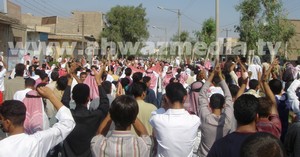 Amnesty International has issued an urgent action appeal on behalf of scores of Ahwazi Arabs, including children, arrested during the Eid-al-Adha protests in Ahwaz City on 11 January.
The leading human rights organisation listed the names of seven of those arrested and being held in custody. Five of those listed by Amnesty are under the age of 21, including an 11-year-old and a 14-year-old. The other two are imams Saleh 'Abidawi and Sheikh Saleh al-Haidari. Amnesty states that they are among scores of those arrested following demonstrations "demanding an end to the persecution of Arabs, poverty and unemployment among Arabs, and the release of political prisoners arrested following unrest in Khuzestan province which began in April 2005." The group says that those arrested could be at risk of torture. It has also highlighted reports on Sheikh al-Haidari's hunger strike, which were originally published by the Mohammara News Agency (MONA).
Amnesty says it has received reports of three killings of demonstrators by security forces. The British Ahwazi Friendship Society (BAFS) has a list of five names of those killed, but the number could be higher.
Links
Amnesty International Urgent Action - 1 February
Liberty or Death for Ahwaz Imam on Hunger Strike - BAFS report, 29 January
Photos of two Ahwazis martyred by Iran - BAFS report, 26 January
Iran: More arrests in Ahwaz - BAFS report, 20 January
Iran authorities arrest hundreds and shoot demonstrators in Ahwaz - BAFS report, 17 January
Iran's crack-down as Ahwaz Eid protests continue - BAFS report, 13 January
Iran security forces attack Ahwazi anti-government protest - BAFS report, 12 January
Labels: Amnesty , intifada
permalink
keywords: ahvaz ahwaz ahwazi arabistan khuzestan khuzistan khuzestani arab arabistan iran iranian human rights security oil news ahmadinejad ethnic cleansing
.......................................................................................
10 December, 2005
Amnesty International published an urgent action this week highlighting the incommunicado detention and possible torture of four Ahwazi Arabs who participated in demonstrations by Arabs during the Eid al-Fitr celebrations.
The detainees include the poet 23-year-old poet Nasr Daraji (also known as Firouz Abou Farhan), who is a supporter of Arab rights and had allegedly helped lead the Eid protests. Brothers Karim and Abdulali Douraghi as well as a man known only by his surname, Eshagi, were also named in the Amnesty report as being potential victims of torture.
According to the Amnesty report, Daraji had fled his family home after friends had warned him that he was on a "wanted" list: "He went into hiding, but returned to his home late in the night of 6 November, to visit his aging parents and get some clean clothing. The house was immediately raided by police and he was arrested at about 3am. Police reportedly beat his mother, who is aged about 65 and suffering from diabetes, when she asked why her son was being arrested and where he was taken."
The Eid demonstration was intended by the organisers to be a peaceful show of Arab identity and culture, but police attacked the crowd with tear gas grenades as the marchers approached the city's 5th bridge and beat and arrested youths. Some Ahwazi homes raised black flags in protest at the regime's repression during Eid.
The regime tried to portray the demonstration as a separatist ploy to generate unrest, claiming that a group called the Arab People's Group had staged a riot. No group of this name exists. Protests by Ahwazi Arabs are largely the result of economic deprivation and political and cultural oppression, with the government's own statistics revealing high levels of unemployment, poverty, illiteracy and child malnutrition. The Amnesty report stated that "the Arab population do not feel they have benefited as much from the oil revenue as the Persian population; historically they have been marginalised and discriminated against, for instance being denied the right to an education in their own language."
The march and demonstration were largely a show of local defiance against state repression, which has increased following Mahmoud Ahmadinejad's installation as president. More than 200 demonstrators were arrested during the Eid protest. The security forces were ordered to attack by General Amir Hayat Moghadam, recently appointed the Governor of Khuzestan by President Ahmadinejad. He had warned the demonstrators that any Ahwazi Arab wearing traditional Arabic clothing would be arrested, indicating that the regime would not tolerate any display of Arabic culture.
Days before the Eid protests, 81 Ahwazi Arabs were arrested while conducting a cultural play called Mahibis , a popular event performed during iftaar , following fasting in the month of Ramadan. The arrested included Zahra Nasser-Torfi, a feminist leader and director of the Ahwaz Al-Amjad cultural center, Arab-Iranian poet Hamid Haydari and the entire Mojadam family - Mohammad Mojadam, Hamid Mojadam, Mehdi Mojadam, Rasoul Mojadam, Khaled Bani-Saleh and Hassan Naisi. These arrests were a contributing factor to the Eid protests.
Tensions have also been running high over the arrest of seven sons and close relatives of Arab tribal leader Hajj Salem Bawi. In October, two of his sons were sentenced to death for alleged insurrection. Their executions will be carried out if the Supreme Court approves the death sentence issued by the lower court. All seven have been tortured in prison. Previous Arab political detainees have been lynched or executed summarily while in prison and their bodies have been dumped in the Karun River.
Khuzestan is off-limits to reporters and outside observers while maintaining state of siege of the province whose population is 70 per cent is indigenous Arab. Al-Jazeera was banned in the province after it covered demonstrations by Arabs against the government's plan to reduce the proportion of Arabs in the province to a third of the total population.
The Amnesty International report can be downloaded by clicking here .
Labels: Amnesty , human rights
permalink
keywords: ahvaz ahwaz ahwazi arabistan khuzestan khuzistan khuzestani arab arabistan iran iranian human rights security oil news ahmadinejad ethnic cleansing
.......................................................................................
03 November, 2005
Amnesty International highlighted the possibility of the imminent execution of the sons of Ahwazi Arab tribal leader Hajj Salem Bawi in a report published on Wednesday. The text of the report (AI Index MDE 13/065/2005) is below:
-->Iran: Further information on fear of torture and ill-treatment / Incommunicado detention and new concern: Death Sentence. -->
Imad Bawi and his brother Zamel Bawi have reportedly been sentenced to death. It is not known what they were convicted of, or whether there will be an appeal. If there is no appeal, and the sentence goes directly to the Supreme Court for ratification, they could be executed at any time.
The brothers' father, Hajj Salem Bawi, was reportedly released on 28 August. He apparently met three of his sons while he was held in Amaniya Prison, in the city of Ahwaz. He could see that they had been ill-treated.
The five Bawi brothers and their cousin Asad Bawi were reportedly arrested on 11 August, and Hajj Salem Bawi later that day when he made enquiries about their whereabouts. It is not known precisely when Mansour Tayouri or Hassan Boughedar were arrested. The Bawi family are prominent in Ahvaz, in the province of Khuzestan, which is home to most of Iran's Arab minority. Relatives have reportedly claimed that at least three of the detainees have been tortured physically and psychologically.
Labels: Amnesty , death penalty
permalink
keywords: ahvaz ahwaz ahwazi arabistan khuzestan khuzistan khuzestani arab arabistan iran iranian human rights security oil news ahmadinejad ethnic cleansing
.......................................................................................
19 April, 2005
Amnesty International has launched an appeal on behalf of Ahwazi Arabs arrested during demonstrations against ethnic cleansing last weekend.
The human rights organisation stated that Kazem Mojadam, Abdoulghader Hamadi, Mojahed Baldi (or Baladi), Salem Beradea, Nabi Manabi, Hassan Manabi, Sabri Houzedar Sefed and at least 130 others currently in detention were arbitrarily arrested and are at risk of torture.
AI's urgent appeal stated that "They are not known to have been charged, or to have had access to legal representation, their families or any medical treatment."
"There are unconfirmed reports that at least 29 people have been killed in the disturbances, and up to 500 injured," said Amnesty. "The security forces have reportedly sealed off some areas of the city of Ahvaz, and cut their power supply, telephone connections and water. They have reportedly used excessive force, possibly including extrajudicial executions, after demonstrators allegedly killed up to seven police or security officials. Reports allege that they are now operating a 'shoot-to-kill' policy."
>> Click here to view Amnesty's Urgent Appeal on the detentions in Khuzestan
Labels: Amnesty , intifada
permalink
keywords: ahvaz ahwaz ahwazi arabistan khuzestan khuzistan khuzestani arab arabistan iran iranian human rights security oil news ahmadinejad ethnic cleansing
.......................................................................................
