




The Iranian regime has deployed foreign militants, including members of the Lebanese Hezbollah, to break up the strike by over 2,000 workers at the Haft Tappeh sugar cane refinery.
The extremist Shia militias from Iraq, Afghanistan, Lebanon and other countries where Iran has established terrorist organisations are being stationed at the local police station, under the direction of the Revolutionary Guards. The strike is now in its fifth day ( click here for more information ).
The workers, the majority of whom are Ahwazi Arabs, are protesting against months of unpaid wages, the lack of democratic trade union organisation and the effects of economic liberalisation on the sugar sector, which has led to an influx of cheap sugar imports that has devastated privately owned sugar producers. They have also demanded the resignation of the provincial governor; Khuzestan has seen frequent changes in the provincial governorship since the Ahwazi uprising in April 2005.
Earlier, a worker who wished to remain anonymous said: "Government forces have tried to prevent the protests but they have failed. The governor told the workers that the issue is out of his hands and that the security services will take action against the workers who he claims want a riot. This means that our demands for wages are regarded as an act of disorder and anyone who seek his rights he should be beaten. Are the workers slaves to work without payment?"
A protesting Ahwazi Arab worker told Radio Farda that "the Islamic Republic of Iran helps Palestine and Arab countries, how come they have money to help them but they don't to pay us?"
permalink
keywords: ahvaz ahwaz ahwazi arabistan khuzestan khuzistan khuzestani arab arabistan iran iranian human rights security oil news ahmadinejad ethnic cleansing
.......................................................................................
02 October, 2007
 The Iranian regime is despatching security forces to quash protests by striking workers at the Haft Tapeh (Saba atlal) sugar cane factory.
Around 2,500 workers, mostly Ahwazi Arabs, have held three days of protest in Shoush (Susa).
Abu Al-Fazel Abidini, an independent journalist from Ahwaz, told Radio Farda : "Special forces came to the region from Ahwaz city and other cities. Some of the forces are based in Khansari, some at the factory and the rest in different areas in Shoush."
He added that the security forces were filming the protesting workers in order to pursue them later.
Four workers were arrested on Sunday but later released. The Shoush governor has threatened mass arrests if the protests continue. Workers have called on the provincial governor to block the sale of sugar cane plantations in order to protect the industry, which sustains thousands of households. However, the governor has refused to intervene.
A worker who wished to remain anonymous said: "Government forces have tried to prevent the protests but they have failed. The governor told the workers that the issue is out of his hands and that the security services will take action against the workers who he claims want a riot. This means that our demands for wages are regarded as an act of disorder and anyone who seek his rights he should be beaten. Are the workers slaves to work without payment?"Ù
Click here for further information on the protests in Haft Tapeh
Labels: labour
permalink
keywords: ahvaz ahwaz ahwazi arabistan khuzestan khuzistan khuzestani arab arabistan iran iranian human rights security oil news ahmadinejad ethnic cleansing
.......................................................................................
01 October, 2007
Three thousand workers from the Haft Tapeh (Saba atlal) Sugar Cane Company held demonstrations outside the Khuzestan provincial governor's office in Shoush city (Susa) on Saturday demanding their wages.
A protesting Ahwazi Arab worker told Radio Farda that "the Islamic Republic of Iran helps Palestine and Arab countries, how come they have money to help them but they don't to pay us?"
Another worker believes that the currently the company management policy is "exhausting labours and encouraging them to leave the company in order to possess their lands."
The workers intend to continue their peaceful demonstrations outside the governor's office.
On 25 August, workers at Haft Tapeh Sugar Cane Company sent a letter to the International Labour Organisation (ILO) informing them that if the authorities did not respond to their demands for payment, they will resume industrial action. They had staged strike action on 11 July. A labour activist said: "We have held 15 strikes since the beginning of the last year, involving thousands of workers and clerks at this company, but each time the authorities failed to abide by their pledge to solve the problems."
Worker demands at the sugar company include:
- the payment of all salaries in arrears
- an end to the sale of foreign sugar on the Iranian market by "mafia" groups
- the right to labour representation
- a rise in salaries to reflect the rising cost of living brought about by poor weather
- right for workers to participate in the election of workers' representatives
- retirement of those workers who have reached retirement age
- provision of adequate safety equipment
- dismissing the company's board of directors
- ending threats to workers.
Labour activists have set a deadline of 27 September for the government to respond to their demands or they will resume industrial action and demonstrations in Ahwaz. A labour activist at Hafttapeh said: "If we had a trade union it would defend our rights, just like the bus workers syndicate in Tehran."
Privately-owned sugar mills in Khuzestan have suffered as a result of trade liberalisation, which has led to unrestricted imports of sugar. This has led to bankruptcy, non-payment of wages, redundancy and civil unrest.
According to labour activists, the Ministry of Intelligence has taken over the management of the sugar cane projects. However, Mesbah Yazdi, the head of an Iranian sugar "mafia" gang responsible for under-cutting locally produced sugar with cheap foreign imports, has called for the privatisation of "failed" sugar mills taken over by the government.
On 12 September, the Human Rights and Democracy Activists of Iran group published a statement in support of the 5,000 striking workers in Hafttapeh. The group also supported demands for
- an elected committee of workers' representatives
- ending the casualisation of labour and making temporary positions permanent
- an increase in salaries
- providing housing to workers
The sugar industry is built on the suffering of Ahwazi Arabs, dating back to 1962 when US businessman David Lillington's investment in the sector led to the confiscation of 68,500 hectares of Arab-owned land for the purpose of sugar cane cultivation ( click here for more information ).
Nasser Bani Assad, spokesman for the British Ahwazi Friendship Society, said: "Mahmoud Ahmadinejad came to power proclaiming that he would tackle corruption and poverty. Under his administration, the situation facing Ahwazi workers is worsening. Instead of backing the workers, he is calling out the troops to repress them. If they refuse to work, they lose their jobs. This is not an option in a region like Ahwaz (Khuzestan), where unemployment is high, particularly among ethnic Arabs.
"After months of wage arrears many feel they have nothing to lose by going on strike and taking to the streets in protest. Workers are struggling to feed their families and pay for housing. Yet, the Ahwaz region is one of the most oil rich in the world. The oil revenue is going straight into the pockets of the mullahs while workers are forced into virtual slavery. Iran is breaking international labour codes and should be chastised by the international community for its poor treatment of workers."
Labels: labour
permalink
keywords: ahvaz ahwaz ahwazi arabistan khuzestan khuzistan khuzestani arab arabistan iran iranian human rights security oil news ahmadinejad ethnic cleansing
.......................................................................................
27 September, 2007
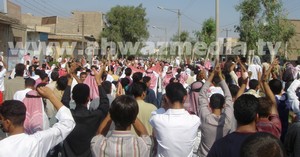 The Arab-majority region in Iran's restive south-west has been swept up in a wave of strikes and protests by workers upset by non-payment of wages by bankrupt industries.
Although the protests have been peaceful, the government has responded with force but has failed to meet any of the demands lodged by workers who are facing increasing hardships. Worker unrest comes a year after similar protests by workers in the port and ship-building industries in Mohammerah (Khorramshahr)
In Ahwaz City, a peaceful protest by 150 workers from a mothballed paper mill in Shoushtar (Tostar) was broken up by Iranian forces using tear gas and baton charges, with five workers reportedly beaten and injured, according to Radio Farda .
Abu Al-Fazel Abidini, a journalist from Ahwaz, told Radio Farda: "Over the past year and a half, these workers have been repeatedly asking the Khuzestan provincial government to reopen the factory and receive their delayed salaries. They have only received one or two months of salaries and haven't been given any official response to their demands."
He added: "They also held three demonstrations in front of President's office, but they were met with ruthless attacks [by the security services]. On Tuesday [25 September], workers gathered to talk to the provincial governor to tell him their problems, including seven months of salary arrears. They also demanded that insurance be paid and the factory reopened following its closure due to financial problems. These workers have suffered many problems during recent months. Most of these workers are tenants and eleven of them have been hospitalised in mental hospitals and have psychological problems. Some of the workers faced family problems which have ended in divorce. The 230 factory workers cannot send their children to the schools and universities due to financial problems."
The clamp-down at the paper mill comes weeks after 600 workers at the "Gama" company and 120 workers at "Pars Hassas" in Asloeyyiah went on strike due to three months of salary arrears. The Gama company sacked 40 workers involved in the strike. The Pars Hassas company, a refinery contractor, has also threatened to dismiss striking workers. ( click here for further details )
On 25 August, workers at Hafttapeh (Saba-atlal) Sugar Cane Company sent a letter to the International Labour Organisation (ILO) informing them that if the authorities did not respond to their demands for payment, they will resume industrial action. They had staged strike action on 11 July. A labour activist said: "We have held 15 strikes since the beginning of the last year, involving thousands of workers and clerks at this company, but each time the authorities failed to abide by their pledge to solve the problems."
Worker demands at the sugar company include:
- the payment of all salaries in arrears
- an end to the sale of foreign sugar on the Iranian market by "mafia" groups
- the right to labour representation
- a rise in salaries to reflect the rising cost of living brought about by poor weather
- right for workers to participate in the election of workers' representatives
- retirement of those workers who have reached retirement age
- provision of adequate safety equipment
- dismissing the company's board of directors
- ending threats to workers.
Labour activists have set a deadline of 27 September for the government to respond to their demands or they will resume industrial action and demonstrations in Ahwaz. A labour activist at Hafttapeh said: "If we had a trade union it would defend our rights, just like the bus workers syndicate in Tehran."
Privately-owned sugar mills in Khuzestan have suffered as a result of trade liberalisation, which has led to unrestricted imports of sugar. This has led to bankruptcy, non-payment of wages, redundancy and civil unrest.
According to labour activists, the Ministry of Intelligence has taken over the management of the sugar cane projects. However, Mesbah Yazdi, the head of an Iranian sugar "mafia" gang responsible for under-cutting locally produced sugar with cheap foreign imports, has called for the privatisation of "failed" sugar mills taken over by the government.
On 12 September, the Human Rights and Democracy Activists of Iran group published a statement in support of the 5,000 striking workers in Hafttapeh. The group also supported demands for
- an elected committee of workers' representatives
- ending the casualisation of labour and making temporary positions permanent
- an increase in salaries
- providing housing to workers
The sugar industry is built on the suffering of Ahwazi Arabs, dating back to 1962 when US businessman David Lillington's investment in the sector led to the confiscation of 68,500 hectares of Arab-owned land for the purpose of sugar cane cultivation ( click here for more information ).
Nasser Bani Assad, spokesman for the British Ahwazi Friendship Society, said: "Mahmoud Ahmadinejad came to power proclaiming that he would tackle corruption and poverty. Under his administration, the situation facing Ahwazi workers is worsening. Instead of backing the workers, he is calling out the troops to repress them. If they refuse to work, they lose their jobs. This is not an option in a region like Ahwaz (Khuzestan), where unemployment is high, particularly among ethnic Arabs.
"After months of wage arrears many feel they have nothing to lose by going on strike and taking to the streets in protest. Workers are struggling to feed their families and pay for housing. Yet, the Ahwaz region is one of the most oil rich in the world. The oil revenue is going straight into the pockets of the mullahs while workers are forced into virtual slavery. Iran is breaking international labour codes and should be chastised by the international community for its poor treatment of workers."
Labels: labour
permalink
keywords: ahvaz ahwaz ahwazi arabistan khuzestan khuzistan khuzestani arab arabistan iran iranian human rights security oil news ahmadinejad ethnic cleansing
.......................................................................................
03 May, 2007
 A major political row has erupted over the military-industrial
Arvand Free Zone
following the sacking of its chairman Dr Mohammed Reza Abbasi, according to
a report by the semi-official Iranian Labour News Agency
.
A major political row has erupted over the military-industrial
Arvand Free Zone
following the sacking of its chairman Dr Mohammed Reza Abbasi, according to
a report by the semi-official Iranian Labour News Agency
.
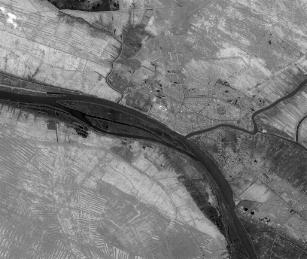
The AFZ has been created from land confiscated from indigenous Arabs living along the Shatt al-Arab in a 155 sq km area. It is the latest development in Iran's campaign of ethnic cleansing of its restive Arab population from the border with Iraq. The focus of the row is the four billion rials (US$435,000) earned every day by the AFZO from activities from the port of Khorramshahr. Dr Abbasi stood in the way of those who wished to transfer this income to Anzali, a port on the Caspian Sea in the northern Gilan province.
Dr Abbasi, a supporter of President Mahmoud Ahmadinejad, was dismissed from his job by Arvand Free Zone Organisation (AFZO) managers connected to a top official in the Iranian government who wanted full control over the zone and its income. He was appointed chair of the AFZO on 16 August 2006 under a three year contract, but was replaced by Ramazan Ahmadi.
Syed Baheralolum, the chief inspector of the AFZ, lent his support to Abbasi, saying "a high-ranking government manager disliked Dr Abbasi from the beginning. This high-positional manager had previously vetoed the order appointing Dr Abbasi as AFZO chair and appointed someone else. The President intervened to ensure that Abbasi's position was secured."
Abbasi claimed he was sacked because he was not part of a corrupt and politically well-connected clique running the AFZO, accusing local members of parliament of bribing the organisation's officials. In an interview with ILNA, he said: "My aim was to implement a management based on [Islamic] revolutionary principles. As such, I refused to provide benefits to certain groups and I resisted their demands to share profits. Consequently, they discharged me using calumny, fiction and sedition."
According to ILNA, Abbasi's supporters are holding a hunger strike in Jame'a mosque in Khorramshahr (Mohammerah) until he is reinstated and they have received a response from President Mahmoud Ahmadinejad. Abbasi claimed his term as AFZO chairman saw a number of investment projects, with 100 projects to be started in 2007. However, according to Abbasi, corruption has upset efforts to lure more foreign investment.
Abbasi claimed that "some people do not want Khorramshahr and Abadan to be developed." He accused those who undermined his work of "obstructionism" and counter to Iran's revolutionary ideals.
Baheralolum claims that poor results for President Ahmadinejad's supporters in recent municipal elections prompted some political opportunists to move against Abbasi. He accused the free zones Secretariat High Council, provincial and municipal authorities and members of parliament of obstructionism and claimed that "officials in the province and cities were working in a way that made it impossible for the chair of AFZO to carry out his job." He added that "on one occasion I witnessed one of the board members ask for bribes. This person has instated his nephews to monitor Dr Abbasi and issue false reports against him."
Baheralolum stated that an MP gathered a petition against him for backing Abbasi and that an arrest warrant has now been issued against him. In his interview with ILNA, Baheralolum claimed that tribal leaders and the families of war martyrs had joined the protest over Abbasi's sacking and stated that up to 3,000 riot police had been sent to Abadan to prevent demonstrations.
Nasser Bani Assad, a spokesman for the British Ahwazi Friendship Society (BAFS), said: "The struggle over the AFZO is a consequence of the struggle between Iranian hardliners and so-called reformists. It seems that opponents of President Ahmadinejad within the establishment have used underhand tactics against Dr Abbasi.
"While Abbasi is portraying himself as a 'man of the people', there is no evidence that he has done anything to redistribute wealth from the AFZ to the local population. Abbasi has not stopped the mass land confiscation effort conducted by AFZO officials, which is leading to the ethnic cleansing of local Arab inhabitants.
"The Abbasi affair demonstrates that sections of the establishment are prepared to play on local grievances to undermine their rivals. Baheralolum's statements are close to incitement to riot, suggesting the President's own supporters are prepared to provoke ethnic unrest for their own ends. The result will be arrests, torture and executions. Not one Iranian government official or Iranian politician cares what happens to the indigenous Arab population that has suffered decades of neglect, poverty and displacement. The current row is no exception.
"BAFS calls on Ahwazi Arabs not to become pawns in Tehran's internal political battles and to assert their own political agenda. Ahwazis have heard many empty promises from those who pretend to be on their side, but have later been betrayed. Neither Abbasi nor his opponents have done anything to stop the criminal land confiscation campaign along the Shatt al-Arab, conducted for control of the profits of the Arvand Free Zone Organisation. This row is about greed, not ideals."
permalink
keywords: ahvaz ahwaz ahwazi arabistan khuzestan khuzistan khuzestani arab arabistan iran iranian human rights security oil news ahmadinejad ethnic cleansing
.......................................................................................
09 October, 2006
Ahwazi port workers have clashed with police in recent days during protests at the non-payment of wages.
Hundreds of workers employed at port facilities and ship building industries in Mohamareh (Khorammshahr) and Abadan, situated on the left bank of the Shatt Al-Arab waterway, are complaining that their wages are months in arrears. In the past week, they have protested outside the offices of the provincial governor demanding action and have staged three-day strikes. Instead of respecting their right to lawful protest, trade union membership and labour rights, port owners have sacked those who have protested against non-payment.
The Iranian Labour News Agency (ILNA) has reported hundreds of job losses of protesting workers at Mohamereh port facilities ( click for further details ). This includes 20 workers employed by Armin Gostar in Abadan who were sacked for protesting against non-payment of wages and lack of labour rights, according to ILNA.
Employees of Jangineh Brick Baking Factory have also staged protests outside the governor's office in Ahwaz, the provincial capital, claiming they had not been paid for 12 months and had not received annual bonuses for two years.
Nasser Bani Assad, spokesman for the British Ahwazi Friendship Society, said: "Mahmoud Ahmadinejad came to power proclaiming that he would tackle corruption and poverty. Under his administration, the situation facing Ahwazi workers is worsening. Instead of backing the workers, he is calling out the troops to repress them. If they refuse to work, they lose their jobs. This is not an option in a region like Ahwaz (Khuzestan), where unemployment is high, particularly among ethnic Arabs.
"After months of wage arrears many feel they have nothing to lose by going on strike and taking to the streets in protest. Workers are struggling to feed their families and pay for housing. Yet, the Ahwaz region is one of the most oil rich in the world. The oil revenue is going straight into the pockets of the mullahs while workers are forced into virtual slavery. Iran is breaking international labour codes and should be chastised by the international community for its poor treatment of workers."
Labels: labour
permalink
keywords: ahvaz ahwaz ahwazi arabistan khuzestan khuzistan khuzestani arab arabistan iran iranian human rights security oil news ahmadinejad ethnic cleansing
.......................................................................................
25 September, 2006
Ahwazi Arabs working in the ship-building industry along the Shatt Al-Arab waterway are growing increasingly frustrated over non-payment of wages.
According the official Iranian Labour News Agency (ILNA), ship workers in the port town of Abadan have not been paid for six months and have held a 72 hour strike in protest. The strike was called off after the management agreed to pay the workers. However, according to ILNA, workers have yet to be paid.
The trade union movement in Ahwaz's ship and oil industries are an important base for Ahwazi Arab political mobilisation and has become more militant since Iran's President Mahmoud Ahmadinejad came to power in August 2005. Many trade unionists have links to banned Ahwazi Arab parties seeking equal rights.
Labels: labour
permalink
keywords: ahvaz ahwaz ahwazi arabistan khuzestan khuzistan khuzestani arab arabistan iran iranian human rights security oil news ahmadinejad ethnic cleansing
.......................................................................................
09 February, 2006
Majid Naasseri-Nejad, a member of parliament representing the Arab populated area of Fallahieah (Shadegan), called on Iran's Oil Minister Kazem Vaziri-Hamaneh to ensure equitable employment practices in the oil-rich Arab-majority province of Khuzestan or face impeachment, according to reports.
Naasseri-Nejad claimed that the Oil Ministry had been placing recruitment advertisements in Shiraz, Isfahan, Mashhad, Tehran and other cities and provinces, but was not actively recruiting from the local Arab population. Some Arab districts are enduring unemployment rates of up to 90 per cent, he claimed.
The practice of moving non-Arabs into the area to fill job vacancies is highly controversial among the impoverished local Ahwazi Arabs. Discriminatory employment practices are rooted in the government's long-term programme of reducing the proportion of Arabs in the province from 70 per cent to around a third through "ethnic restructuring". This was outlined in a top-secret letter written by the then Vice-President Mohammad Ali Abtahi which was leaked last year. The Abtahi letter led to an Ahwazi uprising that was crushed by the regime, killing more than 160 people.
Last month, Portuguese Socialist MEP Paulo Casaca, who heads the European Parliament's delegation to NATO, condemned the Iranian government's policies in Khuzestan as "ethnic cleansing".
Links
Abtahi's secret letter on ethnic restructuring
Paulo Casaca's condemnation of ethnic cleansing against Ahwazis - BAFS, 19 January
Labels: labour , land , poverty
permalink
keywords: ahvaz ahwaz ahwazi arabistan khuzestan khuzistan khuzestani arab arabistan iran iranian human rights security oil news ahmadinejad ethnic cleansing
.......................................................................................
