



 British Foreign Minister Kim Howells has voiced his opposition to the planned execution of Ahwazi Arabs, who were convicted of "waging war on God" in Iran's secret revolutionary court in Ahwaz City (
click here for his full response
).
British Foreign Minister Kim Howells has voiced his opposition to the planned execution of Ahwazi Arabs, who were convicted of "waging war on God" in Iran's secret revolutionary court in Ahwaz City (
click here for his full response
).
In a reply to a written question by Conservative MP Graham Stuart, Mr Howells, Minister of State with responsibility for the Middle East portfolio, said that the UK government had "closely monitored" the cases of 11 men facing execution. He said: "We oppose and condemn the death penalty in all its forms. In this case, we have specific concerns about the conduct of the trial including whether it was held secretly behind closed doors; whether a jury was present; and whether the defendants had adequate access to lawyers before the trial.
"The presidency of the EU raised our concerns about this case with the Director General of the International Department of the Judiciary on 20 November and highlighted the EU's longstanding objection to the death penalty in all its forms. We will continue to monitor this case closely with EU colleagues."
Mr Howells' condemnation coincides with an Early Day Motion (EDM) in the House of Commons condemning the trials and executions ( click here for more information ). The EDM was drafted by Labour MP Chris Bryant and supported by MPs across the political spectrum, from Jeremy Corbyn on the left to Michael Gove on the right. It follows a successful move by British Green MEPs Caroline Lucas and Jean Lambert to secure unanimous cross-party condemnation in the European Parliament of the planned execution of the 11 Ahwazi activists on 16 November ( click here for further details ). On 21 November the UN General Assembly approved a Canadian-sponsored motion condemning Iran's "increasing discrimination and other human rights violations against ethnic and religious minorities" and its "persistent failure in Iran to comply fully with international standards in the administration of justice - including the absence of due process of law, the refusal to provide fair and public hearings, and the denial of the right to counsel by detainees." ( click here for further information )
Related stories: :
British MPs condemn Ahwazi trials - 28 November
Executions of 11 Ahwazis Delayed - 23 November
UN General Assembly Criticises Iran's Discrimination of Minorities - 23 November
Ahwazis and Balochis demonstrate against Iran regime - 19 November
Swedish MPs appeal to Ahmadinejad over executions - 19 November
UNPO Continues Appeal to Halt Executions of Ahwazi Arabs in Iran - 19 November
Iran sentences three more Ahwazis to death - 18 November
European Parliament condemns Iran over Ahwazi executions - 16 November
"The barbaric deaths meant to spread fear" - Daily Mail - 16 November
Balochis and Azeris rally against Iran's executions - 16 November
Iran: Flawed trials and injustice - 15 November
Ahwazi men "confess" to belonging to obscure militant group - 15 November
UNPO Call to Stop Public Executions of Ahwazi Arabs in Iran - 14 November
Senior European Parliamentarian condemns Iran's ethnic cleansing - 14 November
Eleventh Ahwazi added to the list of those facing execution - 14 November
"Iran is guilty of ethnic cleansing" - Green MEPs - 14 November
Iran regime shows forced "confessions" on Khuzestan TV - 13 November
Mass executions of Ahwazis threaten Middle East security - 12 November
Ten Ahwazi Arabs to hang in public - 11 November
Psychologist sentenced to 20 years imprisonment - 18 October
"27 Ahwazi dissidents in custody" - Emadeddin Baghi - 9 September
Death sentence for Ahwazis confirmed by Supreme Court - 31 July
Son of Ahwazi sentenced to death appeals to Kofi Annan - 27 July
Urgent Appeal to EU Foreign Affairs Chief over Iran Executions - 11 July
Iran: Retry Ethnic Arabs Condemned to Death - 24 June
UNPO Urgent Appeal Concerning Ahwazi Executions
Ahwazis face arrest, deportation and execution - 1 June
Amnesty International: Eleven Ahwazis Face Execution - 17 May
Iran prepares for new round of executions in Ahwaz - 13 May
Executed: Young Men Hung by Iranian Tyrants - 2 March
Iran prepares to execute tribal family - 19 February
Iran sentences seven over Ahwaz bombings - 15 February
Iran increases repression in Ahwaz - 8 February
Ahwaz Bombings Come After Weeks of Unrest - 24 January
Labels: death penalty , UK
permalink
keywords: ahvaz ahwaz ahwazi arabistan khuzestan khuzistan khuzestani arab arabistan iran iranian human rights security oil news ahmadinejad ethnic cleansing
.......................................................................................
 Thirty-three British MPs, from Labour, Conservative, Liberal Democrat, Plaid Cymru (Party of Wales) and Northern Ireland's Social Democrat and Labour Party, have signed an Early Day Motion condemning as unfair the recent trials of 10 Ahwazi Arab rights activists (
click here for EDM text
). They are calling on the Iranian government to commute the death sentences. Since the EDM was submitted, a further five Ahwazi activists are known to have been sentenced to death and many more are awaiting trial.
Thirty-three British MPs, from Labour, Conservative, Liberal Democrat, Plaid Cymru (Party of Wales) and Northern Ireland's Social Democrat and Labour Party, have signed an Early Day Motion condemning as unfair the recent trials of 10 Ahwazi Arab rights activists (
click here for EDM text
). They are calling on the Iranian government to commute the death sentences. Since the EDM was submitted, a further five Ahwazi activists are known to have been sentenced to death and many more are awaiting trial.
The EDM was drafted by Labour MP Chris Bryant and supported by MPs across the political spectrum, from Jeremy Corbyn on the left to Michael Gove on the right. It follows a successful move by British Green MEPs Caroline Lucas and Jean Lambert to secure unanimous cross-party condemnation in the European Parliament of the planned execution of the 11 Ahwazi activists on 16 November ( click here for further details ). This was followed on 21 November by a Canadian sponsored UN General Assembly resolution that condemned Iran's "increasing discrimination and other human rights violations against ethnic and religious minorities" and its "persistent failure in Iran to comply fully with international standards in the administration of justice - including the absence of due process of law, the refusal to provide fair and public hearings, and the denial of the right to counsel by detainees." ( click here for further information )
Commenting on the victimisation of Iran's Arab minority, Mr Bryant said: "Iran's human rights record is pretty grisly on a wide range of issues, but the Ahwazi Arabs have suffered more than most from the authorities in Tehran.
"Of course Britain should try to have a good relationship with Iran, but it must be on the basis of an honest criticism of their human rights abuses.
"The widespread use of torture to extract so-called confessions, the refusal to allow defendants to have proper consultations with their lawyers before a trial begins, and the fact that many trials last less than a day and have no witnesses, means that many of these convictions would be considered completely unsound in any civilised country.
"I very much hope that the UK and the European Union will call on Iran to commute the death sentences," said Mr Bryant.
Daniel Brett, Chairman of the British Ahwazi Friendship Society, said: "The Ahwazi community, particularly the families of those facing execution, will be thankful of the international solidarity with the men on trial and the efforts of British politicians such as Chris Bryant, Caroline Lucas and Jean Lambert to campaign on their behalf. The solidarity shown by the British and European Parliaments and the UN General Assembly has given Ahwazis a sense of hope and optimism, showing that there is an alternative to armed conflict to advance their campaign for equality, freedom and justice.
"It was widely expected that the death sentences would be carried out two weeks ago, following forced confessions by the 11 Ahwazi human rights activists on Khuzestan TV. However, there appears to be a delay. We hope that this is in response to international and domestic pressure and that the government is considering either commuting the death penalties, ordering a retrial that meets international standards and Iran's own obligations, or that the men will be set free.
"No country's judicial system is perfect. But in Iran's case, these miscarriages of justice appear to be the result of political interference at the highest level. Is the Iranian government strong and confident enough to admit the mistakes in these cases? It will certainly prove its critics wrong if it does."
The following is the text of the Early Day Motion in the House of Commons:
EDM 128 EXECUTION OF AHWAZI ARABS
16.11.2006
Moved by Chris Bryant, MP
That this House notes the long-running persecution of the Ahwazi Arabs in the south west Khuzestan region of Iran by the authorities in Tehran; further notes that 10 Ahwazi Arabs named Ali Motairi, Abdullah Solaimani, Abdulreza Sanawati (Zergani), Ghasem Salamat, Mohamad Chaab Pour, Abdulamir Farajullah Chaab, Alireza Asakreh, Majed Alboghubaish, Khalaf Khaziri and Malek Banitamim have been sentenced to death; supports Amnesty International and Human Rights Watch in their complaints that Iranian justice has meant that many Ahwazi Arab defendants have had no opportunity to meet their lawyers before their case has begun, have had one-day trials in secret with no witnesses and have had false confessions extracted through torture; and calls on the Iranian Government to respect the human rights of all its peoples and to commute the death penalty in these cases.
Signatories:
Chris Bryant (Labour)
Michael Gove (Conservative)
Bob Russell (Liberal Democrat)
Peter Bottomley (Conservative)
Andrew George (Liberal Democrat)
David Drew (Labour)
Mark Durkan (Social Democrat and Labour Party)
Robert N Wareing (Labour)
Stephen Williams (Liberal Democrat)
Greg Pope (Labour)
Kelvin Hopkins (Labour)
Lynne Jones (Labour)
Elfyn Llwyd (Plaid Cymru - Party of Wales)
Albert Owen (Labour)
Derek Conway (Conservative)
Jeremy Corbyn (Labour)
Mark Williams (Liberal Democrat)
Bob Spink (Conservative)
Nick Harvey (Liberal Democrat)
Mark Lazarowicz (Labour)
Alasdair McDonnell (Social Democratic and Labour Party)
Tom Brake (Liberal Democrat)
Colin Breed (Liberal Democrat)
Martin Caton (Labour)
Derek Wyatt (Labour)
Edward Vaizey (Conservative)
Julie Morgan (Labour)
Evan Harris (Liberal Democrat)
Brian Jenkins (Labour)
Ann Cryer (Labour)
Janet Dean (Labour)
Neil Gerrard (Labour)
John Hemming (Liberal Democrat)
Related stories: :
Executions of 11 Ahwazis Delayed - 23 November
UN General Assembly Criticises Iran's Discrimination of Minorities - 23 November
Ahwazis and Balochis demonstrate against Iran regime - 19 November
Swedish MPs appeal to Ahmadinejad over executions - 19 November
UNPO Continues Appeal to Halt Executions of Ahwazi Arabs in Iran - 19 November
Iran sentences three more Ahwazis to death - 18 November
European Parliament condemns Iran over Ahwazi executions - 16 November
"The barbaric deaths meant to spread fear" - Daily Mail - 16 November
Balochis and Azeris rally against Iran's executions - 16 November
Iran: Flawed trials and injustice - 15 November
Ahwazi men "confess" to belonging to obscure militant group - 15 November
UNPO Call to Stop Public Executions of Ahwazi Arabs in Iran - 14 November
Senior European Parliamentarian condemns Iran's ethnic cleansing - 14 November
Eleventh Ahwazi added to the list of those facing execution - 14 November
"Iran is guilty of ethnic cleansing" - Green MEPs - 14 November
Iran regime shows forced "confessions" on Khuzestan TV - 13 November
Mass executions of Ahwazis threaten Middle East security - 12 November
Ten Ahwazi Arabs to hang in public - 11 November
Psychologist sentenced to 20 years imprisonment - 18 October
"27 Ahwazi dissidents in custody" - Emadeddin Baghi - 9 September
Death sentence for Ahwazis confirmed by Supreme Court - 31 July
Son of Ahwazi sentenced to death appeals to Kofi Annan - 27 July
Urgent Appeal to EU Foreign Affairs Chief over Iran Executions - 11 July
Iran: Retry Ethnic Arabs Condemned to Death - 24 June
UNPO Urgent Appeal Concerning Ahwazi Executions
Ahwazis face arrest, deportation and execution - 1 June
Amnesty International: Eleven Ahwazis Face Execution - 17 May
Iran prepares for new round of executions in Ahwaz - 13 May
Executed: Young Men Hung by Iranian Tyrants - 2 March
Iran prepares to execute tribal family - 19 February
Iran sentences seven over Ahwaz bombings - 15 February
Iran increases repression in Ahwaz - 8 February
Ahwaz Bombings Come After Weeks of Unrest - 24 January
Labels: death penalty , UK
permalink
keywords: ahvaz ahwaz ahwazi arabistan khuzestan khuzistan khuzestani arab arabistan iran iranian human rights security oil news ahmadinejad ethnic cleansing
.......................................................................................
Below is a joint appeal to the global human rights community by the Human Rights Activists in Iran (H.R.A.I), the Committee Defense for Human Rights in north-west of Iran (H.RN.W.I), the Kurdish Human Rights defense organization (R.M.M.K) and the Ahwazi Human Rights Organization (A.H.R.O) concerning the situation of the Evin Prison in Iran. Click here to sign the petition .
To: The Secretary General of the United Nations, The UN Human Rights Council , Amnesty International, Human Rights watch
An appeal to all Human Right Organizations of the World
Section 209 of Evin Prison in Iran is run by the Ministry of Intelligence of the Islamic Republic and except for the ministry agents no other government bodies have any control over the prison affairs.
During the last years many of Iran political prisoners have died in this Section under torture and many others kept in it have ended up being executed by firing squads or hanged. At this moment of time hundreds of similar prisoners are kept in this Section and the Ministry of Intelligence would not allow their names to be added to the long list of Iran political prisoners.
Most of these prisoners are held in solitary confinement and are constantly interrogated while under physical and psychological torture. The families of these prisoners very rarely have any information about the health or conditions of their loved ones, who are most of the time handcuffed and blindfolded, are denied of medical care and legal representation and do not even know on what charges they have been arrested. In Section 209 of Evin Prison even the very own repressive rules of the regime are not followed.
Those currently held at the Section include political dissidents, human rights activists, students, trade union officials and workers, as well as many other Iranians from all walks of life.
The following people are among the prisoners at Section 209:
Ali Akbar Mussavi Khoini, Dr. Saeed Masoori, Ahmad Batebi, Kayvan Rafii, Kianoosh Sanjari, Dr. Kayvan Ansari, Abulfazl Jahandar, Kheirullah Derakhshandi, Abdullah Al Mansouri, Ayatollah Kazemi Boroujerdi and many of his followers, as well as many prisoners from other provinces of Iran who have been transferred to Evin from their local prisons.
We, the undersigned, would therefore urge the Secretary General of the United Nations, the UN Human Rights Council, Amnesty International and Human Rights Watch to assign a special investigating committee to visit Section 209 of Evin Prison in Iran and publish a report on their findings.
1- Human Rights Activists in Iran (H.R.A.I)
2- Committee Defence for Human Rights in North-West of Iran (H.R.N.W.I)
3- Kurdish Human Rights defence organization (R.M.M.K)
4- Ahwazi Human Rights organization (A.H.R.O)
Labels: human rights , Mansouri , refugees , UN
permalink
keywords: ahvaz ahwaz ahwazi arabistan khuzestan khuzistan khuzestani arab arabistan iran iranian human rights security oil news ahmadinejad ethnic cleansing
.......................................................................................
26 November, 2006
Iranian Parliament Speaker Gholam Ali Haddad Adel has made a major gaffe in his accusation that the "enemies of Islam" are attempting to set Shi'ites and Sunnis against each other in Ahwaz.
According to the official Fars News Agency, Haddad Adel said: "Enemies of Islam intend to exercise the same policy and sow discord between the Shiites and Sunnites in a number of border provinces, such as Sistan and Balouchestan, Khuzestan, Kurdistan, etc. in a bid to hinder materialization of the goals of the Islamic Revolution and prevent our revolution from setting a paradigm for other countries." ( click here to read report )
Khuzestan province has seen an upsurge in unrest over the past 18 months, with the local Arab population rebelling against racial discrimination, land confiscation programmes and political oppression.
Nasser Bani Assad, spokesman for the British Ahwazi Friendship Society, said: "Haddad Adel's comments are sheer nonsense. He is deliberately trying to misrepresent the Ahwazi uprising as evidence of foreign attempts to divide Shia and Sunni. Up to 70 per cent of Khuzestan's population is Arab, but 80 per cent of Arabs are Shi'ite. Arab protestors have used Islamic festivals to launch mass demonstrations against the regime, but their campaign is not against Shi'ism but against the regime's anti-Arab racism. Haddad Adel is inventing conspiracy theories for the regime's ignorant sympathisers abroad, but anyone with any understanding on this region knows that there is not one hint of religious communalism in the uprising nor is any foreign government involved in instigating the rebellion."
Labels: intifada
permalink
keywords: ahvaz ahwaz ahwazi arabistan khuzestan khuzistan khuzestani arab arabistan iran iranian human rights security oil news ahmadinejad ethnic cleansing
.......................................................................................
23 November, 2006
 The following is a press release from
Arab Media Watch
, a UK-based organisation campaigning for fair coverage of Arab issues and against anti-Arab racism in the media.
The following is a press release from
Arab Media Watch
, a UK-based organisation campaigning for fair coverage of Arab issues and against anti-Arab racism in the media.
Arab Media Watch urges the media to follow the looming execution of 10 Iranian Arabs - following a flawed trial condemned by human rights groups - as well as the plight of Iran's millions of ethnic Ahwazi Arabs, who form the majority in Khuzestan province, which contains up to 90% of the country's oil reserves and is a possible location for its nuclear programme.
The most informative, in-depth reports in the British media so far this year (until 17 November) have come from the Daily Mail ( The barbaric deaths meant to spread fear, 15 November ) and the Times ( Tehran's secret war against its own people, Peter Tatchell, 10 October ).
Media coverage in general, however, has been sparse. The Financial Times has had the most coverage so far this year (14 articles), followed by BBC Online (seven), the Guardian (five), the Mail (two), and one each by the Times, the Daily Telegraph and the Independent. The Sun, the Daily Mirror, the Daily Express and the Daily Star have had no reports.
Besides the aforementioned articles in the Mail and the Times, media coverage has not been recent - ranging from 24 January to 16 April - and while focusing solely on unrest by Iranian Arabs, there has been little mention of their underlying, serious and long-standing grievances.
The Independent and the Guardian have provided no context. Of the BBC's seven articles, two had no context, while the others mentioned "alleged discrimination" and "Arab accusations" as if the human rights abuses are a matter of opinion rather than a fact that has been highlighted numerous times by respected human rights groups such as Amnesty International and Human Rights Watch. The same is true of the Telegraph article. Of the FT's 14 articles, only three provided context, while two others mentioned "allegations".
AMW chairman Sharif Hikmat Nashashibi and Daniel Brett, AMW member and chairman of the British Ahwazi Friendship Society, are available for interview.
Nashashibi: ,
Brett: ,
More information on the Ahwazi Arabs can be obtained on the BAFS website ( www.ahwaz.org.uk ) and an article on Arab Media Watch's website .
Labels: media
permalink
keywords: ahvaz ahwaz ahwazi arabistan khuzestan khuzistan khuzestani arab arabistan iran iranian human rights security oil news ahmadinejad ethnic cleansing
.......................................................................................
22 November, 2006
 Iran appears to have delayed the execution of 11 Ahwazi Arabs, whose forced confessions were shown on Khuzestan TV last week.
The 11 men are:
1. Ali Mutairi from Mashour (Mahshahr)
2. Khalaf Khazeiri from Falahiyah (Shadegan)
3. Mohamad Chaab Pour from Tostar (Shoushtar)
4. Abdullah Farajulaah Chab from Tostar (Shoushtar)
5. Abdullah Solimani from Tostar (Shoushtar)
6. Majed Albu Ghubaish from Mashour (Mahshahr)
7. Ali Reza Asakre from Falahiyah (Shadegan)
8. Ghasem Salamat from Ahwaz City
9. Abdul Reza Sanawati from Ahwaz City
10. Saeed Hemidan from Khalafiyah (Ramshir)
11. Malek Banitamim from Tostar (Shoushtar)
They were all convicted of threatening national security and "waging war on God" after one-day closed trials in which they had little or no access to lawyers. They are widely believed to have been framed for bomb attacks on oil pipelines in 2005 - had been in prison since 2000 - which the regime has blamed on the obscure dissident group, the Mohi-eldain Al-Nasir Martyrs Brigade.
The executions were due to take place on 14 November, but foreign governments have lobbied intensively to save the men's lives. On 16 November, the European Parliament voted unanimously to condemn the executions and on 21 November the UN General Assembly condemned Iran's justice system and the continued persecution of ethnic minority groups ( click here for details ).
The delay in executions is unofficial and the death sentences have not been commuted. It is thought that the executions will be carried out after Bashar Assad's visit to Tehran this weekend, in order to prevent embarrassment for the Syrian leader whose Ba'athist government was founded on the principles of pan-Arab unity.
Related stories: :
UN General Assembly Criticises Iran's Discrimination of Minorities - 23 November
Ahwazis and Balochis demonstrate against Iran regime - 19 November
Swedish MPs appeal to Ahmadinejad over executions - 19 November
UNPO Continues Appeal to Halt Executions of Ahwazi Arabs in Iran - 19 November
Iran sentences three more Ahwazis to death - 18 November
European Parliament condemns Iran over Ahwazi executions - 16 November
"The barbaric deaths meant to spread fear" - Daily Mail - 16 November
Balochis and Azeris rally against Iran's executions - 16 November
Iran: Flawed trials and injustice - 15 November
Ahwazi men "confess" to belonging to obscure militant group - 15 November
UNPO Call to Stop Public Executions of Ahwazi Arabs in Iran - 14 November
Senior European Parliamentarian condemns Iran's ethnic cleansing - 14 November
Eleventh Ahwazi added to the list of those facing execution - 14 November
"Iran is guilty of ethnic cleansing" - Green MEPs - 14 November
Iran regime shows forced "confessions" on Khuzestan TV - 13 November
Mass executions of Ahwazis threaten Middle East security - 12 November
Ten Ahwazi Arabs to hang in public - 11 November
Psychologist sentenced to 20 years imprisonment - 18 October
"27 Ahwazi dissidents in custody" - Emadeddin Baghi - 9 September
Death sentence for Ahwazis confirmed by Supreme Court - 31 July
Son of Ahwazi sentenced to death appeals to Kofi Annan - 27 July
Urgent Appeal to EU Foreign Affairs Chief over Iran Executions - 11 July
Iran: Retry Ethnic Arabs Condemned to Death - 24 June
UNPO Urgent Appeal Concerning Ahwazi Executions
Ahwazis face arrest, deportation and execution - 1 June
Amnesty International: Eleven Ahwazis Face Execution - 17 May
Iran prepares for new round of executions in Ahwaz - 13 May
Executed: Young Men Hung by Iranian Tyrants - 2 March
Iran prepares to execute tribal family - 19 February
Iran sentences seven over Ahwaz bombings - 15 February
Iran increases repression in Ahwaz - 8 February
Ahwaz Bombings Come After Weeks of Unrest - 24 January
Labels: death penalty
permalink
keywords: ahvaz ahwaz ahwazi arabistan khuzestan khuzistan khuzestani arab arabistan iran iranian human rights security oil news ahmadinejad ethnic cleansing
.......................................................................................
 The Syrian Human Rights Committee (SHRC) has denounced the deportation of another group of Ahwazi citizens living in Syria to Iran in a press released issued this week (
click here to download
).
The Syrian Human Rights Committee (SHRC) has denounced the deportation of another group of Ahwazi citizens living in Syria to Iran in a press released issued this week (
click here to download
).
Human rights organisations and the UNHCR have received credible reports that Syria deported three more UNHCR-registered refugees in addition to Saeed Saki and Faleh Abdullah Al-Mansouri (a Dutch national): Taher Mazrae, Rasool Ali Mazrae and Jamal Obaidawi (pictured).
An SHRC media spokesman claimed that Syria have breached its obligations under human rights conventions that commit it to protect recognised refugees. Syria had agreed to host the refugees and permit them to carry out their political activities. The SHRC spokesman called on the Syrian authorities to cease breaking its human rights obligations and to use their influence on Iran to release the Ahwazi detainees.
Amnesty International has previously condemned the deportation of Ahwazi Arab refugees as a violation of international law.
Currently, 11 Ahwazi Arabs are awaiting execution in Iran. Last week, four more Ahwazis - Risan Sawari, Aqil Sawari, Mohammad Ali Sawari and Jafar Sawari - were sentenced to death.
Related stories:
Iran/Netherlands: Dutch Ahwazi activist in Evin prison torture chamber - 19 October
UNHCR deeply concerned about Ahwazi refugees in Syria - 16 September
UNPO: "Iran Must End Repression against Minority Groups" - 15 August
"Syria has violated international law" - Amnesty International - 11 August
Ahwazi Arabs unite against Syrian "treachery" - 11 August
Netherlands abandons Dutch Ahwazi activist - 11 August
Syria deports Ahwazis to Iran, including Dutch national - 9 August
Ahwazis face arrest, deportation and execution - 1 July
UNPO highlights plight of Ahwazis on International Refugee Day - 20 June
UNHCR calls on Syria not to extradite Ahwazi refugees - 6 June
Syria releases three Ahwazis, but four remain in custody - 19 May
Kuwaiti newspaper publishes call for an end to Syria's anti-Ahwazi policy - 18 May
Syria's deportation scandal - 16 May
Lebanese democrats support Ahwazis - 16 May
Ahwazi Arabs arrested in Syria on Iran's request - 13 May
More arrests of Ahwazi Arabs in Syria - 15 May
Ahwazis arrested in Syria - 1 May
Labels: Mansouri , refugees , UN
permalink
keywords: ahvaz ahwaz ahwazi arabistan khuzestan khuzistan khuzestani arab arabistan iran iranian human rights security oil news ahmadinejad ethnic cleansing
.......................................................................................
 The UN General Assembly overwhelmingly voted in favour of a resolution proposed by the Canadian government which criticised Iran's appalling human rights record and its treatment of ethnic minorities (
click here for details
).
The UN General Assembly overwhelmingly voted in favour of a resolution proposed by the Canadian government which criticised Iran's appalling human rights record and its treatment of ethnic minorities (
click here for details
).
The motion (A/C.3/61/L.41), which received the support of 70 governments on Tuesday, expressed "serious concern at the continuing harassment, intimidation and persecution of human rights defenders, non-governmental organizations, political opponents, religious dissenters, webloggers and union members, among others." It comes just days after the European Parliament gave a damning indictment of the regime's human rights record, highlighting the planned execution of 11 Ahwazi Arab political activists.
The General Assembly also voiced "serious concern at a persistent failure in Iran to comply fully with international standards in the administration of justice â including the absence of due process of law, the refusal to provide fair and public hearings, and the denial of the right to counsel by detainees."
The motion also highlights "increasing discrimination and other human rights violations against ethnic and religious minorities" and calls on Iran to eliminate discrimination based on religious, ethnic or linguistic grounds. Women's rights and political freedoms were also under attack, according to the UN. The General Assembly encouraged the UN Human Rights Council and various Special Rapporteurs to pursue their work regarding Iran, and for the Assembly to continue its examination of the situation at its sixty-second session.
The Iranian regime reacted angrily to the international community's condemnation of its human rights record, with its representative calling the motion "another politically motivated exercise pursued by the Government of Canada to serve its narrow political purposes and interests," although he did not identify what those interests were. Rather than address the General Assembly's concerns, the Iranian representative alleged that Canada had "a questionable human rights record, particularly concerning indigenous peoples." He added that "the draft consisted of baseless accusations and unfounded claims, and the situation it described in Iran was predicated on the sponsor's illusions and fantasies." Signalling the regime's defiance, Iran's UN representative claimed that criticism of the country's human rights violations "could diminish prospects for cooperation and understanding on human rights."
Countries supporting the resolution included all the members of the European Union. North Korea, Zimbabwe and Uzbekistan voted with Iran against the motion.
Meanwhile, British Members of the European Parliament have also called on UN Secretary General to intervene against the ethnic cleansing of Ahwazi Arabs ( click here for details ).
Labels: UN
permalink
keywords: ahvaz ahwaz ahwazi arabistan khuzestan khuzistan khuzestani arab arabistan iran iranian human rights security oil news ahmadinejad ethnic cleansing
.......................................................................................
19 November, 2006
The Iranian regime has imposed a complete block on all Ahwazi websites ahead of its planned execution of Arab activists.
Nasser Bani Assad, spokesman for the British Ahwazi Friendship Society (BAFS), said: "The regime is panicking in the face of international opposition to the unjust executions. The European Parliament has unanimously condemned the executions and there is a renewed focus on Iran's ethnic cleansing policies. In the UK, there have been top level meetings on the executions, with Shadow Foreign Secretary William Hague stepping up the pressure for a European response while politicians from the Labour and Green parties have launched an intensive lobbying effort with the European Commission and the United Nations.
"A block on websites is designed to control the flow of information. The regime does not want Iranians to hear that it is facing heavy criticism from international bodies over its treatment of Ahwazi Arabs. It could be trying to suppress information to limit the level of unrest that will follow the executions. Alternatively, it could be preparing for a climb-down on the executions and does not want Iranians to perceive this as a retreat. We don't mind a block on our website if this means that the regime changes its policies and halts the mass executions."
The execution of 11 men was expected on Tuesday after "confessions" - following months of torture and intimidation of the families of the accused - were broadcast on Khuzestan TV. However, lobbying efforts appear to have led to an unofficial delay, although the Mehr News Agency has indicated that the executions could go ahead tomorrow (Monday).
Labels: media
permalink
keywords: ahvaz ahwaz ahwazi arabistan khuzestan khuzistan khuzestani arab arabistan iran iranian human rights security oil news ahmadinejad ethnic cleansing
.......................................................................................
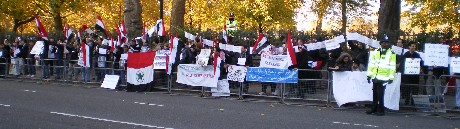
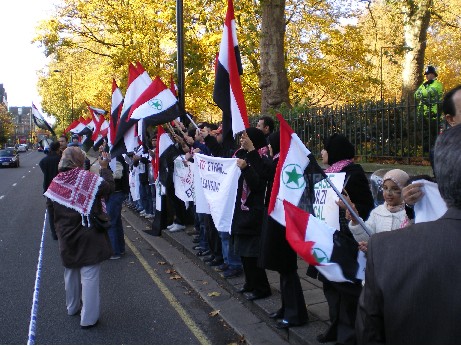
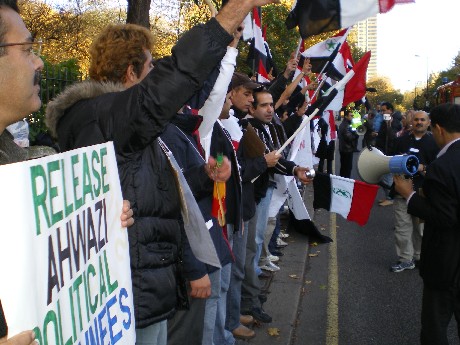
Scores of Ahwazi Arab and Balochi activists gathered outside the Iranian embassy in London on Saturday to protest against the regime's racist policies and campaign of executions against ethnic minorities. The protest was organised by the Ahwaz Community Association of the UK and supported by a range of Ahwazi and Balochi organisations.
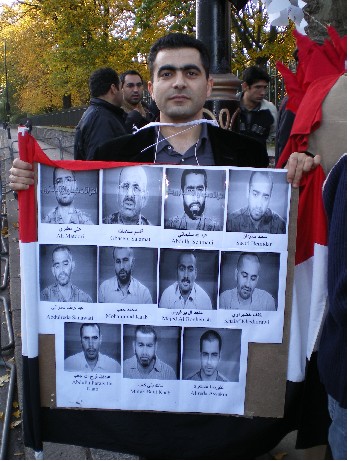
Photographs of 11 Ahwazi Arabs facing imminent execution were displayed along with the names of over 100 Ahwazi opposition activists recently killed by the regime.
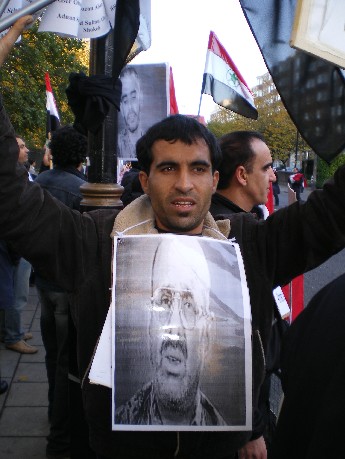
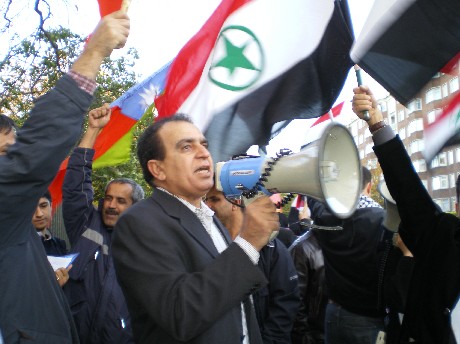
Balochi and Ahwazi activists gave speeches at the demonstration. Rahim Bandoui, a spokesman for the Balochistan Peoples Party, said: "Today we have gathered here to protest and oppose the injustices of the barbaric regime of Iran against the prosecution and killing of our people who are rising and demanding their humanistic and national democratic rights. While everybody is suffering from not having their basic human rights observed, [...] unfortunately our Arabs, Baloch, Kurds, Azeri Turks and Turkmen are facing additional suffering, just for not having the same language, culture and even the same religion of the ruling elite. So far for nearly a century, all types of the ruling elites of Pan-Farsisms, crowned and turbaned, have consistently, constitutionally and institutionally tried to eliminate other nations and forcibly assimilate all cultural and linguistic diversity in Iran into ONE nation's culture, language and religion i.e. Persianisation."
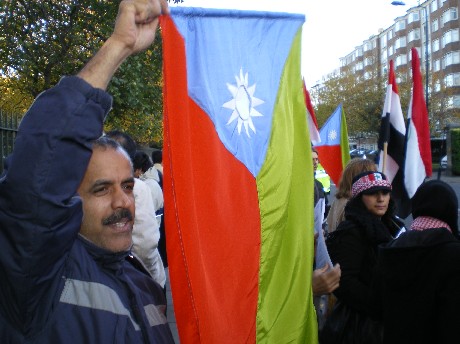
Bandoui spoke of how new media technologies such as satellite television and radio were playing a vital role in the growing sense of identity among Iran's constituent nations and resistance against state killings of opposition activists.
He added: "In our view having a stable democracy in the region is not feasible without solving this social and political issue through a democratic process in Iran. Notably, the shadow and the heat wave of the barbaric regime's atrocities with regard to the human rights violation has stretched itself from its borders and has become not only the regional but a global threat to peace and stability."
The demonstration was supported by leading British human rights campaigner Peter Tatchell, who has condemned Iran's ethnic cleansing programme against Ahwazi Arabs.
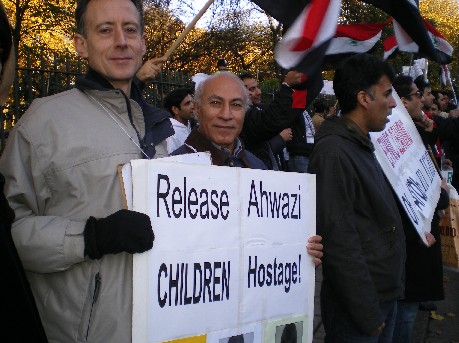
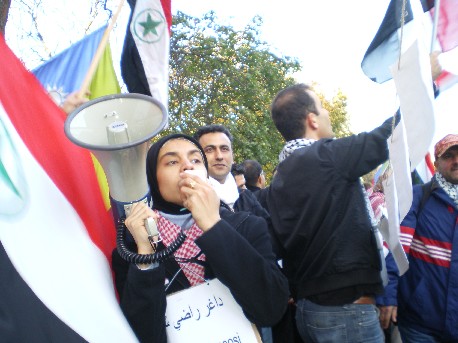
Ahwazis and Balochis chanted slogans, including "Ahmadinejad is the terrorist". The Ahwazi Arab activists facing execution have been accused of terrorism, although the regime has failed to substantiate the charges against the men who were tried in secret courts with little or no access to their lawyers. In contrast, President Ahmadinejad's government has been accused by Western governments of sponsoring international terrorism and of arming and organising death squads in Iraq.
Labels: activism
permalink
keywords: ahvaz ahwaz ahwazi arabistan khuzestan khuzistan khuzestani arab arabistan iran iranian human rights security oil news ahmadinejad ethnic cleansing
.......................................................................................
 Swedish members of parliament have stepped up pressure on Iranian President Mahmoud Ahmadinejad to halt the executions of Ahwazi Arabs.
Egon Frid and Siv Holma of the Left Party, Helena Leander of the Green Party and Fredrik Malm of the Liberal Party voiced their concern over imminent execution of Ahwazi Arabs named in a motion passed by the European Parliament on Thursday ( click here for details ). In the letter, they reiterate statements by Amnesty International and other international and Iranian human rights organizations that the trials were deeply flawed and that "all the evidence points to their innocence."
"All 10 men were tortured into making false confessions," the Swedish MPs add in their letter. "Their lawyers were not allowed to see them prior to their trial and they were given the prosecution case only hours before the start of the trial, which was held in secret. The lawyers for the condemned men have been arrested for complaining about the illegal and unjust nature of the men's trials. They have been charged with threatening national security."
They contrast the Ahwazi region's oil-rich with the "extreme levels of poverty, unemployment and illiteracy" suffered by the indigenous inhabitants. "Ahwazis are subjected to repression, racial discrimination and faced with land confiscation, forced displacement and forced assimilation," they say. "The convictions are evidently arbitrary and are intended to collectively punish Ahwazi Arabs for opposing the system of apartheid that they are subjected to."
They have also pledged to ensure that the EU and European governments will continue to follow the situation of the Ahwazi Arabs in the future.
Labels: death penalty , EU
permalink
keywords: ahvaz ahwaz ahwazi arabistan khuzestan khuzistan khuzestani arab arabistan iran iranian human rights security oil news ahmadinejad ethnic cleansing
.......................................................................................
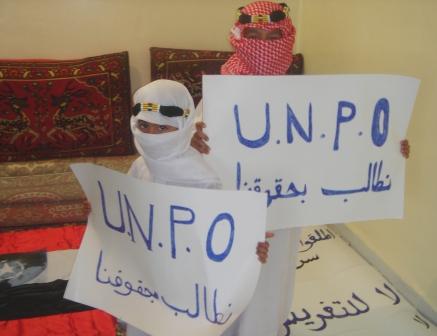 The following is a statement from the Unrepresented Nations and Peoples Organisation (UNPO) -
click here to download the original
.
The following is a statement from the Unrepresented Nations and Peoples Organisation (UNPO) -
click here to download the original
.
UNPO remains deeply concerned about the fate of the 10 ethnic Ahwazi-Arab activists recently sentenced to death by Iranian Courts, as well as an eleventh activist also to be hanged, but without formal trial or sentencing.
The European Parliament yesterday expressed also their concern, adopting a resolution which calls for an immediate halt to their executions, as well as the release of all other prisoners of conscience, many of whom are at present languishing without trial in Iranian jails. The resolution also expresses a broader concern with the treatment of minorities within Iran, many of whom are UNPO Members, as well as the prevalence and methods of execution used as a means to silence political opposition.
The Resolution in Full
The 10 men, Ali Motairi, Abdullah Solaimani, Abdulreza Sanawati (Zergani), Ghasem Salamat, Mohamad Chaab Pour, Abdulamir Farajullah Chaab, Alireza Asakreh, Majed Alboghubaish, Khalaf Khaziri, Malek Banitamim, were all found guilty of charges relating initially to an incident of terrorism, and later to Mohareb (enmity with God), in secret one-day trials which have received extensive international condemnation. Both Amnesty International and Human Rights Watch have indicated also a general concern with the fairness of any trail involving Ahwazi-Arabs in Iran.
In addition to having their trials conducted in secret, the defendants were not permitted to meet with their lawyers, several of whom have also been arrested following their complaints over the fairness of the proceedings. There are also reports suggesting that the defendants were tortured during detention, and forced to make confessions later broadcasted on Iranian television. It was the televised confession of the untried eleventh individual, Mr. Saeed Hamedan, which indicated he is also to be amongst the executed.
As international leaders consider the potential benefits of softening their stance and increasing cooperation with the Iranian Regime, UNPO is part of the growing number of politicians, international institutions, and members of civil society demanding Iran commute the death sentences of the 11 men, as well as cease entirely in their use of the death sentence as a means of punishing political activists.
UNPO has issued appeals to Philip Alston, the United Nations' (UN) Special Rapporteur on Extrajudicial, Summary, or Arbitrary Executions, and Mrs. Louise Arbour, the UN High Commissioner for Human Rights. The Ahwaz Human Rights Organization (AHRO) has also issued appeals to several MEPs; Hon. Ms. Angelika Beer, Chairwoman of the Iran Delegation in the European Parliament; Hon. Mr. Josep Borrell Fontelles, President of the European Parliament, Member of European Parliament (MEP); Elmar Brok, Chair of the Foreign Affairs Committee; Helene Flautre; Paolo Casaca; and Baroness Nicholson of Winterbourne.
British and European Parliamentary members contacted by the British Ahwazi Friendship Society (BAFS), including Chris Bryant MP and Michael Gove MP, joined by Green Party MEPs Caroline Lucas and Jean Lambert, have also called on UN Secretary General Mr. Annan, as well as a range of senior EU and UN leaders, to step in and demand Tehran commutes the death sentences.
Their calls will be echoed this weekend, when a number of Ahwazi and Azeri groups will be joined also by UNPO Member from Balochistan to protest outside the Iranian Embassy in London. International Media are also sure also to support the gathering, featuring a number of prominent articles, such as in; The Guardian (UK) and The Daily Mail (UK).
UNPO remains deeply concerned about the imminent executions and the ongoing situation for Ahwazi Arabs in Iran, and will continue to appeal for:
- Iran to stop the execution of the 11 convicted men and grant fair trials to the 19 men convicted of the bombing;
- The Iranian government to cease its execution of Ahwaz Arabs for peaceful protest; and
- Iran to address the issue of unfair trials and extrajudicial and summary executions of the indigenous Ahwaz Arab people.
Related links
Appeal to UN Secretary General Kofi Annan
Information about Protest in London
Article in The Guardian (UK)
Labels: activism , death penalty , human rights
permalink
keywords: ahvaz ahwaz ahwazi arabistan khuzestan khuzistan khuzestani arab arabistan iran iranian human rights security oil news ahmadinejad ethnic cleansing
.......................................................................................
17 November, 2006
The Iranian regime has sentenced three more Ahwazi Arabs to death, despite condemnation over planned execution of 11 Ahwazis.
The three - Abdul Housain Haribi, Housain Maramazi and Housain Asakre - were sentenced to hang by a one-day closed trial at the Revolutionary Court in Falahiyah (Shadegan) on Thursday. They were accused of bombing oil pipelines in the Al-Ahwaz region, which produces 90 per cent of Iran's oil output. The trials of Ahwazi Arabs have been mired in controversy, with complaints from human rights organisations of political interference in the judicial process, lack of access to lawyers, torture and televised forced confessions.
The European Parliament voted unanimously to condemn the imminent execution of 11 Ahwazi Arabs by the Iranian regime in a motion supported by all political groups. The motion highlighted the Iranian regime's discrimination against ethnic minorities, particularly the Ahwazi Arabs who are "being displaced from their villages according to statements by Miloon Kothari, UN Special Rapporteur on Adequate Housing, while some of them remain in detention or have been sentenced to death."
It "condemns the current disrespect of minority rights and demands that minorities be allowed to exercise all rights granted by the Iranian Constitution and international law" and "calls upon the authorities to eliminate all forms of discrimination based on religious or ethnic grounds or against persons belonging to minorities, such as Kurds, Azeris, Arabs and Baluchis."
Iran's defiance of the European Parliament's condemnation is likely to sour EU relations with Iran. The mass executions of Ahwazi Arabs have focused attention on the regime's violent racism, with the campaign for a halt in executions gathering pace. The Finnish government - which currently holds the EU presidency - is reportedly preparing to take up the matter of executions of Ahwazis with the Iranian government on behalf of the EU.
Related stories: :
European Parliament condemns Iran over Ahwazi executions - 16 November
"The barbaric deaths meant to spread fear" - Daily Mail - 16 November
Balochis and Azeris rally against Iran's executions - 16 November
Iran: Flawed trials and injustice - 15 November
Ahwazi men "confess" to belonging to obscure militant group - 15 November
UNPO Call to Stop Public Executions of Ahwazi Arabs in Iran - 14 November
Senior European Parliamentarian condemns Iran's ethnic cleansing - 14 November
Eleventh Ahwazi added to the list of those facing execution - 14 November
"Iran is guilty of ethnic cleansing" - Green MEPs - 14 November
Iran regime shows forced "confessions" on Khuzestan TV - 13 November
Mass executions of Ahwazis threaten Middle East security - 12 November
Ten Ahwazi Arabs to hang in public - 11 November
Psychologist sentenced to 20 years imprisonment - 18 October
"27 Ahwazi dissidents in custody" - Emadeddin Baghi - 9 September
Death sentence for Ahwazis confirmed by Supreme Court - 31 July
Son of Ahwazi sentenced to death appeals to Kofi Annan - 27 July
Urgent Appeal to EU Foreign Affairs Chief over Iran Executions - 11 July
Iran: Retry Ethnic Arabs Condemned to Death - 24 June
UNPO Urgent Appeal Concerning Ahwazi Executions
Ahwazis face arrest, deportation and execution - 1 June
Amnesty International: Eleven Ahwazis Face Execution - 17 May
Iran prepares for new round of executions in Ahwaz - 13 May
Executed: Young Men Hung by Iranian Tyrants - 2 March
Iran prepares to execute tribal family - 19 February
Iran sentences seven over Ahwaz bombings - 15 February
Iran increases repression in Ahwaz - 8 February
Ahwaz Bombings Come After Weeks of Unrest - 24 January
Labels: death penalty
permalink
keywords: ahvaz ahwaz ahwazi arabistan khuzestan khuzistan khuzestani arab arabistan iran iranian human rights security oil news ahmadinejad ethnic cleansing
.......................................................................................
16 November, 2006
 The European Parliament has condemned the imminent execution of 11 Ahwazi Arabs by the Iranian regime in a motion supported by all political groups.
The motion highlighted the Iranian regime's discrimination against ethnic minorities, particularly the Ahwazi Arabs who are "being displaced from their villages according to statements by Miloon Kothari, UN Special Rapporteur on Adequate Housing, while some of them remain in detention or have been sentenced to death."
It "condemns the current disrespect of minority rights and demands that minorities be allowed to exercise all rights granted by the Iranian Constitution and international law" and "calls upon the authorities to eliminate all forms of discrimination based on religious or ethnic grounds or against persons belonging to minorities, such as Kurds, Azeris, Arabs and Baluchis."
The motion also "calls on the Iranian authorities to immediately halt the imminent execution of the Arabs Abdullah Suleymani, Abdulreza Sanawati Zergani, Qasem Salamat, Mohammad Jaab Pour, Abdulamir Farjallah Jaab, Alireza Asakreh, Majed Alboghubaish, Khalaf Derhab Khudayrawi, Malek Banitamim, Sa'id Saki and Abdullah Al-Mansouri."
The vote of condemnation was supported by the Conservative, Socialist, Green, Liberal Democrat, Radical and Communist groups, representing the entire spectrum of political opinion in Europe. British Green MEPs Caroline Lucas and Jean Lambert have pushed the issue of Ahwazi Arab rights at the European Parliament and have strongly condemned the Iranian regime's violent persecution of minorities ( click here for further details ).
The European Parliament's unanimous censure of the Iranian regime's treatment of minorities will have a major impact on EU relations with Iran. The mass executions of Ahwazi Arabs have focused attention on the regime's violent racism, with the campaign for a halt in executions gathering pace. The Finnish government - which currently holds the EU presidency - is reportedly preparing to take up the matter of executions of Ahwazis with the Iranian government on behalf of the EU.
The lobbying effort in the UK has been intense. William Hague, the Shadow Foreign Secretary and former leader of the Conservative Party, met with Foreign Office officials yesterday to highlight concerns about the execution of Ahwazi Arabs. His office told the British Ahwazi Friendship Society that the officials "assured him that they are taking the case extremely seriously, and that the FCO regularly raises the issue of individual death sentences with the Iranian government. Mr Hague believes it is important that international condemnation of this case is heard in Tehran, and he will continue to follow the matter closely."
Labour MP Chris Bryant, a long-standing critic of Iran's atrocious human rights record, is preparing to table an Early Day Motion in the British parliament which will condemn Iran's mass execution of Ahwazis.
DEMONSTRATION AGAINST EXECUTIONS AND ETHNIC CLEANSING OF AHWAZI ARABS:
DATE: SATURDAY 18 NOVEMBER
TIME: 1PM-3PM
PLACE:
IRANIAN EMBASSY
PRINCE'S GATE
LONDON
NEAREST TUBE: SOUTH KENSINGTON
CLICK HERE FOR DIRECTIONS
Related stories: :
"The barbaric deaths meant to spread fear" - Daily Mail - 16 November
Balochis and Azeris rally against Iran's executions - 16 November
Iran: Flawed trials and injustice - 15 November
Ahwazi men "confess" to belonging to obscure militant group - 15 November
UNPO Call to Stop Public Executions of Ahwazi Arabs in Iran - 14 November
Senior European Parliamentarian condemns Iran's ethnic cleansing - 14 November
Eleventh Ahwazi added to the list of those facing execution - 14 November
"Iran is guilty of ethnic cleansing" - Green MEPs - 14 November
Iran regime shows forced "confessions" on Khuzestan TV - 13 November
Mass executions of Ahwazis threaten Middle East security - 12 November
Ten Ahwazi Arabs to hang in public - 11 November
Psychologist sentenced to 20 years imprisonment - 18 October
"27 Ahwazi dissidents in custody" - Emadeddin Baghi - 9 September
Death sentence for Ahwazis confirmed by Supreme Court - 31 July
Son of Ahwazi sentenced to death appeals to Kofi Annan - 27 July
Urgent Appeal to EU Foreign Affairs Chief over Iran Executions - 11 July
Iran: Retry Ethnic Arabs Condemned to Death - 24 June
UNPO Urgent Appeal Concerning Ahwazi Executions
Ahwazis face arrest, deportation and execution - 1 June
Amnesty International: Eleven Ahwazis Face Execution - 17 May
Iran prepares for new round of executions in Ahwaz - 13 May
Executed: Young Men Hung by Iranian Tyrants - 2 March
Iran prepares to execute tribal family - 19 February
Iran sentences seven over Ahwaz bombings - 15 February
Iran increases repression in Ahwaz - 8 February
Ahwaz Bombings Come After Weeks of Unrest - 24 January
Labels: death penalty , EU
permalink
keywords: ahvaz ahwaz ahwazi arabistan khuzestan khuzistan khuzestani arab arabistan iran iranian human rights security oil news ahmadinejad ethnic cleansing
.......................................................................................
 The following article written by Daniel Brett, Chairman of the British Ahwazi Friendship Society, appeared in Gozaar, a journal on democracy and human rights in Iran.
Click here to download the article in English and Persian
.
The following article written by Daniel Brett, Chairman of the British Ahwazi Friendship Society, appeared in Gozaar, a journal on democracy and human rights in Iran.
Click here to download the article in English and Persian
.
All Western democracies possess legislation to combat racism, but few have the commitment to ethnic equality enshrined in the Iranian Constitution. Article 15 allows the use of non-Persian regional and tribal languages in the media and education. Article 19 states that "All people of Iran, whatever the ethnic group or tribe to which they belong, enjoy equal rights; and colour, race, language, and the like, do not bestow any privilege", while Article 20 establishes the equal cultural rights for all. The Constitution is an acknowledgement that Iran is and always has been a multi-cultural society. Cultural equality is an Iranian tradition that dates back some 2,500 years to Cyrus the Great who similarly acknowledged the importance of regional identity, ruling over a plethora of different cultures and kingdoms through a system of autonomous satrapies.
While the Constitution may lay out commitments to equality, the reality is far different for Iran's cultural minorities. Iran has the dubious distinction as being one of the world's worst oppressors of minorities, with ethnic groups one of the regime's main targets. Atrocities against Iran's ethnic and cultural minorities occur on a daily basis.
Located in the geopolitically sensitive and oil-rich Khuzestan province - called Arabistan by the Safavid in early 16th century and changed by Reza Shah in 1936 to Khuzestan - neighbouring Iraq, the Ahwazi Arabs suffer more than most. The irony is that the regime preaches solidarity with the Palestinians, funding the Sunni Islamist group Hamas with the oil wealth extracted from land confiscated from Shia Arabs who comprise around 70 per cent of Khuzestan's population.
The treatment of the Ahwazi Arabs belies the regime's professed solidarity with the poor and dispossessed in the Arab world. Displaced from their traditional lands and crowded into slums, the Ahwazi Arabs endure human development indicators that fall well below those of the Palestinians and the Iranian national average. Illiteracy among Ahwazi Arab men is around 50-60 per cent for men, higher for women, compared to 14-18 per cent for Iran as a whole and 4 per cent for Palestinian territories. The average malnutrition rate for Iran is 11 per cent and in the Palestinian territories 4%, but in the Arab district of Susangerd the level is around 80 per cent. Unemployment among Ahwazi Arabs is around 50 per cent, compared to Iran's national average of 12 per cent and 30 per cent among Palestinians. Added to this are the lingering effects of the Iran-Iraq War, with landmines continuing to kill and maim Arab farmers and contamination from chemical weapons leading to high rates of birth deformities. Levels of poverty among Ahwazi Arabs outstrip many African countries: Zimbabwe has higher rates of literacy; Ethiopia has lower levels of child malnutrition. Poverty has fuelled a sense of despair among the youth, with a spiralling problem of drug addiction and suicide. Yet, these African levels of deprivation are occurring in a province that has more oil wealth than the UAE and Kuwait combined.
There is strong evidence that poverty is the result of institutional racism that has recently escalated into full-scale ethnic cleansing and violent repression. Despite constitutional guarantees of equality, Amnesty International states that Ahwazi Arabs have "reportedly been denied state employment under the gozinesh criteria. Many villages and settlements reportedly have little or no access to clean running water, sanitation or other utilities such as electricity ... land expropriation by the Iranian authorities is reportedly so widespread that it appears to amount to a policy aimed at dispossessing Arabs of their traditional lands. This is apparently part of a strategy aimed at the forcible relocation of Arabs to other areas while facilitating the transfer of non-Arabs into Khuzestan and is linked to economic policies such as zero interest loans which are not available to local Arabs."
In a visit to Khuzestan in July 2005, UN Special Rapporteur on Adequate Housing Miloon Kothari verified the fact that land confiscation was been conducted to set up housing and industrial projects that excluded the Ahwazi Arabs. He said: "... when you visit Ahwaz ... there are thousands of people living with open sewers, no sanitation, no regular access to water, electricity and no gas connections ... why is that? Why have certain groups not benefited? ... Again in Khuzestan, ... we drove outside the city about 20 km and we visited the areas where large development projects are coming up - sugar cane plantations and other projects along the river - and the estimate we received is that between 200,000 - 250,000 Arab people are being displaced from their villages because of these projects. And the question that comes up in my mind is, why is it that these projects are placed directly on the lands that have been homes for these people for generations? I asked the officials, I asked the people we were with. And there is other land in Khuzestan where projects could have been placed which would have minimised the displacement."
More than 200,000 hectares of land owned by Ahwazi Arabs farmers have been confiscated since the 1979 Revolution and given to the government sponsored Sugar Cane Project, an intensive sugar cultivation project. Around 47,000 hectares of Ahwazi Arab farmland in the Jofir area have been transferred to non-indigenous settlers and a further 25,000 hectares have been taken from Ahwazi Arab farmers and given to the government-owned Shilat corporation and government agencies. More than 6,000 hectares of Ahwazi farmland north of Shush have been taken to "resettle the faithful non-indigenous Persians", according to directives by the Ministry of Agriculture and the IRGC's Command. In 2004, the homes of 4,000 Arab residents of Sapidar were destroyed and bulldozed over in 2004 with little or no compensation to make way for a shining new housing development for settlers from Isfahan and Fars, enticed into Khuzestan with zero-interest loans not available to the local Ahwazi Arabs.
Ethnic cleansing has been stepped up under the Ahmadinejad administration with the creation of the 155 sq km Arvand Free Zone, a military-industrial zone along the border with Iraq's Basra province. Entire villages are being eradicated to make way for petrochemical projects that will profit only the ruling mullahs and their friends in the Chinese business community who are investing heavily in the zone. The now banned Hamsayeha newspaper has reported complaints from Arabs living on Minoo Island - where they have cultivated dates for centuries - that agents working for the government and the Arvand Free Zone are bullying them into selling their homes ahead of a planned land confiscation programme. Mostafa Motowarzadeh, the Majlis (parliament) member for Khorramshahr, has confirmed the problems facing the farmers. He added that the Iranian authorities were pushing ahead with acquisitions before the end of the official consultation period for the land acquisitions.
Faced with such blatant discrimination, poverty and ethnic cleansing, Ahwazi Arabs began mobilising around their right to equality. In 1999, taking advantage of the modest relaxation of political repression under the Khatami administration, Ahwazi Arab intellectuals set up the Lejnat Al-Wefaq (Reconciliation Committee) to campaign for equal cultural, political and economic rights. The group participated in elections and its general secretary, Jasem Shadidzadeh Al-Tamimi, succeeded in winning a parliamentary seat in the Sixth Majlis (2000-04) as well as winning all but one seat on the Ahwaz municipal council in 2003. However, in the last parliamentary elections in 2004, conservatives in the regime barred candidates nominated by Lajnat Al-Wefagh. The group was dismantled, closing down legal possibilities for demands for Ahwazi rights.
A ban on the party participating in elections led many Ahwazi Arabs to conclude that they could not expect the regime to respect their constitutional right to equality, leading to ethnic unrest. In April 2005, Ahwazi Arabs staged an uprising against the confiscation of their land and racial discrimination. The government of President Mohammed Khatami responded by brutally clamping down on the demonstrators, leading to 51 confirmed deaths. The use of state terror has continued with at least 25,000 arrests and hundreds of killings, executions and disappearances.
Lejnat Al-Wefaq's former Majlis member Jasem Shadidzadeh Al-Tamimi appealed to the government to accede to Ahwazi demands for cultural tolerance and an end to racial discrimination and land confiscation. In an open letter to President Khatami, he urged him to "do your utmost in lowering the 'wall of mistrust' between the proud Iranian ethnicities, so that the 'infected wounds' of the Arab people of Ahwaz may heal." In response, the government detained Al-Tamimi, but released him without charge - although regime hardliners have called for his arrest and he has faced at least one assassination attempt. Dozens of Wefaq activists have been imprisoned and many have escaped into exile. Many are buried at a place the government calls "Lanat Abad", the place of the "damned people". The bodies do not stay long in the unmarked graves, before they are dug up and eaten by feral dogs. Relatives of the dead claim that they do not know where they are buried and say they have not been buried in accordance with Islamic custom, despite being killed by the Islamic Republic for offending the same religion for their opposition to theocracy.
In November 2006, the Ahwaz prosecutor's office declared that the Wefaq had been outlawed due to its alleged opposition to the Islamic regime and encouraging communal violence. Anyone associated with the party is therefore guilty of mohareb (enmity with God), which carries the death penalty. Meanwhile, traditional Arab cultural events held around religious festivals such as Eid ul-Fitr have been banned, with actors, singers, imams and teachers among those jailed for mohareb and threatening national security, while mosques and Islamic meeting centres run by Arabs have been closed.
The denial of constitutional rights is the surest sign that Ahwazi Arabs cannot expect freedom and justice under the Islamic Republic. The question is: what is the alternative? As yet, only a minority support pan-Arab and separatist parties, but the failure the broader Iranian opposition to extend solidarity to Ahwazi Arabs and acknowledge their plight and support their cause is leading many desperate youths to support complete independence from Iran.
The Democratic Solidarity Party of Al-Ahwaz has proposed a new constitutional settlement that would enable Ahwazi Arabs to exercise their cultural rights and enjoy some degree of control over the resources of their traditional lands. The solution is federalism.
Many Iranians eschew such a concept, fearing that it would be the first step towards their country's fragmentation. The Balkans wars are cited as an example of what would happen to Iran if its regional governments were given a measure of autonomy. There is also the fear that local autonomy would make Iran vulnerable to the kind of interference in its domestic affairs seen during certain periods of Iranian history, notably by the British and Russians during the Qajar dynasty and the Second World War and the Iraqis in the 1980s.
The notion that Iran would balkanise with the introduction of a federal democratic constitution is based on the supposition that Iran's minorities are inherently disloyal. It is, in fact, a racist belief that ensures that the ambitions of regional-based ethnic minorities should be forever repressed to ensure the integrity of the Iranian state. This attitude is shared by significant sections of the Iranian opposition and the Islamic regime itself. The ethnic oppression of Ahwazi Arabs also predates the Islamic Republic and was a characteristic of the chauvinistic nationalism of the Pahlavi dynasty. Yet, the majority of Ahwazi Arabs did not rally behind Saddam Hussein's call for pan-Arab unity, but rather fought and died in their thousands against the Iraqi invasion. They have paid and continue to pay a blood price for passing the loyalty test, but are still regarded as an enemy within. It is clear to most Ahwazis that a constitutional commitment to equality is not enough. Equality needs to be accompanied by the devolution of power and a fair redistribution of wealth generated by the abundant resources in the traditional Arab lands.
There is no proof that federal states are any weaker than centralised states. On the contrary, federalism allows regional authorities to contest the central government within a constitutional framework, thereby undermining the separatist cause. Federalism has enabled the world's largest democracy, India, to maintain its territorial integrity despite its huge diversity of ethnic, cultural, linguistic and religious groups and attempts by neighbouring Pakistan to inflame communal hatred and divide Indians.
Contrary to those who claim that federalism would lead to Balkanisation, Yugoslavia is a good example of how the centralisation of power in the hands of those from a particular ethnic group can destroy a multi-ethnic state. The Balkan region is a warning to those who seek to characterise Iran solely in terms of Persian culture and language and centralise power in Tehran. Serbian chauvinism, not federalism, was the ultimate reason for the Balkans wars. Serbian domination of monarchist Yugoslavia fuelled separatist sentiment that was exploited by the Nazis with the installation of the fascist Ustashe regime in Croatia, leading to the genocide of Croatia's ethnic Serbs. The re-establishment of Yugoslavia as a neutral socialist federal state after the Second World War led to decades of communal harmony. But these were shattered by Slobodan Milosevic's Serbian nationalism, which sought to centralise power in Belgrade and reorganise the country's federal structures to ensure Serbian hegemony. It was ethnic chauvinism by the leaders of Yugoslavia's largest national group that led to the bloody wars that devastated the Balkans, not federalism itself.
Yugoslavia is a warning of what could happen to Iran if its constituent national minorities are not given the autonomy that enjoyed for centuries before Reza Pahlavi's rise to power. India shows that a stable democracy can accommodate a diverse population like Iran if regional demands are accommodated through federal power structures. Iran would be a stronger, more stable, cohesive and peaceful nation under federalism.
For the Ahwazi Arabs, federalism and regional autonomy would enable them to control their own affairs, protect their land rights and exercise their cultural rights. The only other alternative to being crushed forever under the weight of a militaristic centralised state is independence. Increased oppression and continued social and economic marginalisation of the Ahwazi Arabs will also generate the kind of extremist backlash seen in the Balkans, but which has so far only been seen in a minority of disillusioned Ahwazi youth.
Gozaar - meaning "transition" - is a monthly Persian/English journal devoted to democracy and human rights in Iran. Recognizing that open access to ideas and information is the cornerstone of the quest for freedom, Gozaar seeks to help Iranian democrats fulfill the universal aspiration for justice by creating an accessible, inclusive and provocative space for the discussion of liberty. The journal is dedicated to the courageous women and men in Iran organizing to make their country free. Funding for this project is provided mainly by The Netherlands Ministry of Foreign Affairs, under its Human Rights and Democracy programs.
Labels: features
permalink
keywords: ahvaz ahwaz ahwazi arabistan khuzestan khuzistan khuzestani arab arabistan iran iranian human rights security oil news ahmadinejad ethnic cleansing
.......................................................................................
 The following is an article from the Daily Mail, one of the UK's most popular newspapers, on Iran's planned execution of 11 innocent Ahwazi Arabs for "waging war on God" -
click here to download the original
The following is an article from the Daily Mail, one of the UK's most popular newspapers, on Iran's planned execution of 11 innocent Ahwazi Arabs for "waging war on God" -
click here to download the original
As Tony Blair warms to Iran, Tehran's hard-line Islamic regime is preparing to hoist 11 Iranian Arabs from cranes and slowly strangle them to death in public.
The men were convicted of involvement in a bombing spree after secret trials. But activists insist they are innocent and paying the price for merely hailing from the country's downtrodden Arab minority.
It is feared they could be hanged as early as today because their 'confessions' were broadcast on Iranian television on Monday night.
Two other ethnic Arabs were publicly hanged from a crane in March just two days after their heavily-edited 'confessions' were televised.
Public executions are not uncommon in the Islamic Republic. It carries out more every year than any country but China. Some are particularly gruesome.
The 11 were convicted for their alleged role in explosions that killed more than 20 people in Iran's oil-rich province of Khuzestan last year.
The slow strangulation method to be used on them is designed to maximise suffering. It prolongs the agony and 'intimidates the public', said Dr Karim Abdian, executive director of the Ahwaz Human Rights Organisation in Washington.
The 11 were due to be hanged in the city of Ahwaz, capital of Khuzestan, where ethnic Arabs are a majority.
Now it is believed the hangings will take place in several cities with largely Arab populations to spread the fear, said Dr Abdian.
The imminent executions are raising a storm of protest from British MPs. Human rights campaigner Peter Tatchell, backed by Labour MP Chris Bryant and Tory MP Michael Gove, is urging the Government to petition Iran to commute the executions. 'The men were tortured into giving false confessions,' said Mr Tatchell.
The sentences were imposed after trials behind closed doors which human rights groups say did not meet international standards. One of the condemned men was even in jail at the time of the bombings.
Iranian and foreign activists say the trials of the 11 were flawed, the charges baseless and the sentencing based on a spurious interpretation of the law.
'We've challenged the regime if they have any evidence whatsoever of any crime to show it and they haven't been able to show a shred of evidence,' said Dr Abdian.
The condemned men come from three groups, he added. Most are from a reformist ethnic Arab party whose goal is to win rights for Ahwazi Arabs through legal and constitutional means.
The peaceful group was banned last week after the Iranian judiciary accused it of inciting unrest and opposing the Islamic system.
Some are human rights activists and others 'are just professionals like engineers and doctors who have been picked just because they are smart people of the Arabs'.
Labels: death penalty , features
permalink
keywords: ahvaz ahwaz ahwazi arabistan khuzestan khuzistan khuzestani arab arabistan iran iranian human rights security oil news ahmadinejad ethnic cleansing
.......................................................................................
Balochi and Azeri groups have united behind the campaign for a halt in Iran's campaign of executions and ethnic cleansing against Ahwazis.
The Balochistan Peoples Party will participate in the demonstration outside the Iranian Embassy in London on Saturday from 1pm. Like the Ahwazis, the Balochis - a mostly Sunni nation located on either side of the Iran-Pakistan border - are facing mass executions as the Iranian regime attempts to quash a growing rebellion in Balochistan. During the last two years the Iranian intelligence agencies, particularly the Mersad group, appear to have followed a policy of "shoot and kill" instead of arresting young Baloch accused of being members of the Baloch resistance movement. The Iranian regime has launched a series of military operations and "war games" in Balochistan, using both helicopter gun-ships and air strikes. According to government's own media sources, the regime has shot, executed or hanged, more than 200 Baloch individuals over the past few months, relying heavily on accusations of drug smuggling, anti revolutionary activities, and cooperation with the United States and Great Britain.
Balochis have been preyed upon by the Iranian regime. On 23 August 2006, the Marsad Group attacked a village near Zahidan, the provincial capital of Balochistan, and killed two young men in front of women and children. They were forced out of their homes, to search for the members of resistance movement and weapons. The two young men had protested against the ill treatment of the women. On the 24th of August Amir Hamzeh Eidouzehi, a young man, was hanged in public in Baloch town of Khash, and another young men, Ali Jan Moradi, was hanged in IranShahr on 27 August 2006, both were accused of instigating public trouble and drug trafficking, a sentenced without trail. On the 24th of September three men identified as Ali Karimi, Gholam Koohkan, and Khodamorad Lashkarzadeh, were hanged in prison in provincial capital Zahedan. These dissidents were also executed on charges of drug smuggling and convicted without trial.
Azeri Turks, comprising around a third of the Iranian population and also subject to racism in Iran, have also backed the campaign to halt the execution of Ahwazis. The Azerbaijani Youth Association is lobbying the European Parliament and European governments to take action. A representative wrote to the British Ahwazi Friendship Society (BAFS), saying: "It is with great concern that I have heard about Ahwazis in Iran facing execution. When it comes to life we make no difference on if they are Arabs or Turks. We must show solidarity with each other and together fight against these fascists."
DEMONSTRATION AGAINST EXECUTIONS AND ETHNIC CLEANSING OF AHWAZI ARABS:
DATE: SATURDAY 18 NOVEMBER
TIME: 1PM-3PM
PLACE:
IRANIAN EMBASSY
PRINCE'S GATE
LONDON
NEAREST TUBE: SOUTH KENSINGTON
CLICK HERE FOR DIRECTIONS
Labels: activism
permalink
keywords: ahvaz ahwaz ahwazi arabistan khuzestan khuzistan khuzestani arab arabistan iran iranian human rights security oil news ahmadinejad ethnic cleansing
.......................................................................................
15 November, 2006
The following is an article by Peter Tatchell, which appeared on the Guardian's website today -
click here to download the original and participate in the on-line debate
.
The planned hanging of 11 activists in Iran look like a deliberate attempt by Tehran to intimidate and silence Ahwazi Arab protests.
This week, 11 Ahwazi Arab rights activists are scheduled to be hanged in Iran. They will by strung up by cranes in public squares, using the slow strangulation method, which is deliberately designed to maximise and prolong their suffering. This is "justice" in the Islamic Republic of Iran.
Instead of pressing President Ahmadinejad to commute these death sentences, Tony Blair seems more interested in enlisting Iran's help to get him and George Bush out of the mess in Iraq. Mr Blair's speech at the Guildhall on Monday night implored Tehran to stop supporting terrorism in Iraq and abide by its international obligations on nuclear non-proliferation. Not a word about Iran's duty to uphold international human rights laws.
Mr Blair may not care about human rights in Iran, but the international campaign against the execution of the 11 Arab activists is backed by Labour MP Chris Bryant, Conservative MP Michael Gove and Green MEPs Caroline Lucas and Jean Lambert.
The condemned men were found guilty of bombing oil installations in 2005. But no material evidence of their guilt was offered at their trial. In fact, all the evidence points to their innocence. Amnesty International and Human Rights Watch have repeatedly expressed serious concern about the fairness of trials involving Ahwazi Arabs and the safety of their convictions.
The men's lawyers were not allowed to see them prior to their trial and they were given the prosecution case only hours before the start of the court proceedings. The trials were held in secret. Witnesses for the defence were refused permission to testify. The lawyers for the condemned men were recently arrested for complaining about the illegal and unjust nature of the trials. They face charges of threatening national security.
Family members say the men sentenced to death were tortured into making false confessions, which were broadcast on Iranian television on Monday night. In a recent letter to the chief of the judiciary, Ayatollah Mahmoud Hashemi Shahroudi, one of Iran's leading human rights advocates, Emadeddin Baghi, said that the trials of Ahwazi Arabs were flawed, the charges baseless, and that the sentencing was based on a spurious interpretation of the law.
According to the Ahwazi Human Rights Organisation and the British-Ahwazi Friendship Society, these men have been framed as part of Tehran's on-going persecution of its Ahwazi Arab ethnic minority population in the south-west Iranian province of Khuzestan.
Ahwazi Arabs accuse Tehran of Persian chauvinism, racism and ethnic cleansing, as I recently exposed in Tribune. The response from Islamists and their far left apologists was to accuse me of being racist and anti-Muslim. How can it be Islamophobic or racist to defend Arab Muslims against Tehran's persecution?
Anyway, don't take my word for it. Amnesty International has also expressed concern about the victimisation of the Arab minority in Iran. The planned hangings look like a deliberate attempt by Tehran to intimidate and silence Ahwazi Arab protests against ethnic subjugation and mass impoverishment.
The Ahwazi Arab homeland produces 90% of Iran's oil output and 10% of Opec's global production. Tehran expropriates all the oil revenues, leaving the region as the third poorest in the country, with near-African levels of poverty.
Tehran treats Arabs similarly, in some respects, to the way the South African apartheid regime treated black people. Under apartheid, black pupils were compelled to take school lessons in the oppressor language of Afrikaans. Likewise, Tehran has banned Arabic in Ahwazi schools and made instruction in Farsi (Persian) compulsory. The result is a 30% Arab drop-out rate at primary level and a 50% drop-out rate at secondary level. Illiteracy rates among Arabs are at least four times those of non-Arabs.
This ethnic persecution is one aspect of Tehran's systemic human rights abuses. Iran also executes Muslims who turn away from their faith, unchaste women and gay people. According to Amnesty International, its prisons are full of political prisoners: Sunni Muslims, Bahais, Kurds, trade unionists, students, journalists, lawyers, communists and human rights advocates.
On land confiscated from Ahwazi Arabs, Iran is training, financing and arming Islamist death squads in Iraq. With Tehran's approval, these killers are murdering Sunni Muslims, men wearing jeans and shorts, unveiled women, barbers, sellers of alcohol and videos, and people who listen to western music or who have a stylish haircut.
Contrary to Tehran's misinformation campaign, the vast majority of Ahwazi Arabs reject separatism. They want regional self-government, not independence. Nor do they support a US invasion. This would, they argue, strengthen the position of the hardliners in Tehran, allowing President Ahmadinejad to use the pretext of defence and security to play the nationalist card and to further crack down on dissent. Many Ahwazis believe the route to reform - for the benefit of all the people of Iran - is an internal alliance of Iranian democrats, leftists, trade unionists, minority nationalities and local civic organisations.
DEMONSTRATION AGAINST EXECUTIONS AND ETHNIC CLEANSING OF AHWAZI ARABS:
DATE: SATURDAY 18 NOVEMBER
TIME: 1PM-3PM
PLACE:
IRANIAN EMBASSY
PRINCE'S GATE
LONDON
NEAREST TUBE: SOUTH KENSINGTON
CLICK HERE FOR DIRECTIONS
Related stories: :
Ahwazi men "confess" to belonging to obscure militant group - 15 November
UNPO Call to Stop Public Executions of Ahwazi Arabs in Iran - 14 November
Senior European Parliamentarian condemns Iran's ethnic cleansing - 14 November
Eleventh Ahwazi added to the list of those facing execution - 14 November
"Iran is guilty of ethnic cleansing" - Green MEPs - 14 November
Iran regime shows forced "confessions" on Khuzestan TV - 13 November
Mass executions of Ahwazis threaten Middle East security - 12 November
Ten Ahwazi Arabs to hang in public - 11 November
Psychologist sentenced to 20 years imprisonment - 18 October
"27 Ahwazi dissidents in custody" - Emadeddin Baghi - 9 September
Death sentence for Ahwazis confirmed by Supreme Court - 31 July
Son of Ahwazi sentenced to death appeals to Kofi Annan - 27 July
Urgent Appeal to EU Foreign Affairs Chief over Iran Executions - 11 July
Iran: Retry Ethnic Arabs Condemned to Death - 24 June
UNPO Urgent Appeal Concerning Ahwazi Executions
Ahwazis face arrest, deportation and execution - 1 June
Amnesty International: Eleven Ahwazis Face Execution - 17 May
Iran prepares for new round of executions in Ahwaz - 13 May
Executed: Young Men Hung by Iranian Tyrants - 2 March
Iran prepares to execute tribal family - 19 February
Iran sentences seven over Ahwaz bombings - 15 February
Iran increases repression in Ahwaz - 8 February
Ahwaz Bombings Come After Weeks of Unrest - 24 January
Labels: death penalty , features
permalink
keywords: ahvaz ahwaz ahwazi arabistan khuzestan khuzistan khuzestani arab arabistan iran iranian human rights security oil news ahmadinejad ethnic cleansing
.......................................................................................
14 November, 2006
Forced confessions of 11 Ahwazi men broadcasted on Khuzestan TV blamed a little-known militant group that has supposedly resurfaced more than 20 years after it vanished during the Iran-Iraq War.
After months of incarceration in which they were tortured and their families threatened, the men "confessed" to belonging to the Mohi-eldain Al-Nasir Martyrs Brigade, which the Iranian regime blames for bomb attacks in Ahwaz. Khuzestan TV broadcast heavily edited clips from the confessions, which appear to be dubbed over ( click here to download the television programme ).
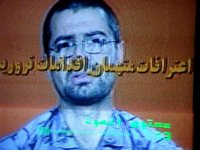 In the broadcast, 30 year old Ali Matouri Zadeh (pictured) "confessed" to heading the group. He had been a founding member of the Lejnat Al-Wefaq (Reconciliation Committee), which attempted to advance Ahwazi Arab minority rights through constitutional and legal means. It was set up in 1999 and participated in elections. Its general secretary, Jasem Shadidzadeh Al-Tamimi, succeeded in winning a parliamentary seat in the Sixth Majlis (2000-04) and Wefaq-backed candidates won all but one seat on the Ahwaz municipal council in 2003. However, in the last parliamentary elections in 2004, conservatives in the regime barred candidates nominated by Lajnat Al-Wefagh. The group was dismantled, closing down legal possibilities for demands for Ahwazi rights. This month it was outlawed for allegedly stirring up communalism against the regime - a claim that is without foundation.
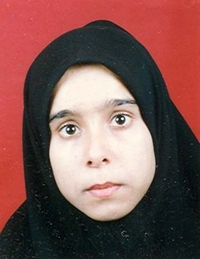 Matouri Zadeh was arrested in February along with his pregnant wife, 26 year old school teacher Fahima Ismaili Badawi (pictured). She gave birth to a baby girl named Salma in the notorious Sepidar Prison in March. Both mother and daughter have remained in prison, with intelligence officials putting pressure on Fahima to denounce her husband, divorce him and change the girl's name to a Persian one. She refused and was sentenced in June to 15 years imprisonment by Branch 3 of the Revolutionary court in Ahwaz City.
Amnesty International has suggested the mother and daughter were held to pressure Matouri Zadeh to confess to participating in bomb attacks ( click here for latest report ). Matouri Zadeh's "confession" was probably intended to save his wife and daughter's lives, but has also vindicated the regime's violent clamp-down on Ahwazi Arab reformist groups such as Wefaq.
The sudden re-emergence of the Mohi-eldain Al-Nasir Martyrs Brigade has raised suspicions over its true origins. The group was named after Mohi-eldain Al-Nasir, an Ahwazi militant who was executed by Iran's monarchist regime in the 1970s, and played a small, brief part in Iraq's war with Iran (1980-88). The group was forgotten until last year, when the Iranian regime linked it to bomb attacks in Ahwaz. The attacks used powerful plastic explosives and the group has broadcast its own propaganda videos. It has also reportedly used Peugeot-brand cars, which few Ahwazis can afford to buy let alone destroy in bomb attacks. Some have claimed the group is linked to Iranian intelligence, attempting to terrorise ordinary Ahwazis and turn them against the civil rights movement. The regime itself has blamed the British government, although it has provided no proof to substantiate its claim.
The British Ahwazi Friendship Society (BAFS) has called for a full and open investigation in the bomb attacks. It has also called for a retrial for the accused, pointing to the fact that the 11 men facing execution were sentenced after one-day trials in secret courts with little or no access to their lawyers.
Related stories: :
UNPO Call to Stop Public Executions of Ahwazi Arabs in Iran - 14 November
Senior European Parliamentarian condemns Iran's ethnic cleansing - 14 November
Eleventh Ahwazi added to the list of those facing execution - 14 November
"Iran is guilty of ethnic cleansing" - Green MEPs - 14 November
Iran regime shows forced "confessions" on Khuzestan TV - 13 November
Mass executions of Ahwazis threaten Middle East security - 12 November
Ten Ahwazi Arabs to hang in public - 11 November
Psychologist sentenced to 20 years imprisonment - 18 October
"27 Ahwazi dissidents in custody" - Emadeddin Baghi - 9 September
Death sentence for Ahwazis confirmed by Supreme Court - 31 July
Son of Ahwazi sentenced to death appeals to Kofi Annan - 27 July
Urgent Appeal to EU Foreign Affairs Chief over Iran Executions - 11 July
Iran: Retry Ethnic Arabs Condemned to Death - 24 June
UNPO Urgent Appeal Concerning Ahwazi Executions
Ahwazis face arrest, deportation and execution - 1 June
Amnesty International: Eleven Ahwazis Face Execution - 17 May
Iran prepares for new round of executions in Ahwaz - 13 May
Executed: Young Men Hung by Iranian Tyrants - 2 March
Iran prepares to execute tribal family - 19 February
Iran sentences seven over Ahwaz bombings - 15 February
Iran increases repression in Ahwaz - 8 February
Ahwaz Bombings Come After Weeks of Unrest - 24 January
Labels: death penalty
permalink
keywords: ahvaz ahwaz ahwazi arabistan khuzestan khuzistan khuzestani arab arabistan iran iranian human rights security oil news ahmadinejad ethnic cleansing
.......................................................................................
The British Ahwazi Friendship Society (BAFS) has branded Iran's planned public execution of 11 Ahwazi Arabs as a "public relations disaster" for the regime.
The imminent mass executions have led to a wave of condemnation in Europe that will only build if they go ahead.
Members of the British Parliament and the European Parliament as well as international human rights organisations are mobilising against the killings, with increasing awareness of the regime's ethnic cleansing programme against the Ahwazi Arab minority.
BAFS Chairman Daniel Brett said: "Previous public executions carried out in March received little attention in the West. Perhaps the Iranian government thought it could carry out more executions without international censure. But the number due to be executed coupled with serious doubts about the trials and the arrest of lawyers for the defendants has generated considerable publicity and support for the Ahwazi rights movement.
"Iran will no doubt face condemnation from the European Parliament and this will have a major impact on the EU's dialogue with Iran if the executions go ahead. It will also damage Iran's efforts to claim leadership over the Arab world, particularly on the issue of Palestinian statehood. Killing innocent Ahwazis will reveal the regime's innate contempt for Arabs and show that its supposed solidarity with the Palestinians and Lebanese is nothing but a front for expanding its sphere of influence.
"If the regime thought that killing its opponents would kill off opposition, it is very naive. Iran's leaders have the option of cancelling the executions, annulling the verdicts and demanding a retrial that meets international standards of justice. They can also quell unrest by legalising Ahwazi Arab parties like the Lejnat Al-Wefaq (Reconciliation Committee), which was recently outlawed, and allowing them to compete in free and fair elections. An immediate halt to land confiscations is also necessary to end the continuing impoverishment of Ahwazi Arabs.
"We don't think the regime has the confidence or the strength to allow its citizens the equal social, economic and political rights and democratic freedoms they are entitled to. But they can always call their opponents' bluff and prove them wrong by cancelling the executions."
DEMONSTRATION AGAINST EXECUTIONS AND ETHNIC CLEANSING OF AHWAZI ARABS:
DATE: SATURDAY 18 NOVEMBER
TIME: 1PM-3PM
PLACE:
IRANIAN EMBASSY
PRINCE'S GATE
LONDON
NEAREST TUBE: SOUTH KENSINGTON
CLICK HERE FOR DIRECTIONS
Related stories: :
UNPO Call to Stop Public Executions of Ahwazi Arabs in Iran - 14 November
Senior European Parliamentarian condemns Iran's ethnic cleansing - 14 November
Eleventh Ahwazi added to the list of those facing execution - 14 November
"Iran is guilty of ethnic cleansing" - Green MEPs - 14 November
Iran regime shows forced "confessions" on Khuzestan TV - 13 November
Mass executions of Ahwazis threaten Middle East security - 12 November
Ten Ahwazi Arabs to hang in public - 11 November
Psychologist sentenced to 20 years imprisonment - 18 October
"27 Ahwazi dissidents in custody" - Emadeddin Baghi - 9 September
Death sentence for Ahwazis confirmed by Supreme Court - 31 July
Son of Ahwazi sentenced to death appeals to Kofi Annan - 27 July
Urgent Appeal to EU Foreign Affairs Chief over Iran Executions - 11 July
Iran: Retry Ethnic Arabs Condemned to Death - 24 June
UNPO Urgent Appeal Concerning Ahwazi Executions
Ahwazis face arrest, deportation and execution - 1 June
Amnesty International: Eleven Ahwazis Face Execution - 17 May
Iran prepares for new round of executions in Ahwaz - 13 May
Executed: Young Men Hung by Iranian Tyrants - 2 March
Iran prepares to execute tribal family - 19 February
Iran sentences seven over Ahwaz bombings - 15 February
Iran increases repression in Ahwaz - 8 February
Ahwaz Bombings Come After Weeks of Unrest - 24 January
Labels: death penalty
permalink
keywords: ahvaz ahwaz ahwazi arabistan khuzestan khuzistan khuzestani arab arabistan iran iranian human rights security oil news ahmadinejad ethnic cleansing
.......................................................................................
 Below is an article from the UNPO website -
click here to download the original
Below is an article from the UNPO website -
click here to download the original
UNPO has issued appeals to Philip Alston, the United Nations' (UN) Special Rapporteur on Extrajudicial, Summary, or Arbitrary Executions, and Mrs. Louise Arbour, the UN High Commissioner for Human Rights on the public executions of 11 Ahwazi Arabs sentenced to public hanging. The Ahwaz Human Rights Organization (AHRO), has also issued appeals to several MEPs; Hon. Ms. Angelika Beer, Chairwoman of the Iran Delegation in the European Parliament; Hon. Mr. Josep Borrell Fontelles, President of the European Parliament, Member of European Parliament (MEP); Elmar Brok, Chair of the Foreign Affairs Committee; Hélène Flautre; Paolo Casaca; and Baroness Nicholson of Winterbourne, urging immediate action to halt the executions.
Among the 11 ethnic Arab-Iranian (Ahwazi-Arabs) rights activists, just Monday, November 13, 2006, Saeed Hamedan confessed to insurgency on Iranian TV, indicating that he will be among the executed. Unlike the other ten sentenced to die, he has not been sentenced by Iranian courts, making his execution the consequence of an illegal summary judgment by Iranian authorities. All 11 Ahwazi Arabs were convicted after one-day secret trials that were internationally condemned. Early Monday, the forced confessions of the 10 convicted Ahwazi Arabs, among the 19 Ahwazis convicted for mohareb (enmity with God) after being originally convicted of terrorism offences, were broadcast on Iranian television.
British and European Parliamentary members contacted by the British Ahwazi Friendship Society (BAFS) - including Green MEPs Caroline Lucas and Jean Lambert, Labour MP Chris Bryant, and Conservative MP Michael Gove - condemned the executions and urged the European Commission to take action immediately. Not only were confessions obtained under torture, but the ten men were denied access to their lawyers, and many of their lawyers were arrested for complaints regarding the unfair, secret trials. Two Ahwazis among those sentenced to death were in prison, serving time for the crime of insurgency, when the bomb attacks they were allegedly involved in occurred. The Iranian Judiciary failed to provide dates and details of the trials of 9 of the convicted men.
Dr. Lucas stated that the policy of the Iranian government towards the Ahwazi Arabs was one of ethnic cleansing, and asked the United Nations (UN) and European Union (EU) to investigate the systematic practice of imprisoning and executing Ahwazis. The Ahwazis, an indigenous Arab group, comprise 3 percent of Iran's population. Residing mainly in the southwestern Iranian province of Khuzestan, they are a majority in Al-Ahwaz, which contains most of Iran's oilfields. In the last year alone, it is reported that 25,000 Ahwazis have been arrested, 131 executed, and 150 have disappeared. Human rights organizations, including Amnesty International, have reported on the imprisonment of Ahwazi children along with their mothers, a tactic used to coerce Ahwazi men who are politically active to turn themselves in. The Iranian government has also banned political parties, trade unions, student groups, and the right of Arabs to stand for election.
UNPO remains deeply concerned about the imminent executions and the ongoing situation for the Ahwazi Arabs in Iran. UNPO General Secretary Marino Busdachin appealed to Commissioner Arbour and Special Rapporteur Alston to:
- urge Iran to stop the execution of the 11 convicted men and grant fair trials to the 19 men convicted of the bombing;
-call upon the Iranian government to cease its execution of Ahwaz Arabs for peaceful protest; and
-address the issue of unfair trials and extrajudicial and summary executions of the indigenous Ahwaz Arab people.
Labels: EU , human rights , UN
permalink
keywords: ahvaz ahwaz ahwazi arabistan khuzestan khuzistan khuzestani arab arabistan iran iranian human rights security oil news ahmadinejad ethnic cleansing
.......................................................................................
 Portuguese Socialist MEP Paulo Casaca has called on European Commission President José Manuel Borroso to intervene to save the lives of Ahwazi Arabs due to be executed by the Iranian government this week.
The men were convicted of "enmity with God" for their alleged role in bomb attacks in Ahwaz, but international and Iranian human rights organisations have cast serious doubt on their one-day trials, which were held in secret with minimal contact with lawyers and no witnesses.
In his letter, Casaca, who serves as Chairman of the European Parliament's delegation to the NATO Parliamentary Assembly, claimed that the executions were part of a pattern of behaviour that amounted to ethnic cleansing of Ahwazi Arabs. He said that the daily atrocities against Ahwazi Arabs were well documented by "several human rights defenders associations and organisations, namely Amnesty International, and can not be left unanswered by the European Union diplomacy."
Yesterday, British Green MEPs Dr Caroline Lucas and Jean Lambert condemned the ethnic cleansing of Ahwazi Arabs and called for international intervention to stop the planned executions ( click here for further details ).
Labels: EU
permalink
keywords: ahvaz ahwaz ahwazi arabistan khuzestan khuzistan khuzestani arab arabistan iran iranian human rights security oil news ahmadinejad ethnic cleansing
.......................................................................................
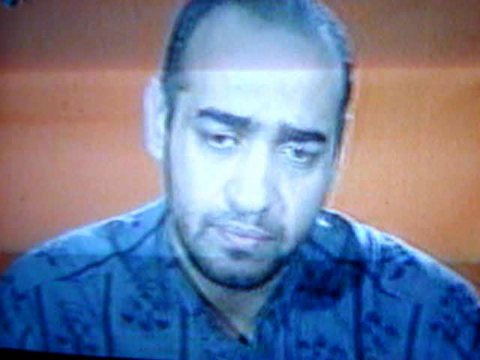
Saeed Hamedan was among the Ahwazi Arabs shown confessing to insurgency on Iran's Khuzestan TV, bringing the total number facing public execution in Ahwaz to 11.
Hamedan was sentenced to 20 years imprisonment in Ghaen, Isfahan province, some weeks ago. The 32 year old's appearance in the televised forced "confessions" indicate he will be in the mass executions of Arabs planned this week. Hamedan was a councillor from Ramshir City and is a licenced dealer of Fuji photographic products. His appearance on television among the accused is surprising as he has not been sentenced by the courts, indicating that his execution is the result of an illegal summary judgement by the Iranian authorities.
The 11 Ahwazi Arabs were convicted following one-day secret trials that have been condemned by human rights organisations inside and outside Iran as well as the lawyers for the accused.
The 11 men are:
1. Ali Mutairi from Mashour (Mahshahr)
2. Khalaf Khazeiri from Falahiyah (Shadegan)
3. Mohamad Chaab Pour from Tostar (Shoushtar)
4. Abdullah Farajulaah Chab from Tostar (Shoushtar)
5. Abdullah Solimani from Tostar(Shoushtar)
6. Majed Albu Ghubaish from Mashour (Mahshahr)
7. Ali Reza Asakre from Falahiyah (Shadegan)
8. Ghasem Salamat from Ahwaz City
9. Abdul Reza Sanawati from Ahwaz City
10. Saeed Hemidan from Khalafiyah (Ramshir)
11. Malek Banitamim from Tostar (Shoushtar)
Picture from Arabistan.org
Related stories: :
"Iran is guilty of ethnic cleansing" - Green MEPs - 14 November
Iran regime shows forced "confessions" on Khuzestan TV - 13 November
Mass executions of Ahwazis threaten Middle East security - 12 November
Ten Ahwazi Arabs to hang in public - 11 November
Psychologist sentenced to 20 years imprisonment - 18 October
"27 Ahwazi dissidents in custody" - Emadeddin Baghi - 9 September
Death sentence for Ahwazis confirmed by Supreme Court - 31 July
Son of Ahwazi sentenced to death appeals to Kofi Annan - 27 July
Urgent Appeal to EU Foreign Affairs Chief over Iran Executions - 11 July
Iran: Retry Ethnic Arabs Condemned to Death - 24 June
UNPO Urgent Appeal Concerning Ahwazi Executions
Ahwazis face arrest, deportation and execution - 1 June
Amnesty International: Eleven Ahwazis Face Execution - 17 May
Iran prepares for new round of executions in Ahwaz - 13 May
Executed: Young Men Hung by Iranian Tyrants - 2 March
Iran prepares to execute tribal family - 19 February
Iran sentences seven over Ahwaz bombings - 15 February
Iran increases repression in Ahwaz - 8 February
Ahwaz Bombings Come After Weeks of Unrest - 24 January
Labels: death penalty
permalink
keywords: ahvaz ahwaz ahwazi arabistan khuzestan khuzistan khuzestani arab arabistan iran iranian human rights security oil news ahmadinejad ethnic cleansing
.......................................................................................
13 November, 2006
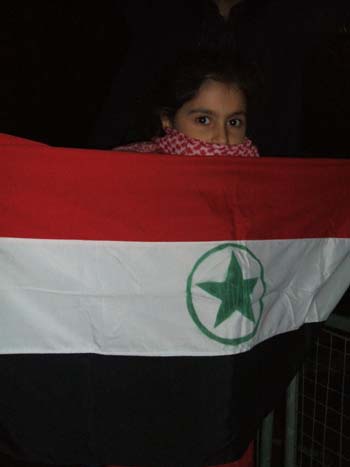 Ahwazi groups are coming together for a demonstration against ethnic cleansing and executions outside the Iranian Embassy, Prince's Gate in London, on Saturday at 1pm (
click here for directions
- nearest tube: South Kensington).
Ahwazi groups are coming together for a demonstration against ethnic cleansing and executions outside the Iranian Embassy, Prince's Gate in London, on Saturday at 1pm (
click here for directions
- nearest tube: South Kensington).
The protest is being organised by the Ahwaz Community Association of the UK and is supported by the Ahwaz Human Rights Organisation , Democratic Solidarity Party of Ahwaz , the Ahwaz Democratic Popular Front and the British Ahwazi Friendship Society . Other Iranian groups are also expected to show their solidarity.
Related stories: :
"Iran is guilty of ethnic cleansing" - Green MEPs - 14 November
Iran regime shows forced "confessions" on Khuzestan TV - 13 November
Mass executions of Ahwazis threaten Middle East security - 12 November
Ten Ahwazi Arabs to hang in public - 11 November
Psychologist sentenced to 20 years imprisonment - 18 October
"27 Ahwazi dissidents in custody" - Emadeddin Baghi - 9 September
Death sentence for Ahwazis confirmed by Supreme Court - 31 July
Son of Ahwazi sentenced to death appeals to Kofi Annan - 27 July
Urgent Appeal to EU Foreign Affairs Chief over Iran Executions - 11 July
Iran: Retry Ethnic Arabs Condemned to Death - 24 June
UNPO Urgent Appeal Concerning Ahwazi Executions
Ahwazis face arrest, deportation and execution - 1 June
Amnesty International: Eleven Ahwazis Face Execution - 17 May
Iran prepares for new round of executions in Ahwaz - 13 May
Executed: Young Men Hung by Iranian Tyrants - 2 March
Iran prepares to execute tribal family - 19 February
Iran sentences seven over Ahwaz bombings - 15 February
Iran increases repression in Ahwaz - 8 February
Ahwaz Bombings Come After Weeks of Unrest - 24 January
Labels: activism
permalink
keywords: ahvaz ahwaz ahwazi arabistan khuzestan khuzistan khuzestani arab arabistan iran iranian human rights security oil news ahmadinejad ethnic cleansing
.......................................................................................
 The following is a report published on the website of Green Party Member of the European Parliament Dr Caroline Lucas -
click here to view original
The following is a report published on the website of Green Party Member of the European Parliament Dr Caroline Lucas -
click here to view original
UN Secretary General Kofi Annan should insist Iranian President Mahmoud Ahmadinejad halts the executions of ten Iranian Arabs due to take place tomorrow, the European Parliament heard today.
UK Green Party MEPs Caroline Lucas and Jean Lambert have called on Mr Annan - as well as a range of senior EU and UN leaders - to step in and demand Tehran commutes the death sentences, which follow convictions in unfair trials based on evidence extracted under torture and widely condemned by human rights groups worldwide.
Dr Lucas, who represents South-East England, said: "These executions seem to be part of a deliberate campaign of ethnic cleansing of the Ahwazi Arabs, who make up three per cent of Iran's population, and the international community must intervene to stop them.
"All 10 men were tortured into making false confessions. None had a fair trial, according to both Amnesty International and Human Rights Watch."
As well as writing to Kofi Annan, she demanded immediate action from EU foreign policy chief Javier Solana, the EU's External Relations Commissioner Benito Ferrero-Waldner (with whom Dr Lucas first raised the issue of persecution of Ahwazi Arab persecution last month) and the UN's High Commissioner for Human Rights Louise Arbour.
London's Green Party MEP Jean Lambert said the men's convictions were in clear breach of international human rights standards.
"Their lawyers were not allowed to see them prior to their trial and they were given the prosecution case only hours before the start of the court proceedings, which were held in secret.
"The men must be released without charge or face new fair trials in accordance with internationally accepted standards," she added.
The Green Party MEP, who has been awarded for her work on Justice and Human Rights, today called on the European Parliament for urgent action to halt the executions.
She has previously written to the Iranian President, the British embassy and other relevant authorities on the issue and today raised the situation with the Iranian Embassy in London, as well as EU officials.
"The situation of these ten people is now desperate. I am adding my voice to the many asking for the death penalty not to be carried out," she said.
"Iran is a signatory to the International Covenant on Civil and Political Rights and should therefore grant these men a fair and public hearing by a competent, independent and impartial tribunal. By not doing so and continuing with the executions Iran will critically damage its international reputation."
The ten men in question were originally convicted of terrorism offences. Since the trial the lawyers have been arrested for complaining about the illegal and unjust nature of the trials, and have been charged with threatening national security. The men could be hanged as soon as tomorrow, according to Iranian media reports.
Human rights groups have warned that the trials form part of a wider campaign of ethnic cleansing by Tehran , which they say is 'waging a secret, racist war against its Arab population.'
Iran 's Arabs (known as the Ahwazi Arabs) reside predominantly in the south western province of Khuzestan and are believed to make up approximately three per cent of Iran's population. They represent a majority in Al-Ahwaz, an area which is home to most of Iran's oilfields.
According to the Ahwaz Human Rights Organization, over the course of the past year 25,000 Ahwazis have been arrested; 131 have been executed, and a further 150 have disappeared. Amnesty International has recently reported that Tehran has been imprisoning Ahwazi children along with their mothers in an attempt to force their political activist fathers to surrender to the police. Ahwazi political parties, trade unions and student groups are illegal. Arab candidates have been barred from standing for election.
The MEPs also called on the UN and EU to investigate the wider context and take immediate steps to ensure the protection and basic rights of the Ahwazi Arabs.
Dr Lucas added: "The international community must act now to prevent the escalation of yet another campaign of persecution against an ethnic minority. The UN and EU must send a clear message to Tehran that the world is watching - and is not prepared to stand by and find itself saying 'Never Again' again."
Related stories: :
Iran regime shows forced "confessions" on Khuzestan TV - 13 November
Mass executions of Ahwazis threaten Middle East security - 12 November
Ten Ahwazi Arabs to hang in public - 11 November
Psychologist sentenced to 20 years imprisonment - 18 October
"27 Ahwazi dissidents in custody" - Emadeddin Baghi - 9 September
Death sentence for Ahwazis confirmed by Supreme Court - 31 July
Son of Ahwazi sentenced to death appeals to Kofi Annan - 27 July
Urgent Appeal to EU Foreign Affairs Chief over Iran Executions - 11 July
Iran: Retry Ethnic Arabs Condemned to Death - 24 June
UNPO Urgent Appeal Concerning Ahwazi Executions
Ahwazis face arrest, deportation and execution - 1 June
Amnesty International: Eleven Ahwazis Face Execution - 17 May
Iran prepares for new round of executions in Ahwaz - 13 May
Executed: Young Men Hung by Iranian Tyrants - 2 March
Iran prepares to execute tribal family - 19 February
Iran sentences seven over Ahwaz bombings - 15 February
Iran increases repression in Ahwaz - 8 February
Ahwaz Bombings Come After Weeks of Unrest - 24 January
Labels: EU
permalink
keywords: ahvaz ahwaz ahwazi arabistan khuzestan khuzistan khuzestani arab arabistan iran iranian human rights security oil news ahmadinejad ethnic cleansing
.......................................................................................
 Amnesty International has issued an urgent action to stop the execution of ten Ahwazi Arabs wrongly accused of insurgency.
It urges human rights activists to write to Iran's Supreme Leader Ayatollah Sayed Ali Khamenei ( or ) and Head of the Judiciary Ayatollah Mahmoud Hashemi Shahroudi () to:
* express grave concern that the nine men (naming them) may be in imminent danger of execution
* urge the Iranian authorities to commute their death sentences immediately
* ask for details of the men's trial proceedings, including the specific charges against them, whether they have been granted access to independent lawyers of their choice, and of any appeals they may have made against their sentences
Click here for latest news on the executions
Labels: death penalty
permalink
keywords: ahvaz ahwaz ahwazi arabistan khuzestan khuzistan khuzestani arab arabistan iran iranian human rights security oil news ahmadinejad ethnic cleansing
.......................................................................................
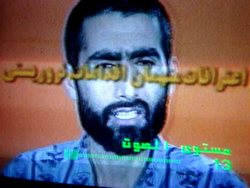 Khuzestan TV shown forced confessions of 10 Ahwazi Arabs due to be executed by public hanging this week.
International human rights organisations and Iranian and Ahwazi activists have condemned the trials and sentencing. Members of the British and European Parliaments contacted by BAFS - including Green MEP Caroline Lucas, Labour MP Chris Bryant and Conservative MP Michael Gove - have expressed horror at the executions and are appealing for the British government and the European Commission to take urgent action.
Click here to download "confessions"
Picture from Arabistan.org
Related stories: :
Mass executions of Ahwazis threaten Middle East security - 12 November
Ten Ahwazi Arabs to hang in public - 11 November
Psychologist sentenced to 20 years imprisonment - 18 October
"27 Ahwazi dissidents in custody" - Emadeddin Baghi - 9 September
Death sentence for Ahwazis confirmed by Supreme Court - 31 July
Son of Ahwazi sentenced to death appeals to Kofi Annan - 27 July
Urgent Appeal to EU Foreign Affairs Chief over Iran Executions - 11 July Iran: Retry Ethnic Arabs Condemned to Death - 24 June
UNPO Urgent Appeal Concerning Ahwazi Executions
Ahwazis face arrest, deportation and execution - 1 June
Amnesty International: Eleven Ahwazis Face Execution - 17 May
Iran prepares for new round of executions in Ahwaz - 13 May
Executed: Young Men Hung by Iranian Tyrants - 2 March
Iran prepares to execute tribal family - 19 February
Iran sentences seven over Ahwaz bombings - 15 February
Iran increases repression in Ahwaz - 8 February
Ahwaz Bombings Come After Weeks of Unrest - 24 January
Labels: death penalty
permalink
keywords: ahvaz ahwaz ahwazi arabistan khuzestan khuzistan khuzestani arab arabistan iran iranian human rights security oil news ahmadinejad ethnic cleansing
.......................................................................................
12 November, 2006
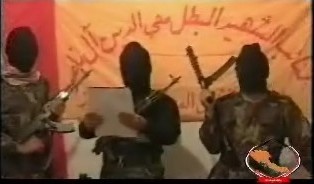
Militant groups are engaging in a recruitment drive among disillusioned Ahwazi Arab youth and have pledged a wave of attacks on oil installations in revenge for planned mass executions in Ahwaz City this week.
The separatist Arab Struggle Movement for the Liberation of Arabistan's armed wing has issued a statement warned of "consequences" for the Iranian regime, which it described as a brutal racist system. It claimed that if executions of 10 Ahwazi Arabs go ahead this week, it would attack cities across Iran. Click here to view a call to war by the Mohieldain Al-Naser Martyrs Brigade .
Another separatist group, the Ahwazi Arab Renaissance Party, has claimed that two bomb attacks in commercial areas of Ahwaz over the weekend were the work of the "Ahwazi resistance", although the party itself has not claimed responsibility. A party spokesman, Kazem Hamed Alvarhani, said that if the executions are carried out, the Iranian authorities will "pay dearly." He indicated that ethnic Persians living in the Ahwaz region "will not be able to live in safety." ( click here to download the statement )
The Iranian regime has effectively quashed all moderate Ahwazi movements by banning Ahwazi NGOs and jailing cultural and human rights activists. This month, the government outlawed the Lejnat Al-Wefaq, an Arab reformist group led by former parliamentarian Jasem Shahdidzadeh Al-Tamimi that supported legal and constitutional means to campaign for human rights for Ahwazi Arabs ( click here for details ). Wefaq had been condemned by Arab separatist groups who claimed it was set up by the regime to distract Ahwazis from seeking the recreation of an independent Arabistan, the name for the Ahwazi homeland before its invasion by Persian monarch Reza Pahlavi in 1925.
Nasser Bani Assad, spokesman for the British Ahwazi Friendship Society (BAFS), said: "We will be calling on Ahwazis to ignore calls for communal violence, for this will give the regime reasons for more violent action against peaceful, freedom-loving Ahwazi Arab civilians. President Ahmadinejad will use any call to arms for his own benefit. We also call on all Iranians to show solidarity with Ahwazi Arabs, so that they do not feel isolated and abandoned by democratic forces in Iran.
"However, with Wefaq banned, moderates facing execution and the international community failing to respond to the ethnic cleansing of Ahwazi Arabs from their traditional lands, militant groups will attempt to step up their campaign, which has so far been limited to arson attacks and sabotage. There is a very real prospect that these militias will look for alliances and arms supplies from other groups in the Middle East.
"Failure to address the plight of the Ahwazi Arabs could broaden the conflict in Iraq and sideline the Ahwazi Arab majority who favour peace and human rights. The extremists will attempt to succeed where the moderates fail and this is entirely due to the violent aggression of the Iranian state and the indifference of the international community.
"The world cannot continue to ignore the unrest as militants will target oil installations in the Ahwaz region, which supplies 90 per cent of Iranian oil. This will have a major impact on oil markets, which are already experiencing sustained high prices."
Labels: death penalty
permalink
keywords: ahvaz ahwaz ahwazi arabistan khuzestan khuzistan khuzestani arab arabistan iran iranian human rights security oil news ahmadinejad ethnic cleansing
.......................................................................................
11 November, 2006
A bomb has exploded in a residential area of Ahwaz ahead of mass executions of Ahwazi Arabs in the restive city.
No-one was hurt in the bomb blast, which occurred at 23:46 local time on Friday night and shattered the windows of nearby buildings. Iran has blamed past bomb attacks on Ahwazi groups it alleges are supported by the British government, although it has failed to provide any evidence to substantiate its claims.
The regime is planning to execute 10 Ahwazi Arabs after their convictions for mohareb (enmity with God) following trials that have been condemned by Iranian and international human rights organisations ( click here for further details ). The men are expected to appear in televised 'confessions' on Khuzestan TV in the next day or two, as was the case with the public executions of Mehdi Nawaseri and Ali Afrawi in March ( click here for further details ).
Many Ahwazis suspect that the Directorate General of Special Operations (DGSO) is behind some or all of the bomb attacks in Ahwaz. The DGSO was responsible for an attack on Imam Reza shrine which killed a number of pilgrims in June 1994, during Rafsanjani's administration. At the time, the attack was blamed on opposition groups. Iranian defectors later revealed that the attacks were a stage-managed by the DGSO in an attempt to force foreign governments into halting the activities of exiled opposition groups. The DGSO was reponsible for the murders of Christian priests, which were also initially blamed on foreign opposition groups but later revealed to be masterminded by the group. Yesterday's bomb attack in Ahwaz was probably intended to stir up public sentiment against Ahwazi Arabs ahead of the executions.
Nasser Bani Assad, spokesman for the British Ahwazi Friendship Society (BAFS), said: "No Ahwazi group would attack residents of an Arab city since this would undermine their attempts to win support from the local population. There are suspicions that these bomb attacks are the work of the government's Bassij militias in an attempt to create the casus belli for violence against Ahwazi Arab rights activists. Last year, the government blamed Ahwazi separatists for simultaneous attacks in Ahwaz and Tehran, caused by powerful plastic explosives. It is impossible for any Ahwazi group to carry out such attacks - they would not have the resources or the organisational capacity.
"We are convinced that all the men facing execution are entirely innocent of the charges against them. Their execution will be a crime against humanity and we will be campaigning for an international arrest warrant for Abbas Jafari, the Director General of Khuzestan's Justice Department who prevented the men from having a fair trial and directed the judges in the revolutionary courts to deliver guilty verdicts."
Labels: death penalty
permalink
keywords: ahvaz ahwaz ahwazi arabistan khuzestan khuzistan khuzestani arab arabistan iran iranian human rights security oil news ahmadinejad ethnic cleansing
.......................................................................................
10 November, 2006
The Iranian Supreme Court has confirmed death sentences for 10 Ahwazis convicted of bomb attacks in Ahwaz and will be publically hung very soon, according to the Iranian media.
 Abbas Jafari (pictured), the Director General of Khuzestan's Justice Department, said 19 people had been convicted of
mohareb
(enmity with God) and 10 will be hung in Ahwaz City. The others have been exiled or sentenced to long prison terms.
Abbas Jafari (pictured), the Director General of Khuzestan's Justice Department, said 19 people had been convicted of
mohareb
(enmity with God) and 10 will be hung in Ahwaz City. The others have been exiled or sentenced to long prison terms.
He told Khuzestan TV: "These people, according to Islamic punishment laws, have been identified as elements who have waged war on God and therefore execution rulings have been issued in their cases. The rulings have been reviewed at the highest judicial levels and then endorsed. The cases were quite large and many senior judges were involved in reviewing them. We will pave the way for the rulings to be carried out."
The judgements on the men have been condemned by their lawyers and Iranian human rights activists as well as activists abroad. The lawyers of the accused have written to the President and senior judicial officials regarding the serious irregularities in the court cases, including preventing them from meeting with their clients and forced confessions. The regime responded by arresting the lawyers, all but one of whom are Ahwazi Arabs. According to a recent report by the official Iranian Labour News Agency (ILNA), Khalil Saeedi, Mansur Atashneh, Dr Abdulhasan Haidari, Jawad Tariri, Faisal Saeedi and Taheri Nasab - the lawyers representing the accused - were questioned in Branch 7 of the Ahwaz Revolutionary Court and later released on bail. They were accused of threatening national security by making his letter of complaint public - the letter was subsequently published on websites belonging to Ahwazi Arab groups. ( click here to read the ILNA report )
Human Rights Watch has released a statement calling for an immediate halt to the executions and the revoking of the death penalty. It said: "The death sentences were imposed following secret trials that Human Rights Watch said could not be considered to meet international standards."
 Sarah Leah Whitson, Director of HRW's Middle East and North Africa division, said: "Iran's opaque judicial system denies people due process and then hands down a death sentence after a one-day trial. The Judiciary should stop these executions."
Those facing the death penalty include Zamel Bawi, Jaafar Sawari, Risan Sawari and Abdulreza Nawaseri, who were sentenced on 8 June after a one-day trial in which there were no witnesses. According to HRW, "the Judiciary has not provided dates and details of trials for the other nine men sentenced to death."
Two of those sentenced to death, Nazem Bureihi and Abdolreza Nawaseri, were already serving prison sentences for insurgency at the time of the bomb attacks for which the regime claims they were responsible.
"One of the wonders of the Iranian Judiciary is that it can accuse a person of carrying out bombings while he's in prison," said Whitson. "That lays bare the arbitrariness of his conviction."
In an article in The Times, British human rights campaigner Peter Tatchell also raised concerns about the trial, pointing out that three of the accused â Hamza Sawa- eri, Jafar Sawari and Reisan Sawari â say that they were nowhere near the Zergan oilfield the day it was bombed ( click here to read the article ).
Tatchell wrote: "The death sentences seem designed to silence protests by Iran's persecuted ethnic Arabs." He has also accused Iran of ethnic cleansing Ahwazi Arabs from their homeland.
Related stories: :
Psychologist sentenced to 20 years imprisonment - 18 October
"27 Ahwazi dissidents in custody" - Emadeddin Baghi - 9 September
Death sentence for Ahwazis confirmed by Supreme Court - 31 July
Son of Ahwazi sentenced to death appeals to Kofi Annan - 27 July
Urgent Appeal to EU Foreign Affairs Chief over Iran Executions - 11 July Iran: Retry Ethnic Arabs Condemned to Death - 24 June
UNPO Urgent Appeal Concerning Ahwazi Executions
Ahwazis face arrest, deportation and execution - 1 June
Amnesty International: Eleven Ahwazis Face Execution - 17 May
Iran prepares for new round of executions in Ahwaz - 13 May
Executed: Young Men Hung by Iranian Tyrants - 2 March
Iran prepares to execute tribal family - 19 February
Iran sentences seven over Ahwaz bombings - 15 February
Iran increases repression in Ahwaz - 8 February
Ahwaz Bombings Come After Weeks of Unrest - 24 January
Labels: death penalty
permalink
keywords: ahvaz ahwaz ahwazi arabistan khuzestan khuzistan khuzestani arab arabistan iran iranian human rights security oil news ahmadinejad ethnic cleansing
.......................................................................................
07 November, 2006
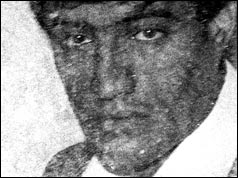 A parole board is to rule on the release of the only surviving hostage taker involved in the 1980 Iranian Embassy Siege, Fowzi Badavi Nejad, in January.
An Ahwazi Arab and former member of the Democratic Revolutionary Movement for the Liberation of Arabistan, he was just 23 when he took part in the siege. The other hostage-takers were killed when the SAS stormed the building to release the hostages. Nejad was sentenced to life imprisonment (25 years) for conspiracy to murder in 1981. Two hostages were killed in the incident, but Nejad was never accused of murder. Some hostages testified that Nejad had prevented further killings towards the end of the siege.
Nejad's prison tariff was reduced from 25 to 22 years in 2004 by the Court of Appeal, with the backing of the Lord Chief Justice Lord Woolf. However, he remained in prison under the orders of the then Home Secretary David Blunkett, whose anti-terrorist legislation was recently ruled illegal by the courts.
Now aged 49, he is said to be a reformed character and his group has disbanded, which indicates that he is no longer a threat to the UK - the group had never targetted Britain or its interests. Ahmad Dadgar, one of the hostages, has campaigned for his release, claiming that Nejad has been adequately punished for his actions and calling on the British government to give him political asylum. Dadgar, a leading Iranian diplomat at the time, was shot during the siege.
His view is shared by Robin Horsfall, one of the SAS officers involved in freeing the hostages, who told the Guardian newspaper in February 2005: "I'd have no problem with him staying in this country. We should say, 'Well, you've paid your debt to society,' and we should let him get on with the rest of his life."
Prisoner officers have told the media that Nejad plans to campaign to prevent British Muslims from joining terrorist organisations. A prison officer told one newspaper that "Nejad has grown into a model inmate. He has educated himself, shown remorse and is eager to give something back to the country he once terrorised."
A parole board ruling for Nejad's release will cause problems for the British government's relations with Iran. He cannot be returned to Iran as he will be executed. In September, Iran's Foreign Ministry spokesman Mohammad Ali Hosseini accused the British government of hypocrisy for planning a "premature amnesty" for Nejad, who he claimed was a terrorist. At the same time, he also accused London's Metropolitan Police of supporting terrorism by allowed the British Ahwazi Friendship Society (BAFS) to demonstrate outside the House of Commons ( click here for further details ).
Tehran has already accused the UK of sponsoring Ahwazi separatism in Khuzestan. Iran claims that British and Americans are inflaming ethnic tension in the province. Demonstrations in April, which led to the killing of more than 160 unarmed Ahwazis by Iranian security services, were followed by a string of bomb attacks in Ahwaz City on 12 June. Ahwazi groups point out that the unrest is rooted in the Iranian government's campaign of ethnic cleansing and the impoverishment of Ahwazi Arabs, but Tehran is eager to blame the US and UK. The government is alleging foreign involvement in Khuzestan to back up its claim that the UK and US are preparing for an invasion of Iran and to justified continuing repression of Ahwazi Arabs.
BAFS spokesman Nasser Bani Assad said: "Nejad was a naive young man who was recruited into a terrorist organisation that was manipulated by Iraq during the Iran-Iraq War. At the time, Iraq was attempting to use long-standing grievances among Ahwazi Arabs to bolster its invasion of Iran. But the conflict between Iran and Iraq is over, Saddam Hussein is now a convicted criminal and Fowzi Nejad is a reformed individual.
"We condemn his past actions, but hope that the British people will understand that he does not pose a threat to them. In fact, his desire to campaign against terrorism will be invaluable in the campaign to stop young British Muslims making the same mistake as he did.
"We hope that in the event of any asylum application, the Home Office will ignore the rhetoric from Tehran and understand that if he is deported to Iran he will face torture and will be executed."
Labels: UK
permalink
keywords: ahvaz ahwaz ahwazi arabistan khuzestan khuzistan khuzestani arab arabistan iran iranian human rights security oil news ahmadinejad ethnic cleansing
.......................................................................................
04 November, 2006
The Iranian regime has banned an Ahwazi Arab group campaigning for minority rights, claiming that it was behind the unrest in Al-Ahwaz (Khuzestan).
According to the official Iranian Students News Agency (ISNA), the Ahwaz prosecutor's office released a statement todayn stating that the Lejnat Al Wefagh does not have permission to engage in political activities and has been declared illegal due to it's alleged opposition to the Islamic regime and encouraging communal violence. Anyone associated with the party is therefore guilty of mohareb (enmity with God), which carries the death penalty.
The Lejnat Al-Wefaq was set up in 1999 to support minority rights by constitutional means, using Article 15 of the Iranian Constitution to support its case that Ahwazi Arabs are legally entitled to equal cultural, linguistic, economic and political rights.
 The group participated in elections and its general secretary, Jasem Shadidzadeh Al-Tamimi (pictured speaking in parliament), succeeded in winning a parliamentary seat in the Sixth Majlis (2000-04) as well as winning all but one seat on the Ahwaz municipal council in 2003 (
click here for more details
). However, in the last parliamentary elections in 2004, conservatives in the regime barred candidates nominated by Lajnat Al-Wefagh. The group was dismantled, closing down legal possibilities for demands for Ahwazi rights.
The group participated in elections and its general secretary, Jasem Shadidzadeh Al-Tamimi (pictured speaking in parliament), succeeded in winning a parliamentary seat in the Sixth Majlis (2000-04) as well as winning all but one seat on the Ahwaz municipal council in 2003 (
click here for more details
). However, in the last parliamentary elections in 2004, conservatives in the regime barred candidates nominated by Lajnat Al-Wefagh. The group was dismantled, closing down legal possibilities for demands for Ahwazi rights.
A ban on the party participating in elections led many Ahwazi Arabs to conclude that they could not expect the regime to respect their constitutional right to equality, leading to ethnic unrest. In April 2005, Ahwazi Arabs staged an uprising against the confiscation of their land and racial discrimination. The government of President Mohammed Khatami responded by brutally clamping down on the demonstrators, leading to 51 confirmed deaths ( click here for more information ). The use of state terror has continued with at least 25,000 arrests and hundreds of killings, executions and disappearances.
Lejnat Al-Wefaq's former Majlis member Jasem Shadidzadeh Al-Tamimi appealed to the government to accede to Ahwazi demands for cultural tolerance and an end to racial discrimination and land confiscation. In an open letter to President Khatami, he urged him to "do your utmost in lowering the 'wall of mistrust' between the proud Iranian ethnicities, so that the 'infected wounds' of the Arab people of Ahwaz may heal." ( click here for further details ) In response, the government detained Al-Tamimi, but released him without charge - although regime hardliners have called for his arrest and he has faced at least one assassination attempt. Dozens of Wefaq activists have been imprisoned and many have escaped into exile.
Nasser Bani Assad, spokesman for the British Ahwazi Friendship Society (BAFS), said: "Most Ahwazi Arabs will interpret the move to outlaw a party that stands for reconciliation with the Islamic Republic as a sign that the regime is keen to obstruct the equal rights they have been granted under the Iranian Constitution. Without any way of exercising their grievances through legal means and seemingly without any international condemnation of the regime's racism and ethnic cleansing measures, a growing number of Ahwazi Arabs will take increasingly extreme measures.
"Banning the Lejnat Al-Wefaq has closed any channel of communication between the Ahwazis and the regime and unfortunately many will see the only option is direct confrontation. The move will also have far reaching implications for the stability of Iran and the Middle East and oil markets.
"We can expect to see an increase in the sabotage of oil installations and a heightening in the cycle of violence and retribution in the Ahwaz region. Separatist sentiment is also likely to rise further as Ahwazis have little interest in being governed by an elite in Tehran that refuses to obey its own constitutional requirement to equal rights. The alienation of Ahwazi Arabs is only helping to polarise opinion, marginalising moderates like Shadidzadeh.
"Ahwazi democrats fear that the failure of the international community to take action to address the serious problems affecting Ahwazi Arabs is inflaming the situation further, leading to a growth in extremism and a wider security problems and a threat to global oil supplies - the Ahwaz region's oilfields contain 90 per cent of Iran's oil reserves."
Labels: activism
permalink
keywords: ahvaz ahwaz ahwazi arabistan khuzestan khuzistan khuzestani arab arabistan iran iranian human rights security oil news ahmadinejad ethnic cleansing
.......................................................................................
02 November, 2006
Ahwazis were among the hundreds demonstrating outside Chatham House in London where former Iranian president Mohammad Khatami was lecturing on Iran domestic and foreign policies.
Chatham House is one of the world's leading think tanks for the analysis of international issues. At the meeting, Khatami discussed the use of torture and the recent British debate about the Muslim veil.
Mohammed Khatami presided over an administration that executed hundreds of its opponents, oppressed women and ethnic and religious minorities and crushed student and trade union activism.
Yet, the British establishment is praising this human rights abuser as a "reformist" and awarding him with an honorary doctorate at one of the UK's leading universities. Khatami is neither a reformer nor a democrat, but a murderous tyrant. Numbering five million people, Iran's Ahwazis are just one of many groups that faced violent persecution under Khatami and continue to face state terrorism under his successor, Mahmoud Ahmadinejad.
Khatami's stated plan, revealed in letters leaked to Al-Jazeera TV last year, was to reduce the Arab population from 70 per cent of the total population of Khuzestan - known to its Ahwazi Arab inhabitants as Al-Ahwaz or Arabistan - to 30 per cent by forcing Ahwazi Arabs out of their homes and enticing people from outside the province with jobs and interest-free loans denied to the indigenous population. Under Khatami, Ahwazi Arabs faced an official policy of discrimination and repression that has led to African levels of poverty - yet their homeland is one of the world's most oil-rich areas and the backbone of the Iranian economy!
Last year while Khatami was still in power, UN Special Rapporteur Miloon Kothari visited the areas devastated by Khatami's violent campaign which made hundreds of thousands of Ahwazi Arabs homeless in their own land. This is what he had to say: "[I]n Khuzestan [...] large development projects, like petrochemical plants, are being built leading to the displacement of entire villages - with thousands of people not consulted on the projects, informed of the impending displacement, nor offered adequate resettlement and compensation [...] the compensation being offered to the Arab villagers who were being displaced is sometimes one fortieth of the market value - and there is nothing they can do about it. It's a fait accompli. And all of these phenomena are continuing. It's something that is happening almost every day."
In April 2005, Ahwazi Arabs staged an unarmed uprising against Khatami's ethnic cleansing programme. The 'reformist' president moved swiftly to crush the intifada, with 25,000 Ahwazis arrested and hundreds more executed, killed unlawfully or 'disappeared'. Entire families have been imprisoned, including children as young as two and four years old.
Pictures of Ahwazis in the anti-Khatami demonstration outside Chatham House:
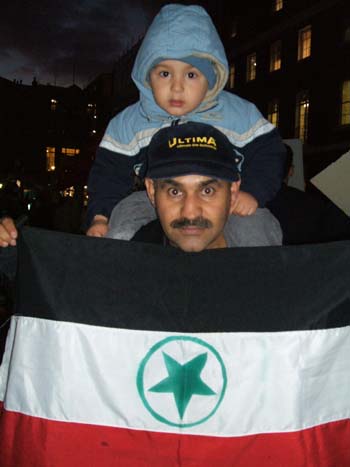
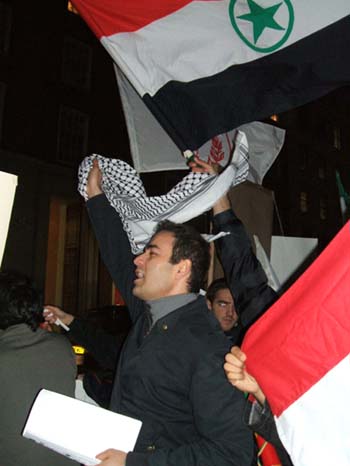
Labels: activism , UK
permalink
keywords: ahvaz ahwaz ahwazi arabistan khuzestan khuzistan khuzestani arab arabistan iran iranian human rights security oil news ahmadinejad ethnic cleansing
.......................................................................................
