




Ahwazi Arab activists have condemned the treatment of gay rights activist Peter Tatchell (pictured) and other demonstrators in Moscow at the weekend. Peter has worked tirelessly for minority groups such as the Ahwazi Arabs, forging solidarity with people facing discrimination on the basis of their race, ethnicity, religion, gender and sexuality.
Dr Karim Abdian, Director of the Ahwaz Human Rights Organisation (AHRO), said: "It's a sad day for peace and democracy in general and democracy in Russia in particular when well-known human rights advocates and defenders such as Peter Tatchell and Marco Cappato are arrested and beaten in broad daylight in full view of Russian police in Moscow. Peter Tatchell, a British icon in human rights, and Mr Cappato, an MP in European Parliament and a leader of the Italian Radical Party, are friends and supporters of the Ahwazi Arab ethnic minority in Iran. We condemn the arrests and beating of Peter Tatchell and his delegates and request their release immediately. We also hold the Russian government responsible for their well-being."
British Ahwazi Friendship Society activists have also joined in the condemnation of the beatings and arrests. Ali Bani Torfi said: "We call for the release of Peter Tatchell and his comrades immediately. We call for solidarity with Peter and condemn his arrest. He was punched in the head in full view of police. The act of Russian police was appeared to support the ultra-nationalists and Orthodox Church hardliners. The Iranian regime violates the freedom of speech of Ahwazi Arabs by preventing them from holding demonstrations. The Russian government is doing the same to activists in Moscow. Peter is a good friend of the oppressed and downtrodden peoples like the Ahwazi Arabs in Iran. He fought to save the lives of many Ahwazi Arab activists who were arrested by the Iranian regime. All these nations must now stand with Peter and call the UK and EU governments to intervene and pressure Russia to release them without delay."
Yasser Assadi added: "We Ahwazis give our support to the human rights activist Peter Tatchell who is not only acting for gay rights but also other human rights issues such as minority rights. He has helped the oppressed Ahwazi people raise their voice at an international level. We believe that he should be freed and should not be treated inhumanely."
Labels: activism
permalink
keywords: ahvaz ahwaz ahwazi arabistan khuzestan khuzistan khuzestani arab arabistan iran iranian human rights security oil news ahmadinejad ethnic cleansing
.......................................................................................
25 May, 2007
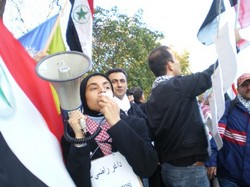 Ahwazi Arab feminists have condemned the Iranian regime's bullying tactics over the enforcement of strict dress codes on women.
Many Iranian women associate the hejab (Islamic headscarf) with an "alien" Arabic culture, but Ahwazi Arab women's rights activists insist that no woman should be compelled by the government to wear it. They have also hit out against the Iranian regime's increased restrictions on women's clothing. The Iranian airport police are preventing women from travelling on airlines if they are dressed in an "un-Islamic" fashion and have issued over 17,000 official warnings to Iranian women and convicted a further 80. This month, the Iranian police launched an extensive campaign against violations of the uniforms women are forced to wear.
The regime has been ruthless against Ahwazi Arab women deemed to be "poorly covered". According to reports received by the British Ahwazi Friendship Society (BAFS), a woman in the Kut-abdulla district of Ahwaz City was harassed by police and her hair was cut off because her fringe was showing. In response, the woman's family fought with the police. Some Ahwazi activists complain that ethnic minorities face worse treatment because they are less able to raise their voice against the authorities. News on the regime's brutal treatment of women tends to concentrate on women in Tehran.
A London-based Ahwazi women's rights activist said: "I am wearing Hijab because I have chosen to do it, even being in a free society such as the UK, but I strongly condemn the Iranian plan to implement their interpretation of Islamic obligations. Women should have a choice to chose, not forced to obey. This kind of action will tarnish Islam, this government should understand that Ahwazi women consider Hejab as a part of their Arab culture, so they don't need to teach us how to cover ourselves."
Labels: women
permalink
keywords: ahvaz ahwaz ahwazi arabistan khuzestan khuzistan khuzestani arab arabistan iran iranian human rights security oil news ahmadinejad ethnic cleansing
.......................................................................................
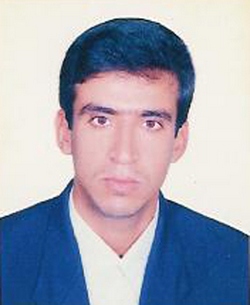 Amnesty International issued an appeal for the release of Ahwazi Arab journalist Mohammad Hassan Fallahiya, who has been given a three year prison sentence for criticising the Iranian regime.
Amnesty has declared that Fallahiya is a "prisoner of conscience detained solely for the peaceful exercise of his rights to freedom of expression and association" and has expressed concern that he is "at risk of torture or ill-treatment." Fallahiya suffers from sickle cell anaemia, a common condition among Ahwazi Arabs, as well as a heart condition but is reportedly being denied medical treatment. He requires constant treatment with antibiotics and access to medical examinations. His relatives fear he may die if he is not treated.
Since November 2006, he has been imprisoned in Section 209 of Evin Prison, which is run by the Ministry of Intelligence which uses it to torture political prisoners and conduct summary killings. A number of other prominent Ahwazis are being held in Section 209, including 60 year old Dutch national Faleh Abdullah al-Mansouri and UNHCR-registered refugees abducted from Syria last year.
On 21 April, he was reportedly sentenced to three years' imprisonment with hard labour. According to Amnesty International, "he was not afforded legal representation at any point in the judicial process, in violation of international fair trial standards."
Fallahiya is the managing editor of Aqlam al-Talaba ( The Students' Pens ), a publication issued by the students in Ahwaz University in
Khuzestan province. He is also a correspondent for several Arab television and radio broadcasting news agencies including Abu Dhabi TV and Radio, in the United Arab Emirates (UAE) and a journalist for the Lebanese al-Mustaqbal broadcasting
corporation.
Meanwhile, another prominent Ahwazi Arab journalist, Youssef Azizi Bani Torouf, is facing accusations by supporters of President Mahmoud Ahmadinejad that he is a pan-Arabist and is in contact with British and Israeli intelligence services. Ahwazi activists fear that he may soon be taken into custody due to the allegations against him and attempts to kidnap his son, a UNHCR-registered refugee in Syria.
Click here for Amnesty's appeal for Mohammad Hassan Fallahiya's release
Labels: Amnesty , human rights , media
permalink
keywords: ahvaz ahwaz ahwazi arabistan khuzestan khuzistan khuzestani arab arabistan iran iranian human rights security oil news ahmadinejad ethnic cleansing
.......................................................................................
24 May, 2007
 British Foreign Minister Kim Howells has expressed "deep concern" about Iran's execution of Ahwazi Arabs and has pledged to take "all available opportunities to make clear to the Iranian authorities our concerns about minority rights in Iran."
Writing to the British Ahwazi Friendship Society (BAFS) in response to a joint appeal by Ahwazi groups to Prime Minister Tony Blair, Mr Howells recognised that religious and ethnic minorities in Iran continued to face "intimidation and discrimination" by the regime. The minister, who has responsibility for British relations with the Middle East, highlighted British attempts to try to halt the execution of Ahwazi Arab activists. He also supported EU and UN General Assembly condemnation of human rights violations against minorities, including Arabs, Kurds, Balochis, Christians, Jews and Sunni Muslims.
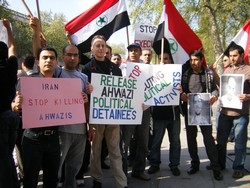 The joint appeal by Ahwazi groups was made in April on the second anniversary of the Ahwazi intifada and was signed by the Ahwazi Community in the UK, Ahwazi Arab People's Democratic Popular Front, the Ahwazi Women's Centre, the British Ahwazi Friendship Society, the Ahwazi Human Rights Organisation, the Democratic Solidarity Party of Al-Ahwaz and the National United Movement of Al-Ahwaz. Activists handed in their petition to the Prime Minister's residence during a demonstration outside Downing Street in Westminster, which was supported by leading British human rights activist Peter Tatchell (pictured).
Click here to read the appeal
.
The joint appeal by Ahwazi groups was made in April on the second anniversary of the Ahwazi intifada and was signed by the Ahwazi Community in the UK, Ahwazi Arab People's Democratic Popular Front, the Ahwazi Women's Centre, the British Ahwazi Friendship Society, the Ahwazi Human Rights Organisation, the Democratic Solidarity Party of Al-Ahwaz and the National United Movement of Al-Ahwaz. Activists handed in their petition to the Prime Minister's residence during a demonstration outside Downing Street in Westminster, which was supported by leading British human rights activist Peter Tatchell (pictured).
Click here to read the appeal
.
Labels: activism , UK
permalink
keywords: ahvaz ahwaz ahwazi arabistan khuzestan khuzistan khuzestani arab arabistan iran iranian human rights security oil news ahmadinejad ethnic cleansing
.......................................................................................
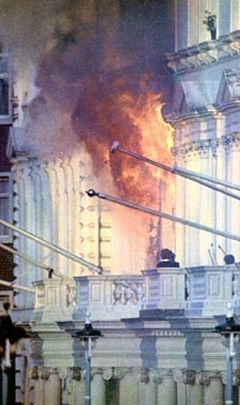 An Iranian diplomat caught up in the 1980 Iranian Embassy Siege in London has accused the British government of deliberately killing the embassy's press attaché Abbas Lavasani during the SAS raid that ended the siege.
Speaking 27 years after the siege, Dr Gholam Ali Afrouz has called for the British government to pay compensation for "murdering" Lavasani, according to a Fars News Agency report .
The siege was carried out by the Democratic Revolutionary Movement for the Liberation of Arabistan, which demanded the release of Ahwazi prisoners and autonomy for the Ahwazi Arab homeland. Only one hostage taker, Fowzi Badawi Nejad, survived the SAS raid. He was sentenced to life imprisonment (25 years) for conspiracy to murder in 1981 but remains in prison on the orders of the Home Secretary, despite having his tariff reduced to 22 years in 2004 by the Court of Appeal.
Lavasani was one of two hostages were killed in the siege. He was killed and his body was dumped outside the embassy before the SAS stormed the building.
Afrouz's accusations that the SAS had killed Lavasani appear to be an attempt to rally anti-British sentiment in Iran and ensure that Fowzi Nejad is handed over to the Iranian authorities on his release. However, earlier this year the British government suspended a memorandum of understanding with Iran governing the deportation of Iranian asylum seekers, a move that has infuriated Iran.
Labels: UK
permalink
keywords: ahvaz ahwaz ahwazi arabistan khuzestan khuzistan khuzestani arab arabistan iran iranian human rights security oil news ahmadinejad ethnic cleansing
.......................................................................................
Concerns are growing over the fate of Mohammad-Hussein Falahieh (pictured), a leading Ahwazi Arab journalist who was arrested in March and is being tortured in Iran's notorious Prison 209.
Falahieh is 29 years old and is married with one child. He has served as chief editor of Aghlam-ol-Talaba newspaper and has also worked as a radio and television journalist, including work as a news presenter on the Iranian government's Al-Alam TV. He also worked for Dubai-based radio and television stations and had a regular newspaper column in leading Arabic newspapers in the Middle East. His last job was a Arabic/Farsi translator at the Algerian Embassy in Tehran.
The British Ahwazi Friendship Society (BAFS) believes that the Iranian regime is attempting to prevent reporting of crimes against humanity against the Ahwazi Arabs and is arresting all Ahwazi Arabs with any connection to the media as a precaution. There is no proof that any Ahwazi journalist is involved in stirring up ethnic unrest in Iran, apart from "confessions" extracted under torture. BAFS calls for the immediate release of all Ahwazi journalists.
Labels: media
permalink
keywords: ahvaz ahwaz ahwazi arabistan khuzestan khuzistan khuzestani arab arabistan iran iranian human rights security oil news ahmadinejad ethnic cleansing
.......................................................................................
 Tehran-based Ahwazi Arab journalist and writer Youssef Azizi Bani Torouf (pictured) has been condemned as a pan-Arabist in league with Britain by the hardline pro-Ahmadinejad website Raja News (
click here for article
).
Tehran-based Ahwazi Arab journalist and writer Youssef Azizi Bani Torouf (pictured) has been condemned as a pan-Arabist in league with Britain by the hardline pro-Ahmadinejad website Raja News (
click here for article
).
Bani Torouf was condemned by Raja News for publishing articles on the London-based Arabic language news website Elaph , which it describes as the "Arabic BBC". He has faced a number of attacks from the Iranian establishment for writing on the situation affecting Ahwazi Arabs.
Bani Torouf, who has written over 20 books in both Arabic and Farsi, was arrested following the Ahwazi Arab intifada in April 2005 but released weeks later after leading a prison hunger strike against the use of torture, poor prison conditions and detention without trial. In March, his son 20 year old Afnan was among a group of Ahwazi refugees who were arrested and detained in Syria in preparation for deportation to Iran. The refugees were released in April following an intensive lobbying campaign by Ahwazi, Syrian and international human rights groups and appeals by Bani Torouf in the Arabic media.
Bani Torouf has been threatened with arrest and prosecution in relation to hardline claims that he supports separatism, although he has stated that the "Arabs of Khuzestan, as a nation or an ethnic group or whatever you like to call it, are inseparable parts of the Iranian nation." The accusations in Raja News are an attempt to warn and silence him.
Labels: media
permalink
keywords: ahvaz ahwaz ahwazi arabistan khuzestan khuzistan khuzestani arab arabistan iran iranian human rights security oil news ahmadinejad ethnic cleansing
.......................................................................................
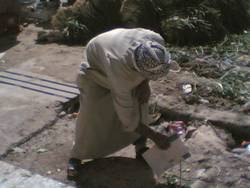 By Redha Amini and Ali Bani Torfi
The Arab-majority province of Khuzestan is suffering from long-term political negligence and economic deprivation, despite being rich of oil and gas and serving as a hub for industrial and exoports, according to the Farsi language Karoon newspaper.
In an article entitled "Khuzestan is the richest province, but ..." published on 6 May, the newspaper states that out of a population of 4.35 million, 1.46 million live in the countryside where there are problems of under-employment while official unemployment in the province is up to 20 per cent. Despite the province's fertility and potential in agriculture, farms are suffering from a lack of investment and are under-performing, leading to rural poverty.
Dr Nasser Soudani, the parliamentary representative for Ahwaz City, was forced to concede the problems with unemployment in the region. He also highlighted the problem of drinking water, which is contaminated and regularly cut off despite the region's large rivers and reservoirs. He laid the blame on the demand for water from sugar cane plantations, which were established after the government confiscated thousands of hectares of land from Ahwazi Arab farmers.
Ahwazi NGOs believe that poverty is far worse than the government is prepared to admit, with unemployment estimated at up to 50 per cent in Arab-populated cities such as Abadan and Mohammerah (Khorramshahr). Iranian politicians are also unwilling to address the root cause of water shortages: the diversion of water to Isfahan and Rafsanjan.
Soudani identified three main problems in Khuzestan: "first there is insufficient development spending, second there is no developed and comprehensive plan and third there is no effective management ... The region's level of educational attainment is lower than other regions and the Education Ministry and the Ministry of Science, Research and the Environment should pay special attention to this region to tackle these problems."
He also talked of an outbreak of untreatable skin and blood illnesses which he said were getting out of control.
Labels: environment , poverty
permalink
keywords: ahvaz ahwaz ahwazi arabistan khuzestan khuzistan khuzestani arab arabistan iran iranian human rights security oil news ahmadinejad ethnic cleansing
.......................................................................................
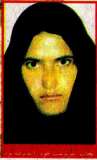
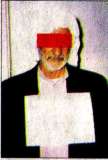 Iran's refusal to appoint an Arab head women's affairs in the Khuzestan provincial government and its suppression of Ahwazi civil society is helping to sustain honour killings of Arab women, according to the Ahwazi Arab Women's Network.
The claims come after Iran's Ham-Mihn newspaper reported the case of an Ahwazi woman who was buried alive by her father in April (both pictured above). Villagers had accused her of having an extra-marital affair after she divorced her husband, prompting her father to kill her for the sake of family honour. He admitted killing his 22 year old daughter Nejat, but claimed she agreed to be buried alive and even helped to dig her own grave. After Nejat's mother learnt of the killing, her husband threatened to bury her alive if she reported the murder to the authorities. Nejat's two year old daughter has since been taken to an orphanage in Ahwaz City.
Ahwazi women's rights activists condemned the murder, but laid the blame on Khuzestan's provincial government for failing to empower Arab women. It has never employed an Arab women to head the women's affairs, although Arabs are the largest ethnic group in the province. Most appointed to the role are middle-class Persian women from Tehran who have no understanding of Ahwazi culture.
One rights activist told the British Ahwazi Friendship Society (BAFS): "Nejat's story is heart-breaking, but is sadly a common practice due to Ahwazis' poor education and economic backwardness.
"The Iranian regime has forbidden any sort of civil society and NGOs in raising awareness of these kinds of crimes. Ahwazi culture is not barbaric, it is retarded by political oppression and economic marginalisation. Al-Ahwaz has been suffering from under-development since the Iranians imposed direct control from Tehran in 1925. For more than 80 years Iranian authorities haven't attempted to understand the Ahwazi society in order to combat these bad practices.
"Nejat's story is just one example of how women are being killed by their relatives due to baseless gossip. Honour killing should be challenged everywhere. It is even happening in the UK and all over the Middle East. Whereas the British authorities are tackling the problem, the Iranians appear to be encouraging it.
"An Ahwazi woman should be appointed to set up education programmes to combat this criminal practice and Ahwazi NGOs should be encouraged to assist in ending the practice. But so long as the provincial government discriminates against Arabs in government appointments and so long as it represses civil society, honour killings will continue."
Labels: women
permalink
keywords: ahvaz ahwaz ahwazi arabistan khuzestan khuzistan khuzestani arab arabistan iran iranian human rights security oil news ahmadinejad ethnic cleansing
.......................................................................................
03 May, 2007
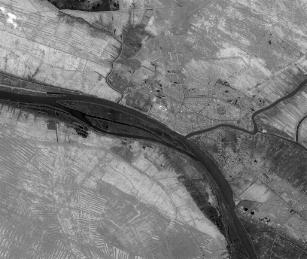 A major political row has erupted over the military-industrial
Arvand Free Zone
following the sacking of its chairman Dr Mohammed Reza Abbasi, according to
a report by the semi-official Iranian Labour News Agency
.
A major political row has erupted over the military-industrial
Arvand Free Zone
following the sacking of its chairman Dr Mohammed Reza Abbasi, according to
a report by the semi-official Iranian Labour News Agency
.
The AFZ has been created from land confiscated from indigenous Arabs living along the Shatt al-Arab in a 155 sq km area. It is the latest development in Iran's campaign of ethnic cleansing of its restive Arab population from the border with Iraq. The focus of the row is the four billion rials (US$435,000) earned every day by the AFZO from activities from the port of Khorramshahr. Dr Abbasi stood in the way of those who wished to transfer this income to Anzali, a port on the Caspian Sea in the northern Gilan province.
Dr Abbasi, a supporter of President Mahmoud Ahmadinejad, was dismissed from his job by Arvand Free Zone Organisation (AFZO) managers connected to a top official in the Iranian government who wanted full control over the zone and its income. He was appointed chair of the AFZO on 16 August 2006 under a three year contract, but was replaced by Ramazan Ahmadi.
Syed Baheralolum, the chief inspector of the AFZ, lent his support to Abbasi, saying "a high-ranking government manager disliked Dr Abbasi from the beginning. This high-positional manager had previously vetoed the order appointing Dr Abbasi as AFZO chair and appointed someone else. The President intervened to ensure that Abbasi's position was secured."
Abbasi claimed he was sacked because he was not part of a corrupt and politically well-connected clique running the AFZO, accusing local members of parliament of bribing the organisation's officials. In an interview with ILNA, he said: "My aim was to implement a management based on [Islamic] revolutionary principles. As such, I refused to provide benefits to certain groups and I resisted their demands to share profits. Consequently, they discharged me using calumny, fiction and sedition."
According to ILNA, Abbasi's supporters are holding a hunger strike in Jame'a mosque in Khorramshahr (Mohammerah) until he is reinstated and they have received a response from President Mahmoud Ahmadinejad. Abbasi claimed his term as AFZO chairman saw a number of investment projects, with 100 projects to be started in 2007. However, according to Abbasi, corruption has upset efforts to lure more foreign investment.
Abbasi claimed that "some people do not want Khorramshahr and Abadan to be developed." He accused those who undermined his work of "obstructionism" and counter to Iran's revolutionary ideals.
Baheralolum claims that poor results for President Ahmadinejad's supporters in recent municipal elections prompted some political opportunists to move against Abbasi. He accused the free zones Secretariat High Council, provincial and municipal authorities and members of parliament of obstructionism and claimed that "officials in the province and cities were working in a way that made it impossible for the chair of AFZO to carry out his job." He added that "on one occasion I witnessed one of the board members ask for bribes. This person has instated his nephews to monitor Dr Abbasi and issue false reports against him."
Baheralolum stated that an MP gathered a petition against him for backing Abbasi and that an arrest warrant has now been issued against him. In his interview with ILNA, Baheralolum claimed that tribal leaders and the families of war martyrs had joined the protest over Abbasi's sacking and stated that up to 3,000 riot police had been sent to Abadan to prevent demonstrations.
Nasser Bani Assad, a spokesman for the British Ahwazi Friendship Society (BAFS), said: "The struggle over the AFZO is a consequence of the struggle between Iranian hardliners and so-called reformists. It seems that opponents of President Ahmadinejad within the establishment have used underhand tactics against Dr Abbasi.
"While Abbasi is portraying himself as a 'man of the people', there is no evidence that he has done anything to redistribute wealth from the AFZ to the local population. Abbasi has not stopped the mass land confiscation effort conducted by AFZO officials, which is leading to the ethnic cleansing of local Arab inhabitants.
"The Abbasi affair demonstrates that sections of the establishment are prepared to play on local grievances to undermine their rivals. Baheralolum's statements are close to incitement to riot, suggesting the President's own supporters are prepared to provoke ethnic unrest for their own ends. The result will be arrests, torture and executions. Not one Iranian government official or Iranian politician cares what happens to the indigenous Arab population that has suffered decades of neglect, poverty and displacement. The current row is no exception.
"BAFS calls on Ahwazi Arabs not to become pawns in Tehran's internal political battles and to assert their own political agenda. Ahwazis have heard many empty promises from those who pretend to be on their side, but have later been betrayed. Neither Abbasi nor his opponents have done anything to stop the criminal land confiscation campaign along the Shatt al-Arab, conducted for control of the profits of the Arvand Free Zone Organisation. This row is about greed, not ideals."
permalink
keywords: ahvaz ahwaz ahwazi arabistan khuzestan khuzistan khuzestani arab arabistan iran iranian human rights security oil news ahmadinejad ethnic cleansing
.......................................................................................
01 May, 2007
The British Ahwazi Friendship Society (BAFS) is putting pressure on the British government to reveal details of the UK's Memorandum of Understanding with Iran over the return of failed asylum seekers after a government spokesman announced that the MoU had been abandoned.
In March, Home Office Minister Baroness Scotland announced that the British government had "not been able to implement our MoU with Iran as the arrangements originally negotiated are no longer appropriate or practical." However, she insisted that the " content of MoU negotiations is confidential for operational reasons ." BAFS has been campaigning for the publication of the MoU since May 2006, when a request for disclosure was made under the Freedom of Information Act. But the government has refused the requests. BAFS's campaign for disclosure has been backed by British Conservative and Green MEPs, who have also demanded answers from the government.
At the heart of the issue surrounding the UK's MoU with Iran is the transfer of confidential information on asylum seekers fleeing persecution in Iran, the forced deportation of Iranian asylum seekers before their cases were heard and the forcing asylum seekers to apply for passports with the Iranian Embassy in London.
The British Ahwazi Friendship Society (BAFS) has received reports that returned asylum seekers are being arrested and interrogated by Iranian officials about information contained in their asylum applications. Some allege that the Iranian authorities are in receipt of British Home Office documents on these failed asylum seekers. This information is often incriminating as it details political activities. BAFS is the only advocacy group that has campaigned against the MoU, which affects all Iranian refugees and not just Ahwazi Arabs.
BAFS Chairman Daniel Brett said: "While we welcome the government's decision to abandon the MoU, we still do not know the details of this memorandum or the reasons why the British government abandoned it. As the MoU is no longer in force, there is no reason for the government to withhold information on its details.
"We suspect that there may be some link with the illegal deportation of Ahwazi UNHCR-registered refugees from Syria to Iran in May 2006. The refugees are now suffering brutal torture at the hands of their interrogators. If Iran cannot abide by the UN Convention relating to refugees , then it cannot be trusted to respect any MoU which is not legally enforceable. The government refuses to say why the MoU has been suspended and in what circumstances it will come back into force, which creates considerable uncertainty for asylum seekers waiting for their cases to be heard. Some Ahwazi asylum seekers are suicidal and some are thinking of disappearing due to the lingering uncertainties over the UK's MoU with Iran."
Mr Brett has written to Deputy Speaker Sir Alan Haselhurst to urge the government to reveal the details of the MoU. He also called for an investigation into any weaknesses within the asylum process which could have been exploited by the Iranian regime to extract information on asylum seekers.
Labels: refugees
permalink
keywords: ahvaz ahwaz ahwazi arabistan khuzestan khuzistan khuzestani arab arabistan iran iranian human rights security oil news ahmadinejad ethnic cleansing
.......................................................................................
