




The following is an appeal by the Ahwaz Human Rights Organisation to Louise Arbour, the UN High Commissioner for Human Rights , in relation to the imminent execution of six Ahwazi Arabs.
We are writing to inform you of the imminent execution of six more ethnic Arab-Iranians (Ahwazi-Arabs) in Ahwaz, provincial capital of Khuzestan in southwestern
The six men currently awaiting execution were moved to a cell in Karoon prison in
1. Rasoul Ali Mazrea (65), a UNHCR-registered refugee
2. Ahmad Marmazi, (35), resident of Mashur, married with 2 children
3. Hamzah Sawari, 20 years old
4. Zamel Bawi (son of Ahwazi Arab tribal leader Hajj Salem Bawi)
5. Abdulemam Zaeri
6. Nazem Boryhi
Mr. Rasoul Mazrea, along with 4 other Ahwazis, was deported on May 2006 by the Syrian government to
The charges against them include hoisting the Ahwazi flag, naming their children Sunni names, converting from Shi'ism to Sunnism, preaching Wahabbism and being "Mohareb" or enemies of god, which carries death sentence. Other charges are "destabilizing the country", "attempting to overthrow the government", "possession of improvised explosives", "sabotage of oil installations" and being a "threat to national security."
Last year, Mr. Emadeldin Baghi
,
a leading Iranian human rights activist, i
n a
letter
to the chief of the judiciary, Ayatollah Hashemi Shahroudi, argued that the trials of Ahwazi Arabs were flawed, the charges baseless, and that the sentencing was based on a spurious interpretation of law and that no evidence
has been presented.
Mr. Nkbakht, a prominent defense lawyer in
This new wave of execution i s the latest in a series of barbaric hangings, designed to intimidate and terrorize the indigenous Ahwazi-Arab population into submission.
On 10 January 2007, independent experts appointed by the United Nations Human Rights Council, Mr. Philip Alston, the Special Rapporteur on extrajudicial, summary or arbitrary executions, Mr. Leandro Despouy, the Special Rapporteur on the independence of judges and lawyers, and Mr. Manfred Nowak, the Special Rapporteur on torture, issued a joint statement urging the Iranian Government to "stop the imminent execution of seven men belonging to the Ahwazi Arab minority and grant them a fair and public hearing." Despite that plea, on 14 February, 2007 Ghasem Salami, 41, married with 6 children, Majad Albughbish, 30, single, were executed in Ahwaz by public hanging and a day later Mr. Risan Sawari, a 32 years old Ahwazi-Arab teacher was killed under torture in Karoon prison.
This is in addition to four executions on 24 January 2007 (Mohammad Chaabpour , Abdolamir Farjolah Chaab , Alireza Asakereh and Khalaf Khanafereh) and three on 19 December 2006 (Malek Banitamim , Abdullah Solaimani and Ali Matorizadeh). This brings the number of executions of Ahwazi Arab political and human rights activists in the past 9 months to at least 13.
The executions are in the context of a brutal clamp-down on Ahwazi Arabs protesting against ethnic discrimination and persecution. Although the Ahwazi Arab homeland in
We appeal to you to condemn the latest wave of execution and call
upon Iranian authorities to halt the imminent execution of the others. We also appeal to you to call upon
For further information, please see a dossier of other human rights violations against indigenous and ethnic Ahwazi-Arabs in
http://www.fidh.org/spip.php?article4711
http://pejvakzendanyan.blogfa.com/post-108.aspx
http://www.emadbaghi.com/en/archives/000761.php
http://www.consilium.europa.eu/ueDocs/cms_Data/docs/pressdata/en/cfsp/92611.pdf
http://web.amnesty.org/library/Index/ENGMDE130052007?open&of=ENG-IRN
http://web.amnesty.org/library/Index/ENGMDE130852006?open&of=ENG-392
http://www.hrw.org/english/docs/2006/11/11/iran14560.htm
http://hrw.org/english/docs/2006/06/26/iran13609.htm
http://www.ahwaz.org.uk/2007/01/unhcr-iran-must-stop-executions-of.html
permalink
keywords: ahvaz ahwaz ahwazi arabistan khuzestan khuzistan khuzestani arab arabistan iran iranian human rights security oil news ahmadinejad ethnic cleansing
.......................................................................................
06 October, 2007
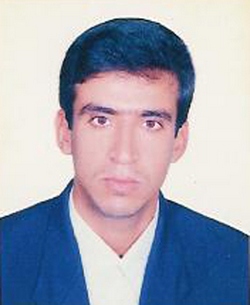 Imprisoned Ahwazi Arab journalist Hassan Fallahiya has sent the following letter to UN Secretary General Ban Ki-Moon from Evin Prison in Iran. In May,
Amnesty International declared him a "prisoner of conscience detained solely for the peaceful exercise of his rights to freedom of expression and association" and has expressed concern that he is "at risk of torture or ill-treatment."
It appealed for his release after he was given a three year prison term for criticising the government. He has been in prison since November 2006, including a period in the notorious Section 209, which is run by the Ministry of Intelligence which uses it to torture political prisoners and conduct summary killings.
Imprisoned Ahwazi Arab journalist Hassan Fallahiya has sent the following letter to UN Secretary General Ban Ki-Moon from Evin Prison in Iran. In May,
Amnesty International declared him a "prisoner of conscience detained solely for the peaceful exercise of his rights to freedom of expression and association" and has expressed concern that he is "at risk of torture or ill-treatment."
It appealed for his release after he was given a three year prison term for criticising the government. He has been in prison since November 2006, including a period in the notorious Section 209, which is run by the Ministry of Intelligence which uses it to torture political prisoners and conduct summary killings.
[...]
Labels: activism , human rights
permalink
keywords: ahvaz ahwaz ahwazi arabistan khuzestan khuzistan khuzestani arab arabistan iran iranian human rights security oil news ahmadinejad ethnic cleansing
.......................................................................................
03 October, 2007
The Iranian regime has deployed foreign militants, including members of the Lebanese Hezbollah, to break up the strike by over 2,000 workers at the Haft Tappeh sugar cane refinery.
The extremist Shia militias from Iraq, Afghanistan, Lebanon and other countries where Iran has established terrorist organisations are being stationed at the local police station, under the direction of the Revolutionary Guards. The strike is now in its fifth day ( click here for more information ).
The workers, the majority of whom are Ahwazi Arabs, are protesting against months of unpaid wages, the lack of democratic trade union organisation and the effects of economic liberalisation on the sugar sector, which has led to an influx of cheap sugar imports that has devastated privately owned sugar producers. They have also demanded the resignation of the provincial governor; Khuzestan has seen frequent changes in the provincial governorship since the Ahwazi uprising in April 2005.
Earlier, a worker who wished to remain anonymous said: "Government forces have tried to prevent the protests but they have failed. The governor told the workers that the issue is out of his hands and that the security services will take action against the workers who he claims want a riot. This means that our demands for wages are regarded as an act of disorder and anyone who seek his rights he should be beaten. Are the workers slaves to work without payment?"
A protesting Ahwazi Arab worker told Radio Farda that "the Islamic Republic of Iran helps Palestine and Arab countries, how come they have money to help them but they don't to pay us?"
permalink
keywords: ahvaz ahwaz ahwazi arabistan khuzestan khuzistan khuzestani arab arabistan iran iranian human rights security oil news ahmadinejad ethnic cleansing
.......................................................................................
The British Ahwazi Friendship Society (BAFS) has launched an Ahwazi Rights Declaration, following a consultation process with the Ahwazi Arab community. It sets out Ahwazi demands for self-determination, human rights, democracy, freedom of association, freedom of worship, women's rights, redistribution of oil wealth and peace in Iran. The Declaration will form the basis of lobbying and advocacy activity for Ahwazi Arab rights. Click here to sign the declaration .
- Having regard to Article 15 of the Iranian Constitution permitting "the use of regional and tribal languages in the press and mass media, as well as for teaching of their literature in schools."
- Having regard to Article 19 of the Iranian Constitution affirming that "all people of Iran, whatever the ethnic group or tribe to which they belong, enjoy equal rights; and colour, race, language, and the like, do not bestow any privilege."
- Having regard to Article 26 of the Iranian Constitution affirming that "The formation of parties, societies, political or professional associations, as well as religious societies, whether Islamic or pertaining to one of the recognized religious minorities, is permitted provided they do not violate the principles of independence, freedom, national unity, the criteria of Islam, or the basis of the Islamic republic."
- Having regard to Article 1 of the UN Declaration of Human Rights stating that "All human beings are born free and equal in dignity and rights."
- Having regard to Article 7 of the UN Declaration of Human Rights affirming that "All are equal before the law and are entitled without any discrimination to equal protection of the law. All are entitled to equal protection against any discrimination in violation of this Declaration and against any incitement to such discrimination."
- Having regard to Article 1 of the International Covenant on Civil and Political Rights, ratified by Iran, affirming that "All peoples have the right of self-determination. By virtue of that right they freely determine their political status and freely pursue their economic, social and cultural development."
- Having regard to Article 3 of the International Convention on the Elimination of All Forms of Racial Discrimination, ratified by Iran, condemning "racial segregation and apartheid" and commits state parties to "undertake to prevent, prohibit and eradicate all practices of this nature in territories under their jurisdiction."
- Having regard to Article 33(1) of the United Nations 1951 Convention Relating to the Status of Refugees, declaring that "No Contracting State shall expel or return ("refouler") a refugee in any manner whatsoever to the frontiers of territories where his life or freedom would be threatened on account of his race, religion, nationality, membership of a particular social group or political opinion," and Article 14(1) of the Universal Declaration of Human Rights, which states that "Everyone has the right to seek and to enjoy in other countries asylum from persecution."
- Having regard to the UN General Assembly's resolution expressing serious concern about the human rights situation in Iran; [1]
- Having regard to the reports by Amnesty International on the arrest, incommunicado detention, use of torture and execution against Ahwazi Arab prominent journalists, lawyers, tribal leaders, students and human rights activists; [2] [3]
- Having regard to the Amnesty International's report acknowledging that 54 civilians who were killed during the April 2005 uprising in Ahwaz City. [4]
A. Whereas the human rights situation in Iran has systematically deteriorated in the last few years;
B. Whereas Iran continues to arrest, imprisonment and execution of Ahwazi Arab minority rights activists;
C. Whereas Iran systematically refused to provide information and engage in a dialogue with UN Special Rapporteurs on the continuing execution of Ahwazi Arabs, violating its obligations under the procedures of the Human Rights Council; [5]
D. Whereas breaches of human and minority rights in Khuzestan (Al-Ahwaz) continue to be reported by non-governmental organisations, including the persecution of ethnic Arabs and the destruction of their homes and confiscation of their land;
E. Whereas in recent years Khuzestan (Al-Ahwaz) has witnessed a state-enforced change in ethnic composition through forced out-migration of Arabs to other provinces and in-migration of non-Arabs, as stated by UN Special Rapporteur for Adequate Housing Miloon Kothari, which amounts to an ethnic cleansing policy; [6]
F. Whereas Arabs are denied employment under the gozinesh criteria; [7]
G. Whereas Ahwazi Arab refugees under the protection of the United Nations continue to be detained and illegally deported or extradited from Syria. [8] [9]
We the undersigned
1. Condemn racism, political violence and reactionary ideologies;
2. Condemn Iran's persecution of Ahwazi Arabs on the grounds that collectively they represent a national security threat;
3. Call upon Iran to respect the cultural, linguistic and historical identity of the Arabs of Khuzestan (Al-Ahwaz);
4. Call for an end to ethnically exclusive settlements in Khuzestan (Al-Ahwaz), including the use of separation barriers to segregate neighbourhoods by ethnicity;
5. Call upon Iran to allow Arab freedom of expression and association, with the full participation of Arab political parties in the electoral process, so long as they are peaceful and respect the outcome of free and fair elections;
6. Declare that the Ahwazi issue should not be used as a pretext for foreign invasion and that the Ahwazi movement should not be used as part of a proxy war between Iran and its foreign enemies; the Ahwazi Arab civil rights movement should remain a genuine and legitimate expression of ethnic grievances and aspirations;
7. Consider unacceptable the persecution of Arabs in Iran and support an independent and public investigation by the UN Human Rights Council into the situation in Khuzestan (Al-Ahwaz) following the repression of April 2005, particularly a series of executions of Ahwazi Arabs, the killing of unarmed Ahwazi Arab demonstrators and other extra-judicial killings;
8. Call for the recognition of the Arab people as a distinct ethnic group and enshrine this in the Iranian Constitution;
9. Call for Arabs to be educated in their native tongue, up to higher educational level;
10. Call for freedom of worship for non-Shia people of Khuzestan (Al-Ahwaz) and the rest of Iran, including Sunnis, Christians, Mandeans, Jews, Bahais, Zoroastrians and other faiths and also to permit religious conversion and atheist and humanist beliefs;
11. Call for the respect for women's rights in Iran and for the appointment of an Arab woman to take the position of womenâs officer in the Khuzestan (Al-Ahwaz) provincial government in order to tackle culturally sensitive issues, such as honour killing, health issues and education;
12. Call for the recognition of internally democratic, independent trade unions in the workplace, with peaceful worker mobilisation free of government intimidation;
13. Call for positive discrimination in favour of Arabs in Arab majority districts to ensure adequate Arab representation in employment;
14. Call for Arab citizens' equal right to housing, employment and ownership of property throughout Iran;
15. Call for the establishment of a local assembly with powers to legislate and enforce laws in Khuzestan (Al-Ahwaz) and ensure the participation of the Arab people in the Iranian parliament and the Cabinet on the basis of their proportion of the total population;
16. Freedom of expression and publication should be emphasised with the independent publication of Arabic language books and newspapers and independent broadcasting on radio and television networks, without any kind of censorship;
17. Call for oil revenues to be used to develop the Arab region's industry and agriculture for the sake of employment and poverty alleviation;
18. Call for a review of the agrarian reform law, with land redistributed to peasants;
19. Condemn the arrest and imprisonment of Ahwazi Arab intellectuals, journalists and lawyers and the closure of Arabic bookshops;
20. Call for the United Nations and refugee-hosting States, including Syria, to respect the rights of Ahwazi Arab refugees to safe haven and asylum, and immediately cease deportations to Iran.
Labels: activism
permalink
keywords: ahvaz ahwaz ahwazi arabistan khuzestan khuzistan khuzestani arab arabistan iran iranian human rights security oil news ahmadinejad ethnic cleansing
.......................................................................................
02 October, 2007
 The Iranian regime is despatching security forces to quash protests by striking workers at the Haft Tapeh (Saba atlal) sugar cane factory.
Around 2,500 workers, mostly Ahwazi Arabs, have held three days of protest in Shoush (Susa).
Abu Al-Fazel Abidini, an independent journalist from Ahwaz, told Radio Farda : "Special forces came to the region from Ahwaz city and other cities. Some of the forces are based in Khansari, some at the factory and the rest in different areas in Shoush."
He added that the security forces were filming the protesting workers in order to pursue them later.
Four workers were arrested on Sunday but later released. The Shoush governor has threatened mass arrests if the protests continue. Workers have called on the provincial governor to block the sale of sugar cane plantations in order to protect the industry, which sustains thousands of households. However, the governor has refused to intervene.
A worker who wished to remain anonymous said: "Government forces have tried to prevent the protests but they have failed. The governor told the workers that the issue is out of his hands and that the security services will take action against the workers who he claims want a riot. This means that our demands for wages are regarded as an act of disorder and anyone who seek his rights he should be beaten. Are the workers slaves to work without payment?"Ù
Click here for further information on the protests in Haft Tapeh
Labels: labour
permalink
keywords: ahvaz ahwaz ahwazi arabistan khuzestan khuzistan khuzestani arab arabistan iran iranian human rights security oil news ahmadinejad ethnic cleansing
.......................................................................................
01 October, 2007
 The following are excerpts from a debate on the Arabs of Iran's Al-Ahwaz province, which aired on ANB TV on September 7, 2007. To view the clip visit
http://www.memritv.org/clip/en/1567.htm
The following are excerpts from a debate on the Arabs of Iran's Al-Ahwaz province, which aired on ANB TV on September 7, 2007. To view the clip visit
http://www.memritv.org/clip/en/1567.htm
Musa Al-Sharifi of the Al-Ahwaz Democratic Solidarity Party: "With regard to our Arab region of Al-Ahwaz, the [Iranian] government's policy is to expropriate lands, to deport the indigenous Arab inhabitants to other regions, and to replace them with people from the Persian provinces of central Iran."
Interviewer: "How is this done? The Arabs own the lands, which are expropriated by government decree, or what?"
Musa Al-Sharifi: "Yes, this process began in the days of the Shah with the sugar cane projects and so on. They would take the lands from the Arab farmers and establish on them camps for the army or the security agencies, or fictitious economic projects and so on. This process began in the time of the Shah, and intensified in the Islamic Republic."
[...]
Mansour Al-Ahwazi, political activist and treasurer of the British Ahwazi Friendship Society (BAFS): "Various methods are used in the ethnic cleansing. We did not claim that there were killings... There are killings, indiscriminate executions, and all that, but not like what happened in Yugoslavia and other places. They are trying to finish off our existence.
[...]
"The first city of Persian settlers is called Shirinshah. You can find it on the map, or you can open Google Earth and see this Persian city in the heart of the Arab region. Lands in this region were expropriated under the pretext of the sugar cane project and were used to build the city of Shirinshah.
"The first settlement in the time of the Shah was called New Yazd, but after the revolution, the Iranians who were brought there fled from New Yazd. When the Iranian regime believes that the Arab or international situation allows it to get away with these things, it intensifies its actions. After the Arab defeat by Israel in 1967, they carried out the first settlement plan of New Yazd. They brought people from Yazd, and settled them in Al-Ahwaz. They did this when they saw that the condition of the Arabs deteriorated, even though the Arabs completely ignore our cause.
"Now that Iraq is no longer competing with Iran, and now that Iran has gained a monopoly over the strategic situation in the region, they have stepped up the expropriation of lands in Al-Ahwaz. The Iranian regime - despite all its claims to support the Arab causes and so on... Whenever it identifies some weakness in the [Arab] nation, it escalates its ethnic cleansing policies in Al-Ahwaz.
[...]
"The Al-Ahwaz issue highlights the contradictions of the Iranian government. The Iranian government professes to call for unity, to avoid sectarianism, and to defend the Shiites. It tries to use the Shiite bargaining chip in some Arab countries in order to promote its plans and in order to extract some concessions from the U.S. or from some of the other Western powers. If Iran really defends the Shiites, why does it oppress the [Arab] Shiites of Al-Ahwaz? The majority [of the Arabs] there are Shiite. If it really defends the [Arab] peoples in Lebanon and Palestine, why does it oppress its own Arab people? This is the greatest contradiction in the policy of the Iranian government.
"This issue highlights the contradictions of the Iranian government on all levels - on the sectarian level, as well as the Islamic level. The Iranian government is, in fact, coming to a dead-end, not only in terms of its foreign policy, but domestically as well.
"For example, some time ago they closed the Al-Ashraq cultural institute, which was the only Arab cultural institute in Al-Ahwaz. It was closed two days ago, as you can read on the Internet. This was done for no reason whatsoever. It did not support violence or any political organization. All it did was distribute Arab and Islamic books. It was attacked and was closed down.
"This is part of the faltering policy of the Ahmadinejad government - just like it chose to run ahead with its nuclear program, it failed to start a dialogue with its [non-Persian] peoples, and to find a formula of compromise in this regard. It has now begun to escalate its indiscriminate arrests and its attacks.
"There have been many more executions in recent years, since the rise of Ahmadinejad, and many cultural institutes have been closed down. [The Iranian government] has begun to push matters towards a dead end, and to encourage people to rise up and create unrest. What is happening now in Baluchistan... I am sure that you have heard about the kidnappings. In Kurdistan, two helicopters were attacked. They blame the West for all this unrest, and try to say this is the result of conspiracies, but it is the result of their own policy.
[...]
"Iran rules Al-Ahwaz by virtue of the status quo alone. It enjoys no historical, political, or even popular legitimacy in Al-Ahwaz.
[...]
"As the international situation deteriorates for the Iranian government, its control will weaken. Their fear of this leads them to escalate the oppression in Al-Ahwaz.
[...]
"The unity of Iran has begun to face very grave dangers, because the broadest common denominator - the religious or Shiite element - has weakened greatly."
Interviewer: "In what sense has it weakened? They derive strength from this."
Mansour Al-Ahwazi: "No, this element has weakened greatly, because the government's policy. Take, for example, the issue of the veil. They impose the veil, but in the early days of the revolution, it was worn out of personal conviction, and no one imposed it. Iranian women seek any opportunity to express their rage at the policies of the Iranian government, which imposes the veil.
"In the past, Iranian women wore the veil out of personal conviction. Now, it has become a matter of oppression, and you can see how they mobilize armies in order to attack and humiliate women and to force them to wear the veil."
Labels: activism , features , media
permalink
keywords: ahvaz ahwaz ahwazi arabistan khuzestan khuzistan khuzestani arab arabistan iran iranian human rights security oil news ahmadinejad ethnic cleansing
.......................................................................................
Three thousand workers from the Haft Tapeh (Saba atlal) Sugar Cane Company held demonstrations outside the Khuzestan provincial governor's office in Shoush city (Susa) on Saturday demanding their wages.
A protesting Ahwazi Arab worker told Radio Farda that "the Islamic Republic of Iran helps Palestine and Arab countries, how come they have money to help them but they don't to pay us?"
Another worker believes that the currently the company management policy is "exhausting labours and encouraging them to leave the company in order to possess their lands."
The workers intend to continue their peaceful demonstrations outside the governor's office.
On 25 August, workers at Haft Tapeh Sugar Cane Company sent a letter to the International Labour Organisation (ILO) informing them that if the authorities did not respond to their demands for payment, they will resume industrial action. They had staged strike action on 11 July. A labour activist said: "We have held 15 strikes since the beginning of the last year, involving thousands of workers and clerks at this company, but each time the authorities failed to abide by their pledge to solve the problems."
Worker demands at the sugar company include:
- the payment of all salaries in arrears
- an end to the sale of foreign sugar on the Iranian market by "mafia" groups
- the right to labour representation
- a rise in salaries to reflect the rising cost of living brought about by poor weather
- right for workers to participate in the election of workers' representatives
- retirement of those workers who have reached retirement age
- provision of adequate safety equipment
- dismissing the company's board of directors
- ending threats to workers.
Labour activists have set a deadline of 27 September for the government to respond to their demands or they will resume industrial action and demonstrations in Ahwaz. A labour activist at Hafttapeh said: "If we had a trade union it would defend our rights, just like the bus workers syndicate in Tehran."
Privately-owned sugar mills in Khuzestan have suffered as a result of trade liberalisation, which has led to unrestricted imports of sugar. This has led to bankruptcy, non-payment of wages, redundancy and civil unrest.
According to labour activists, the Ministry of Intelligence has taken over the management of the sugar cane projects. However, Mesbah Yazdi, the head of an Iranian sugar "mafia" gang responsible for under-cutting locally produced sugar with cheap foreign imports, has called for the privatisation of "failed" sugar mills taken over by the government.
On 12 September, the Human Rights and Democracy Activists of Iran group published a statement in support of the 5,000 striking workers in Hafttapeh. The group also supported demands for
- an elected committee of workers' representatives
- ending the casualisation of labour and making temporary positions permanent
- an increase in salaries
- providing housing to workers
The sugar industry is built on the suffering of Ahwazi Arabs, dating back to 1962 when US businessman David Lillington's investment in the sector led to the confiscation of 68,500 hectares of Arab-owned land for the purpose of sugar cane cultivation ( click here for more information ).
Nasser Bani Assad, spokesman for the British Ahwazi Friendship Society, said: "Mahmoud Ahmadinejad came to power proclaiming that he would tackle corruption and poverty. Under his administration, the situation facing Ahwazi workers is worsening. Instead of backing the workers, he is calling out the troops to repress them. If they refuse to work, they lose their jobs. This is not an option in a region like Ahwaz (Khuzestan), where unemployment is high, particularly among ethnic Arabs.
"After months of wage arrears many feel they have nothing to lose by going on strike and taking to the streets in protest. Workers are struggling to feed their families and pay for housing. Yet, the Ahwaz region is one of the most oil rich in the world. The oil revenue is going straight into the pockets of the mullahs while workers are forced into virtual slavery. Iran is breaking international labour codes and should be chastised by the international community for its poor treatment of workers."
Labels: labour
permalink
keywords: ahvaz ahwaz ahwazi arabistan khuzestan khuzistan khuzestani arab arabistan iran iranian human rights security oil news ahmadinejad ethnic cleansing
.......................................................................................
