




The Iranian regime has deployed foreign militants, including members of the Lebanese Hezbollah, to break up the strike by over 2,000 workers at the Haft Tappeh sugar cane refinery.
The extremist Shia militias from Iraq, Afghanistan, Lebanon and other countries where Iran has established terrorist organisations are being stationed at the local police station, under the direction of the Revolutionary Guards. The strike is now in its fifth day ( click here for more information ).
The workers, the majority of whom are Ahwazi Arabs, are protesting against months of unpaid wages, the lack of democratic trade union organisation and the effects of economic liberalisation on the sugar sector, which has led to an influx of cheap sugar imports that has devastated privately owned sugar producers. They have also demanded the resignation of the provincial governor; Khuzestan has seen frequent changes in the provincial governorship since the Ahwazi uprising in April 2005.
Earlier, a worker who wished to remain anonymous said: "Government forces have tried to prevent the protests but they have failed. The governor told the workers that the issue is out of his hands and that the security services will take action against the workers who he claims want a riot. This means that our demands for wages are regarded as an act of disorder and anyone who seek his rights he should be beaten. Are the workers slaves to work without payment?"
A protesting Ahwazi Arab worker told Radio Farda that "the Islamic Republic of Iran helps Palestine and Arab countries, how come they have money to help them but they don't to pay us?"
permalink
keywords: ahvaz ahwaz ahwazi arabistan khuzestan khuzistan khuzestani arab arabistan iran iranian human rights security oil news ahmadinejad ethnic cleansing
.......................................................................................
01 September, 2007
Iran is destabilising Iraq to expand its influence in the Middle East, said BAFS spokesman and treasurer Mansour Silawi al-Ahwaz in a live interview on Baghdad's Al-Sharqiyah Television on Friday.
In a programme that examined the role of Iranian militias in Iraq, Al-Ahwazi said: "It goes without saying that Iran will not seek the security and stability of Iraq as long as it has not achieved any understanding with the United States on all outstanding issues. Iran has a huge intelligence and military clout in Iraq."
He added that Iran exploited several factors to "go to extremes in its plans with a view to implementing its ambitious project of expanding at the expense of Iraqis in particular and the Arabs of the region in general."
A resident of Al-Saydiyah, Abu Yusuf, claimed that militias in Iraqi uniforms were attacking civilians. In a telephone interview with Al-Sharqiyah Television, he said: "Individuals donning Interior Ministry commandos' uniform have stormed the Uqbah Bin-Nafi Secondary School in the Al-Saydiyah neighbourhood of southern Baghdad and beaten and humiliated its teaching staff. They also opened fire on four women who were martyred instantly." He claimed that some 20 school pupiles were arrested.
Meanwhile, "Open Doors", an international nongovernmental organization, claimed that more than 1,000 Christian families were threatened by militias in Baghdad for their refusal to convert to Islam, pay jizyah (Islamic tax), and marry off their girls to Muslim men. In a statement, the organization added that a real campaign has been unleashed with the aim of evicting the Christian residents of the Al-Dawrah area in southern Baghdad and nearby neighbourhoods.
Labels: terrorism
permalink
keywords: ahvaz ahwaz ahwazi arabistan khuzestan khuzistan khuzestani arab arabistan iran iranian human rights security oil news ahmadinejad ethnic cleansing
.......................................................................................
14 August, 2007
The Iranian regime has arrested five Ahwazi Arabs while claiming that it had broken up an Ahwazi "terrorist" group it claims is backed by the US, British and Israeli government.
Issa Mahdi Sawari, Mohammad Hatab Sari, Issa Zaeri, Abdulrahman Haidari and Abdolnaser Hamadi were arrested earlier this month and are being held at an undisclosed location. According the British Ahwazi Friendship Society's (BAFS) sources in Ahwaz, none of the men were known to have been involved in serious political activities. Abdulrahman Haidari shares the same name as a well-known Ahwazi activist who was interviewed by Al-Jazeera TV, talking about Arab political demands. However, they are not the same person.
According to the semi-official Fars News Agency, Intelligence Minister Gholam Hossein Mohseni Ejeie said: "Iranian intelligence agents, in their latest operation, have prevented a terrorist act by an anti-revolutionary group, They were aiming to carry out a terrorist act in the south of the (southwestern) Khuzestan province but they were arrested before carrying out any action." ( click here for statement )
Ejeie did not reveal the names of those arrested, but BAFS believes the five arrested Ahwazis have been held in connection with the alleged "terrorist" plot. He claimed the US government was trying "to spread division and splits between forces of revolution and those loyal to the system by utilising some naive and uninformed people."
Further reports from Iran claim that the British government was assisting Ahwazis in smuggling weapons into Iran. The Baztab website claimed that a "British agent" had been arrested. ( click here for report )
The regime has yet to publish any evidence to support its claim that foreign governments are using Ahwazis to carry out bomb attacks in Iran, beyond forced confessions shown on the local television network. A number of Ahwazi political prisoners have been executed in recent months, accused of waging war on God. Two executed Ahwazis were accused of carrying out bomb attacks in Ahwaz in 2005 and 2006, although they had been in prison since 2000. UN experts and international human rights organisations have condemned the regime's secret trials of Ahwazi Arabs and their lack of legal representation .
Craig Murray, Britain's former ambassador to Uzbekistan and a strong critic of British foreign policy, told BAFS of his doubts about Iranian claims of British involvement in any Ahwazi insurgency. He said that the UK "would only consider providing training for insurgent groups if there was a clearly defined military objective and good chance of success. I cannot imagine [the British] are doing anything like this in Iran."
Ejeie also said that in recent months a "number of anti-revolutionaries" had been arrested by Iran's neighboring countries and extradited back to the Islamic republic. Although Ejeie did not reveal the name of the states involved, the Syrian Ba'athist regime is co-operating with Iran in the arrest and deportation of Ahwazi refugees. ( click here for more information on Ahwazi refugees )
Labels: human rights , intifada , terrorism
permalink
keywords: ahvaz ahwaz ahwazi arabistan khuzestan khuzistan khuzestani arab arabistan iran iranian human rights security oil news ahmadinejad ethnic cleansing
.......................................................................................
26 April, 2007
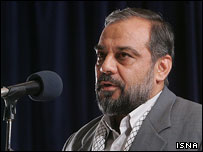 Deputy Minister of the Intelligence Department Mohammad-Bagher Zolghadr, has threatened Western states with "heavy bombardment" if they interfere in Iranian affairs.
Zolghadr, a key ally of President Mahmoud Ahmadinejad who was recently promoted from his position as Deputy Commander of the Revolutionary Guards, accused Western states of using ethnic minorities to ignite a war with Iran. He pledged to target Western interests in the Middle East with rocket attacks, according to the Baztab website which is run by Mohsen Rezai, a former chief commander of the Revolutionary Guards ( click here for report ).
The former General made the threats during a visit to Iranian Kurdistan, which is witnessing ethnic unrest and clashes between Kurdish rebels and Iranian forces. Zolghadr is currently one of the 15 top Islamic Republic officials specifically designated by the UN for travel limitation. He is associated with the killings of leading Iranian dissident intellectuals in 1998.
Zolghadr's remarks come amid revelations by former Iranian diplomat Adel Assadinia that the Iranian consulate in Dubai has established sleeper cells throughout the Gulf region to attack Western interests in the event of any hostilities between Iran and Western governments ( click here for report ). Assadinia's claims came after the Deputy Chief of Staff of the Iranian Armed Forces Ali Reza Afshar warned that even a "small move" against Iran would lead to a "great explosion" throughout the Gulf region ( click here for report ).
The Iranian regime has since declared the British Ahwazi Friendship Society (BAFS) an illegal terrorist organisation and condemned the Metropolitan Police for allowing the organisation to stage demonstrations in London. Foreign Ministry spokesman Mohammad Ali Hosseini said in September 2006 that pro-Ahwazi Arab activism by groups in the UK was a "sign of Britain's meddling in the internal affairs of other countries."
BAFS Chairman Daniel Brett said: "Taking all these statements together, the regime appears to be threatening to kill Western citizens if Western governments continue to allow ethnic rights activists to mobilise against persecution. It is clear that the regime thinks the ethnic rights movements in Iran are a direct threat and is trying to portray them as proxies in a war of attrition. The very existence of groups such as BAFS is regarded as an act of war against Iran.
"While we do not foresee a bombardment in the near future, there is a danger that the regime will conduct an assassination campaign in Europe. The Revolutionary Guards killed three Kurdish leaders in Vienna in 1989. Austrian Green Party leader Peter Pilz claims that Ahmadinejad played a role in the assassinations while serving as a Revolutionary Guards commander. Given the recent round of threats by senior military figures and government officials, there is reason to believe that the regime has prepared a plan to assassinate Ahwazi, Kurdish and Balochi opposition leaders in Europe if ethnic groups continue to challenge the regime."
Labels: minorities , terrorism
permalink
keywords: ahvaz ahwaz ahwazi arabistan khuzestan khuzistan khuzestani arab arabistan iran iranian human rights security oil news ahmadinejad ethnic cleansing
.......................................................................................
25 March, 2007
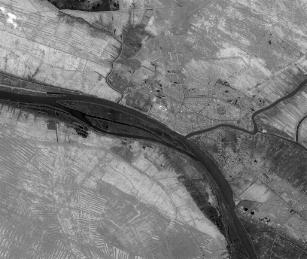 Iran's capture of 15 British navy personnel at gunpoint on the Shatt al-Arab, purportedly in Iraqi waters, is inextricably linked to the regime's long-term ambition to impose its territorial control over the strategic waterway and hold Baghdad hostage to its interests.
The left bank of the Shatt al-Arab is witnessing a large-scale militarisation programme which is being conducted under the auspices of the Arvand Free Zone Organisation (AFZO), a state-run group that aims to extend the regime's economic, political and military influence over the Shatt al-Arab and ultimately Iraq. The AFZO's plans for the military-industrial zone were outlined in a letter issued to indigenous Ahwazi Arab residents living within the zone instructing them that their land would be confiscated ( click here to download the BAFS report ). The confiscation programme is nothing short of ethnic cleansing for the sake of Iran's neo-imperialism.
Arab Shia tribes have populated regions on both sides of the Shatt al-Arab for centuries if not millennia. The leaders of the Bani Kaab tribe owned land on both banks of the waterway, giving them considerable influence and political autonomy. Any foreign power wishing to gain influence over trade along the Shatt al-Arab had to deal with the Bani Kaab leadership, which controlled the Sheikhdom of Mohammara. The Ottomans confiscated the land belonging to the Bani Kaab in the 19th century and Reza Pahlavi deposed Sheikh Kazal, the de facto ruler of the oil-rich Arabistan region, following his military coup in 1925. Arabistan was renamed Khuzestan and Mohammara was renamed Khorramshahr. The area came to prominence in 1980, when Iraq invaded Khuzestan ostensibly to âliberateâ the Ahwazi Arabs, although Saddam was no doubt taking advantage of Iranâs post-revolutionary turmoil to seize the regionâs massive oilfields. The narrowness of the Shatt Al-Arab also enabled Iran and Iraq to stage large-scale amphibious assaults during the war. In February 1986, 30,000 Iranian troops crossed the Shatt Al-Arab in a surprise attack to invade and occupy Iraq's Al-Faw peninsula and create a bridgehead for further advances into Iraq.
The Marsh Arabs of Iraq's Basra province suffered ethnic cleansing and repression under Saddam's regime while in Iran the Ahwazi Arabs have endured violent persecution under the Pahlavi dynasty and the Islamic Republic. On both sides of the waterway, the governments of Iran and Iraq have viewed the indigenous population as disloyal and a threat to their territorial claims. They were perceived as a threat by Saddam because they are predominantly Shia, while the Iranian regime sees them as having innate pan-Arab sympathies. Ethnic cleansing has been used by both countries as a method of securing control and territorial claims over the Shatt al-Arab.
The AFZ is the latest development in the Iranian regime's campaign to rid the left bank of Ahwazi Arabs and impose Iranian control over the Shatt al-Arab. The latest seizure of British personnel is a symptom of this quiet militarisation programme. Land acquisition and ethnic cleansing are intimately bound up with militarisation. Over recent years, the Iranian regime has confiscated large tracts of land from local Arabs and transferred ownership to the Iranian Revolutionary Guards Corps (IRGC) and state-owned enterprises. Around 47,000 hectares of Ahwazi Arab farmland in the Jofir area near the Ahwazi city of Abadan has been transferred members of the security forces and government enterprises. More than 6,000 hectares of Ahwazi farmland north of Shush (Susa) has been taken to "resettle" the faithful non-indigenous Persians, following directives issued by the Ministry of Agricultures and the Revolutionary Guards Corp Command. These policies have forced Ahwazi Arabs into poor shanty towns.
The AFZ is located along the narrowest and most strategically sensitive part of the Shatt al-Arab and includes a large number of Revolutionary Guards naval posts, which are used to patrol the waterway and protect Iranian arms smugglers entering Iraq. It stretches 30km from Abadan along the Shatt Al-Arab to the land border between Basra and Khuzestan. The zone is in three segments: an island and adjacent land measuring 30 square km, a strip of land north of Khorramshahr measuring 25 square km and an in-land eastern segment measuring around 100 square km in area. The total land area of the Arvand Free Zone is around 155 square km and includes Arab towns and villages. At certain points, the zone is literally within a stone's throw of Basra.
The Shatt al-Arab is the most politically sensitive area of the Middle East. Whoever controls the waterway controls movements from Iraq to the Gulf, including oil shipments, as well as serving as an important trade route for the entire west of Iran. Control over the disputed waterway led to wars between the Persian and Ottoman empires in the 17th and 19th centuries and more recently Iraq and Iran.
The AFZ has seen the mass expulsion of Arabs, the destruction of their villages and the creation of an exclusive military-industrial zone. The expulsion campaign began with the Arab farmers located on Minoo Island, near Abadan ( click here for information ). The islanders were bullied by AFZO officials into giving up their land before the official deadline, indicating an increasing sense of urgency associated with establishing the zone. In all, up to 500,000 indigenous Ahwazi Arabs are being displaced by the creation of a 5,000 square km security zone, of which the AFZ is just a part, along the Shatt al-Arab.
The zone's security element has strengthened covert operations inside Iraq, with the objective of securing an early exit of Coalition troops, influencing Iraq's political system and using patronage to control local authorities in Basra. The zone is also being used to train, fund and organise militias loyal to Tehran. Mahdi Army leader Moqtada al-Sadr and several Iranian-backed politicians belonging to the ruling United Iraqi Alliance have recently visited the area.
Documents from the Iranian Revolutionary Guards Corps' (IRGC) Fajr Garrison in Khuzestan, which serves as the organisation's main headquarters for southern Iran, show that Tehran is employing up to 40,000 agents in Iraq. The information was first revealed in March 2005 by former Iranian agents who defected due to pay cuts and subsequently confirmed by Coalition troops in Iraq. Fajr Garrison hosts the IRGC's Qods Force, which runs the vast underground network in Iraq. Agents are paid by middle-men, who carry out regular visits to Ahwaz City to obtain payments and be debriefed by Qods commanders.
The regime's activities in Khuzestan and the left bank of the Shatt al-Arab are related to the rise of militias in Basra and the British government's discovery that weapons used by insurgents were likely to have originated from the IRGC via the Iranian-backed Lebanese Hezbollah. It is no coincidence that attacks on British troops, a sudden upsurge in militia activity in Basra province and the seizing of British naval personnel on the Shatt al-Arab have occurred at the same time as Ahwazi Arabs are being removed from the area to make way for the AFZ. Greater international attention to the plight of the Ahwazi Arabs would hinder the pace of militarisation along the Shatt al-Arab and stymie Iranian efforts to control Iraq.
Labels: features , land , terrorism
permalink
keywords: ahvaz ahwaz ahwazi arabistan khuzestan khuzistan khuzestani arab arabistan iran iranian human rights security oil news ahmadinejad ethnic cleansing
.......................................................................................
04 March, 2007
The Iranian embassy in London has declared that the British Ahwazi Friendship Society (BAFS) is an "illegal organisation" that is "dedicated to stirring up trouble between Iran and its neighbours."
The Iranian embassy was talking to the Sunday Telegraph following revelations by a former Iranian diplomat, Adel Assadinia, that the regime had trained secret networks of agents across the Gulf states to attack Western interests and incite civil unrest. BAFS's "crime" was to publicise the diplomat's claims and to put him in contact with the British media ( click here for Sunday Telegraph article ).
Assadinia served for two terms as Majlis member for Ahwaz in the 1980s and defected to Europe in 2003 after revealing corruption at the highest echelons of the Iranian regime. He told the Sunday Telegraph that the Iranian regime was comparable with the regime of Saddam Hussein before he was overthrown: "very fragile and brittle within,"
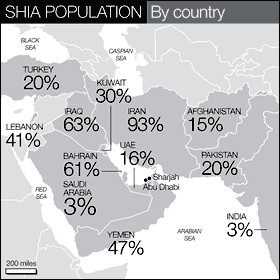 Assadinia has spoken out about Iran's spy network in the Gulf region, which includes teachers, doctors and nurses at Iranian-owned schools and hospitals. According to the former Iranian Consul General to Dubai, the spies have formed Shia sleeper cells ready to be "unleashed" at the first sign of any serious threat to Tehran. Countries with large Shia populations include Iraq, Yemen, Bahrain, Lebanon, Pakistan and India; India has the world's second largest Shia population after Iran.
The BAFS has received reports that the Red Crescent Hospital in Dubai is a centre for Iranian intelligence recruitment, with many doctors and nurses employed there also in the service of SEVAK.
The Sunday Telegraph quoted Assadinia has saying that "Were America or Israel to attack Iran, such cells would be instructed to foment long-dormant sectarian grievances and attack the extensive American and European business interests in wealthy states such as Dubai and Saudi Arabia. Such a scenario would bring chaos to the Gulf, one of the few areas of the Middle East that remains prosperous and has largely pro-Western governments."
Assadinia's claims come a day after Deputy Chief of Staff of the Iranian Armed Forces Ali Reza Afshar warned that even a "small move" against Iran would lead to a "great explosion" throughout the Gulf region ( click here for report ).
Assadinia told the Sunday Telegraph: "The Iranian government believes that to survive it needs permanent bases throughout the Middle East. Anybody who contemplates threatening or invading Iran will have those cells unleashed against them."
The former consul general to Dubai claimed that Iran's Dubai consulate was used as a "conduit for illicit funding of Hezbollah." He added that Iranian foreign ministry agents would regularly pass through with "suitcases containing up to £11 million, using diplomatic baggage channels to bypass customs scrutiny."
Iran's Dubai consulate is a hub for Iranian intelligence operations, due to the presence of Iranian businesses in the emirate. He told the Sunday Telegraph that "other intelligence activities included running nightclubs and prostitution rings, where carousing officials and diplomats could be lured into 'honey trap' blackmail operations, and organising Iranian expatriates - there are an estimated 500,000 in the Gulf - to act as double agents."
The BAFS and the Henry Jackson Society (HJS) will be holding an event in the House of Commons where Assadinia and an Arab Shia cleric will speak out against Iran's terrorist activities in the region and in favour of secularism and reconciliation with Sunni Muslims in Iraq.
BAFS Chairman Daniel Brett said: "The Iranian regime outlaws each and every organisation that contradicts its dogma and reveals its true intentions.
"The fact is that BAFS is a legitimate non-governmental organisation that operates within the law. We continue to state our opposition to violence and any military attack on the peoples of Iran, but we believe that the world should know the truth about the nature of the Iranian government.
"Iran constantly accuses us of being terrorists for supporting human rights, but the regime itself is inflicting state terrorism on the peoples living under its rule and is expanding that terror abroad.
"Gulf states have a right to know what the Iranian regime is doing on their territory and the potential for Iranian-backed terrorist attacks in the region. Mr Assadinia has simply told the truth.
"BAFS is not the problem with Iran's relations with the Arab world. Iran's duplicity and subversive activities in Arab states is the problem, not the BAFS.
"The Iranian regime's attitude towards Arabs can be seen in the treatment of its own Ahwazi Arab population, which is 80-90 per cent Shia. Ahwazi Arab have been bombed out of their homes by the Iranian government and human rights activists have been executed following flawed trials condemned by UN experts. This is the extent of the Iran regime's 'solidarity' with Arab Shi'ites living under its rule.
"Iran has imperialist designs over the Middle East and the negative consequences for Arab states' stability and prosperity is viewed by Tehran as collateral damage. It is time that governments in the Gulf wise up and clamp down on the clandestine networks that are supported by the Iranian regime on their territory."
permalink
keywords: ahvaz ahwaz ahwazi arabistan khuzestan khuzistan khuzestani arab arabistan iran iranian human rights security oil news ahmadinejad ethnic cleansing
.......................................................................................
16 February, 2007
The Iranian regime has accused the US of backing a group it says is linked to Al-Qaeda for a bomb attack on a bus in Balochistan in the east of Iran, which killed 12 members of the Revolutionary Guards.
Jundullah (Army of Allah), an Islamist group operating in the Balochi homeland, claimed responsibility for the attack in Zahedan. Police say they have arrested 65 suspects with links to British and US intelligence and the Al-Qaeda terrorist network. They also claim that the bombs were manufactured by US forces.
The regime's far-fetched conspiracy theory has parallels with its claim of British and US involvement in bomb attacks in the Ahwazi Arab homeland in Khuzestan, bordering Iraq, during 2005 and 2006. It has made various unproven claims relating to the perpetrators of the Ahwaz attacks, including British soldiers, British-sponsored Arab separatists, Arab reformist groups, the Iraq-based Mujahideen-e-Khalq, Iraqi Ba'athists and Saudi Wahhabists. The regime does not appear to make any distinction between the ideological differences between the groups it says are backed by Western forces.
Balochistan straddles the Iran-Pakistan border and is predominantly Sunni. Balochis have long-standing grievances relating to religious persecution by the Shia-dominated regime in Tehran, high rates of poverty and state terrorism. The situation in the Balochi and Ahwazi Arab homelands is similar, although the Ahwazis are mostly Shia. The regime's treatment of Balochis and Arabs is identical: ethnic repression, mass arrests of dissidents, arbitrary and illegal killings, land confiscations and forced displacement. The regime tends to blame any reaction among these ethnic groups to its brutal oppression on foreign governments.
Labels: minorities , terrorism
permalink
keywords: ahvaz ahwaz ahwazi arabistan khuzestan khuzistan khuzestani arab arabistan iran iranian human rights security oil news ahmadinejad ethnic cleansing
.......................................................................................
08 January, 2007
 Intelligence reports relating to Iranian support for terrorism in Iraq have confirmed information issued by the British Ahwazi Friendship Society (BAFS) almost two years ago (
click for article
).
Intelligence reports relating to Iranian support for terrorism in Iraq have confirmed information issued by the British Ahwazi Friendship Society (BAFS) almost two years ago (
click for article
).
Strategic Policy Consulting in Washington has stated that the Al-Qods Force, which is run by Iran's quasi-military Islamic Revolutionary Guards, is "stepping up terrorism and encouraging sectarian violence in Iraq," using the Fajr Garrison (pictured) in the Arab populated city of Ahwaz, southwestern Iran, as a base of operations. The Al-Qods Force trains militants in manufacturing improved explosive devices and finances and organises pro-Iranian militias in Iraq. According to SPC, the Iraq network is under the command of Jamal Jaafar Mohammad Ali Ebrahimi, who is also known as Mehdi Mohandes. He is alleged to have been responsible for planning the bombing of the US and the UK embassies in Kuwait in the 1980s and has been on Interpol's wanted list since 1984.
BAFS has also received credible information relating to the Iranian regime's attempts to recruit Ahwazi Arabs to fight in Iraq as well as money laundering through offshore accounts to fund terrorist operations.
Related articles:
Ahwaz used as a terrorist base - March 2005
Basra Insurgency and Iran's Militarisation of Ahwaz - September 2005
Iran's Militarisation of the Shatt Al-Arab - October 2005
Safeguarding the Ahwazi Arabs is essential for achieving a stable and democratic Middle East - December 2005
Labels: terrorism
permalink
keywords: ahvaz ahwaz ahwazi arabistan khuzestan khuzistan khuzestani arab arabistan iran iranian human rights security oil news ahmadinejad ethnic cleansing
.......................................................................................
15 October, 2006
Iranian security forces arrested four Arab gunmen in Susangerd (Khafajieh), near the Iraq border, after an exchange of fire, according to Iran's Fars News Agency. According to a border battalion commander, the gunmen injured two soldiers during a gun battle. Iranian forces seized a small arms cache including two Kalashnikov assault rifles, a pistol, a magazine with 22 bullets and five pistol bullters. The Iranian security forces claim the men are outlaws rather than insurgents.
Link to Fars News Agency report
Labels: terrorism
permalink
keywords: ahvaz ahwaz ahwazi arabistan khuzestan khuzistan khuzestani arab arabistan iran iranian human rights security oil news ahmadinejad ethnic cleansing
.......................................................................................
20 June, 2006
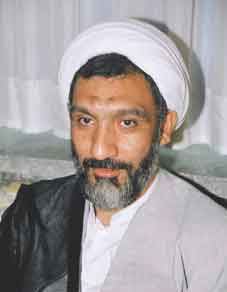 German Interior Minister Wolfgang Schaeuble has refused to meet his Iranian counterpart, Mostafa Pour Mohammadi, over his role in mass executions in Al-Ahwaz (Khuzestan) during the 1980s, according to Germany's Focus magazine.
As the province's head prosecutor, Pour Mohammadi was responsible for the killings of more than one thousand opposition activists in trials that often lasted less than five minutes. Children were among victims of Pour Mohammadi's reign of terror in Al-Ahwaz. Since he became Interior Minister in September 2005, he has overseen the imprisonment of thousands of Ahwazi Arab activists and the execution of scores of Ahwazis. The children of dissidents, including a new-born baby, are among those currently in prison as Pour Mohammadi seeks to step up Iran's ethnic cleansing of Ahwazi Arabs from their homeland.
German police have also accused Pour Mohammadi of masterminding the assassination of four leaders of the Democratic Party of Iranian Kurdistan in Vienna in 1992, during peace talks with the Iranian government. Austrian politicians have also claimed that President Mahmoud Ahmadinejad was responsible for logistical support for the assassinations. Grand Ayatollah Hassan Ali Montazeri also names Pour Mohammadi in his autobiography as one of the politicians who ordered the execution in 1988 of 30,000 members of the Iranian opposition.
Germany is also protesting against Iran's refusal to free a German citizen, Donald Klein, who was arrested with a French citizen, Stephane Lherbier, in November 2005 while fishing in the Arabian Gulf. Iran has accused them of espionage and has sentenced them to 18 months imprisonment for entering Iranian waters.
Nasser Bani Assad, spokesman for the British Ahwazi Friendship Society (BAFS), said: "We applaud Germany's principled position on its dealings with Iran. The best way to deal with the Iranian regime is isolate the human rights abusers from international diplomacy and minimise contact. The policy of appeasement chosen by most European governments has not worked. Instead, the regime's abuses and defiance of the international community have worsened as European governments have bent over backwards to please the Ahmadinejad administration.
"Herr Schaeuble realises that the people in the Iranian regime are some of the world's worst mass murderers and supporters of terrorism. His stance will be welcomed by the Ahwazis and the people of Iran working for democratic change, the protection of human rights, liberty and equality.
"It is interesting to note that the only Germans - and indeed the only Europeans - who want Ahmadinejad present at the World Cup are neo-Nazis due to his Holocaust denial. The Ahwazis, like all Iranian groups, have no problem with Jews and condemn the regime's historical revisionism. We also believe that Ahmadinejad has no right to predicate Palestinian statehood on the elimination of Israel, just as we believe that Ahwazi rights do not entail the destruction of Iran. Ahmadinejad and members of his government represent the forces of division, violence and hatred, forces that drove the Nazis into power in Germany. Germans know better than anyone the perils of Nazism and this is why they overwhelmingly reject the fascist regime in Iran."
Labels: EU , terrorism
permalink
keywords: ahvaz ahwaz ahwazi arabistan khuzestan khuzistan khuzestani arab arabistan iran iranian human rights security oil news ahmadinejad ethnic cleansing
.......................................................................................
19 January, 2006
Iran's kidnapping of Iraqi coast guards in the Shatt Al-Arab is an indication of the regime's continuing hostile stance over the disputed waterway, claims the British Ahwazi Friendship Society (BAFS).
Nine Iraqi coast guards were seized and one allegedly killed at the weekend during a clash on the waterway that separates the Iraqi province of Basra from Iran's Arab-populated province of Khuzestan. Mohammed al-Waili, the regional governor of Basra, claimed that the Iraqi coastguards had boarded an Iranian ship, the Nour 1 , which was suspected of smuggling oil in Iraqi waters when they were overpowered by an Iranian patrol. Iran took aggressive action against the Iraqi coast guards despite the supposedly warm relations between the governments of both countries.
The kidnappings come in the context of Iran's continuing militarisation of its southern border with Iraq, with thousands of Ahwazi Arabs being expelled from their lands around Mohammarah (Khorammshahr), Abadan and Minoo (Salboukh) Island. The process of ethnic cleansing and land confiscation is being carried out under the auspices of the Arvand Free Zone Organisation, which was set up ostensibly to improve trade links with Iraq and strengthen national security. Click here for more information .
BAFS spokesperson Nasser Bani-Assad said: "Apart from being a serious human rights issue, any development that involves people being displaced by force obviously has a security element to it as they clearly do not want people being too near.
"The fact that they are deciding to put this huge complex right up against the border is significant. We think this is to enable them to train and send militias over the border.
"The aggressive action taken against Iraqi coast guards indicates that Iran wishes to control the Shatt Al-Arab to an extent that it is willing to jeopardise its close relations with the Iraqi government. No-one should place any confidence in the Iranian regime's displays of 'good faith' towards Iraq. It wishes to control Iraq according to its own agenda, just as it is attempting to take control of the Palestinian cause.
"The world must wake up to the plight of the Ahwazi Arabs and realise that their suffering has serious implications for regional and global security."
Labels: terrorism
permalink
keywords: ahvaz ahwaz ahwazi arabistan khuzestan khuzistan khuzestani arab arabistan iran iranian human rights security oil news ahmadinejad ethnic cleansing
.......................................................................................
02 November, 2005
Bomb attacks on the offices of British Petroleum and British Airways suggest that hard-line elements allied to the Iranian government are carrying out terrorist acts to put pressure on the British government.
On Wednesday, a small bomb exploded outside the offices of the British companies, the second time the offices have been targetted in the past three months. No group has claimed responsibility for the attacks and no-one has been arrested. The bomb attacks came a day after the government-backed Union of Islamic Students of Iranian Universities issued a statement threatening to beseige the British embassy. It read: "We warn brutal and slavish regimes such as the British government to stop their evil mischief before the violent fires of the Muslim nation burn you, or else you will face consequences similar to the capture of the den of American spies" - a reference to the 444-day occupation of the US embassy that began on 4 November 1979.
Ahwaz City has also witnessed bomb attacks, the most recent carried out on 15 October when six people were killed after two explosions in a shopping centre. The city also saw attacks in the run-up to the June presidential election, which reformist presidential candidate Mustafa Moin suggested could be the work of those seeking the election of a military figure .
The bomb attacks in Ahvaz have been followed by a wave of arrests of Arab tribal leaders, intellectuals, journalists and human rights activists. However, the attacks on BP and BA have not led to a similar crack-down on violent anti-Western elements who are either allied to or supported by the regime.
Nasser Bani Assad, spokesman for the British Ahwazi Friendship Society, said: "The regime arrested 30 Arabs just hours after the Ahwaz City bombings and claims that all have confessed to carry out the attacks and receiving training from the British. The regime claims it has been more successful than any other government in the world in arresting terrorist suspects. So why has it been unable to identify and arrest those responsible for bombing British companies in Tehran?
"The fact is that almost every terrorist act in Iran is carried out by the government and its allies. The Ahwaz bombings were intended to implicate the British in terrorism and to rally nationalist support behind hard-liner Mahmoud Ahmadinejad. The regime does not care if a few Arabs die in the attacks, for it has been willing to sacrifice Arab lives and livelihoods for the sake of its land confiscation programme in Khuzestan.
"The bombings of British firms in Tehran were carried out to terrorise British companies into putting political pressure on the Blair government to back down over the nuclear dispute. But this time it chose smaller and less lethal bombs in order not to turn public anger against the anti-Western line adopted by Ahmadinejad.
"The Ahmadinejad administration is one of the cruellest and most violent in Iranian history. No-one should under-estimate the extent it will go to in order to achieve its objectives."
Labels: terrorism
permalink
keywords: ahvaz ahwaz ahwazi arabistan khuzestan khuzistan khuzestani arab arabistan iran iranian human rights security oil news ahmadinejad ethnic cleansing
.......................................................................................
30 October, 2005
 London's Sunday Telegraph has revealed that the Iranian regime is smuggling terrorists into Iraq via Khuzestan, the homeland of the persecuted Ahwazi Arabs.
According to an article by the correspondent Con Coughlin , the Iranian Revolutionary Guards' elite Qods Force, based in Ahwaz City, has set up a network of secret smuggling routes to ferry men and equipment into Iraq for attacks on coalition troops. These claims come alongside reports from Western intelligence agencies of a sharp increase in Iran's involvement in insurgent operations since Mahmoud Ahmadinejad was elected president in June.
According to Coughlin, a major route is thought to be through the marshland surrounding the Shatt al-Arab waterway in southern Iraq, which enables guard units to plan attacks against British forces in Basra.
The Sunday Telegraph report comes after the British Ahwazi Friendship Society (BAFS) published plans for the 155 sq km Arvand Free Zone (AFZ), a military-industrial complex along the Shatt Al-Arab.
The newspaper called the creation of the AFZ a "sinister development" which will involve the displacement of tens of thousands of indigenous Ahwazi Arabs.
In an interview with the newspaper , a BAFS spokesman said: "Apart from being a serious human rights issue, any development that involves people being displaced by force obviously has a security element to it as they clearly do not want people being too near.
"The fact that they are deciding to put this huge complex right up against the border is significant. We think this is to enable them to train and send militias over the border."
Labels: terrorism
permalink
keywords: ahvaz ahwaz ahwazi arabistan khuzestan khuzistan khuzestani arab arabistan iran iranian human rights security oil news ahmadinejad ethnic cleansing
.......................................................................................
29 October, 2005
President Ahmadinejad's is using the Palestinian issue for his own expansionist goals, while simulatenously ethnic cleansing Arab areas of Iran, claims the British Ahwazi Friendship Society, a UK-based Ahwazi Arab solidarity group.
At Tehran's annual "Qods Day" demonstrations, Ahmadinejad tried to justify his call for Israel to be wiped out, saying: "The oppressed Palestinians are martyred by Zionists, their properties are looted, their houses are bombarded and they are assassinated but the Zionists expect that no one should object them."
The regime's poor treatment of Iran's indigenous Arab population reveals that its solidarity for oppressed Palestinian Arabs is hypocritical. More than 200,000 hectares of Arab-owned land have been confiscated by the regime since the 1979 Islamic revolution and given to the government's intensive sugar cultivation project. Tens of thousands of hectares of Arab land have also been transferred to settlers brought from outside Khuzestan or to the military and the Revolutionary Guards, without any compensation. In the process, thousands of Arab homes have been destroyed by security forces and Ahwazi Arabs have been forced from their farms and villages into city slums.
The regime is now planning the development of the military-industrial Arvand Free Zone (AFZ), a 155 sq km exclusive zone along the Shatt Al-Arab waterway . This will involve the forced displacement of the entire Arab population in the area that falls within the zone and the destruction of Arab villages and farms. Last week, Ahwazi Arab residents of Minoo Island, which falls within the AFZ, complained that they were being bullied into leaving their farms and homes by government agents ahead of the official deadline for consultation.
Those who have resisted the ethnic cleansing programme have been arrested, tortured and killed by the regime. An unarmed uprising in April led to the deaths of more than 160 people across the province of Khuzestan, the heart of the Ahwazi Arab homeland, including children and a pregnant woman.
Nasser Bani Assad, spokesman for the British Ahwazi Friendship Society, said: "Ahmadinejad and the mullahs who have appointed him have no interest in the well-being and freedom of Arabs. The treatment of the Ahwazis shows that Tehran hates Arabs. The Palestinians have their own Arabic language universities, but Ahwazi Arabs are not even allowed to run an Arabic language nursery school. The Palestinians have their own independent media, but all Arabic language newspapers have been banned in Iran and receiving Arabic language satellite channels carries heavy penalties. Palestinians have an elected administration with its own police force, while the Ahwazi Arabs are not even allowed to form their own political parties.
"Iranian-backed groups use suicide bombers against civilians and receive sympathy from those who claim they are fighting oppression. But if one Ahwazi Arab lifts a finger against the Iranian regime he can find himself and his family in prison, shot in the head or lynched from a street light - while the appeasers in the international community look on indifferently and sometimes with approval!
"Ahmadinejad says he wants to liberate Palestinians, but he does not even give the Ahwazi Arabs the few rights that Palestinians enjoy. We support the right to self-determination and self-government for all peoples, including Palestinians, but Ahmadinejad wants the Arabs to behave on his terms and that does not equate to liberty. The Palestinians should be free of oppression and occupation, but so should the Ahwazis.
"The elected Palestinian National Authority has condemned Ahmadinejad's call for the elimination of Israel. All Arab governments, including Syria, have formally recognised Israel's right to exist. Which Arab elected Ahmadinejad to speak on their behalf? The Arabs in Iran don't want him and his regime, why should any other Arab accept his violent dogma and hypocrisy?"
Labels: terrorism
permalink
keywords: ahvaz ahwaz ahwazi arabistan khuzestan khuzistan khuzestani arab arabistan iran iranian human rights security oil news ahmadinejad ethnic cleansing
.......................................................................................
