



 The following are excerpts from a debate on the Arabs of Iran's Al-Ahwaz province, which aired on ANB TV on September 7, 2007. To view the clip visit
http://www.memritv.org/clip/en/1567.htm
The following are excerpts from a debate on the Arabs of Iran's Al-Ahwaz province, which aired on ANB TV on September 7, 2007. To view the clip visit
http://www.memritv.org/clip/en/1567.htm
Musa Al-Sharifi of the Al-Ahwaz Democratic Solidarity Party: "With regard to our Arab region of Al-Ahwaz, the [Iranian] government's policy is to expropriate lands, to deport the indigenous Arab inhabitants to other regions, and to replace them with people from the Persian provinces of central Iran."
Interviewer: "How is this done? The Arabs own the lands, which are expropriated by government decree, or what?"
Musa Al-Sharifi: "Yes, this process began in the days of the Shah with the sugar cane projects and so on. They would take the lands from the Arab farmers and establish on them camps for the army or the security agencies, or fictitious economic projects and so on. This process began in the time of the Shah, and intensified in the Islamic Republic."
[...]
Mansour Al-Ahwazi, political activist and treasurer of the British Ahwazi Friendship Society (BAFS): "Various methods are used in the ethnic cleansing. We did not claim that there were killings... There are killings, indiscriminate executions, and all that, but not like what happened in Yugoslavia and other places. They are trying to finish off our existence.
[...]
"The first city of Persian settlers is called Shirinshah. You can find it on the map, or you can open Google Earth and see this Persian city in the heart of the Arab region. Lands in this region were expropriated under the pretext of the sugar cane project and were used to build the city of Shirinshah.
"The first settlement in the time of the Shah was called New Yazd, but after the revolution, the Iranians who were brought there fled from New Yazd. When the Iranian regime believes that the Arab or international situation allows it to get away with these things, it intensifies its actions. After the Arab defeat by Israel in 1967, they carried out the first settlement plan of New Yazd. They brought people from Yazd, and settled them in Al-Ahwaz. They did this when they saw that the condition of the Arabs deteriorated, even though the Arabs completely ignore our cause.
"Now that Iraq is no longer competing with Iran, and now that Iran has gained a monopoly over the strategic situation in the region, they have stepped up the expropriation of lands in Al-Ahwaz. The Iranian regime - despite all its claims to support the Arab causes and so on... Whenever it identifies some weakness in the [Arab] nation, it escalates its ethnic cleansing policies in Al-Ahwaz.
[...]
"The Al-Ahwaz issue highlights the contradictions of the Iranian government. The Iranian government professes to call for unity, to avoid sectarianism, and to defend the Shiites. It tries to use the Shiite bargaining chip in some Arab countries in order to promote its plans and in order to extract some concessions from the U.S. or from some of the other Western powers. If Iran really defends the Shiites, why does it oppress the [Arab] Shiites of Al-Ahwaz? The majority [of the Arabs] there are Shiite. If it really defends the [Arab] peoples in Lebanon and Palestine, why does it oppress its own Arab people? This is the greatest contradiction in the policy of the Iranian government.
"This issue highlights the contradictions of the Iranian government on all levels - on the sectarian level, as well as the Islamic level. The Iranian government is, in fact, coming to a dead-end, not only in terms of its foreign policy, but domestically as well.
"For example, some time ago they closed the Al-Ashraq cultural institute, which was the only Arab cultural institute in Al-Ahwaz. It was closed two days ago, as you can read on the Internet. This was done for no reason whatsoever. It did not support violence or any political organization. All it did was distribute Arab and Islamic books. It was attacked and was closed down.
"This is part of the faltering policy of the Ahmadinejad government - just like it chose to run ahead with its nuclear program, it failed to start a dialogue with its [non-Persian] peoples, and to find a formula of compromise in this regard. It has now begun to escalate its indiscriminate arrests and its attacks.
"There have been many more executions in recent years, since the rise of Ahmadinejad, and many cultural institutes have been closed down. [The Iranian government] has begun to push matters towards a dead end, and to encourage people to rise up and create unrest. What is happening now in Baluchistan... I am sure that you have heard about the kidnappings. In Kurdistan, two helicopters were attacked. They blame the West for all this unrest, and try to say this is the result of conspiracies, but it is the result of their own policy.
[...]
"Iran rules Al-Ahwaz by virtue of the status quo alone. It enjoys no historical, political, or even popular legitimacy in Al-Ahwaz.
[...]
"As the international situation deteriorates for the Iranian government, its control will weaken. Their fear of this leads them to escalate the oppression in Al-Ahwaz.
[...]
"The unity of Iran has begun to face very grave dangers, because the broadest common denominator - the religious or Shiite element - has weakened greatly."
Interviewer: "In what sense has it weakened? They derive strength from this."
Mansour Al-Ahwazi: "No, this element has weakened greatly, because the government's policy. Take, for example, the issue of the veil. They impose the veil, but in the early days of the revolution, it was worn out of personal conviction, and no one imposed it. Iranian women seek any opportunity to express their rage at the policies of the Iranian government, which imposes the veil.
"In the past, Iranian women wore the veil out of personal conviction. Now, it has become a matter of oppression, and you can see how they mobilize armies in order to attack and humiliate women and to force them to wear the veil."
Labels: activism , features , media
permalink
keywords: ahvaz ahwaz ahwazi arabistan khuzestan khuzistan khuzestani arab arabistan iran iranian human rights security oil news ahmadinejad ethnic cleansing
.......................................................................................
04 September, 2007
The following is a statement released by the Ahwaz Human Rights Organisation concerning the trial of Yusuf Azizi Bani Torof, an Ahwazi Arab journalist and writer who has been charged with threatening national security. Click here for further details on his case .
According to the reports which Ahwaz Human Rights Organization (AHRO) have received, the hearing of Mr. Yusef Azizi Bani Torof was delayed on Tuesday 28 August in the Revolutionary Court branch 15 of Tehran, because his defence lawyer was not attending.
According to reports the court did not invite Mr. Saleh Nikbakhat who is the excellent lawyer of Mr. Yusef Azizi Bani Torof and has been his lawyer since year 2005.
Also the court did not ask for two other top lawyers, Mr. Abdul Fattah Sultani and Mrs. Mahnaz Parakand, who submitted their defence to the court on behalf of Mr. Yusef Azizi Bani Torof.
Labels: human rights , media
permalink
keywords: ahvaz ahwaz ahwazi arabistan khuzestan khuzistan khuzestani arab arabistan iran iranian human rights security oil news ahmadinejad ethnic cleansing
.......................................................................................
24 August, 2007
 Ahwazi Arab journalist Yusef Azizi Bani-Torof will be put on trial for "threatening national security" on Monday (27 August) on charges relating to his reports on the indigenous Ahwazi Arab uprising more than two years ago.
Bani Torof is a celebrated writer and journalist who has written 24 books in Farsi and Arabic as well as his media work. He currently writes a column for the Arabic news portal Elaph , which is based in London. The British Ahwazi Friendship Society believes he could face a long period of imprisonment amid a growing clamp-down on Ahwazi Arab journalists, intellectuals, doctors, lawyers and other professionals.
The Ahwaz journalist's lawyer, Abdulfatah Soltani, told the Iranian Students News Agency (ISNA) that he was being denied access to his client's files. Although Bani Torof has been accused of threatening national security, he has in the past stated that despite the Ahwazi Arabs' cultural distinctiveness and periods of autonomy in the past, they are "inseparable parts of the Iranian nation." However, extremists associated with President Ahmadinejad have insisted he is a separatist with links to foreign intelligence services.
Bani Torof was arrested days after the uprising of April 2005 and spent 65 days in prison in Ahwaz City and one day in Section 209, a prison infamous for torturing inmates to death. He was released on 27 June 2005, with a 200 million rial bail, equivalent to 22,000 US dollars. In August 2006, he was arrested after giving a lecture at a journalists' conference and his bail was raised to one billion rials or nearly 90,000 US dollars. The authorities allege that he talked against the regime, a charge he denies.
Bani Torof's struggle has won him admiration throughout Iran and in the Arab world. Recently, a number of Iranian academics and students voiced their support for his nomination for the Nobel Peace Prize.
Recently, Bani Torof's son Afnan was arrested in Syria after he was registered as a refugee with the UNHCR in Damascus. Afnan, along with a number of other Ahwazi refugees, was released following a campaign by BAFS and other advocacy groups.
Labels: human rights , media
permalink
keywords: ahvaz ahwaz ahwazi arabistan khuzestan khuzistan khuzestani arab arabistan iran iranian human rights security oil news ahmadinejad ethnic cleansing
.......................................................................................
17 August, 2007
This article appeared on the Pajamas Media website
Are American taxpayers unwittingly funding the Iranian regime's own propaganda? Ali Ghaderi and Karim Abdian contend that US government-funded Voice of America Persia and Radio Farda are ultimately damaging to American interests. Not only do these broadcasting services have sympathy for the ruling theocracy, but their inherent Persian bias alienates Iranian ethnic and religious minorities.
Last month, Iran launched Press TV, an English-language television station to broadcast propaganda to the West, utilizing a network of loyal and well-paid correspondents across the world. But their task could have been made easier if they had simply translated broadcasts from the Voice of America Persian Service and Radio Farda, which are both funded by US taxpayers.
Millions of Congress-approved dollars are poured into the VOA-Persian Service and Radio Farda ostensibly to promote democracy and break the Iranian regime's overbearing censorship. However, they are facing increased scrutiny following damning reports by Senator Tom Coburn of Oklahoma, the General Accountability Office (GAO), and the government's inter-agency Iran Steering Group. These reports condemned both VOA-Persian and Radio Farda for sympathy with sections of the Iranian regime and for often recycling the regimeâs own propaganda. The situation is so bad that some Iranians in the US have begun to question whether the journalists employed by VOA-Persian and Radio Farda are agents for the Iranian Ministry of Intelligence.
Some have also pointed to the inherent ethnic (Persian) chauvinism and cronyism in these broadcasts, which are alienating the non-Persian nationalities who are at least half, and by some estimates as high as two-thirds, of the total population in Iran. Activists representing a coalition of non-Persian parties campaigning for ethnic minority rights who monitor VOA Persian Service have released a study that shows that of the 132 people interviewed by VOA-Persian in May of 2007, just over two percent were from the ethnic minority groups of Kurds and Balochis. Thus, Ahwazi Arabs, Azeri-Turks, Turkmens, and others were completely excluded from these broadcasts despite the documented ongoing human rights violations against minorities by the Iranian regime.
These Farsi broadcasts (especially of VOA-Persian Service), claim Iranian minorities are controlled and managed by staunch supporters of the deposed Shah's son, Reza Pahlavi II, and share the regime's antipathy towards non-Persian ethnic groups. Reza Pahlavi and his senior advisors such as Shahriar Ahi and Draiush Homayoun are frequentlyâsometimes dailyâfeatured on VOA-Persian TV.
The "guests" on these broadcasts are usually hand-picked Persian monarchists, ultra-nationalists or individuals with nationalist inclinations, who depict Iran as a Persian nation period, ignoring the claims of non-Persian Iranians who insist that Persians, despite their political dominance, are in a minority, and no more than a third of the total population. Most of the ultra-nationalists featured on VOA-Persian service believe and practice the ideology of Arian or Persian supremacy and don't believe that one can be Iranian and non-Persian at the same time.
In addition to these paid and unpaid guests who are consultants and senior advisers to Reza Pahlavi, former cabinet ministers and former diplomats of the Shah are also frequently featured on VOA-Persian TV. One was interviewed 15 times, and the rest multiple times in the single month of May alone. Aside from one Kurd and one Baloch, no members of the remaining non-Persian minorities were heard. US-funded radio and TV stations are targeting Persian monarchists, who represent an extreme minority in Iran.
Be it imperial or republican, Iran is clearly an ethnically diverse society, and ethnic dynamics have always been present throughout its history. Non-Persian ethnic groups are a major part, and play a dominant role in the current socio-political struggle for democratic transformation. The VOA broadcast should reflect this diversity. Under an ideal situation US government sponsored broadcasts should dare to be a platform for oppressed minorities and not a propaganda tool for the regime that portrays Iran as a Persian nation with no minority discontent.
Incredibly, VOA and Radio Farda refuse to broadcast news of human rights violations against ethnic and linguistic minorities, according to Iranian minority rights activists. Yet, according to Amnesty International, "Minorities are subject to discriminatory laws and practices," including restrictions on housing, the confiscation of land and property, denial of employment, and restrictions on cultural expression. This discrimination, AI adds, often results in "other human rights violations such as the imprisonment of prisoners of conscience, grossly unfair trials of political prisoners before Revolutionary Courts, corporal punishment and use of the death penalty, as well as restrictions on movement and denial of other civil rights." Amnesty International's Iran desk has campaigned intensively for the release of prisoners of conscience campaigning for minority rights as well as an end to policies amounting to discrimination and persecution.
In November 2006, the European Parliament and the UN General Assembly also joined in the chorus of condemnation of the Iranian regime's discriminatory practices. In a rare display of unanimity, all the political groups in the European Parliament - from Conservatives to Communists â backed a resolution that condemned "the current disrespect of minority rights and demands that minorities be allowed to exercise all rights granted by the Iranian Constitution and international law." Further, the UN General Assembly voiced concern over "increasing discrimination and other human rights violations against ethnic and religious minorities," and called on Iran to eliminate ethnic discrimination.
But a listener to VOA-Persian or Radio Farada would not hear a word against the regime's practices against minorities â especially against Arabs and Balochis - who have been subjected to ethnic cleansing, subject to population transfer, land confiscation and occasional aerial bombardment.
The State Department has oversight responsibility over VOA, but in this case they are clearly not exercising any influence to manage the overall message of the broadcasts. Undersecretary Karen Hughes, on behest of Secretary Rice, occupies a seat on the Broadcast Board of Governors (BBG), the main controlling body with oversight responsibility for all US Government non-military broadcasts. It is not clear if this body is aware that the overall message implied by VOA Persian language broadcast is that the US supports a strategy of re-establishing monarchy and favors keeping intact the rule of Persian minority dominance in Iran.
In a letter to VOA Director Dan Austin, representatives of Iranian Kurds, Arabs, Azerbaijanis, Baloch, Lors and Turkmen argue that "on the rare occasions when someone from a minority group is invited to express an opinion on VOA-Persian TV, they have been subjected to an inquisition, on-and off-air, in which they are required to state their allegiance to the Iranian or Persian nation over their own ethnic group." Those who dare to describe themselves as Kurdish, Arab, Baloch, or simply refer to themselves as even Arab-Iranian, Balochi-Iranian, Kurdish-Iranian, etc, are not welcomed or deprived of further appearances. The existence of this discriminatory vetting process in a US government sponsored broadcast service is incredibly disturbing. One can only assume that it was allowed to continue because neither the VOA director nor the BBG were aware of what was and is going on.
Representatives of Iranian ethnic and religious minorities living in the US claim that VOA is violating its charter by its practical discrimination against non-Persian groups and has called for the dismissal of the Persian Service Director and key managers who are responsible for executing the current editorial policy. According to these representatives, VOA-Persian Service management argue that only a restored monarchy in Iran, or the current Persian-dominated theocratic regime are necessary to ensure Iran's territorial, cultural, and linguistic integrity.
Unless there is a radical shake-up in these US-funded TV and radio stations, they risk becoming a greater threat to US interests than Iran's Press TV will ever be. The millions of dollars spent on VOA and Radio Farda could be better spent on the dozens of financially poor grassroots radio and television stations run by genuine Iranian opposition groups that enjoy high ratings in their target ethnic audiences and beyond.
Ali Ghaderi is U.S. Representative of the Democratic Party of Kurdistan. Karim Abdian, Ph.D., Executive Director of the Ahwaz Human Rights Organization, is U.S. Representative of the Ahwazi-Arab Ethnic Minority in Iran.
Labels: human rights , media , minorities
permalink
keywords: ahvaz ahwaz ahwazi arabistan khuzestan khuzistan khuzestani arab arabistan iran iranian human rights security oil news ahmadinejad ethnic cleansing
.......................................................................................
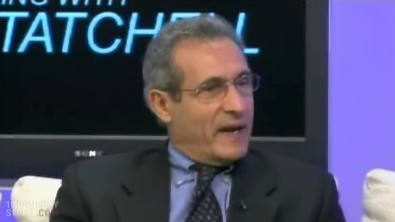 Dr Karim Abdian, director of the Ahwaz Human Rights Organisation (AHRO), highlighted Iran's ethnic cleansing campaign in an interview with leading British human rights and gay rights activist Peter Tatchell. The interview covered the human rights abuse against Ahwazi intellectuals, notably the journalist
Mohammad Hassan Fallahiya
and the psychologist
Dr Awdeh Afrawi
. Dr Abdian spoke of the hundreds of other Ahwazis, including young children, who are imprisoned who campaigned lawfully for Arab rights and autonomy. He also drew attention to the Iranian regime's refusal to allow UN Human Rights Special Rapporteur Dr Philip Alston to visit Iran and investigate human rights abuses.
Dr Karim Abdian, director of the Ahwaz Human Rights Organisation (AHRO), highlighted Iran's ethnic cleansing campaign in an interview with leading British human rights and gay rights activist Peter Tatchell. The interview covered the human rights abuse against Ahwazi intellectuals, notably the journalist
Mohammad Hassan Fallahiya
and the psychologist
Dr Awdeh Afrawi
. Dr Abdian spoke of the hundreds of other Ahwazis, including young children, who are imprisoned who campaigned lawfully for Arab rights and autonomy. He also drew attention to the Iranian regime's refusal to allow UN Human Rights Special Rapporteur Dr Philip Alston to visit Iran and investigate human rights abuses.
Any Ahwazi who stands up against starvation and ethnic cleansing of Ahwazis is denounced as a Wahabbi radical, a separatist or a Western imperialist, said Dr Abdian. He ended the interview by outlining the Ahwazi demand for self-government within Iran, which was the basis of the Ahwazi Arabs' Mohammerah Declaration of 1979. But he said that international solidarity, not military intervention by foreign governments, was the best means to achieve Ahwazi aspirations.
Dr Abdian is an advisor to the British Ahwazi Friendship Society (BAFS) and has represented the Ahwazi Arabs at an international level.
Below is an excerpt from the interview. Click here to watch the full interview .
Labels: activism , human rights , media
permalink
keywords: ahvaz ahwaz ahwazi arabistan khuzestan khuzistan khuzestani arab arabistan iran iranian human rights security oil news ahmadinejad ethnic cleansing
.......................................................................................
25 May, 2007
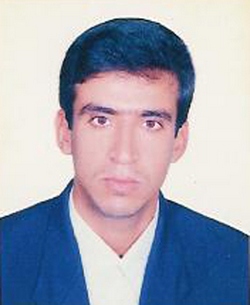 Amnesty International issued an appeal for the release of Ahwazi Arab journalist Mohammad Hassan Fallahiya, who has been given a three year prison sentence for criticising the Iranian regime.
Amnesty has declared that Fallahiya is a "prisoner of conscience detained solely for the peaceful exercise of his rights to freedom of expression and association" and has expressed concern that he is "at risk of torture or ill-treatment." Fallahiya suffers from sickle cell anaemia, a common condition among Ahwazi Arabs, as well as a heart condition but is reportedly being denied medical treatment. He requires constant treatment with antibiotics and access to medical examinations. His relatives fear he may die if he is not treated.
Since November 2006, he has been imprisoned in Section 209 of Evin Prison, which is run by the Ministry of Intelligence which uses it to torture political prisoners and conduct summary killings. A number of other prominent Ahwazis are being held in Section 209, including 60 year old Dutch national Faleh Abdullah al-Mansouri and UNHCR-registered refugees abducted from Syria last year.
On 21 April, he was reportedly sentenced to three years' imprisonment with hard labour. According to Amnesty International, "he was not afforded legal representation at any point in the judicial process, in violation of international fair trial standards."
Fallahiya is the managing editor of Aqlam al-Talaba ( The Students' Pens ), a publication issued by the students in Ahwaz University in
Khuzestan province. He is also a correspondent for several Arab television and radio broadcasting news agencies including Abu Dhabi TV and Radio, in the United Arab Emirates (UAE) and a journalist for the Lebanese al-Mustaqbal broadcasting
corporation.
Meanwhile, another prominent Ahwazi Arab journalist, Youssef Azizi Bani Torouf, is facing accusations by supporters of President Mahmoud Ahmadinejad that he is a pan-Arabist and is in contact with British and Israeli intelligence services. Ahwazi activists fear that he may soon be taken into custody due to the allegations against him and attempts to kidnap his son, a UNHCR-registered refugee in Syria.
Click here for Amnesty's appeal for Mohammad Hassan Fallahiya's release
Labels: Amnesty , human rights , media
permalink
keywords: ahvaz ahwaz ahwazi arabistan khuzestan khuzistan khuzestani arab arabistan iran iranian human rights security oil news ahmadinejad ethnic cleansing
.......................................................................................
24 May, 2007
Concerns are growing over the fate of Mohammad-Hussein Falahieh (pictured), a leading Ahwazi Arab journalist who was arrested in March and is being tortured in Iran's notorious Prison 209.
Falahieh is 29 years old and is married with one child. He has served as chief editor of Aghlam-ol-Talaba newspaper and has also worked as a radio and television journalist, including work as a news presenter on the Iranian government's Al-Alam TV. He also worked for Dubai-based radio and television stations and had a regular newspaper column in leading Arabic newspapers in the Middle East. His last job was a Arabic/Farsi translator at the Algerian Embassy in Tehran.
The British Ahwazi Friendship Society (BAFS) believes that the Iranian regime is attempting to prevent reporting of crimes against humanity against the Ahwazi Arabs and is arresting all Ahwazi Arabs with any connection to the media as a precaution. There is no proof that any Ahwazi journalist is involved in stirring up ethnic unrest in Iran, apart from "confessions" extracted under torture. BAFS calls for the immediate release of all Ahwazi journalists.
Labels: media
permalink
keywords: ahvaz ahwaz ahwazi arabistan khuzestan khuzistan khuzestani arab arabistan iran iranian human rights security oil news ahmadinejad ethnic cleansing
.......................................................................................
Tehran-based Ahwazi Arab journalist and writer Youssef Azizi Bani Torouf (pictured) has been condemned as a pan-Arabist in league with Britain by the hardline pro-Ahmadinejad website Raja News (
click here for article
).
Bani Torouf was condemned by Raja News for publishing articles on the London-based Arabic language news website Elaph , which it describes as the "Arabic BBC". He has faced a number of attacks from the Iranian establishment for writing on the situation affecting Ahwazi Arabs.
Bani Torouf, who has written over 20 books in both Arabic and Farsi, was arrested following the Ahwazi Arab intifada in April 2005 but released weeks later after leading a prison hunger strike against the use of torture, poor prison conditions and detention without trial. In March, his son 20 year old Afnan was among a group of Ahwazi refugees who were arrested and detained in Syria in preparation for deportation to Iran. The refugees were released in April following an intensive lobbying campaign by Ahwazi, Syrian and international human rights groups and appeals by Bani Torouf in the Arabic media.
Bani Torouf has been threatened with arrest and prosecution in relation to hardline claims that he supports separatism, although he has stated that the "Arabs of Khuzestan, as a nation or an ethnic group or whatever you like to call it, are inseparable parts of the Iranian nation." The accusations in Raja News are an attempt to warn and silence him.
Labels: media
permalink
keywords: ahvaz ahwaz ahwazi arabistan khuzestan khuzistan khuzestani arab arabistan iran iranian human rights security oil news ahmadinejad ethnic cleansing
.......................................................................................
18 January, 2007
Journalist Wayne Madsen has withdrawn his allegation that the British Ahwazi Friendship Society (BAFS) is a front for British intelligence following an email exchange with BAFS Chairman Daniel Brett.
On 12 January, the Wayne Madsen Report (WMR) published an article that alleged that three explosions near Mohammara/Khorramshahr were attacks by members of the Ahwazi Arab ethnic group sponsored by British intelligence. It quoted unnamed intelligence sources in support of its claims. Mr Brett emailed the website, pointing out that the explosions were related to landmine clearance operations, as confirmed in the Iranian media and by Iranian officials . He also stated that while the Iranians have blamed British intelligence for ethnic unrest and bomb attacks by Ahwazi Arabs, the Iranian government has failed to provide any proof to support its allegations.
WMR subsequently published Mr Brett's letter, along with a rebuttal in defence of its claims. The website stated that BAFS was an "obvious British intelligence operation." It also referred to Mr Brett's previous involvement in the Fabian Society, which was described as "the vanguard for the neo-imperialistic 'New Labor' policies of Tony Blair." Additionally, it called into question the source of BAFS funding, claiming that the organisation was a tool of "neocon grand conspirators."
Following a subsequent exchange of correspondence between Mr Madsen and Mr Brett, the WMR website stated that it was "satisfied that the Ahwazi exile movement is not in total collusion with U.S. and British intelligence in fomenting attacks in Khuzestan province in southwestern Iran."
Mr Brett gave Mr Madsen assurances that BAFS had not had contact with a research company associated with the US Marines Corps, that it is not in contact with the Mujahideen-e Khalq Organisation (MKO), that it is not in contact with any military intelligence organisation of any country and that it rejects violence as a means to advancing the minority rights agenda in Iran. BAFS said that it relies only on donations from private individuals from within the Ahwazi diaspora and receives no funds from non-governmental organisations or governments.
In his email, Mr Brett said that "we oppose any invasion of Iran," adding that "we do not believe that democracy can be imposed by force from outside Iran." He stressed that "our campaigns to stop the execution of Ahwazi opposition activists have attracted support from across the political spectrum in the UK, including the backing of senior members of the progressive left."
Following the WMR's retraction of its allegations against Mr Brett and against BAFS, Mr Brett said: "We are grateful that Mr Madsen has looked at the evidence and has the courage to make a public statement that his initial assessment of our organisation was wrong. While he may still have suspicions about US and British policies in the Middle East, he acknowledges that BAFS is independent of these governments' foreign policy agenda. BAFS hopes that Mr Madsen will speak directly to members of the Ahwazi opposition in exile to increase his knowledge of the region's political climate."
permalink
keywords: ahvaz ahwaz ahwazi arabistan khuzestan khuzistan khuzestani arab arabistan iran iranian human rights security oil news ahmadinejad ethnic cleansing
.......................................................................................
23 November, 2006
 The following is a press release from
Arab Media Watch
, a UK-based organisation campaigning for fair coverage of Arab issues and against anti-Arab racism in the media.
The following is a press release from
Arab Media Watch
, a UK-based organisation campaigning for fair coverage of Arab issues and against anti-Arab racism in the media.
Arab Media Watch urges the media to follow the looming execution of 10 Iranian Arabs - following a flawed trial condemned by human rights groups - as well as the plight of Iran's millions of ethnic Ahwazi Arabs, who form the majority in Khuzestan province, which contains up to 90% of the country's oil reserves and is a possible location for its nuclear programme.
The most informative, in-depth reports in the British media so far this year (until 17 November) have come from the Daily Mail ( The barbaric deaths meant to spread fear, 15 November ) and the Times ( Tehran's secret war against its own people, Peter Tatchell, 10 October ).
Media coverage in general, however, has been sparse. The Financial Times has had the most coverage so far this year (14 articles), followed by BBC Online (seven), the Guardian (five), the Mail (two), and one each by the Times, the Daily Telegraph and the Independent. The Sun, the Daily Mirror, the Daily Express and the Daily Star have had no reports.
Besides the aforementioned articles in the Mail and the Times, media coverage has not been recent - ranging from 24 January to 16 April - and while focusing solely on unrest by Iranian Arabs, there has been little mention of their underlying, serious and long-standing grievances.
The Independent and the Guardian have provided no context. Of the BBC's seven articles, two had no context, while the others mentioned "alleged discrimination" and "Arab accusations" as if the human rights abuses are a matter of opinion rather than a fact that has been highlighted numerous times by respected human rights groups such as Amnesty International and Human Rights Watch. The same is true of the Telegraph article. Of the FT's 14 articles, only three provided context, while two others mentioned "allegations".
AMW chairman Sharif Hikmat Nashashibi and Daniel Brett, AMW member and chairman of the British Ahwazi Friendship Society, are available for interview.
Nashashibi: ,
Brett: ,
More information on the Ahwazi Arabs can be obtained on the BAFS website ( www.ahwaz.org.uk ) and an article on Arab Media Watch's website .
Labels: media
permalink
keywords: ahvaz ahwaz ahwazi arabistan khuzestan khuzistan khuzestani arab arabistan iran iranian human rights security oil news ahmadinejad ethnic cleansing
.......................................................................................
19 November, 2006
The Iranian regime has imposed a complete block on all Ahwazi websites ahead of its planned execution of Arab activists.
Nasser Bani Assad, spokesman for the British Ahwazi Friendship Society (BAFS), said: "The regime is panicking in the face of international opposition to the unjust executions. The European Parliament has unanimously condemned the executions and there is a renewed focus on Iran's ethnic cleansing policies. In the UK, there have been top level meetings on the executions, with Shadow Foreign Secretary William Hague stepping up the pressure for a European response while politicians from the Labour and Green parties have launched an intensive lobbying effort with the European Commission and the United Nations.
"A block on websites is designed to control the flow of information. The regime does not want Iranians to hear that it is facing heavy criticism from international bodies over its treatment of Ahwazi Arabs. It could be trying to suppress information to limit the level of unrest that will follow the executions. Alternatively, it could be preparing for a climb-down on the executions and does not want Iranians to perceive this as a retreat. We don't mind a block on our website if this means that the regime changes its policies and halts the mass executions."
The execution of 11 men was expected on Tuesday after "confessions" - following months of torture and intimidation of the families of the accused - were broadcast on Khuzestan TV. However, lobbying efforts appear to have led to an unofficial delay, although the Mehr News Agency has indicated that the executions could go ahead tomorrow (Monday).
Labels: media
permalink
keywords: ahvaz ahwaz ahwazi arabistan khuzestan khuzistan khuzestani arab arabistan iran iranian human rights security oil news ahmadinejad ethnic cleansing
.......................................................................................
19 May, 2006
 The Iranian government has barred Iranians from accessing the website of the British Ahwazi Friendship Society (BAFS).
The ban, imposed this month, follows a hacking attack last month which closed down the website for 24 hours ( click here for more information ). BAFS has been in discussions with other organisations promoting human rights and democracy in Iran who have faced similar attacks. A Whois trace on one IP involved in hacking attempts was traced to the offices of the Iranian Ministry of Foreign Affairs while others were routed via impossible locations such as Somalia, Togo and the Cocos Islands. Some have claimed that Chinese software was used in the hacking attacks.
Iran is notoriously paranoid about Iranians accessing information on the internet and has also clamped down on the country's blogging community.
BAFS Chairman Daniel Brett said: "I am surprised it took them so long to ban the BAFS website in Iran. Being banned by the Iranian government is something of a badge of honour for us. It is a desperate act by a regime that has no legitimacy and no democratic mandate from the people it rules.
"Whether it is censoring the internet, imprisoning children, staging show trials or carrying out disappearances, assassinations and lynchings, every time the regime steps up its repression, the Ahwazi movement strengthens and unifies and support grows. The attacks and now the ban on the BAFS website will only raise its importance.
"We're not particularly bothered by the ban anyway as the purpose of the website is to publicise the Ahwaz issue outside Iran. Nevertheless, it is a shame that the hundreds of Iranians who visit our website every week are no longer able to read what is happening to the Ahwazi Arabs.
"BAFS has consistently stated that it does not support separatism and opposes any invasion of Iran. The government fears the organisation's message of non-violent struggle for Ahwazi Arab rights, because the movement poses one of the greatest domestic challenges the regime has ever faced. It will not tolerate anything that contradicts its own propaganda. It will not tolerate Iranians learning the truth about oppression and injustice in Iran."
permalink
keywords: ahvaz ahwaz ahwazi arabistan khuzestan khuzistan khuzestani arab arabistan iran iranian human rights security oil news ahmadinejad ethnic cleansing
.......................................................................................
17 May, 2006
Kuwait's independent newspaper Alqabas has published an open letter to Syria's President Bashar Al-Assad by eight Ahwazi Arab groups calling him to release Ahwazi Arab refugees arrested in Syria over the past week ( click here for further information ).
 Referring to the deportation of UN-registered Ahwazi refugee Saeed Saki (pictured), the Ahwazi groups claimed that the the arrests were "the first time that Syrian Arab nationalist government handed an Ahwazi Arab to the Iranians," calling the arrests "a dangerous dark spot policy in Syrian history directed against our just cause."
The letter added: "The Ahwazis always have been grateful for Syrian nation to welcome them in their second homeland and they have always taken a responsible approach towards the rule of law in Syria"
The letter was signed by the Ahwazi Arab Liberation Front, the Arabistani National Party, the Ahwazi Cultural Committee, the Ahwazi National United Movement, the Ahwazi Patriotic Solidarity Party, the Ahwazi Arab Struggle Movement, the Ahwazi Democratic Assembly and the Ahwazi Patriotic Democratic Movement. Click here to read the letter .
Further information:
Amnesty International report - Syria: Fear of forcible return Syria's Deportation Scandal
More Arrests of Ahwazi Arabs in Syria
Ahwazi Arabs arrested in Syria on Iran's request
Syrian human rights activists arrested amid Ahwazi deportation scandal
Lebanese democrats support Ahwazis
permalink
keywords: ahvaz ahwaz ahwazi arabistan khuzestan khuzistan khuzestani arab arabistan iran iranian human rights security oil news ahmadinejad ethnic cleansing
.......................................................................................
24 April, 2006
Leading human rights campaigner Peter Tatchell writes for The Guardian website on the persecution of the Ahwazi people by the Iranian regime, calling it a crime against humanity. Click here for the original article .

One year ago this month, the streets of the Ahwaz region of south-western Iran flowed with the blood of the country's persecuted Ahwazi Arab minority.
Faced with mass protests against Tehran's policy of ethnic cleansing, the Iranian security forces responded with savage brutality, killing over 160 civilians, wounding at least 500 more, and arresting 450-plus people.
Since the first days of the Ahwazi intifada in April 2005, many hundreds, possibly thousands, more Ahwazis have been arrested and detained without trial (the exact numbers are unknown because Tehran refuses to say how many are being held). A high proportion of detainees show signs of torture. Several Ahwazi pro-democracy activists have been framed and executed after show trials.
Tehran's latest evil ploy is to arrest the children and wives of Ahwazi political dissidents and hold them hostage. Kids as young as two years old are being held in prison as pawns, to force their fathers to surrender to the Iranian authorities.
The crushing of democracy and human rights in al-Ahwaz includes the suppression of political parties, newspapers and student groups. The arrest, jailing and torture of Ahwazi Arab activists is the norm.
What has been the response of the international community? Silence.
The west is preoccupied with Iran's nuclear programme, to the neglect of its persecuted people. There is no concern about the fate of the Ahwazis or the many other victims of Tehran's clerical fascist regime: Sunni Muslims, Kurds, trade unionists, socialists, women, gay people and many more.
George Bush and Tony Blair care only about whether Iran might eventually manufacture nuclear weapons and potentially threaten Israel or the west. They care not a jot about Tehran's ethnic, political and sexual repression of its own people.
The anti-war movement is not much better. It, too, ignores the suffering of the Ahwazis and all the other victims of Iran's theocratic dictatorship. Like many appeasers of tyranny throughout history, it puts peace before justice, even though peace and justice are not mutually exclusive. Some of us find no difficulty in opposing both a US attack on Iran and supporting the just struggles of the Ahwazis and other oppressed peoples of Iran.
Sadly, this is not the way much of the left sees it. There is no leftwing solidarity campaign to support the Iranian movements for democracy, human rights and social justice; even though the brutalities of the ayatollahs rival the worst excesses of Pinochet's Chile and South African apartheid.
What is happening to the Ahwazi Arabs is an indictment of the international community. Where is the concern of the UK, EU, US and UN about the wholesale forced removal of Ahwazis from their own lands, and their involuntary dispersal and relocation in distant, often barren regions of Iran?
Tehran is pursuing a policy that is tantamount to the "ethnic cleansing" of the Ahwazi Arab nation. This is a crime against humanity under international law.
The "ethnic cleansing" of the Ahwazis should come as no surprise. The Islamic Republic of Iran is a racist state. It is ruled by Persian chauvinists and neo-imperialists who brutally suppress their own minority nationalities, denying them the right to self-determination. The Ahwazis are not the only victims. Iran is also persecuting its Kurdish, Turkmen and Balochi minorities.
Despite living in the region of Iran richest in oil, the Ahwazi Arab people are victims of a cruel, deliberate impoverishment by the Iranian regime. All the wealth is being squeezed out. Little is spent in the region. The result? Standards of housing, education and healthcare in the south-west are way, way below the Iranian average.
For the oppressed people of Iran, the solution is clear. The Islamist dictatorship in Tehran must be overthrown; not by western invasion, but through a "people power" democratic revolution from below.
The Ahwazi people seek a democratic, secular state, with self-government for themselves and for all the other suppressed ethnic minorities of Iran. They deserve our support and solidarity, as do all Iranians struggling for human rights and social justice.
permalink
keywords: ahvaz ahwaz ahwazi arabistan khuzestan khuzistan khuzestani arab arabistan iran iranian human rights security oil news ahmadinejad ethnic cleansing
.......................................................................................
25 February, 2006
Windows Media
| Launch in external player |
Al-Ahwaz TV has produced a short documentary on Shirinshahr, which is based on unique footage shot on the road to the ethnic Persian township currently under construction. The new town is being built on land confiscated from Ahwazi farmers. The film shows the constrast between the abject poverty of Ahwazi Arabs compared to the large investments being ploughed into exclusive Persian settlements built on their land. For more information, see " Ethnic Cleansing in Full Force in Iran ", 25 February 2006, British Ahwazi Friendship Society.
permalink
keywords: ahvaz ahwaz ahwazi arabistan khuzestan khuzistan khuzestani arab arabistan iran iranian human rights security oil news ahmadinejad ethnic cleansing
.......................................................................................
25 December, 2005
The British Ahwazi Friendship Society (BAFS) has lodged a complaint against the BBC for a mistake in a report that linked the organisation to an Arab separatist television channel.
A BBC Monitoring report confused the BAFS-supported "Al-Ahwaz TV", which promotes civil rights for Arabs in Iran, with a newly launched Canada-based channel called "Ahwaz TV". The BBC stated that BAFS facilitated grants and donations to the Canadian organisation running the channel, a claim that is wrong. The new channel promotes a separate state for Al-Ahwaz and armed struggle against the "Iranian enemy", positions that BAFS and its allied organisations reject. The BBC report has prompted understandable concern that BAFS supports armed conflict and terrorism.
BAFS spokesman Nasser Bani-Assad said: "BAFS's constitution explicitly states opposition to all violence, whether from the government or the opposition. This is our principled stand. The television channel the BBC associates us with says that Iran is the enemy of the Ahwazi people. We reject this position. The regime is the enemy of the people, not the Iranian peoples and not ordinary Persians.
"We abhor all ethnic chauvinism, Persian or Arab, and believe in non-violent resistance without hatred. We advocate a federal Iranian state with autonomy and internal self-determination for the provinces, similar to federal systems that can be found in many of the world's advanced democracies. We believe that this is the only way Ahwazi Arabs can be free of injustice and oppression. BAFS and the organisations it works alongside are progressive and secular, defending the rights of Ahwazis against persecution, poverty and oppression.
"The mistake is understandable, but the BBC should know better. It is absolute clear to anyone with any knowledge of Al-Ahwaz that we have nothing to do with these people. If the BBC had bothered to follow up the story and contacted us - as all good news organisations should - then this confusion would not have arisen. This is why we are complaining in the strongest possible manner."
The BAFS website's "about" page states: "We do not support separatism and oppose any invasion of Iran by foreign forces. We condemn all forms of terrorism and have no links to any armed group. We believe that through national civil disobedience supported by global solidarity, the people of Al-Ahwaz and the rest of Iran can build a democratic Iran where no religious or ethnic group is subject to persecution, racism or oppression. We uphold the notion of Iran as a multi-ethnic and multi-cultural country and believe that decentralisation, federalism and regional autonomy is essential to democracy in Iran."
Labels: media
permalink
keywords: ahvaz ahwaz ahwazi arabistan khuzestan khuzistan khuzestani arab arabistan iran iranian human rights security oil news ahmadinejad ethnic cleansing
.......................................................................................
