




 The following are excerpts from a debate on the Arabs of Iran's Al-Ahwaz province, which aired on ANB TV on September 7, 2007. To view the clip visit
http://www.memritv.org/clip/en/1567.htm
The following are excerpts from a debate on the Arabs of Iran's Al-Ahwaz province, which aired on ANB TV on September 7, 2007. To view the clip visit
http://www.memritv.org/clip/en/1567.htm
Musa Al-Sharifi of the Al-Ahwaz Democratic Solidarity Party: "With regard to our Arab region of Al-Ahwaz, the [Iranian] government's policy is to expropriate lands, to deport the indigenous Arab inhabitants to other regions, and to replace them with people from the Persian provinces of central Iran."
Interviewer: "How is this done? The Arabs own the lands, which are expropriated by government decree, or what?"
Musa Al-Sharifi: "Yes, this process began in the days of the Shah with the sugar cane projects and so on. They would take the lands from the Arab farmers and establish on them camps for the army or the security agencies, or fictitious economic projects and so on. This process began in the time of the Shah, and intensified in the Islamic Republic."
[...]
Mansour Al-Ahwazi, political activist and treasurer of the British Ahwazi Friendship Society (BAFS): "Various methods are used in the ethnic cleansing. We did not claim that there were killings... There are killings, indiscriminate executions, and all that, but not like what happened in Yugoslavia and other places. They are trying to finish off our existence.
[...]
"The first city of Persian settlers is called Shirinshah. You can find it on the map, or you can open Google Earth and see this Persian city in the heart of the Arab region. Lands in this region were expropriated under the pretext of the sugar cane project and were used to build the city of Shirinshah.
"The first settlement in the time of the Shah was called New Yazd, but after the revolution, the Iranians who were brought there fled from New Yazd. When the Iranian regime believes that the Arab or international situation allows it to get away with these things, it intensifies its actions. After the Arab defeat by Israel in 1967, they carried out the first settlement plan of New Yazd. They brought people from Yazd, and settled them in Al-Ahwaz. They did this when they saw that the condition of the Arabs deteriorated, even though the Arabs completely ignore our cause.
"Now that Iraq is no longer competing with Iran, and now that Iran has gained a monopoly over the strategic situation in the region, they have stepped up the expropriation of lands in Al-Ahwaz. The Iranian regime - despite all its claims to support the Arab causes and so on... Whenever it identifies some weakness in the [Arab] nation, it escalates its ethnic cleansing policies in Al-Ahwaz.
[...]
"The Al-Ahwaz issue highlights the contradictions of the Iranian government. The Iranian government professes to call for unity, to avoid sectarianism, and to defend the Shiites. It tries to use the Shiite bargaining chip in some Arab countries in order to promote its plans and in order to extract some concessions from the U.S. or from some of the other Western powers. If Iran really defends the Shiites, why does it oppress the [Arab] Shiites of Al-Ahwaz? The majority [of the Arabs] there are Shiite. If it really defends the [Arab] peoples in Lebanon and Palestine, why does it oppress its own Arab people? This is the greatest contradiction in the policy of the Iranian government.
"This issue highlights the contradictions of the Iranian government on all levels - on the sectarian level, as well as the Islamic level. The Iranian government is, in fact, coming to a dead-end, not only in terms of its foreign policy, but domestically as well.
"For example, some time ago they closed the Al-Ashraq cultural institute, which was the only Arab cultural institute in Al-Ahwaz. It was closed two days ago, as you can read on the Internet. This was done for no reason whatsoever. It did not support violence or any political organization. All it did was distribute Arab and Islamic books. It was attacked and was closed down.
"This is part of the faltering policy of the Ahmadinejad government - just like it chose to run ahead with its nuclear program, it failed to start a dialogue with its [non-Persian] peoples, and to find a formula of compromise in this regard. It has now begun to escalate its indiscriminate arrests and its attacks.
"There have been many more executions in recent years, since the rise of Ahmadinejad, and many cultural institutes have been closed down. [The Iranian government] has begun to push matters towards a dead end, and to encourage people to rise up and create unrest. What is happening now in Baluchistan... I am sure that you have heard about the kidnappings. In Kurdistan, two helicopters were attacked. They blame the West for all this unrest, and try to say this is the result of conspiracies, but it is the result of their own policy.
[...]
"Iran rules Al-Ahwaz by virtue of the status quo alone. It enjoys no historical, political, or even popular legitimacy in Al-Ahwaz.
[...]
"As the international situation deteriorates for the Iranian government, its control will weaken. Their fear of this leads them to escalate the oppression in Al-Ahwaz.
[...]
"The unity of Iran has begun to face very grave dangers, because the broadest common denominator - the religious or Shiite element - has weakened greatly."
Interviewer: "In what sense has it weakened? They derive strength from this."
Mansour Al-Ahwazi: "No, this element has weakened greatly, because the government's policy. Take, for example, the issue of the veil. They impose the veil, but in the early days of the revolution, it was worn out of personal conviction, and no one imposed it. Iranian women seek any opportunity to express their rage at the policies of the Iranian government, which imposes the veil.
"In the past, Iranian women wore the veil out of personal conviction. Now, it has become a matter of oppression, and you can see how they mobilize armies in order to attack and humiliate women and to force them to wear the veil."
Labels: activism , features , media
permalink
keywords: ahvaz ahwaz ahwazi arabistan khuzestan khuzistan khuzestani arab arabistan iran iranian human rights security oil news ahmadinejad ethnic cleansing
.......................................................................................
20 September, 2007
This is an article published on The Guardian website by human rights campaigner Peter Tatchell in relation to last week's executions of Ahwazi Arab political prisoners. Click here for the original .
The Islamic Republic of Iran has executed three more Arab political prisoners, just days after a visit from the UN High Commissioner for Human Rights, Louise Arbour. In further defiance of the UN and international law, four more Arabs face imminent execution.
There have been no protests from Britain, the EU or the UN. The UN's silence comes on top of the truly appalling vote by UN Human Rights Council to abandon its monitoring of human rights abuses in Iran.
The only thing the west seems to care about is Iran's nuclear programme. Human rights abuses do not concern Washington, London or Brussels. Nor do they concern President Hugo Chavez of Venezuela and President Robert Mugabe of Zimbabwe. Both men have warmly embraced the tyrant of Tehran , President Mahmoud Ahmadinejad.
The Arab League , the supposed defender of Arab peoples worldwide, is equally indifferent. It has refused to protest to Iran about the persecution of ethnic Arabs in the south-west of the country - the oil-rich region Tehran calls Khuzestan, but which the indigenous Arab peoples call al-Ahwaz.
While condemning Israel for abusing the Palestinian people, Arab states are silent about the abuse of fellow Arabs by the Iranian regime. The anti-imperialist left is also mute. Why the double standards? Palestinian Arabs get the support of progressives and radicals everywhere; Iranian Arabs get no support at all. They swing from nooses in public squares like cattle hanging in an abattoir. Does anyone care?
Ahwazi Arabs accuse Tehran of Persian chauvinism, racism and ethnic cleansing, as I previously revealed in Tribune. The response to that article from some Islamists, left-wingers and anti-war activists was to denounce me as racist and anti-Muslim. But how can it be Islamophobic or racist to defend Arab Muslims against Tehran's persecution?
Amnesty International has also expressed concern about the bloody repression and economic exploitation of Iran's Arab minority, as has Dr Karim Abdian of the Ahwaz Human Rights Organisation (AHRO). I recently interviewed Dr Abdian for my Talking With Tatchell TV programme, which you can watch here .
The execution of three Arabs last week is the latest in a series of barbaric hangings, designed to terrorise the Arab population into submission. Ten other Arabs are known to have been executed since December last year. Amnesty International and Human Rights Watch have condemned their trials as unjust and unfair .
In January this year, three UN special rapporteurs also voiced concerns about the way the trials were conducted. Their concerns confirm criticisms by one of Iran's leading human rights advocates, Emad Baghi. In a letter to the chief of the judiciary, Ayatollah Hashemi Shahroudi, he argued that the trials of Ahwazi Arabs were flawed, the charges baseless, and that the sentencing was based on a spurious interpretation of law.
The men hanged last week were Abdulreza Nawaseri, Mohammad Ali Sawari and Jafar Sawari. Charged with bombing the Zergan oilfields in 2005, they were executed secretly in prison using Tehran's sadistic slow strangulation method, deliberately designed to prolong the suffering of the victims.
The men denied all the charges during a summary one-day trial in which they were deprived of adequate legal representation and denied the opportunity to call witnesses in their defence. Their lawyers were not allowed to meet them and were not given time to read their files. When they subsequently complained about the conduct of the trial, five of the seven lawyers (all Arabs) were arrested and summoned to court on allegations that they had threatened national security.
Abdulreza Nawaseri, aged 32, was arrested in 2000 and sentenced to 35 years in prison. He was in jail at the time of the Zergan bombings and therefore could not have committed the attacks, which further suggests that these men were framed on false charges.
Brothers Mohammad Ali Sawari and Jafar Sawari had been in prison since 2005. They were initially accused of promoting Sunni Islam, which is a heinous crime in the sectarian Shia state of Iran. These charges were later supplemented with charges of bombing the Zergan oilfields. No evidence was produced to back up the charges.
Mohammad Ali, a 37-year-old teacher, was an English literature graduate. Some reports claim he was also accused of translating George Orwell's book, Animal Farm, into Arabic, with the aim of sparking an uprising. According to his family, there was no allegation of bombings in his file.
The men's execution prompted spontaneous anti-government demonstrations in Ahwaz. Security forces fired on the crowds. Reports suggest that one person was killed and 20 others wounded.
At least six more Arab political prisoners are facing imminent execution. Four of them are in Karoun prison. These prisoners include Hamzah Sawari, 20 years old, who is accused of giving unauthorised religious instruction in a local mosque, instigating worshippers against the state and displaying the Ahwazi flag in 2005. The other men scheduled to hang with him are Zamel Bawi, Abdulemam Zaeri and Nazem Boryhi. The charges against them have not been made public.
Two more Arabs, who were illegally handed over to Tehran by Syria, are also expected to be hanged. The UN High Commission for Refugees reports that the men were recognised refugees and therefore protected under international and Syrian law from removal to a country such as Iran where they could be at risk of torture and execution.
According to Daniel Brett, chair of the British Ahwazi Friendship Society :
The Iranian government is not only executing innocent men, it is killing or jailing entire families in its attempt to terrorise the Ahwazi Arab people. We know that the entire family of Ahwazi psychologist Dr Awdeh Afrawi have been executed, murdered or imprisoned; Dr Afrawi himself is currently dying in prison, being deliberately denied the medication he needs to survive.
The Nasseri and Bawi tribes appear to be key targets, due to the fact that their lands are oil-rich and members of these tribes have been heavily involved in opposition to the government's land confiscation programme and its forced displacement of Arabs.
Contrary to Tehran's propaganda, most Arab movements in al-Ahwaz are not violent separatists. They primarily want non-discrimination, cultural rights, social justice and regional self-government - not independence.
If, however, Tehran continues to rebuff moderate, mainstream Arab opinion, there is a danger that many Arabs will turn to armed struggle and wage a full-scale national liberation war with the aim of outright independence. This would turn oil-rich al-Ahwaz into another zone of violent instability, with adverse global economic consequences as a result of diminished oil production and rising oil prices.
Quite rightly, most Arabs do not support a US attack on Iran. Military intervention would strengthen the position of the hardliners in Tehran; allowing President Ahmadinejad to play the nationalist card and, using the pretext of defending the country against imperialism, to further crack down on dissent. Many Ahwazis believe the route to liberation is an internal "people power" alliance of Iranian socialists, liberals, democrats, students, trade unionists and minority nationalities.
I have supported the Iranian people's struggle for democracy and human rights for four decades - first against the western-backed imperial fascist Shah and, since 1979, against the clerical fascism of the ayatollahs. Some anti-war leftists refuse to condemn the Tehran dictatorship and refuse to support the Iranian resistance; arguing that to do so would play into the hands of the US neocons and militarists. I disagree. Opposing imperialism and defending human rights are complementary, not contradictory.
Labels: death penalty , features
permalink
keywords: ahvaz ahwaz ahwazi arabistan khuzestan khuzistan khuzestani arab arabistan iran iranian human rights security oil news ahmadinejad ethnic cleansing
.......................................................................................
13 June, 2007
By Bill Roggio, The Weekly Standard
The January 20 attack on the Karbala Provincial Joint Coordination Center by the Iranian backed Qazali Network, which resulted in the kidnapping and murder of five U.S. soldiers, was long known to be an Iranian planned and sponsored strike. While Iran has insulated itself with its cutouts in the Qazali Network, Multinational Forces Iraq has captured members of the network who implicated the Iranian regime, as well as documents that substantiate the allegations. And now U.S. forces have satellite imagery that proves Iranian involvement. In the June 4 edition of Aviation Week and Space Technology , the magazine reports that Iran had built inside its borders a mockup of the Karbala Provincial Joint Coordination Center, which was used to train the attackers. The "training center" was discovered by a U.S. spy satellite surveying Iran.
"U.S. reconnaissance spacecraft have spotted a training center in Iran that duplicates the layout of the governor's compound in Karbala, Iraq, that was attacked in January by a specialized unit that killed American and Iraqi soldiers," Michael Mecham reported in the "In Orbit" section of the magazine. "The U.S. believes the discovery indicates Iran was heavily involved in the attack, which relied on a fake motorcade to gain entrance to the compound. The duplicate layout in Iran allowed attackers to practice procedures to use at the Iraqi compound, the Defense Dept. believes."
An American military officer confirmed to us that the report is accurate, but did not disclose the location of the training camp. In early January, Strategic Policy Consulting confirmed a two year old report by the British Ahwazi Friendship Society that Iran was using the "Arab populated city of Ahwaz, southwestern Iran, as a base of operations." The city of Ahwaz is in Khuzestan province, which borders the southern Iraqi province of Basra. It is not publicly known if Ahwaz is the location of the Karbala mockup.
"The Al-Qods Force trains militants in manufacturing improved explosive devices and finances and organises pro-Iranian militias in Iraq," noted the the British Ahwazi Friendship Society report. "According to SPC, the Iraq network is under the command of Jamal Jaafar Mohammad Ali Ebrahimi, who is also known as Mehdi Mohandes."
We were the first to note, on January 26 , that Iran's Qods Force, which is responsible for planning and conducting foreign operations, intelligence gathering, and terrorist activities, was likely behind the attack due to the complexity of the strike. General David Petraeus briefed on the Karbala attack on April 26 and noted the Qazali network was responsible for the strike.
On May 19, Coalition forces killed Azhar al-Dulaimi during a raid in Baghdad's Sadr City. Dulaimi was described as the "mastermind" and "tactical commander" of the Karbala attack, In March, U.S. forces captured Qais Qazali, the network's leader, his brother Laith Qazali, and several other members.
Multinational Forces Iraq has been targeting the Qazali Network's "secret terror cells" as well as those of the Sheibani Network. Coalition and Iraqi forces have killed 26 members of this network and captured 71 more since April 27, 2007. Three more members of the "secret cell" were captured and another killed today.
The Sheibani Network is the overarching organization that receives support, weapons, advice, and targeting from Iran's Qods Force. Senior members of the Qazali and Sheibani Networks are members of Iran's Qods Force.
Labels: features
permalink
keywords: ahvaz ahwaz ahwazi arabistan khuzestan khuzistan khuzestani arab arabistan iran iranian human rights security oil news ahmadinejad ethnic cleansing
.......................................................................................
12 June, 2007
By Richard Miniter, PJM Washington editor, reporting from Sulaimaniya, Iraq
From his secret base Abdullah Mohtadi commands a small armed force inside Iraq and a vast clandestine network inside Iran.
"I didn't believe in the so-called critical dialogue with Iran. We are for regime change, no matter what the Europeans or even the United States says," Mohtadi tells me.
It is not an ambition for the faint-hearted. Mohtadi, who is Secretary General of the Democratic Komala party, an Iranian Kurdish political party banned by the Islamic Republic, has survived several attempts on his life.
This charming former communist wants to topple the mullahs of Tehran and replace their dictatorial rule with a federal democracy.
"In a sense we have some things in common with the neocons. We believe in the democratization of the whole Middle East and recognize the danger of political Islam."
Still the former communist does not call himself a neo-conservative. He prefers the term "revolutionary liberal." He is one of the "free rangers" of Iran.
The day I first met him, he was trying to stay in the background. I had come to visit his older brother, a famous Kurdish novelist, and the younger Mohtadi was serving as a translator. He didn't even let on that he was related to the novelist, let alone venture a detail about his history, until I asked him about himself.
He was traveling incognito; dressed in a striped shirt and trousers.
Today he is dressed in an olive-drab kawapatour, a traditional Kurdish man's pants suit that flares from waist to knee; it makes him look like both a 1940s military commander and Kurdish nationalist. It looks like a suit for a special occasion.
His words are measured and soft. He drinks his tea without sugar.
Iran's Kurds
There are 12 million Kurds spread across four provinces in Northwestern Iran and another one million Kurds in a far-eastern province. Iran's total population is estimated at more than 60 million.
As with Kurds in neighboring states, the Iranian Kurds have a series of discrimination complaints. He ticks them off. Kurds are deprived of education in their mother tongue and denied money for schools and roads, even though they pay heavy taxes to the central government, according to Mohtadi. Generally, Iran's Kurdistan is run not by Kurds, but by people appointed by Tehran. Not a single police chief is a Kurd, he said. Indeed, none of the top jobs in the four Kurdish provinces are held by a Kurd. "It is a cultural occupation, a case of clear discrimination."
Congress of Nationalities
Mohtadi, with a wide array of allies, is building consensus among the democratic opposition among ethnic minorities inside Iran. It is a minority within a string of minorities. The five main ethnic minorities inside Iran are the Azerbaijanis, the Azeris, the Beluch (in southeast Iran), the Arabs of Ahwaz (in southwest Iran) and the Kurds (in northwest Iran and northeast Iran). These minorities call themselves "nationalities," because they are peoples without a nation. Nonetheless, Mohtadi (and presumably his allies) acknowledge that seceding from Iran is not a realistic option.
Instead, Mohtadi and others have united the democratic elements with the "nationalities" to form the Congress of Nationalities for Federal Iran . They do not seek breakaway republics or ethnic fiefdoms, but regional autonomy within a federal, democratic Iran. They envision that this new Iran will be like the Federal Republic of Germany or the United States before the civil war extinguished the autonomy of states.
Iraq serves as a model for what is possible in Iran. "The Iranian Kurds are celebrating the presidency of Talabani in Iraq," he said. The new Iraq is a viable democracy, with regional autonomy for the Kurds, that can elect an ethnic minority (a Kurd even!) to the presidency to a large, united nation.
Can Iran really evolve in this direction? Yes, it is a faraway dream, Mohtadi admits. But progress to the promised land is quietly being made.
When Iranian police arrested a Kurdish teenaged boy, named Shwana Kadini, and tortured and killed him, in July 2005, it was not hard to stoke public outrage. Across Iran's Kurdish region, the public fury was overwhelming.
Democracy activists were quick to capitalize on public sentiment. Komala and others in their coalition mounted demonstrations in nine cities. The carried signs saying "Bring the killers to justice." Read one way, the signs seem to be about bringing the rogue cops to trial. Read another, it is a call for regime change in Tehran.
Komala and its supporters put some 100,000 people on the streets to demonstrate against the regime in July 2005, he said.
The Iranian writer's union supported Kurds, as did many other Iranian groups.
"For the first time since 1979, all of Iranian Kurdistan erupted with demonstrations," he said.
Tehran's reaction was instructive. "The government became cautious," he said. It made some attempts to placate the public. It suggests that the mullahs realize how tenuous their hold on power really is.
A Secret Network
Still, support is growing among Kurds in Iran, he said. "A decade ago, it is very difficult to get cooperation. Now people complain that you don't give them missions. Why am I not a member? they ask me." You have to earn the right to be a voting party member, he explains.
"We have had 4,000 martyrs in past 28 years, now new recruits are strengthening the party."
Azerbaijanis came late to liberation movement but their democratic management is growing fast. "This is one of the biggest political changes is that we have managed to win over the Shi'ite Kurds of southern [Iranian] Kurdistan," he said.
The internal organization for leading and organizing clandestine staff has doubled twice in the past year, according to Abu Baker Modarrisi, who is a member of the collective that runs the clandestine service.
"We send people into Iran every day," he tells me. "We sent an organizer yesterday to a Kurdish city to set up a cell."
Komala reaches Iranian Kurds through phones, e-mails and satellite television.
"Our satellite broadcasts station both Kurdish and Farsi, using an uplink in Sudan and a studio in Iraq. Rojhelat TV - sunrise and east, broadcast from Sweden, studio here. Iranian Kurd is eastern Kurdistan."
But the jamming backfires. "People are angry about health effects of Iranian jammers," he said. Many Iranians believe they are being poisoned by the intense electro-magnetic fields generated by jamming devices, he said. When I tell him that I can see the moral outrage of being denied free speech, but that the health effects of the jamming are probably nil (the electro-magnetic fields fall off by the square of the distance), he looks nonplussed. He does not want to surrender such an effective propaganda point. But he is an educated man and knows, as a matter of science, that I am right. So he moves back on the better terrain: the regime's use of torture.
Armed Struggle?
For now, Komala will confine itself to mass protests and civil disobedience. "When the time is right," the former communist said, "armed struggle will resume."
Mohtadi strongly denies that Komala coordinates with Pjak, a Kurdish terror group known to attack Iranian police stations and other targets inside Iran. He believes that violence at this stage would alienate supporters inside Iran and is morally opposed to senseless taking of life.
But Komala does have its international affiliations. It is affiliated with Socialist International through the Kurdish branch. The party recently applied for full membership on its own.
It would seem to be the perfect group for the Left to embrace: it is democratic, represents an ethnic minority, fights an evil regime run by Islamist fanatics, uses non-violent techniques to demand social justice and is a bona fide member of the global socialist movement.
And yet it has shockingly few friends on the Left. A few Europeans will listen, he said. But most in Europe and North America ignore Komala. They have moved on. Some seek to accommodate or understand the Iranian regime. Many more are consumed by Bush hatred. Komala is a oxbow lake, left behind by a Mississippi that has changed course.
Little Help from Washington
The Bush Administration seems to have little interest in Komala or the other members of the Congress of Nationalities.
Has he met with representatives of the State department or the CIA? He only nods.
He is grateful that the State Department and the European Union have condemned Iran's use of torture, censorship, false imprisonment, police brutality and sharia law. But he said he does not understand America's goals vis-a-vis Iran.
"We don't know what strategy U.S. is following. They show sympathy [for us], they condemn violations of human rights, nationalities, women. This is said. But there is no strategy. We still don't know what the U.S. want to do with this regime."
"It is better for the strategy to be publicly announced. There is no shame in it."
I ask him if he would favor a "No-fly zone" over the Kurdish region of Iran, similar to the umbrella that once shielded the Kurds in Iraq?
He seems surprised and delighted by the suggestion. But he responds cautiously. "That would greatly help," he said.
He receives no aid from America or any Western government. Sometimes, the local Kurdish government will give the party a little money "for water, electricity and so on. It isn't much."
Komala's support comes solely from supporters inside Iran and among the Kurdish diaspora - desperately poor people providing what they can.
"We are surprised why the Americans are so sensitive. The Iranian regime is confronting the U.S. very openly and still the U.S. is doing nothing to help the Kurds and other nationalities."
The regime is weak, he believes. "It is corrupt, has no self-belief, just self-interest. In the ruling circles, there is no solidarity." With a hard shove, the regime would crumble, he said. "I am optimistic."
Labels: features
permalink
keywords: ahvaz ahwaz ahwazi arabistan khuzestan khuzistan khuzestani arab arabistan iran iranian human rights security oil news ahmadinejad ethnic cleansing
.......................................................................................
08 June, 2007
By Ahmed Janabi, Al-Jazeera
Iranian Arabs in the oil-rich province of Khuzestan in southwest Iran have expressed a strong will to split from Iran and restore their own state, accusing Tehran of suppressing them racially, economically, and politically.
Ahwaz has been witnessing sporadic bombings and confrontations between residents and Iranian police.
In 2006, a bomb exploded in the city, causing tension between Britain and Iran after Manouchechr Mottaki, the Iranian foreign minister, accused Britain of involvement in the unrest.
Arab activists have complained about Iranian indifference to their demands and calls for dialogue.
They have voiced concerns over the low living standards, and the lack of education and medical services in their community.
Tahir Aal Sayyed Nima, chairman of the Ahwaz National Liberation Movement (ANLM), told Al Jazeera.net that Iran was treating its Arab nationals as second-class citizens.
He said: "Arabic is banned in government departments and parliament. Arabic is not allowed to be taught at schools or learning centres. We see this as a bid to assassinate our Arab identity.
"Schools are not available in villages, peasants' children have to go to the city on daily basis to be able to study, which is very impractical of course. Hence, illiteracy in Ahwaz is estimated at 90 per cent, and as long as the Iranian government blocks education, it is unlikely that this percentage would ever go down."
Illiteracy in Iran in general is estimated at 33 per cent.
Federalism
Most of Ahwazi political movements demand full independence for their region, but the Democratic Solidarity Party of al-Ahwaz (DSPA) demands self-rule within a federal state.
Mansour al-Ahwazi, a spokesman for the DSPA, told Al Jazeera.net: "We think it is closer to logic for the time being if we ask for self-rule within a federal state, provided that we enjoy the right of self-determination.
"We have come to the conclusion that the current Iranian regime cannot be reformed, and that is why the reformists have failed to achieve something.
"Our party along with 15 Iranian opposition organisations, have formed the Congress of Iranian Nationalities for Federal Iran. It includes all ethnicities in Iran, and we hope that its outcome will be the appropriate replacement for current regime."
Discrimination
Despite the difference in their approaches, Nima and al-Ahwazi are united in their belief that Ahwazi Arabs are discriminated against by the Iranian government.
Nima said: "An Arab cannot have a job even in his own region. Government departments in our region are full of Persian Iranians. It is nearly impossible for an Arab to get a job at a government department in Ahwaz. How can we get jobs when the Persians call us Kwawla, meaning Gypsies?"
He continued: "Iranians have established agricultural settlements just like those in Israel. By doing this, they are filling the region with Persians and eventually they will achieve their strategic goal of changing the area's demography and make the Persians a majority."
Iran has launched several big projects in the Ahwaz region, such as the Sheeren Shah settlement and the Sheelat settlement, for the fishing industry.
Khuzestan is an oil-rich region
Abd Allah al-Nafisi, a Kuwaiti political analyst and author, told Al Jazeera that the Ahwaz region was vital to Iran's economy. But it is also inhabited by non-Persians, which makes it tricky for Tehran to strike a balance between economic interests and national security.
"Ahwaz is an oil-rich province, so it would be a fundamental region to the government, but at the same time it is inhabited by Arabs. Moreover, geographically it is adjacent to Iraq and Kuwait and stretches along the west shore of the Gulf.
"For the sake of argument, if this region is granted independence or even a self-rule, it would form with Iraq and the Arab states of the Gulf a huge Arab bloc at the gates of Iran," he said.
Constitution
The Iranian constitution states that non-Persian Iranian communities should enjoy the right to preserve their ethnic and religious identities, along with citizenship rights.
Persians constitute 51 per cent of Iran's population of 69 million people. Iran says its Arab population is about two million, but Ahwazis dispute that and say their community has at least five million.
Said Al-Ahwazi: "The Iranian constitution touches on non-Persians' rights, but not clearly and directly. However, we would stick to what we have now.
"We have a problem with the government which is still in a state of denial about its own constitution. If the constitution were implemented fairly, at least we would have been able to teach our language to our children and we would have been able to get jobs."
He said that the first to ask the government to abide by the constitution and give Arabs and other non-Persian Iranians their rights, was a former member of parliament, Jassim al-Tamimi, of the Ahwazi Accordance party.
But the Iranian parliament considered al-Tamimi's requests as a threat to Iranian national security, and banned him from running for the 2005 parliamentary elections.
He was also imprisoned for a week during the Ahwazi uprising in April 2005.
Al Jazeera contacted al-Tamimi at his house in Iran, but his family said he was out of Iran and refused to reveal his whereabouts or give any contact details.
Al Jazeera also contacted the Iranian government for its comments, but no Iranian official was forthcoming.
permalink
keywords: ahvaz ahwaz ahwazi arabistan khuzestan khuzistan khuzestani arab arabistan iran iranian human rights security oil news ahmadinejad ethnic cleansing
.......................................................................................
19 April, 2007
 An article by Peter Tatchell, which appeared on The Guardian's website.
Click here for the original article
.
An article by Peter Tatchell, which appeared on The Guardian's website.
Click here for the original article
.
Throughout much of the world, Shia Islam is synonymous with the terrorist violence of the Badr and Sadr death squads in Iraq, and with the murderous tyranny of the Iranian ayatollahs.
Since 1979, tens of thousands of Sunni Muslims, journalists, women, students, gay people, leftwingers, trade unionists and ethnic minorities have been murdered in the name of Shia Islam by the despots in Tehran.
We remember the barbaric fate of Iran's esteemed Sunni Muslim leader, Dr Ali Mozafarian. He was executed in 1992, on charges of espionage, adultery and sodomy. Widely assumed to have been framed, his real crime appears to have been that he preached the wrong kind of Islam - Sunni, not Shia.
Given that Iran and Shi'ism have such negative connotations for so many people, it is encouraging to hear the brave, confident voice of a liberal Shia cleric from Iran, Sheikh Mohammed Kazem al-Khaqani.
In a far-sighted but unreported speech at the House of Commons last month, Sheikh al-Khaqani spoke out in defence of democracy, human rights and secularism; advocating a secular state as the best way to safeguard freedom of belief and expression. Denouncing insurgent jihadism, suicide bombing and Iranian theocracy, he argued that Islam has to be rescued from fundamentalist misinterpretations and that oppressive Muslim regimes need to be challenged.
There are, no doubt, aspects of Sheikh al-Khaqani's teachings that I disagree with. But on several key issues he offers a progressive perspective; confounding those who want to portray Islam as a wholly negative, reactionary religion.
Wouldn't it be great if Sheikh al-Khaqani's voice of compassion, wisdom and humanity could be given a wider platform by the Muslim Council of Britain, the London Central Mosque and the mayor of London?
Sheikh al-Khaqani is the son of Grand Ayatollah Mohammed Taher al-Khaqani, a leading Iranian Ahwazi Arab Shia cleric who was imprisoned after the 1979 Islamic revolution for opposing the theocratic dictatorship and for advocating the separation of religion and the state. The Grand Ayatollah died in suspicious circumstances while under house arrest in Qom.
Sheikh al-Khaqani has dedicated his life to continuing his father's advocacy of a humane understanding of Shia doctrine, with tolerance, human rights and secularism central to his teachings. Such views are heresy in Tehran. Fearful of imprisonment and execution, Sheikh al-Khaqani fled into exile and now lives in Kuwait.
Invited by the British Ahwazi Friendship Society, and supported by the Henry Jackson Society, Sheikh al-Khaqani told his House of Commons audience that Islam was based on the love of God and the right to justice, with the right to life as the first and most important human right of all.
Terrorism, whether against individuals or states, is therefore contrary to Islamic teaching: "Justice and faith necessarily dictate that no one should snatch any right from others ... Terrorists who don explosive belts that kill innocents ... have no connection with the three celestial faiths [Judaism, Christianity and Islam] ... It is one of the particular doctrines of the Shia that jihad in the sense of conquering a country is not permitted - that it is not the right of Muslims, but on the contrary is utterly forbidden," he said.
Sheikh al-Khaqani added that Shia Muslims should not use the flag of religion to topple states or political systems, suggesting that Iran's Islamic revolution violated this Shia tradition. The use of religion to overthrow governments - as was the case in Ayatollah Khomeini's Islamist coup in Iran - is "is an erroneous banner, allied with a tyranny worshipping principals inferior to God Almighty."
Instead, he asserted: "The choice of political systems follows the peoples' choice. Indeed God Almighty has given an indication of how Islamic society should be when He said in the Qur'an: 'He ordered them to take counsel among themselves'; namely that Muslims should act by mutual consultation, in all matters relating to their social lives and their system of governance."
Absolute theocracy, as seen in Iran, cannot therefore be considered as Islamic. If the prophet Muhammad was required to consult with the people at every point, so too must all systems of government, including in the Muslim world.
Sheikh al-Khaqani added "the man of faith must be only a guide and a spiritual father, who refrains from intervening in affairs of governance. So it is also incumbent on the state not to intervene in matters of the faith and its institutions."
The rule of Imam Ali, who is considered the first Islamic caliph among Shia Muslims and the fourth among Sunni Muslims, offers a lesson on the values of mercy, tolerance and justice to Muslims in the modern world. Sheikh al-Khaqani pointed to Ali's forgiveness of his political adversaries. Even when he was victorious over them in war he did not confiscate their wealth.
Emphasising the Qur'an's assertion that "there is no compulsion in religion", Sheikh al-Khaqani said that people were free to choose whatever belief they wanted and had the right to abandon Islam if they wish. This contradicts the Iranian regime's policy of executing anyone considered heretical or an apostate.
Contradicting militant Islamist teaching, he also stressed that justice should be applied equally to all, regardless of whether they are Muslim or non-Muslim.
Sheikh al-Khaqani concluded his speech by stating that social inequality and human rights violations in Muslim countries were "inconsistent with the humanitarian message of Islam or other faiths".
He also reminded the House of Commons audience that "some of the despotism with which we live in eastern countries and a generation tolerating the violence and terrorism that it brings forth" may have its roots in the "past and present errors by western states". He called on westerners to take responsibility for these errors and help put them right in order to combat Islamist despotism and terrorism.
The key points of Sheikh al-Khaqani's House of Commons speech were:
* The right to life is the first right of all human beings. This principle applies to everyone - Muslim and non-Muslim. Justice and faith dictate that this right may not be abrogated. Terrorists and suicide bombers are therefore anti-Islam and apostates.
* There is no compulsion in religion. Religious belief is a choice. The call to Islam is not a religious obligation. Attempts to achieve conversions by threats or force are unIslamic.
* Jihad as a way of conquering a country and subduing people is forbidden. Muslims should lead by example. Consultation among the people is the most appropriate way to determine how society should be run.
* People should be free to choose the political system that they live under. Exhortations to topple secular governments and replace them with a religious state are erroneous interpretations of Islam.
* Absolute theocracy, as practised under the Iranian model of Shi'ism, is unacceptable. Separation of religion and state, with neither interfering in the other's domain, is the ideal.
* Religious tolerance and the promulgation of justice among all people, without consideration for whether the citizen is Muslim or non-Muslim, is an essential tenet of true Islamic thought.
* Violations of human rights in Muslim countries are unacceptable and incompatible with Islam.
* The west must pursue justice in the world. It should seek to acknowledge and correct its errors in the east, which have helped create despotic Islamic states.
Labels: features
permalink
keywords: ahvaz ahwaz ahwazi arabistan khuzestan khuzistan khuzestani arab arabistan iran iranian human rights security oil news ahmadinejad ethnic cleansing
.......................................................................................
25 March, 2007
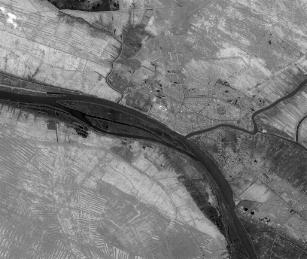 Iran's capture of 15 British navy personnel at gunpoint on the Shatt al-Arab, purportedly in Iraqi waters, is inextricably linked to the regime's long-term ambition to impose its territorial control over the strategic waterway and hold Baghdad hostage to its interests.
The left bank of the Shatt al-Arab is witnessing a large-scale militarisation programme which is being conducted under the auspices of the Arvand Free Zone Organisation (AFZO), a state-run group that aims to extend the regime's economic, political and military influence over the Shatt al-Arab and ultimately Iraq. The AFZO's plans for the military-industrial zone were outlined in a letter issued to indigenous Ahwazi Arab residents living within the zone instructing them that their land would be confiscated ( click here to download the BAFS report ). The confiscation programme is nothing short of ethnic cleansing for the sake of Iran's neo-imperialism.
Arab Shia tribes have populated regions on both sides of the Shatt al-Arab for centuries if not millennia. The leaders of the Bani Kaab tribe owned land on both banks of the waterway, giving them considerable influence and political autonomy. Any foreign power wishing to gain influence over trade along the Shatt al-Arab had to deal with the Bani Kaab leadership, which controlled the Sheikhdom of Mohammara. The Ottomans confiscated the land belonging to the Bani Kaab in the 19th century and Reza Pahlavi deposed Sheikh Kazal, the de facto ruler of the oil-rich Arabistan region, following his military coup in 1925. Arabistan was renamed Khuzestan and Mohammara was renamed Khorramshahr. The area came to prominence in 1980, when Iraq invaded Khuzestan ostensibly to âliberateâ the Ahwazi Arabs, although Saddam was no doubt taking advantage of Iranâs post-revolutionary turmoil to seize the regionâs massive oilfields. The narrowness of the Shatt Al-Arab also enabled Iran and Iraq to stage large-scale amphibious assaults during the war. In February 1986, 30,000 Iranian troops crossed the Shatt Al-Arab in a surprise attack to invade and occupy Iraq's Al-Faw peninsula and create a bridgehead for further advances into Iraq.
The Marsh Arabs of Iraq's Basra province suffered ethnic cleansing and repression under Saddam's regime while in Iran the Ahwazi Arabs have endured violent persecution under the Pahlavi dynasty and the Islamic Republic. On both sides of the waterway, the governments of Iran and Iraq have viewed the indigenous population as disloyal and a threat to their territorial claims. They were perceived as a threat by Saddam because they are predominantly Shia, while the Iranian regime sees them as having innate pan-Arab sympathies. Ethnic cleansing has been used by both countries as a method of securing control and territorial claims over the Shatt al-Arab.
The AFZ is the latest development in the Iranian regime's campaign to rid the left bank of Ahwazi Arabs and impose Iranian control over the Shatt al-Arab. The latest seizure of British personnel is a symptom of this quiet militarisation programme. Land acquisition and ethnic cleansing are intimately bound up with militarisation. Over recent years, the Iranian regime has confiscated large tracts of land from local Arabs and transferred ownership to the Iranian Revolutionary Guards Corps (IRGC) and state-owned enterprises. Around 47,000 hectares of Ahwazi Arab farmland in the Jofir area near the Ahwazi city of Abadan has been transferred members of the security forces and government enterprises. More than 6,000 hectares of Ahwazi farmland north of Shush (Susa) has been taken to "resettle" the faithful non-indigenous Persians, following directives issued by the Ministry of Agricultures and the Revolutionary Guards Corp Command. These policies have forced Ahwazi Arabs into poor shanty towns.
The AFZ is located along the narrowest and most strategically sensitive part of the Shatt al-Arab and includes a large number of Revolutionary Guards naval posts, which are used to patrol the waterway and protect Iranian arms smugglers entering Iraq. It stretches 30km from Abadan along the Shatt Al-Arab to the land border between Basra and Khuzestan. The zone is in three segments: an island and adjacent land measuring 30 square km, a strip of land north of Khorramshahr measuring 25 square km and an in-land eastern segment measuring around 100 square km in area. The total land area of the Arvand Free Zone is around 155 square km and includes Arab towns and villages. At certain points, the zone is literally within a stone's throw of Basra.
The Shatt al-Arab is the most politically sensitive area of the Middle East. Whoever controls the waterway controls movements from Iraq to the Gulf, including oil shipments, as well as serving as an important trade route for the entire west of Iran. Control over the disputed waterway led to wars between the Persian and Ottoman empires in the 17th and 19th centuries and more recently Iraq and Iran.
The AFZ has seen the mass expulsion of Arabs, the destruction of their villages and the creation of an exclusive military-industrial zone. The expulsion campaign began with the Arab farmers located on Minoo Island, near Abadan ( click here for information ). The islanders were bullied by AFZO officials into giving up their land before the official deadline, indicating an increasing sense of urgency associated with establishing the zone. In all, up to 500,000 indigenous Ahwazi Arabs are being displaced by the creation of a 5,000 square km security zone, of which the AFZ is just a part, along the Shatt al-Arab.
The zone's security element has strengthened covert operations inside Iraq, with the objective of securing an early exit of Coalition troops, influencing Iraq's political system and using patronage to control local authorities in Basra. The zone is also being used to train, fund and organise militias loyal to Tehran. Mahdi Army leader Moqtada al-Sadr and several Iranian-backed politicians belonging to the ruling United Iraqi Alliance have recently visited the area.
Documents from the Iranian Revolutionary Guards Corps' (IRGC) Fajr Garrison in Khuzestan, which serves as the organisation's main headquarters for southern Iran, show that Tehran is employing up to 40,000 agents in Iraq. The information was first revealed in March 2005 by former Iranian agents who defected due to pay cuts and subsequently confirmed by Coalition troops in Iraq. Fajr Garrison hosts the IRGC's Qods Force, which runs the vast underground network in Iraq. Agents are paid by middle-men, who carry out regular visits to Ahwaz City to obtain payments and be debriefed by Qods commanders.
The regime's activities in Khuzestan and the left bank of the Shatt al-Arab are related to the rise of militias in Basra and the British government's discovery that weapons used by insurgents were likely to have originated from the IRGC via the Iranian-backed Lebanese Hezbollah. It is no coincidence that attacks on British troops, a sudden upsurge in militia activity in Basra province and the seizing of British naval personnel on the Shatt al-Arab have occurred at the same time as Ahwazi Arabs are being removed from the area to make way for the AFZ. Greater international attention to the plight of the Ahwazi Arabs would hinder the pace of militarisation along the Shatt al-Arab and stymie Iranian efforts to control Iraq.
Labels: features , land , terrorism
permalink
keywords: ahvaz ahwaz ahwazi arabistan khuzestan khuzistan khuzestani arab arabistan iran iranian human rights security oil news ahmadinejad ethnic cleansing
.......................................................................................
23 March, 2007
In a speech to a conference on Shi'ism and democracy held at the Palace of Westminister on Tuesday, Ahwazi Arab Shia cleric Sheikh Mohammed Kazem al-Khaqani described jihadist suicide bombing and Iranian theocracy as impermissable in Shia Islam.
Sheikh al-Khaqani is the son of Grand Ayatollah Mohammed Taher al-Khaqani, a leading Ahwazi cleric who was imprisoned immediately after the Islamic Revolution in Iran for advocating the separation of religion and state. The Grand Ayatollah died in suspicious circumstances while under house arrest in Qom. Sheikh al-Khaqani has made it his mission to continue his father's mission to advocate an authentic understanding of Shia doctrine, with tolerance, human rights and secularism at the heart of his teachings. He has been invited to the UK by the British Ahwazi Friendship Society, which is organising lectures and media interviews with the Sheikh.
At the Palace of Westminster meeting, which was organised by the Henry Jackson Society, Sheikh Al-Khaqani stated that Islam was based on the love of God and the right to justice, with the right to life as the first and most important human right. He reminded the audience that terrorist acts, particularly those aimed at other states, cannot be considered Islamic. He said: "Justice and faith necessarily dictate that no one should snatch any right from others ... [T]errorists who don explosive belts that kill innocents ... have no connection with the three celestial faiths [Judaism, Christianity and Islam]."
He added: "It is one of the particular doctrines of the Shia that Jihad in the sense of conquering a country is not permitted - that it is not the right of Muslims, but on the contrary is utterly forbidden"
Repeating the Qu'ran's statement that "there is no compulsion in religion", Sheikh al-Khaqani said that people were free to choose whatever belief they wanted and had the right to abandon Islam if they wish. The Sheikh's insistance that Islam cannot be imposed by force contradicts the Iranian regime's policy of executing anyone considered heretical or an apostate. Moreover, justice should be applied equally to all, regardless of whether they are Muslim or non-Muslim.
Sheikh al-Khaqani stated that Shi'ites should not use the flag of religion to topple states or political systems, suggesting that Iran's Islamic revolution violated Shia tradition. The use of religion to topple states - as was the case in the Islamic Revolution in Iran - is "is an erroneous banner, allied with a tyranny worshipping principals inferior to God Almighty." Instead, "the choice of political systems follows the peoples' choice. Indeed God Almighty has given an indication of how Islamic Society should be when He said in the Qu'ran: 'He ordered them to take counsel among themselves', namely that Muslims should act by mutual consultation among themselves, in all matters relating to their social lives and their system of governance."
Absolute theocracy, as seen in Iran, cannot therefore be considered as Islamic. If the Prophet Mohammed was required to consult with the people at every point, so too must all systems of government in the Muslim world. Sheikh al-Khaqani added that "the man of faith must be only a guide and a spiritual father, who refrains from intervening in affairs of governance. So it is also incumbent on the state not to intervene in matters of the faith and its institutions."
The rule of Imam Ali, who is considered the first Islamic Caliph among Shia Muslims and the fourth among Sunni Muslims, should provide a lesson on the values of tolerance and justice to Muslims in the modern world. Sheikh al-Khaqani pointed to Ali's forgiveness for his political adversaries and even when he was victorious over them in war he did not confiscate their wealth. The Sheikh's comments are particularly relevant to Ahwazi Arabs, who have been subjected to large-scale land confiscation programmes after the Iranian monarch Reza Pahlavi ended centuries of Arab autonomy when he deposed the local ruler Sheikh Khazal in 1925.
Sheikh al-Khaqani concluded his speech by stating that social injustice and human rights violations in Muslim countries were "inconsistent with the humanitarian message of Islam or other faiths." However, he reminded the audience that "some of the despotism with which we live in Eastern countries and a generation tolerating the violence and terrorism that it brings forth" may have its roots in the "past and present errors by Western states." He called on Westerners to take responsibility for these errors and help put them right in order to combat despotism and terrorism.
Click here to download Sheikh al-Khaqani's speech
Labels: features , human rights
permalink
keywords: ahvaz ahwaz ahwazi arabistan khuzestan khuzistan khuzestani arab arabistan iran iranian human rights security oil news ahmadinejad ethnic cleansing
.......................................................................................
20 March, 2007
By Pooran Saki
Arab people in Khuzestan are suffering immensely from unnecessary deaths and subsequent bereavement as a result of the non-availability of basic health facilities. People in Khuzestan still do not have basic essential such as a sufficient number of doctors, if any at all, and medicines and hospitals.
In most of the cities in this province, like Bostan, Hovazeh and Dasht Azadegan, the local people do not have any hospitals or specialist Doctor. In these cities, sick people frequently die needlessly during emergencies such as accidents or in childbirth.
In Ahwaz, the capital city of Khouzestan province, there are two kind of hospitals some are private, and the others are state-supported, free for people on low incomes. The latter hospitals are unhygienic, without sufficient Doctors or medicines and the death rates, are unacceptably high.
In the Iran-Iraq war, numerous people contracted the HIV virus through being injected with infected blood which came from other countries. This category of patients are living in hospitals without any facilities or medicines and the government doesn't disclose the death rates, so no bady knows the exact figure of patients who have been attacked by this virus.
The area is still very contaminated by chemicals from wartime chemical gases and diseases increasing in this area.
In the area of Women's Health, many women go through childbirth without specialist doctors and unnecessary deaths occur far too frequently. Few women are allowed by religious law to be attended by a male Doctor, and there are not enough female doctors.
Children's Departments are empty of any specialists and lack many essential medicines so that child mortality is common.
Throughout the province, the e sewerage system is very old and not up to the required standard. All sewerage is dumped into the main River Karoon which supplies all the Ahwaz Citys water. This has polluted the water and many diseases are caught through the water.
Labels: environment , features , women
permalink
keywords: ahvaz ahwaz ahwazi arabistan khuzestan khuzistan khuzestani arab arabistan iran iranian human rights security oil news ahmadinejad ethnic cleansing
.......................................................................................
04 March, 2007
The Iranian embassy in London has declared that the British Ahwazi Friendship Society (BAFS) is an "illegal organisation" that is "dedicated to stirring up trouble between Iran and its neighbours."
The Iranian embassy was talking to the Sunday Telegraph following revelations by a former Iranian diplomat, Adel Assadinia, that the regime had trained secret networks of agents across the Gulf states to attack Western interests and incite civil unrest. BAFS's "crime" was to publicise the diplomat's claims and to put him in contact with the British media ( click here for Sunday Telegraph article ).
Assadinia served for two terms as Majlis member for Ahwaz in the 1980s and defected to Europe in 2003 after revealing corruption at the highest echelons of the Iranian regime. He told the Sunday Telegraph that the Iranian regime was comparable with the regime of Saddam Hussein before he was overthrown: "very fragile and brittle within,"
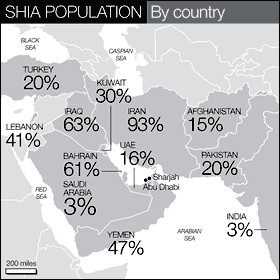 Assadinia has spoken out about Iran's spy network in the Gulf region, which includes teachers, doctors and nurses at Iranian-owned schools and hospitals. According to the former Iranian Consul General to Dubai, the spies have formed Shia sleeper cells ready to be "unleashed" at the first sign of any serious threat to Tehran. Countries with large Shia populations include Iraq, Yemen, Bahrain, Lebanon, Pakistan and India; India has the world's second largest Shia population after Iran.
The BAFS has received reports that the Red Crescent Hospital in Dubai is a centre for Iranian intelligence recruitment, with many doctors and nurses employed there also in the service of SEVAK.
The Sunday Telegraph quoted Assadinia has saying that "Were America or Israel to attack Iran, such cells would be instructed to foment long-dormant sectarian grievances and attack the extensive American and European business interests in wealthy states such as Dubai and Saudi Arabia. Such a scenario would bring chaos to the Gulf, one of the few areas of the Middle East that remains prosperous and has largely pro-Western governments."
Assadinia's claims come a day after Deputy Chief of Staff of the Iranian Armed Forces Ali Reza Afshar warned that even a "small move" against Iran would lead to a "great explosion" throughout the Gulf region ( click here for report ).
Assadinia told the Sunday Telegraph: "The Iranian government believes that to survive it needs permanent bases throughout the Middle East. Anybody who contemplates threatening or invading Iran will have those cells unleashed against them."
The former consul general to Dubai claimed that Iran's Dubai consulate was used as a "conduit for illicit funding of Hezbollah." He added that Iranian foreign ministry agents would regularly pass through with "suitcases containing up to £11 million, using diplomatic baggage channels to bypass customs scrutiny."
Iran's Dubai consulate is a hub for Iranian intelligence operations, due to the presence of Iranian businesses in the emirate. He told the Sunday Telegraph that "other intelligence activities included running nightclubs and prostitution rings, where carousing officials and diplomats could be lured into 'honey trap' blackmail operations, and organising Iranian expatriates - there are an estimated 500,000 in the Gulf - to act as double agents."
The BAFS and the Henry Jackson Society (HJS) will be holding an event in the House of Commons where Assadinia and an Arab Shia cleric will speak out against Iran's terrorist activities in the region and in favour of secularism and reconciliation with Sunni Muslims in Iraq.
BAFS Chairman Daniel Brett said: "The Iranian regime outlaws each and every organisation that contradicts its dogma and reveals its true intentions.
"The fact is that BAFS is a legitimate non-governmental organisation that operates within the law. We continue to state our opposition to violence and any military attack on the peoples of Iran, but we believe that the world should know the truth about the nature of the Iranian government.
"Iran constantly accuses us of being terrorists for supporting human rights, but the regime itself is inflicting state terrorism on the peoples living under its rule and is expanding that terror abroad.
"Gulf states have a right to know what the Iranian regime is doing on their territory and the potential for Iranian-backed terrorist attacks in the region. Mr Assadinia has simply told the truth.
"BAFS is not the problem with Iran's relations with the Arab world. Iran's duplicity and subversive activities in Arab states is the problem, not the BAFS.
"The Iranian regime's attitude towards Arabs can be seen in the treatment of its own Ahwazi Arab population, which is 80-90 per cent Shia. Ahwazi Arab have been bombed out of their homes by the Iranian government and human rights activists have been executed following flawed trials condemned by UN experts. This is the extent of the Iran regime's 'solidarity' with Arab Shi'ites living under its rule.
"Iran has imperialist designs over the Middle East and the negative consequences for Arab states' stability and prosperity is viewed by Tehran as collateral damage. It is time that governments in the Gulf wise up and clamp down on the clandestine networks that are supported by the Iranian regime on their territory."
permalink
keywords: ahvaz ahwaz ahwazi arabistan khuzestan khuzistan khuzestani arab arabistan iran iranian human rights security oil news ahmadinejad ethnic cleansing
.......................................................................................
25 February, 2007
The following is an article by Mehdi Kia, an editor of Iran Bulletin , which was published this week in the Weekly Worker, the newspaper of the Communist Party of Great Britain. Click here to download the original .
Shanty town dwellers make up an ever increasing proportion of the population in the cities of the so-called third world. They have been used as the battering ram of counterrevolution, but this is not inevitable. They can be won by the left. Mehdi Kia looks at the situation in Iran.
In my opinion the left has largely ignored what is in essence a major section of the working class, without whom progressive change is impossible in a country like Iran. I am referring to the millions who live in shanty towns. If we claim to be the advanced representatives of the working class, then we must certainly relate to these people. If we do not do so, others will step in - indeed they are already doing so - in order to mobilise them for reactionary purposes.
I want to look in particular at the situation in Khuzestan, the Arab province of Iran. Khuzestan has a population of 4.35 million, of which about a million are shanty town-dwellers - one third of the urban population. Khuzestan is the richest province in Iran, where all the oil is located, yet one third of its urban population lives illegally in appalling conditions.
The official unemployment rate for the whole of Iran is said to be around 12% and increasing, but the actual figure is way above that. In Khuzestan over the last 10 years official unemployment has risen from 16% to 18%. So in this, the richest province, already high unemployment is rising. It is here that the largest movement of the workforce from the official to the unofficial economy takes place.
The essence of my thesis is that this marginalisation into shanty towns is the geographic expression, if you like, of a deep, structural change within capitalism in Iran and more generally. It is a new phenomenon that has occurred over the last quarter of the 20th century. It did not happen in Marx's time, which is why he had nothing to say about it. The left must learn to understand what this structural change means.
It combines class inequality with ethnic inequality, so that they intermingle and feed on one another. Why is this happening?
Two interlinked processes are involved. One is the dispossession of people from the land and their proletarianisation. After the Iran-Iraq war ended in 1997, the entire reconstruction process speeded up this development.
There was a large-scale movement out of the war zones and a major shift of refugees. Those forced out of their home territories by the Iraqis were not allowed to go back. They were indeed dispossessed of their land. This was a conscious policy decision made by the government after the war. "Security" was the excuse given to justify it.
This move was designed to take the labourers off the land and drive them into the towns. The combination of ethnic repression, the language barrier and the unskilled nature of their work meant they had to compete unequally in the labour market. So within the proletariat minorities ended up at the bottom of the pile. The role of the state was and remains central in this - not only because it used the security argument to bring about their dispossession, but because it is also the biggest single employer.
Part of working class
How should we define shanty-dwellers? They live outside the official demarcation of the city and consequently are excluded from all the services that any urban conglomeration provides: welfare, roads, water, electricity, sewage, etc. They are not just defined by their poverty - they are not the same as the poor who live officially within the cities, since their geographical separation and removal from access to all conventional services puts them in a special and quite different situation.
The Iranian government has recognised the situation of the shanty-dwellers as a real issue, because these were the very people who were, if you like, the battering ram of the islamic revolution during its early period, and the government needed to mobilise them. They provided the main fodder for the war and for all the most repressive aspects of the regime - but now they have become a thorn in the side of the government, representing as they do the most rebellious forces.
The regime has come up with various policies to deal with this, but none has had any real impact. Improving village facilities, in an attempt both to prevent further migration into the cities and to rid the shanty areas of their existing populations by pushing them out back into the villages. The money that has been allocated to this task in the latest budget amounts to about $200 per person, but it has not worked.
So what significance does this population have for socialists? What potential does it have for its own self-liberation? Is there any objective criterion one can use to say that it can actually act in its own liberation and that of others? Have they got any incentive to change and are the conditions right?
Unequivocally, let me make clear that in my understanding shanty-dwellers - whether they live in Iran, Calcutta, Port au Prince or wherever - are members of the working class, of the proletariat, of that very class which we strive to represent. However, their struggle is different from the struggle of the employed working class. Essentially it occurs in the realm of consumption rather than production - although a section does have a role in production, even if it is often intermittent.
Housing
This structural change that has led to the growth and development of such marginalised conditions over the last 25 years needs to be linked to the commodification of housing. In the old village the house was not a commodity, but a use-value. There was no housing shortage. You just built a house with bricks wherever you wanted.
That is no longer the case and these people have no place at all in the commodified housing market. In a way the existence of shanty towns is a phenomenon at the core of which is the extension of capitalism into housing, which is what makes it predominantly an issue in the so-called developing world.
When housing is removed from the "basket of consumption", that actually makes it easier to survive in the competitive capitalist labour market, since many other commodities are also removed at the same time. It is, in a sense, a way of easing the crisis of reproduction in the labour force by going outside commodity relations and reducing the cost of living.
If we accept this, then logically we have to accept that shanty-dwellers, through the removal of their housing from the control of the state, have been removed from its political control to some degree. Already within the shanties a form of self-government operates in these areas of Iran, just as it does in a parallel situation in Brazil, for example.
What are the elements that can provoke rebellion in this group? Shanty towns are often situated around rivers, canals, railways, major road arteries, oil pipelines, places where the shanty-dwellers can "decommodify": ie, steal resources. So, importantly, shanties are not just defined by their poverty, but by their geography. They totally lack basic amenities and are threatened both by the natural elements and by the effects of the social infrastructure - road accidents, flooding, collapsing power lines and so forth.
But they also have some specific freedoms: in particular, freedom from the state's control, which in one sense makes it possible to survive. So shanty-dwellers are in a continuous state of war with the authorities - it is part of their daily life.
However, they need to consolidate their position by retaining what they have gained through struggle. For example, once the attempt to bulldoze them out of existence has been defeated, their next struggle is to extend and improve upon those gains: getting electricity and water supplied; creating shops and schools; winning official recognition for the dwellings they have built and establishing their right of ownership over them.
Resistance
Their resistance often takes the form of riots, taking to the streets. Because they are only on the margins in terms of production, they are hampered from fighting for an increase in their earnings, so what they need to do is fight in order to reduce the cost of consumption. Hence such phenomena as protests against price increases, which manifest themselves in things like bread riots. This means that in Iran the price of bread is in effect fixed - raise the price of bread and you get rioting in the streets.
We should not, however, forget that there is a struggle in the sphere of production as well as in other areas. For example in Ahvaz, one of the main cities in Khuzestan, and in a whole series of other cities in the south of Iran, this took the form of the street vendors' battle to resist efforts by the government to close them down.
In the Arab zone, obviously the issue of language is also important because the combination of shanty dwelling and ethnic discrimination makes language a critical issue. Arab boys who do go to school are at a great disadvantage, because schooling is carried out in Farsi. Language is not just an emotional issue, but a material one in terms of conditions and access to the labour market. In a multilingual society like Iran, where ethnic discrimination is so prevalent, the right to be educated in your own language becomes one of the fundamental democratic demands - not only for the various national movements, but also for the left.
Acts of rebellion are the main weapon is all such struggles. For example, road closures. This is actually an economic act, because it clearly blocks economic activity and is the equivalent of strike action in a factory and can have a similar impact. Revolts tend to take the form of protesting against something rather than demanding concrete improvements. For the shanty-dweller, rebellion is a continuous process, a way of life.
What is perhaps not understood is that rebellion is virtually always successful - perhaps not immediately or in full, but almost always the rebels will get something of what they ask for. Although the street vendors' protests were initially broken up and repressed, the government subsequently agreed to allow them space to trade. Remember that the Iranian revolution was itself triggered by rebellions in many areas over a number of years.
In addition shanty-dwellers do have a degree of bargaining power, in that, although they are outside the official structures, they are legally entitled to vote. This can create pressure for concessions. Of course, this has a downside we are all familiar with - the islamic movement is sometimes able to mobilise the shanty-dwellers for its own purposes - into military or paramilitary organisations, for example.
The neoliberals have also used them as a means of reducing the cost of production - indeed their lack of access to normal provision of services means a reduction in costs to the state. But the left as a whole has ignored the slums and shanty towns, despite the fact that in Iran there are around 10 million people (one sixth of the population) who occupy them and that figure is likely to double in the next decade.
Role of the left
We need to understand the forms of struggle that this section of the working class is engaged in and intervene within them in an effort to deepen and expand them. Initially we need to be aware that their needs are particularly in the sphere of welfare. The islamists have seen this and responded to it, but the left has not. Why don't left doctors, lawyers and teachers go in there and get involved?
We need to help them maintain their relative freedom from central control. The more we can expand those aspects that are outside the sphere of commodity production, the more we can weaken capitalism. Instead we should aid the process of creating use-value - in other words, the establishment of cooperatives and so forth, thereby reducing the private ownership of the means of production.
We need to be able to create equal relations in terms of tackling ethnic and gender inequalities - especially the latter, because it is women who are very often the prime movers in these forms of struggle. They are the ones at the forefront of demonstrations and blocking streets.
Given that these struggles are currently geographically isolated, we need to try to unite them across the country. This also means linking up the struggle of the shanty town-dwellers with those of other sections of the working class. It was sad to see the oil workers not intervening when the street vendors throughout Khuzestan were fighting for their rights. Unity between those working in the industrial sector and the people in the shanty towns becomes a critical factor and it is our job to help link these struggles together. This population is very vulnerable and fragile in terms of the attraction of populism - something which has been exploited by the islamists.
So addressing these people's welfare interests is primary at this stage. And we need to link their struggles for such things as work and housing with the democratic demands for freedom and equality. The left really needs to understand that these people are in a struggle for survival and they need help to achieve self-organisation. We should have done what the damned mullahs have done, but done it better.
The shanty-dwellers are not just part of the reserve army of the proletariat. In some areas they are the proletariat. For instance, in one industrial region near Tehran some 90% work in factories.
Their struggle is also intrinsically connected to the national question. Being the underdogs of the proletariat is a reflection of their status as members of minority ethnic groups. There has been increasing class polarisation within the national movements between the bourgeoisie and the working class. Undoubtedly the slogan of self-determination is important, but we do not want to simply transfer power from one bourgeoisie to another, allowing them to remain exploited in the same way.
As the lowest level of labour, these people require a different kind of organisation from what we have traditionally had. The way to do this is to focus on their struggles - organisation will develop through the struggle itself, rather than on the basis of an organisation set up to create struggle.
If the leadership of the struggle is not in the hands of the left - and so far we have largely ignored it - then reactionary forces will be there to exploit the shanty dwellers as part of their aim to crush the urban working class.
Labels: features
permalink
keywords: ahvaz ahwaz ahwazi arabistan khuzestan khuzistan khuzestani arab arabistan iran iranian human rights security oil news ahmadinejad ethnic cleansing
.......................................................................................
19 February, 2007
By Mrs Pooran Saki
Major General Mohsen Rezai, ex-Commander of Iran's elite Islamic Revolutionary Guards Corps has declared that the government is going to take over land in Dashte Azadagan (Bani Torof) in order to use it as a War Museum.
Dashte Azadagan is in the South of Iran and is populated by ethnic Arabs, who lived here before Iran was formed as a state. During the Iran-Iraq war, this area suffered very heavily - the warfare caused massive damage which destroyed most of the city's buildings, and contaminating the air and water with chemical pollution. The region is still shockingly deficient in educational levels and facilities, in health provision and farming resources, but the Iranian government deliberately ignores the problems.
Now a new deception is to be perpetrated on this region - the government state that they want to seize the land in order to control the area, thereby forcing the ethnic Arab citizens to move from their local region to other parts of Iran.
The government carried out this fraud in 1990, when they demanded that all Arab farmers sell their land, compulsorily and at an unjustly low price. The government stated that they were going to grow sucrose in this area. Of course what they really want is to have a monopoly on oil production, which is also known to be there.
Eventually all the farmers left, without their jobs or livelihoods, and without sufficient funds to purchase new lands. Later, the government changed the traditional system of irrigation and polluted the water. This had a catastrophic effect, for many diseases spread around the region, and this led to many ethnic Arabs moving away from their local area.
I, as an Arab from Ahwaz, protest against this underhand exploitation and misappropriation of ethnic Arab, which is impoverishing and driving out the people, and amounts to no less than theft. Why is Mr Razaiye considering a new War Museum? The local population, who have been victims of the war have a greater need to have the region cleared of mines and chemical pollution, and they need to be safe and secure.
Why do we continue to hear about children being killed by mines or dying slowly from mysterious diseases? This is unacceptable. Are these people being made to suffer because of their minority ethnic Arab status?
permalink
keywords: ahvaz ahwaz ahwazi arabistan khuzestan khuzistan khuzestani arab arabistan iran iranian human rights security oil news ahmadinejad ethnic cleansing
.......................................................................................
09 January, 2007
 The following article by Daniel Brett was
published by Media Star World
, India's leading Urdu language news features agency
The following article by Daniel Brett was
published by Media Star World
, India's leading Urdu language news features agency
President Mahmoud Ahmadinejad's four-day visit to Khuzestan last week was billed as a chance to listen to the province's largely Arab population. Instead, it turned out to be a long lecture on foreign policy with little attempt to address the causes of ethnic unrest in the province.
Ahmadinejad's series of rallies were more notable for what he did not say rather than what he did say. There was the usual litany of anti-Western slogans, the defiance of the UN Security Council's censure of Iran over its nuclear programme, the promise of Israel's demise and the Nazi Holocaust denial that has become the hallmark of the Ahmadinejad administration. Yet Arabs in the audience - who are a minority in Iran but a majority in Khuzestan - did not hear a single word on the civil unrest that has gripped the province since April 2005, when riots broke out after a letter detailing an "ethnic restructuring" plan for Khuzestan was publicised on Al-Jazeera.
 There were signs that the audience wanted to hear more about more fundamental issues. Hand-written placards were held up indicating that a massive presence of Bassij paramilitaries had not completely suppressed dissent. One read "Inflation, unemployment, insecurity, drug addiction have desiccated the tree of the revolution" and another said "Oil and gas are our rights. Eliminate youth unemployment."
For most Ahwazis, industrial development has not led to a significant increase in living standards.
Situated in south-western Iran and bordering Iraq, Khuzestan is the motor of the Iranian economy providing 80-90 per cent of its oil output. However, the province's indigenous Ahwazi Arabs are among the poorest people in Iran, with Arab districts enduring African levels of child malnutrition, the highest illiteracy rates in the Middle East and low life expectancy. Poverty has fuelled social problems, such as drug addiction which has led to a dramatic rise in HIV/AIDS. Added to these economic problems are the lingering effects of Iraq's invasion of Khuzestan, which most Ahwazi Arabs opposed and died in their thousands resisting. Saddam promise of sovereignty for Ahwazi Arabs was never realised, but he left in his wake wrecked cities, poisoned soil and the world's largest minefields which continue to claim lives - although the sacrifices of the Arabs who bore the brunt of Iraqi aggression is rarely recognised and little has been done to clear up the devastation of one of history's most bloody wars. The lack of progress in human development reveals that the promises of the Islamic Revolution - which the local Arab population had embraced in 1979 - have never been fulfilled, despite the province's immense resources.
Economic inequality is underpinned by racial discrimination and state terrorism. In its first assessment of the Ahmadinejad administration's human rights record, Amnesty International pointed out that Arabs have been "denied state employment under the gozinesh criteria." The report adds that "hundreds of Arabs have been arrested since President Ahmadinejad's election and many are feared to have been tortured or ill-treated. The prisons in Khuzestan province, and particularly the capital Ahvaz, are reported to be extremely overcrowded as a result of the large numbers of arrests ... Children as young as 12 are reported to have been detained with adult prisoners. Some of those detained are believed to have been sentenced to imprisonment or death after grossly unfair trials before Revolutionary Courts."
One of the main issues is land expropriation, which Amnesty says is "so widespread that it appears to amount to a policy aimed at dispossessing Arabs of their traditional lands. This is apparently part of a strategy aimed at the forcible relocation of Arabs to other areas while facilitating the transfer of non-Arabs into Khuzestan and is linked to economic policies such as zero interest loans which are not available to local Arabs." Members of the European Parliament have described it as ethnic cleansing on a par with Serbia's purges on Kosovar Albanians.
The problem of land confiscation predates Ahmadinejad's appointment as president. The UN Special Rapporteur on the Right to Adequate Housing Miloon Kothari appeared to be incredulous at the treatment of Ahwazi Arabs. In an interview following his visit to Iran in July 2005: "...when you visit Ahwaz ... there are thousands of people living with open sewers, no sanitation, no regular access to water, electricity and no gas connections ... why is that? Why have certain groups not benefited? ... Again in Khuzestan, ... we drove outside the city about 20 km and we visited the areas where large development projects are coming up - sugar cane plantations and other projects along the river - and the estimate we received is that between 200,000-250,000 Arab people are being displaced from their villages because of these projects. And the question that comes up in my mind is, why is it that these projects are placed directly on the lands that have been homes for these people for generations?"
The Ahwazi Arabs are looking over the waters to their brothers in the rich oil emirates and wondering what life would be like if they had sovereignty over their homeland, which contains oil reserves of over 100 billion barrels - more than the combined total of Kuwait and the UAE. They are also looking back to the time when Khuzestan was known as Arabistan, a large part of which was ruled from Mohammara, now Khorammshahr. The British guaranteed protection for the local Arab ruler Sheikh Khazal Khan in return for an agreement for exclusive oil rights for the Anglo-Persian Oil Company (now British Petroleum), which discovered oil there in 1909. Khazal's rule was ended in 1925 when Reza Pahlavi's forces overran Arabistan, deposed him and imposed direct control. By then, the British had decided that a powerful central government led by a Persian monarch was essential to halt the tide of Bolshevism and ditched their support for the Mohammara sheikhdom.
The Ahwazi Arabs are well aware of what might have been had Pahlavi not imposed central government control over their homeland. Most regard the resurrection of Arabistan as a pipedream. Separatism is unpopular not because Iran's Arab population is overcome by mindless patriotism. The Ahwazis are predominantly Shia, which makes them unworthy of solidarity in the minds of the Sunni dominated Arab League. This may change due to geopolitics and an intensive campaign of international lobbying by Ahwazi groups in recent years. In an article in the British Arab magazine Sharq, Arab Media Watch chairman Sharif Hikmat Nashashibi wrote that "Iran's indigenous Arabs are one of our best-kept secrets, so well kept that many, if not most of us, do not know they exist. Just try finding any information about them on the Arab League website. Nonetheless, due to current internal and external factors, we may be hearing a lot more about them in the near future."
The Iranian intelligentsia is already warning that failure to deal with the crisis in Khuzestan threatens to turn it from a provincial problem into a regional geopolitical issue. In a recent letter to the Chief of the Judiciary Ayatollah Hashemi Shahroudi appealing for clemency for a number of Ahwazis sentenced to death, writer and human rights advocate Emad Baghi wrote that "this kind of ethnic issue is rooted in the poverty, socio-economic deprivation and accumulated repressed complexes abused and exploited by foreign forces. It is only through the pursuit and implementation of justice that ethnic concerns can be addressed and external manipulation neutralized." He urged Shahroudi to end the mass execution of Ahwazis "to avoid costly mistakes not only in relation to the taking of precious human lives but also because of the real potential for heightening and injuring ethnic sensibilities." Yet the regime does not appear to be listening to Baghi's words of wisdom. Instead, Baghi has been repeatedly detained for criticising government policy.
There is little evidence to support Tehran's claims that foreign governments are involved in ethnic unrest. Senior Ahwazi leaders are mindful of the dangers of aligning too closely with the interests of foreign powers, following Saddam Hussein's attempts to rouse Arab nationalism in the province during the Iran-Iraq War (1980-88). However, their attempts to organise constitutional means to advance the Arab rights agenda have been violently suppressed by the government. The Lejnat Al-Wefaq (Reconciliation Committee), which formed in 1999 and won a seat in the Majlis and control of Ahwaz City Council, was recently outlawed and founding members were executed. In doing so, the government undermined the Ahwazis' rights to equality, as outlined in Article 15 of the Iranian Constitution.
Meanwhile, an underclass of disenfranchised and enraged young men is seeking out new ideologies to oppose the regime and neighbouring Iraq has become a breeding ground for armed radicalism. There are ominous signs that Khuzestan is becoming a new front in Iraq's nascent civil war, with videos of armed men purportedly from a resurrected Ahwazi Arab nationalist militant group, the Mohieldain Al-Naser Martyrs Brigade, speaking of revenge against the Iranian regime with Iraqi accents. And the moderate Ahwazis are being sidelined due to the growing confrontation between the government and the ethnic Arabs. The rhetoric of militant groups has given unhappy young men a sense of hope that Ahmadinejad's lectures on Israel and nuclear weapons have failed to provide.
The regime would be wise to study the story of Prophet Daniel, who was buried in Khuzestan. He warned the Babylonian Nebuchadnezzar that regardless of his kingdom's wealth, it had feet of clay that could be broken with just a small stone. Iran's feet of clay - its oil reserves - are in Khuzestan and if the level of despair compels Ahwazi youth to seek martyrdom, the province's Arabs could strike a blow that could topple the Islamic Republic.
Labels: features
permalink
keywords: ahvaz ahwaz ahwazi arabistan khuzestan khuzistan khuzestani arab arabistan iran iranian human rights security oil news ahmadinejad ethnic cleansing
.......................................................................................
02 January, 2007
By Abu Mousa Zafrani, British Ahwazi Friendship Society
President Mahmoud Ahmadinejad's tour of the Arab majority province of Khuzestan was portrayed by the official media as an opportunity to listen to local people's concerns and problems. But he used his speech to a crowd of Bassij loyalists in the restive Ahwaz City as an opportunity to grandstand Iran's foreign policies amid the country's growing international isolation.
During Ahmadinejad's speech in Ahwaz, one brave demonstrator held up a placard which read: " Inflation, unemployment, insecurity, drug addiction have desiccated the tree of the revolution ." The protestor was reminding the President that the monarchist regime was overthrown on the issue of social justice, suggesting that his conflict with the UN Security Council has little relationship with the desire of the population to rid itself of poverty.
Ahmadinejad's Ahwaz lecture on Tuesday showed that the Iranian regime believes that it can convince the masses to forget their suffering and rally in to its defence in the face of supposed Western aggression. His strategy is to use the nuclear issue as a bargaining chip in international affairs while instilling fear in the Iranian population of foreign aggression to quash internal dissent.
Ahmadinejad told his followers: " The Iranian nation is wise and will stick to its nuclear work and is ready to defend it completely ." Whether or not the nuclear programme is for peaceful purposes, the Ahwazi Arabs are convinced that they will be denied any benefits of the nuclear programme, just as the regime denies them a share in the revenues generated by the oil extracted from land that was confiscated from them.
No Ahwazi is prepared to defend the nuclear programme, which is not going to provide them with any material benefits. Many see the construction of nuclear plants on their land as just another industry that excludes them from employment. Some fear that the government's reckless attitude towards safety - Khuzestan's oil pipelines are notoriously unsafe while industrial pollution in the province is causing birth defects and contributing to low life expectancy - puts them at immediate risk of a Chernobyl-style disaster.
The nuclear programme involves the construction of Russian-designed nuclear power plants on their homeland - a region that experiences frequent earthquakes, with tremours measuring 3.7 on the Richter scale reported just days ago .
Most Ahwazis question the need for expensive nuclear power stations when their homeland's oil resources are more than enough to cater for power needs. Rather than spend oil revenue on social development in Khuzestan, the Iranian regime is sinking it into an unnecessary nuclear programme that is leading to international isolation that benefits no-one.
Ahmadinejad's speech made no reference to growing unrest among local Ahwazi Arabs who face an aggressive campaign of land confiscation that many human rights observers have termed "ethnic cleansing". Nor did it address endemic poverty among Arabs, whose homeland contains more oil reserves than Kuwait and the UAE combined - over 100 billion barrels. The response of the Ahmadinejad administration to those who have highlighted the suffering of Ahwazi Arabs is to ignore, silence, intimidate, arrest, torture and execute them.
In his Ahwaz lecture, Ahmadinejad insists that his priority is the humiliation of the West and that the British and Americans are responsible for all of humanity's problems . Are the British responsible for the 80 per cent child malnutrition rate in Khuzestan's Arab populated district of Dasht-e-Azadegan? Are the British driving Ahwazi Arabs off their farms into city slums and a life of unemployment and poverty and drug addiction? Are the British diverting Khuzestan's rivers, causing ecological devastation in the marshlands along the Shatt Al-Arab? Are the British jailing the young children of Ahwazi Arab opposition leaders to pressure them into confessing to crimes they did not commit? The suffering of the Ahwazi Arabs and other minorities in Iran has nothing to do with the British - it is the responsibility of the regime itself.
The subtext of Ahmadinejad's Ahwaz speech was a demand that Ahwazi Arabs abandon all opposition activism for the sake of the nuclear programme. Or they will face serious consequences. It is no coincidence that three Ahwazi activists were sentenced to death on the eve of the President's visit to the provincial capital . He was sending a message - put up and shut up, or you and your families will suffer.
The Lejnat Al-Wefaq - a reformist Arab group that sought constitutional means to advance Arab minority rights - was banned after its candidates won all but one seat on Ahwaz City Council in 2003. Its members were rounded up and imprisoned and last month a leading founding member, Ali Matouri Zadeh, was executed in Karoun Prison - just a day after pro-Ahmadinejad candidates faced a severe drubbing in the local elections. His wife Fahima and baby daughter Salma, who was born in prison in March 2006, remain in prison. A further three Ahwazis were sentenced to death on Monday as a prelude to Ahmadinejad's visit.
Ahmadinejad has not even listened to calls from Khuzestan's elected representatives. The conservative-dominated Majlis (parliament) has voted down on three occasions proposals by Khuzestan's MPs for a modest 1.5 per cent of oil revenues to be redirected to assist poverty alleviation and employment generation in the province.
Ahmadinejad portrays Iran as a model for the Muslim world, but Ahwazi Arabs are comparing themselves to the lifestyles enjoyed by their Arab brothers on the other side of the Gulf. And they are thinking to themselves, is the loss of their dignity a price worth paying for Tehran's confrontation with the international community?
In his speech, Ahmadinejad said without any sense of irony that " rulers who stand against their nation ... will face similar fate " as Saddam Hussein. Last month, students staged demonstrations at Amir Kabir University of Technology while Ahmadinejad was lecturing to them. They chanted their verdict on his rule: " ." And the whole of Iran was behind them, delivering an astounding defeat for Ahmadinejad at the recent elections to the Assembly of Experts. If Ahmadinejad continues down the path of international isolation, economic austerity and political authoritarianism, he will indeed meet the same fate as Saddam Hussein.
Labels: features , human rights , nuclear
permalink
keywords: ahvaz ahwaz ahwazi arabistan khuzestan khuzistan khuzestani arab arabistan iran iranian human rights security oil news ahmadinejad ethnic cleansing
.......................................................................................
16 December, 2006
This article has been submitted for publication on the BAFS website by Muhammad Tahir based in Aq Qala, northern Iran. He is a Prague-based journalist specializing in Afghan, Iranian and Central Asian affairs and is author of "Illegal Dating-a journey into the private life of Iran".
Amangeldi sits cross-legged in his shop, surrounded by heavy silver jewelry and handmade carpets, sipping green tea pondering the future of his failing business.
He was one of the first merchants to set up shop when Iran launched a special economic zone here in Inche Borun, a town in northeast Iran right on the border with Turkmenistan. He was drawn by the prospect of easy access to traditional handicrafts from Turkmenistan, and thought he would find a ready market in what was promised as a flourishing duty-free zone visited by people on both sides of the border.
It should have worked. The people in this part of Iran are mostly ethnic Turkmen, who would welcome contact with their kin across the border, which was hermetically sealed until the Soviet Union collapsed in 1991. Inche Borun lies on the main route into Turkmenistan from Gunbad-e-Kavus, the major town in this part of Iran.
"We had very good contacts with our Turkmen brothers over the border. They used to come to this bazaar to sell their handicrafts and buy staple goods," said Amangeldi, 32. "It was beneficial to both communities - on one side [Iran] it helped reduce unemployment, while for the people on the other side, it was the nearest place to come and get basic goods, as the major towns in Turkmenistan are a long way away."
The idea was driven by Iranian officials in a bid to boost border trade and create employment. Initial success after the special zone was launched in 1997 led them to expand the number of shops to around 250, although local Iranian officials say Turkmenistan never delivered on its promises to invest in the project.
Nearly ten years on, the plan has failed due to lack of support from both governments, neither of which has proved keen on freedom of movement in a sensitive border area. Turkmenistan has enforced strict border controls, most directed at its own citizens, which have effectively strangled trade.
Iranian statistics show that fewer than 1,800 people crossed the border at Inche Borun in the first eight months of 2006.
Seven out of ten businesses in the Inche Borun's duty-free market have closed, so that just 40 of the 137 original shops in the bazaar are still functioning. The market opens only on Fridays instead of daily, and the only customers are Iranian nationals, plus the occasional long-distance truck driver heading north into Turkmenistan.
Amangeldi thinks he will be joining the exodus of traders soon.
"I don't know what went wrong on the Turkmen side - they started implementing such strict policies on crossing the border," he said.
Oraz Muhammad, who has just closed the shop he had in the bazaar, explained that ethnic Turkmen from Iran are allowed to travel into Turkmenistan within a 45-kilometre radius of the Inche Borun crossing point. But he said this was not enough, since they would need to travel further to be able to visit major commercial centres. Nor do Turkmenistan's border officials allow the traders to bring bulk consignments of goods out of the country.
Other merchants complained that their own government had failed to sustain the duty-free zone, and water and electricity supplies remained erratic.
A more serious gripe voiced by many was that the Iranian government had failed to pressure Turkmenistan to ease the border controls.
Many see political factors behind the failure of Tehran and Ashgabat to support the scheme over the longer term.
Politically, Iran and Turkmenistan are a world apart - one a Shia theocracy, the other a secular post-Soviet state dominated by the personality cult surrounding idiosynchratic president Saparmurat Niazov. But both governments have made great efforts to get on since Turkmenistan emerged as an independent country.
Their cooperation is pragmatic and focuses on economic links across their long border. In addition, both countries have cool relationships with other neighbours and the wider international community, so they have an interest in remaining on good terms. Because of this, the election of hardliner Mahmoud Ahmedinejad as Iran's president in place of the reformer Mohammad Khatami has not substantially affected the relationship with Turkmenistan.
One local analyst in Gunbad-e-Kavus, who did not want to be named, attributed the decline in official support for the Inche Borun market to a change in personalities at the top in Iran the year the project was launched.
"This was an entirely political project rather than a social or economic one, because the Iranian president at that time [Ayatollah Akbar] Hashemi Rafsanjani was a close friend of President Niazov," he said. "So after Rafsanjani lost the presidential election [to Khatami] in August 1997, the Iranian-Turkmenistan relationship never regained its former warmth."
Other analysts, such as Aziz Ismailzade, an Iranian Turkmen who now lives abroad, say both governments are paranoid about letting any of their citizens travel freely.
"Their reluctance stems from the same reason - the fear factor. Neither [government] wishes to allow its people unfiltered access to outsiders," he said,
Thus, restricting border traffic may have less to do with bilateral relations than with the external pressures both governments are facing over human rights and other concerns.
"Just as pressure on Niazov's regime has increased in recent years, international pressure on Iran is also at a high level because of its nuclear ambitions," said Ismailzade. "This has led both countries to impose unprecedented restrictions on population movement."
Tehran keeps a close eye on its own ethnic Turkmen community, as it does with other minorities on its periphery such as the Azeris and Kurds, for any sign of separatist ambitions. Niazov's nation-building exercise is all about Turkmen identity - but he has taken care not to irritate Tehran by stirring up nationalist sentiment among the Iranian Turkmen.
Burhan Karadaghi, an Iranian historian based in Germany, believes both governments may have concluded that keeping these border communities at a distance from each other may be best for everyone.
"Neither Niazov nor Ahmedinejad is in favour of letting these [Turkmen] people stay in touch. Niazov would feel insecure if the border was wide open, while the Iranian regime would be unhappy if its own own ethnic minority was in contact with kinsmen outside the country," he said.
Labels: features , minorities
permalink
keywords: ahvaz ahwaz ahwazi arabistan khuzestan khuzistan khuzestani arab arabistan iran iranian human rights security oil news ahmadinejad ethnic cleansing
.......................................................................................
16 November, 2006
 The following article written by Daniel Brett, Chairman of the British Ahwazi Friendship Society, appeared in Gozaar, a journal on democracy and human rights in Iran.
Click here to download the article in English and Persian
.
The following article written by Daniel Brett, Chairman of the British Ahwazi Friendship Society, appeared in Gozaar, a journal on democracy and human rights in Iran.
Click here to download the article in English and Persian
.
All Western democracies possess legislation to combat racism, but few have the commitment to ethnic equality enshrined in the Iranian Constitution. Article 15 allows the use of non-Persian regional and tribal languages in the media and education. Article 19 states that "All people of Iran, whatever the ethnic group or tribe to which they belong, enjoy equal rights; and colour, race, language, and the like, do not bestow any privilege", while Article 20 establishes the equal cultural rights for all. The Constitution is an acknowledgement that Iran is and always has been a multi-cultural society. Cultural equality is an Iranian tradition that dates back some 2,500 years to Cyrus the Great who similarly acknowledged the importance of regional identity, ruling over a plethora of different cultures and kingdoms through a system of autonomous satrapies.
While the Constitution may lay out commitments to equality, the reality is far different for Iran's cultural minorities. Iran has the dubious distinction as being one of the world's worst oppressors of minorities, with ethnic groups one of the regime's main targets. Atrocities against Iran's ethnic and cultural minorities occur on a daily basis.
Located in the geopolitically sensitive and oil-rich Khuzestan province - called Arabistan by the Safavid in early 16th century and changed by Reza Shah in 1936 to Khuzestan - neighbouring Iraq, the Ahwazi Arabs suffer more than most. The irony is that the regime preaches solidarity with the Palestinians, funding the Sunni Islamist group Hamas with the oil wealth extracted from land confiscated from Shia Arabs who comprise around 70 per cent of Khuzestan's population.
The treatment of the Ahwazi Arabs belies the regime's professed solidarity with the poor and dispossessed in the Arab world. Displaced from their traditional lands and crowded into slums, the Ahwazi Arabs endure human development indicators that fall well below those of the Palestinians and the Iranian national average. Illiteracy among Ahwazi Arab men is around 50-60 per cent for men, higher for women, compared to 14-18 per cent for Iran as a whole and 4 per cent for Palestinian territories. The average malnutrition rate for Iran is 11 per cent and in the Palestinian territories 4%, but in the Arab district of Susangerd the level is around 80 per cent. Unemployment among Ahwazi Arabs is around 50 per cent, compared to Iran's national average of 12 per cent and 30 per cent among Palestinians. Added to this are the lingering effects of the Iran-Iraq War, with landmines continuing to kill and maim Arab farmers and contamination from chemical weapons leading to high rates of birth deformities. Levels of poverty among Ahwazi Arabs outstrip many African countries: Zimbabwe has higher rates of literacy; Ethiopia has lower levels of child malnutrition. Poverty has fuelled a sense of despair among the youth, with a spiralling problem of drug addiction and suicide. Yet, these African levels of deprivation are occurring in a province that has more oil wealth than the UAE and Kuwait combined.
There is strong evidence that poverty is the result of institutional racism that has recently escalated into full-scale ethnic cleansing and violent repression. Despite constitutional guarantees of equality, Amnesty International states that Ahwazi Arabs have "reportedly been denied state employment under the gozinesh criteria. Many villages and settlements reportedly have little or no access to clean running water, sanitation or other utilities such as electricity ... land expropriation by the Iranian authorities is reportedly so widespread that it appears to amount to a policy aimed at dispossessing Arabs of their traditional lands. This is apparently part of a strategy aimed at the forcible relocation of Arabs to other areas while facilitating the transfer of non-Arabs into Khuzestan and is linked to economic policies such as zero interest loans which are not available to local Arabs."
In a visit to Khuzestan in July 2005, UN Special Rapporteur on Adequate Housing Miloon Kothari verified the fact that land confiscation was been conducted to set up housing and industrial projects that excluded the Ahwazi Arabs. He said: "... when you visit Ahwaz ... there are thousands of people living with open sewers, no sanitation, no regular access to water, electricity and no gas connections ... why is that? Why have certain groups not benefited? ... Again in Khuzestan, ... we drove outside the city about 20 km and we visited the areas where large development projects are coming up - sugar cane plantations and other projects along the river - and the estimate we received is that between 200,000 - 250,000 Arab people are being displaced from their villages because of these projects. And the question that comes up in my mind is, why is it that these projects are placed directly on the lands that have been homes for these people for generations? I asked the officials, I asked the people we were with. And there is other land in Khuzestan where projects could have been placed which would have minimised the displacement."
More than 200,000 hectares of land owned by Ahwazi Arabs farmers have been confiscated since the 1979 Revolution and given to the government sponsored Sugar Cane Project, an intensive sugar cultivation project. Around 47,000 hectares of Ahwazi Arab farmland in the Jofir area have been transferred to non-indigenous settlers and a further 25,000 hectares have been taken from Ahwazi Arab farmers and given to the government-owned Shilat corporation and government agencies. More than 6,000 hectares of Ahwazi farmland north of Shush have been taken to "resettle the faithful non-indigenous Persians", according to directives by the Ministry of Agriculture and the IRGC's Command. In 2004, the homes of 4,000 Arab residents of Sapidar were destroyed and bulldozed over in 2004 with little or no compensation to make way for a shining new housing development for settlers from Isfahan and Fars, enticed into Khuzestan with zero-interest loans not available to the local Ahwazi Arabs.
Ethnic cleansing has been stepped up under the Ahmadinejad administration with the creation of the 155 sq km Arvand Free Zone, a military-industrial zone along the border with Iraq's Basra province. Entire villages are being eradicated to make way for petrochemical projects that will profit only the ruling mullahs and their friends in the Chinese business community who are investing heavily in the zone. The now banned Hamsayeha newspaper has reported complaints from Arabs living on Minoo Island - where they have cultivated dates for centuries - that agents working for the government and the Arvand Free Zone are bullying them into selling their homes ahead of a planned land confiscation programme. Mostafa Motowarzadeh, the Majlis (parliament) member for Khorramshahr, has confirmed the problems facing the farmers. He added that the Iranian authorities were pushing ahead with acquisitions before the end of the official consultation period for the land acquisitions.
Faced with such blatant discrimination, poverty and ethnic cleansing, Ahwazi Arabs began mobilising around their right to equality. In 1999, taking advantage of the modest relaxation of political repression under the Khatami administration, Ahwazi Arab intellectuals set up the Lejnat Al-Wefaq (Reconciliation Committee) to campaign for equal cultural, political and economic rights. The group participated in elections and its general secretary, Jasem Shadidzadeh Al-Tamimi, succeeded in winning a parliamentary seat in the Sixth Majlis (2000-04) as well as winning all but one seat on the Ahwaz municipal council in 2003. However, in the last parliamentary elections in 2004, conservatives in the regime barred candidates nominated by Lajnat Al-Wefagh. The group was dismantled, closing down legal possibilities for demands for Ahwazi rights.
A ban on the party participating in elections led many Ahwazi Arabs to conclude that they could not expect the regime to respect their constitutional right to equality, leading to ethnic unrest. In April 2005, Ahwazi Arabs staged an uprising against the confiscation of their land and racial discrimination. The government of President Mohammed Khatami responded by brutally clamping down on the demonstrators, leading to 51 confirmed deaths. The use of state terror has continued with at least 25,000 arrests and hundreds of killings, executions and disappearances.
Lejnat Al-Wefaq's former Majlis member Jasem Shadidzadeh Al-Tamimi appealed to the government to accede to Ahwazi demands for cultural tolerance and an end to racial discrimination and land confiscation. In an open letter to President Khatami, he urged him to "do your utmost in lowering the 'wall of mistrust' between the proud Iranian ethnicities, so that the 'infected wounds' of the Arab people of Ahwaz may heal." In response, the government detained Al-Tamimi, but released him without charge - although regime hardliners have called for his arrest and he has faced at least one assassination attempt. Dozens of Wefaq activists have been imprisoned and many have escaped into exile. Many are buried at a place the government calls "Lanat Abad", the place of the "damned people". The bodies do not stay long in the unmarked graves, before they are dug up and eaten by feral dogs. Relatives of the dead claim that they do not know where they are buried and say they have not been buried in accordance with Islamic custom, despite being killed by the Islamic Republic for offending the same religion for their opposition to theocracy.
In November 2006, the Ahwaz prosecutor's office declared that the Wefaq had been outlawed due to its alleged opposition to the Islamic regime and encouraging communal violence. Anyone associated with the party is therefore guilty of mohareb (enmity with God), which carries the death penalty. Meanwhile, traditional Arab cultural events held around religious festivals such as Eid ul-Fitr have been banned, with actors, singers, imams and teachers among those jailed for mohareb and threatening national security, while mosques and Islamic meeting centres run by Arabs have been closed.
The denial of constitutional rights is the surest sign that Ahwazi Arabs cannot expect freedom and justice under the Islamic Republic. The question is: what is the alternative? As yet, only a minority support pan-Arab and separatist parties, but the failure the broader Iranian opposition to extend solidarity to Ahwazi Arabs and acknowledge their plight and support their cause is leading many desperate youths to support complete independence from Iran.
The Democratic Solidarity Party of Al-Ahwaz has proposed a new constitutional settlement that would enable Ahwazi Arabs to exercise their cultural rights and enjoy some degree of control over the resources of their traditional lands. The solution is federalism.
Many Iranians eschew such a concept, fearing that it would be the first step towards their country's fragmentation. The Balkans wars are cited as an example of what would happen to Iran if its regional governments were given a measure of autonomy. There is also the fear that local autonomy would make Iran vulnerable to the kind of interference in its domestic affairs seen during certain periods of Iranian history, notably by the British and Russians during the Qajar dynasty and the Second World War and the Iraqis in the 1980s.
The notion that Iran would balkanise with the introduction of a federal democratic constitution is based on the supposition that Iran's minorities are inherently disloyal. It is, in fact, a racist belief that ensures that the ambitions of regional-based ethnic minorities should be forever repressed to ensure the integrity of the Iranian state. This attitude is shared by significant sections of the Iranian opposition and the Islamic regime itself. The ethnic oppression of Ahwazi Arabs also predates the Islamic Republic and was a characteristic of the chauvinistic nationalism of the Pahlavi dynasty. Yet, the majority of Ahwazi Arabs did not rally behind Saddam Hussein's call for pan-Arab unity, but rather fought and died in their thousands against the Iraqi invasion. They have paid and continue to pay a blood price for passing the loyalty test, but are still regarded as an enemy within. It is clear to most Ahwazis that a constitutional commitment to equality is not enough. Equality needs to be accompanied by the devolution of power and a fair redistribution of wealth generated by the abundant resources in the traditional Arab lands.
There is no proof that federal states are any weaker than centralised states. On the contrary, federalism allows regional authorities to contest the central government within a constitutional framework, thereby undermining the separatist cause. Federalism has enabled the world's largest democracy, India, to maintain its territorial integrity despite its huge diversity of ethnic, cultural, linguistic and religious groups and attempts by neighbouring Pakistan to inflame communal hatred and divide Indians.
Contrary to those who claim that federalism would lead to Balkanisation, Yugoslavia is a good example of how the centralisation of power in the hands of those from a particular ethnic group can destroy a multi-ethnic state. The Balkan region is a warning to those who seek to characterise Iran solely in terms of Persian culture and language and centralise power in Tehran. Serbian chauvinism, not federalism, was the ultimate reason for the Balkans wars. Serbian domination of monarchist Yugoslavia fuelled separatist sentiment that was exploited by the Nazis with the installation of the fascist Ustashe regime in Croatia, leading to the genocide of Croatia's ethnic Serbs. The re-establishment of Yugoslavia as a neutral socialist federal state after the Second World War led to decades of communal harmony. But these were shattered by Slobodan Milosevic's Serbian nationalism, which sought to centralise power in Belgrade and reorganise the country's federal structures to ensure Serbian hegemony. It was ethnic chauvinism by the leaders of Yugoslavia's largest national group that led to the bloody wars that devastated the Balkans, not federalism itself.
Yugoslavia is a warning of what could happen to Iran if its constituent national minorities are not given the autonomy that enjoyed for centuries before Reza Pahlavi's rise to power. India shows that a stable democracy can accommodate a diverse population like Iran if regional demands are accommodated through federal power structures. Iran would be a stronger, more stable, cohesive and peaceful nation under federalism.
For the Ahwazi Arabs, federalism and regional autonomy would enable them to control their own affairs, protect their land rights and exercise their cultural rights. The only other alternative to being crushed forever under the weight of a militaristic centralised state is independence. Increased oppression and continued social and economic marginalisation of the Ahwazi Arabs will also generate the kind of extremist backlash seen in the Balkans, but which has so far only been seen in a minority of disillusioned Ahwazi youth.
Gozaar - meaning "transition" - is a monthly Persian/English journal devoted to democracy and human rights in Iran. Recognizing that open access to ideas and information is the cornerstone of the quest for freedom, Gozaar seeks to help Iranian democrats fulfill the universal aspiration for justice by creating an accessible, inclusive and provocative space for the discussion of liberty. The journal is dedicated to the courageous women and men in Iran organizing to make their country free. Funding for this project is provided mainly by The Netherlands Ministry of Foreign Affairs, under its Human Rights and Democracy programs.
Labels: features
permalink
keywords: ahvaz ahwaz ahwazi arabistan khuzestan khuzistan khuzestani arab arabistan iran iranian human rights security oil news ahmadinejad ethnic cleansing
.......................................................................................
 The following is an article from the Daily Mail, one of the UK's most popular newspapers, on Iran's planned execution of 11 innocent Ahwazi Arabs for "waging war on God" -
click here to download the original
The following is an article from the Daily Mail, one of the UK's most popular newspapers, on Iran's planned execution of 11 innocent Ahwazi Arabs for "waging war on God" -
click here to download the original
As Tony Blair warms to Iran, Tehran's hard-line Islamic regime is preparing to hoist 11 Iranian Arabs from cranes and slowly strangle them to death in public.
The men were convicted of involvement in a bombing spree after secret trials. But activists insist they are innocent and paying the price for merely hailing from the country's downtrodden Arab minority.
It is feared they could be hanged as early as today because their 'confessions' were broadcast on Iranian television on Monday night.
Two other ethnic Arabs were publicly hanged from a crane in March just two days after their heavily-edited 'confessions' were televised.
Public executions are not uncommon in the Islamic Republic. It carries out more every year than any country but China. Some are particularly gruesome.
The 11 were convicted for their alleged role in explosions that killed more than 20 people in Iran's oil-rich province of Khuzestan last year.
The slow strangulation method to be used on them is designed to maximise suffering. It prolongs the agony and 'intimidates the public', said Dr Karim Abdian, executive director of the Ahwaz Human Rights Organisation in Washington.
The 11 were due to be hanged in the city of Ahwaz, capital of Khuzestan, where ethnic Arabs are a majority.
Now it is believed the hangings will take place in several cities with largely Arab populations to spread the fear, said Dr Abdian.
The imminent executions are raising a storm of protest from British MPs. Human rights campaigner Peter Tatchell, backed by Labour MP Chris Bryant and Tory MP Michael Gove, is urging the Government to petition Iran to commute the executions. 'The men were tortured into giving false confessions,' said Mr Tatchell.
The sentences were imposed after trials behind closed doors which human rights groups say did not meet international standards. One of the condemned men was even in jail at the time of the bombings.
Iranian and foreign activists say the trials of the 11 were flawed, the charges baseless and the sentencing based on a spurious interpretation of the law.
'We've challenged the regime if they have any evidence whatsoever of any crime to show it and they haven't been able to show a shred of evidence,' said Dr Abdian.
The condemned men come from three groups, he added. Most are from a reformist ethnic Arab party whose goal is to win rights for Ahwazi Arabs through legal and constitutional means.
The peaceful group was banned last week after the Iranian judiciary accused it of inciting unrest and opposing the Islamic system.
Some are human rights activists and others 'are just professionals like engineers and doctors who have been picked just because they are smart people of the Arabs'.
Labels: death penalty , features
permalink
keywords: ahvaz ahwaz ahwazi arabistan khuzestan khuzistan khuzestani arab arabistan iran iranian human rights security oil news ahmadinejad ethnic cleansing
.......................................................................................
15 November, 2006
 The following is an article by Peter Tatchell, which appeared on the Guardian's website today -
click here to download the original and participate in the on-line debate
.
The following is an article by Peter Tatchell, which appeared on the Guardian's website today -
click here to download the original and participate in the on-line debate
.
The planned hanging of 11 activists in Iran look like a deliberate attempt by Tehran to intimidate and silence Ahwazi Arab protests.
This week, 11 Ahwazi Arab rights activists are scheduled to be hanged in Iran. They will by strung up by cranes in public squares, using the slow strangulation method, which is deliberately designed to maximise and prolong their suffering. This is "justice" in the Islamic Republic of Iran.
Instead of pressing President Ahmadinejad to commute these death sentences, Tony Blair seems more interested in enlisting Iran's help to get him and George Bush out of the mess in Iraq. Mr Blair's speech at the Guildhall on Monday night implored Tehran to stop supporting terrorism in Iraq and abide by its international obligations on nuclear non-proliferation. Not a word about Iran's duty to uphold international human rights laws.
Mr Blair may not care about human rights in Iran, but the international campaign against the execution of the 11 Arab activists is backed by Labour MP Chris Bryant, Conservative MP Michael Gove and Green MEPs Caroline Lucas and Jean Lambert.
The condemned men were found guilty of bombing oil installations in 2005. But no material evidence of their guilt was offered at their trial. In fact, all the evidence points to their innocence. Amnesty International and Human Rights Watch have repeatedly expressed serious concern about the fairness of trials involving Ahwazi Arabs and the safety of their convictions.
The men's lawyers were not allowed to see them prior to their trial and they were given the prosecution case only hours before the start of the court proceedings. The trials were held in secret. Witnesses for the defence were refused permission to testify. The lawyers for the condemned men were recently arrested for complaining about the illegal and unjust nature of the trials. They face charges of threatening national security.
Family members say the men sentenced to death were tortured into making false confessions, which were broadcast on Iranian television on Monday night. In a recent letter to the chief of the judiciary, Ayatollah Mahmoud Hashemi Shahroudi, one of Iran's leading human rights advocates, Emadeddin Baghi, said that the trials of Ahwazi Arabs were flawed, the charges baseless, and that the sentencing was based on a spurious interpretation of the law.
According to the Ahwazi Human Rights Organisation and the British-Ahwazi Friendship Society, these men have been framed as part of Tehran's on-going persecution of its Ahwazi Arab ethnic minority population in the south-west Iranian province of Khuzestan.
Ahwazi Arabs accuse Tehran of Persian chauvinism, racism and ethnic cleansing, as I recently exposed in Tribune. The response from Islamists and their far left apologists was to accuse me of being racist and anti-Muslim. How can it be Islamophobic or racist to defend Arab Muslims against Tehran's persecution?
Anyway, don't take my word for it. Amnesty International has also expressed concern about the victimisation of the Arab minority in Iran. The planned hangings look like a deliberate attempt by Tehran to intimidate and silence Ahwazi Arab protests against ethnic subjugation and mass impoverishment.
The Ahwazi Arab homeland produces 90% of Iran's oil output and 10% of Opec's global production. Tehran expropriates all the oil revenues, leaving the region as the third poorest in the country, with near-African levels of poverty.
Tehran treats Arabs similarly, in some respects, to the way the South African apartheid regime treated black people. Under apartheid, black pupils were compelled to take school lessons in the oppressor language of Afrikaans. Likewise, Tehran has banned Arabic in Ahwazi schools and made instruction in Farsi (Persian) compulsory. The result is a 30% Arab drop-out rate at primary level and a 50% drop-out rate at secondary level. Illiteracy rates among Arabs are at least four times those of non-Arabs.
This ethnic persecution is one aspect of Tehran's systemic human rights abuses. Iran also executes Muslims who turn away from their faith, unchaste women and gay people. According to Amnesty International, its prisons are full of political prisoners: Sunni Muslims, Bahais, Kurds, trade unionists, students, journalists, lawyers, communists and human rights advocates.
On land confiscated from Ahwazi Arabs, Iran is training, financing and arming Islamist death squads in Iraq. With Tehran's approval, these killers are murdering Sunni Muslims, men wearing jeans and shorts, unveiled women, barbers, sellers of alcohol and videos, and people who listen to western music or who have a stylish haircut.
Contrary to Tehran's misinformation campaign, the vast majority of Ahwazi Arabs reject separatism. They want regional self-government, not independence. Nor do they support a US invasion. This would, they argue, strengthen the position of the hardliners in Tehran, allowing President Ahmadinejad to use the pretext of defence and security to play the nationalist card and to further crack down on dissent. Many Ahwazis believe the route to reform - for the benefit of all the people of Iran - is an internal alliance of Iranian democrats, leftists, trade unionists, minority nationalities and local civic organisations.
DEMONSTRATION AGAINST EXECUTIONS AND ETHNIC CLEANSING OF AHWAZI ARABS:
DATE: SATURDAY 18 NOVEMBER
TIME: 1PM-3PM
PLACE:
IRANIAN EMBASSY
PRINCE'S GATE
LONDON
NEAREST TUBE: SOUTH KENSINGTON
CLICK HERE FOR DIRECTIONS
Related stories: :
Ahwazi men "confess" to belonging to obscure militant group - 15 November
UNPO Call to Stop Public Executions of Ahwazi Arabs in Iran - 14 November
Senior European Parliamentarian condemns Iran's ethnic cleansing - 14 November
Eleventh Ahwazi added to the list of those facing execution - 14 November
"Iran is guilty of ethnic cleansing" - Green MEPs - 14 November
Iran regime shows forced "confessions" on Khuzestan TV - 13 November
Mass executions of Ahwazis threaten Middle East security - 12 November
Ten Ahwazi Arabs to hang in public - 11 November
Psychologist sentenced to 20 years imprisonment - 18 October
"27 Ahwazi dissidents in custody" - Emadeddin Baghi - 9 September
Death sentence for Ahwazis confirmed by Supreme Court - 31 July
Son of Ahwazi sentenced to death appeals to Kofi Annan - 27 July
Urgent Appeal to EU Foreign Affairs Chief over Iran Executions - 11 July
Iran: Retry Ethnic Arabs Condemned to Death - 24 June
UNPO Urgent Appeal Concerning Ahwazi Executions
Ahwazis face arrest, deportation and execution - 1 June
Amnesty International: Eleven Ahwazis Face Execution - 17 May
Iran prepares for new round of executions in Ahwaz - 13 May
Executed: Young Men Hung by Iranian Tyrants - 2 March
Iran prepares to execute tribal family - 19 February
Iran sentences seven over Ahwaz bombings - 15 February
Iran increases repression in Ahwaz - 8 February
Ahwaz Bombings Come After Weeks of Unrest - 24 January
Labels: death penalty , features
permalink
keywords: ahvaz ahwaz ahwazi arabistan khuzestan khuzistan khuzestani arab arabistan iran iranian human rights security oil news ahmadinejad ethnic cleansing
.......................................................................................
09 October, 2006
The following article is written by British human rights campaigner Peter Tatchell and appears in today's edition of The Times
"NEVER AGAIN" is, I fear, a phrase that we may hear again all too soon - but too late to warn people, let alone save lives. Under the cover of secrecy the fundamentalist regime in Tehran is waging a sustained, bloody campaign of intimidation and persecution against its Arab minority. These Arabs believe that they are victims of "ethnic cleansing" by Iran's Persian majority.
Sixteen Arab rights activists have been sentenced to death, according to reports in the Iranian media. They were found guilty of insurgency in secret trials before revolutionary courts. But most of the defendants were convicted solely on the basis of confessions extracted under torture. Ten are expected to be hanged in a couple of weeks, after the end of Ramadan. Amnesty International says that two of those sentenced to die, Abdolreza Nawaseri and Nazem Bureihi, were in prison when they were alleged to have been involved in bomb attacks. Three others - Hamza Sawari, Jafar Sawari and Reisan Sawari - say that they were nowhere near the Zergan oilfield the day it was bombed.
The death sentences seem designed to silence protests by Iran's persecuted ethnic Arabs. They comprise 70 per cent of the population of the south-west province of Khuzestan, known locally as Ahwaz. Many Ahwazis believe that the 16 were framed and that their real "crime" was campaigning against Tehran's repression and exploitation of their oil-rich homeland.
Further show trials are planned - 50 Ahwazi Arab activists have been charged with insurgency since last year. They are accused of being mohareb or enemies of God, which is a capital crime. Other allegations include sabotage and possession of home-made bombs. No material evidence has been offered to support the charges. All face possible execution.
Securing information about the impending hangings has been difficult. The authorities are notoriously secretive, often withholding information about charges, evidence and sentences. Foreign journalists are severely restricted and local reporters are intimidated with threats of imprisonment. Despite this official obfuscation, human rights groups confirm a new wave of repression against Ahwazi Arabs who accuse Tehran of "ethnic cleansing" and racism. Ali Afrawi, 17, and Mehdi Nawaseri, 20, were publicly hanged in March for allegedly participating in insurgency. Amnesty International condemned their trial as "unfair". They were denied access to lawyers. The Ahwazi Human Rights Organisation (AHRO) says that seven other Arab political prisoners were secretly executed at around the same time.
Tehran's latest tactic is to hold Ahwazi children as hostages. According to Amnesty International, children as young as 2 have been jailed with their mothers to force their fugitive, political-activist fathers to surrender to the police. Protests against these abuses are brutally suppressed. Ahwazi political parties, trade unions and student groups are illegal. In the past year, 25,000 Ahwazis have been arrested, 131 executed and 150 have disappeared, reports AHRO. The bodies of many of those executed have been dumped in a place that the Government calls lanat abad, the place of the damned. They are buried in shallow graves; dogs dig up and eat the bodies.
Nearly 250,000 Arabs have been displaced from their villages after the Iranian Government's confiscation of more than 200,000 hectares of farmland for a huge sugar-cane project. Dozens more towns and villages will be erased, making a possible further 400,000 Ahwazis homeless, by the creation of a military-industrial security zone, covering more than 3,000 sq km, along the Shatt al-Arab waterway, which borders Iraq.
Ironically, the Hezbollah in Lebanon - the supposed embodiment of Arab resistance in the Middle East - is complicit in the displacement of Ahwazi Arabs. On confiscated Arab land Tehran has set up training camps for Hezbollah and for the Badr Brigades, the Iraqi fundamentalist militia. Badr death squads in Iraq are murdering Sunnis, unveiled women, gay people, men wearing shorts, barbers, sellers of alcohol and people listening to Western music.
Tehran has a grand plan to make the Ahwazi a minority in their own land through "ethnic restructuring". Financial incentives, such as zero- interest loans, are given to ethnic Persians to settle in Ahwaz. New townships are planned, which will house 500,000 non-Arabs. Meanwhile, tens of thousands of displaced Ahwazis eke out a subsistence existence in shanty towns on the outskirts of Ahwaz city. Others have been forcibly relocated to poverty-stricken, far-flung northern regions of Iran.
Ahwaz produces 90 per cent of Iran's oil and Tehran expropriates all the revenues. An attempt by Ahwaz MPs to secure the repatriation of 1.5 per cent of these earnings back to the region for welfare projects was rejected this year. Yet it is the third poorest region of Iran: 80 per cent of the children suffer from malnutrition, and the unemployment rate of Arabs is more than five times that of Persians.
Arab language newspapers and textbooks have been banned to crush Arab identity further. In Ahwaz schools, all instruction is in Farsi (Persian), resulting in a 30 per cent drop-out rate at primary level and 50 per cent at secondary level. Illiteracy rates among Arabs are at least four times those of non-Arabs.
Contrary to Tehran's nationalist propaganda most Ahwazi Arabs just want a measure of self-government; they are not hellbent on independence or in league with the CIA or plotting for an American invasion. Quite the contrary, they fear that Western sabre-rattling will be used as a pretext by Tehran's hardliners to crack down savagely on dissent. Which makes it all the more disturbing that one of the few bodies with diplomatic muscle - the Arab League, which professes pan-Arab solidarity - is so silent in the face of Iran's persecution of Arabs.
Click here to go to Peter Tatchell's article in The Times
Links
Tehran is a Racist State, as well as a Homophobic one - Peter Tatchell, 3 August 2006
The threat of Tehran - Peter Tatchell, The Guardian, 24 April 2006
Rights Activist Peter Tatchell Joins Ahwazi Protest in London - BAFS, 22 April
Solidarity with the Ahwazi Arab freedom struggle - Peter Tatchell, 15 April 2006
Messages of Solidarity for Ahwazis for Intifada Anniversary - BAFS, 14 April 2006
Labels: features
permalink
keywords: ahvaz ahwaz ahwazi arabistan khuzestan khuzistan khuzestani arab arabistan iran iranian human rights security oil news ahmadinejad ethnic cleansing
.......................................................................................
24 April, 2006
Leading human rights campaigner Peter Tatchell writes for The Guardian website on the persecution of the Ahwazi people by the Iranian regime, calling it a crime against humanity. Click here for the original article .
One year ago this month, the streets of the Ahwaz region of south-western Iran flowed with the blood of the country's persecuted Ahwazi Arab minority.
Faced with mass protests against Tehran's policy of ethnic cleansing, the Iranian security forces responded with savage brutality, killing over 160 civilians, wounding at least 500 more, and arresting 450-plus people.
Since the first days of the Ahwazi intifada in April 2005, many hundreds, possibly thousands, more Ahwazis have been arrested and detained without trial (the exact numbers are unknown because Tehran refuses to say how many are being held). A high proportion of detainees show signs of torture. Several Ahwazi pro-democracy activists have been framed and executed after show trials.
Tehran's latest evil ploy is to arrest the children and wives of Ahwazi political dissidents and hold them hostage. Kids as young as two years old are being held in prison as pawns, to force their fathers to surrender to the Iranian authorities.
The crushing of democracy and human rights in al-Ahwaz includes the suppression of political parties, newspapers and student groups. The arrest, jailing and torture of Ahwazi Arab activists is the norm.
What has been the response of the international community? Silence.
The west is preoccupied with Iran's nuclear programme, to the neglect of its persecuted people. There is no concern about the fate of the Ahwazis or the many other victims of Tehran's clerical fascist regime: Sunni Muslims, Kurds, trade unionists, socialists, women, gay people and many more.
George Bush and Tony Blair care only about whether Iran might eventually manufacture nuclear weapons and potentially threaten Israel or the west. They care not a jot about Tehran's ethnic, political and sexual repression of its own people.
The anti-war movement is not much better. It, too, ignores the suffering of the Ahwazis and all the other victims of Iran's theocratic dictatorship. Like many appeasers of tyranny throughout history, it puts peace before justice, even though peace and justice are not mutually exclusive. Some of us find no difficulty in opposing both a US attack on Iran and supporting the just struggles of the Ahwazis and other oppressed peoples of Iran.
Sadly, this is not the way much of the left sees it. There is no leftwing solidarity campaign to support the Iranian movements for democracy, human rights and social justice; even though the brutalities of the ayatollahs rival the worst excesses of Pinochet's Chile and South African apartheid.
What is happening to the Ahwazi Arabs is an indictment of the international community. Where is the concern of the UK, EU, US and UN about the wholesale forced removal of Ahwazis from their own lands, and their involuntary dispersal and relocation in distant, often barren regions of Iran?
Tehran is pursuing a policy that is tantamount to the "ethnic cleansing" of the Ahwazi Arab nation. This is a crime against humanity under international law.
The "ethnic cleansing" of the Ahwazis should come as no surprise. The Islamic Republic of Iran is a racist state. It is ruled by Persian chauvinists and neo-imperialists who brutally suppress their own minority nationalities, denying them the right to self-determination. The Ahwazis are not the only victims. Iran is also persecuting its Kurdish, Turkmen and Balochi minorities.
Despite living in the region of Iran richest in oil, the Ahwazi Arab people are victims of a cruel, deliberate impoverishment by the Iranian regime. All the wealth is being squeezed out. Little is spent in the region. The result? Standards of housing, education and healthcare in the south-west are way, way below the Iranian average.
For the oppressed people of Iran, the solution is clear. The Islamist dictatorship in Tehran must be overthrown; not by western invasion, but through a "people power" democratic revolution from below.
The Ahwazi people seek a democratic, secular state, with self-government for themselves and for all the other suppressed ethnic minorities of Iran. They deserve our support and solidarity, as do all Iranians struggling for human rights and social justice.
permalink
keywords: ahvaz ahwaz ahwazi arabistan khuzestan khuzistan khuzestani arab arabistan iran iranian human rights security oil news ahmadinejad ethnic cleansing
.......................................................................................
12 December, 2005
The following is an article by Daniel Brett, Chairman of the British Ahwazi Friendship Society (BAFS), which was published by the Henry Jackson Society . The HJS is a non-partisan British think-tank promoting democratic geopolitics. The HJS has the backing of some of the country's leading politicians - including Nobel Peace Prize Winner David Trimble and former foreign office minister Denis McShane - as well as Colonel Tim Collins (Commander, First Battalion Royal Irish Regiment, Iraq 2003), Jamie Shea (Deputy Assistant Secretary General for External Relations, NATO) and Gerard Baker (Assistant Editor, The Times).
The life of the Ahwazi Arabs has become perceptibly worse in recent months, particularly following the election of Mahmoud Ahmadinejad as president of Iran in June 2005. The recent militarisation of their province of Khuzestan is bound up with Iran's desire to extend its economic and political influence into Basra and other Arab Shi'ite provinces in Iraq. Ahmadinejad was placed in power with the help of the Basij, a volunteer paramilitary force that forms part of the Iranian Revolutionary Guards - the quasi-military organisation that operates parallel to the armed forces, but professes its loyalty to the religious elite. The Revolutionary Guards have taken an active role in ethnic cleansing in Khuzestan and have assumed responsibility for border security along the Shatt Al-Arab.
The ethnic cleansing of the Arabs is no longer simply a matter of controlling their homeland's vast natural resources. The Revolutionary Guards and the Council of Guardians see Khuzestan as a launch pad for advancing Iran's sphere of influence in the Middle East. Key to this project is the 'Arvand Free Zone', a 155 square km military-industrial zone that stretches from Minoo Island south of Abadan, along the Shatt Al-Arab waterway, to Iran's land border with Basra. As part of this project, all Arabs living within the zone that surrounds the cities of Khorammshahr (Mohammarah) and Abadan will be expelled from their homes and farms. In addition, the ancient date palm groves on Minoo Island that have sustained Arab livelihoods for centuries will be cut down, creating an ecological disaster zone. At certain points along the Shatt Al-Arab, the zone is literally within a stone's throw of Basra, particularly at Khorammshahr (Mohammarah). The port city was the scene of some of the most intense fighting during the Iran-Iraq War (1980-88). It is regarded as one of the Middle East's most strategic points.
The narrowness of the Shatt Al-Arab enabled Iran and Iraq to stage large-scale amphibious assaults during the war. In February 1986, 30,000 Iranian troops crossed the Shatt Al-Arab in a surprise attack to invade and occupy Iraq's Al-Faw peninsula and create a bridgehead for further advances into Iraq. The new attempt to militarise the river and the creation of the military-industrial 'Arvand Free Zone' will give Iran the capacity to carry out similar attacks in the future.
The Zone will complete and consolidate an ongoing process of land confiscation and militarisation along the Khuzestan-Basra border. Over recent years, the Iranian regime has confiscated large tracts of land from local Arabs and transferred ownership to the Iranian Revolutionary Guards and state-owned enterprises. For example, around 47,000 hectares of Ahwazi Arab farmland in the Jofir area, near the Ahwazi city of Abadan, has been transferred to members of the security forces and government enterprises. Further, more than 6,000 hectares of Ahwazi farmland north of Shush (Susa) has been taken to 'resettle' the faithful non-indigenous Persians, according to directives by the Ministry of Agricultures and the Revolutionary Corp Command.
In all, up to 500,000 Ahwazi Arabs could be displaced by the creation of a 5,000 km2 security zone along the Shatt Al-Arab. The zone's industrial enterprises focus on creating strong economic links between Khuzestan and Basra, representing an opportunity to bring Basra's authorities and businesses under Iranian influence and draw them away from Baghdad's control.
The zone's security element will strengthen covert operations inside Iraq, with the objectives of securing an early exit of Coalition troops, influencing Iraq's political system and using patronage to control local authorities in Basra. The zone could also be used to train, fund and organise militias loyal to Tehran.
Among the most well-known Iranian-backed groups is the Badr Corps, the armed wing of the Supreme Council for the Islamic Revolution in Iraq (SCIRI) which had a strong presence in Khuzestan before the fall of Saddam Hussein. Another is the Lebanese Hezbollah, which has long enjoyed Iranian patronage. Both the Badr Corps and the Hezbollah have been implicated in human rights abuses against Ahwazi Arabs.
Documents leaked from the Iranian Revolutionary Guards' Fajr Garrison in Khuzestan, which serves as the organisation's main headquarters for southern Iran, show that Tehran is employing up to 40,000 agents in Iraq. The information was revealed in March 2005 by former Iranian agents who defected due to pay cuts. It showed that Fajr Garrison hosts the IRGC's Qods Force, which runs the vast underground network in Iraq. Agents are paid by middle-men, who carry out regular visits to Ahwaz City to obtain payments and be debriefed by Qods commanders. The regime's activities in Khuzestan are linked to the rise of militias in Basra and the British government's discovery that weapons used by insurgents were likely to have originated from the IRGC, via the Iranian-backed Lebanese Hezbollah.
It is no coincidence that attacks on British troops and a sudden upsurge in militia activity in Basra province have occurred at the same time discussions are being held on the issue of Iran's nuclear fuel cycle and its potential use in the construction of nuclear warheads.
The international response to the overwhelming evidence of ethnic cleansing, militarism and state terrorism in Khuzestan has been weak. Reports from UNCHR, Amnesty International and Human Rights Watch have been ignored by legislators, who have placed emphasis on 'normalising' relations with Iran. The European Parliament's 'Friends of a Free Iran Group', which campaigns for a democratic Iran, had to lobby hard to get a condemnation of the forced displacement of Arabs in a consensus resolution on Iran, which was passed by the EP in October. Addressing the European Parliament, Commissioner Jan Figel, speaking on behalf of Benita Ferrero-Waldner (European Commissioner for External Relations), underlined the 'excessive use of force to suppress unrest in the provinces of Khuzestan and Kurdistan' as a matter of 'deep concern.' In the case of the Ahwazi people, it is the bureaucrats of the European Union and the United Nations who are leading the case for economic and political justice, not the politicians.
The greatest level of support for the Ahwazis has come from continental politicians such as Portuguese Socialist MEP Paulo Casaca, while every appeal to British MPs has been met with indifference. Contrary to claims by Tehran, there is currently no British interest in the Ahwazi issue, let alone a desire to support democratic movements in Khuzestan. It is astonishing that despite an ongoing campaign of ethnic cleansing, which is also intrinsically related to Iran's desire to control instruments of terror in Basra, not one British MP has raised the issue in Parliament. Yet, the Ahwazi issue is crucial for building a democratic Iran and a stable Middle East.
See also: Democracy, Ethnicity and Repression in Iran: The Plight of the Ahwazi Arabs , by Daniel Brett, published by the Henry Jackson Society
Labels: features
permalink
keywords: ahvaz ahwaz ahwazi arabistan khuzestan khuzistan khuzestani arab arabistan iran iranian human rights security oil news ahmadinejad ethnic cleansing
.......................................................................................
27 November, 2005
The following is an article by Daniel Brett, Chairman of the British Ahwazi Friendship Society (BAFS), which was published by the Henry Jackson Society . The HJS is a non-partisan British think-tank promoting democratic geopolitics. The organisation held its launch party at the House of Commons last week, which was attended by Ahwazi Arab democracy and human rights campaigners. The HJS has the backing of some of the country's leading politicians - including Nobel Peace Prize Winner David Trimble and former foreign office minister Denis McShane - as well as Colonel Tim Collins (Commander, First Battalion Royal Irish Regiment, Iraq 2003), Jamie Shea (Deputy Assistant Secretary General for External Relations, NATO) and Gerard Baker (Assistant Editor, The Times).
A democratic revolution in Iran will depend on the country's ethnic minorities. Yet, the importance of minorities is often ignored in the West, where ethnically Persian-led opposition groups, ranging from the ultra-nationalist supporters of the self-proclaimed monarch-in-exile Reza Shah Pahlavi II, to the populists of the Iranian Mujahideen, wield enormous lobbying power - even though there is little evidence to show they have significant support in Iran.
With at least 50 per cent of the population comprised of non-Persian ethnic groups - Arabs, Azeris, Balochis, Kurds, Turkmen and others - Iran is one of the world's most diverse multi-ethnic societies. However, under both the Pahlavi monarchy and the Islamic Republic, power has been concentrated in the hands of predominantly ethnically Persian elites, who have sought to retain their political dominance through the repression and subjugation of non-Persian peoples.
Ethnicity is, therefore, an important area of democratic mobilisation in Iran. The groups leading mass pro-democracy protests in Iran have not been Tehran-based intellectuals, or the vainglorious reformists who duped voters into entrusting them with clipping the powers of the clergy. With Islamist hooligans now in control of university campuses and the reformist movement struggling to justify its existence, new social movements are organising around the question of ethnic oppression. The regime is increasingly being challenged from Iran's peripheries - Kurdistan, Balochistan and the Arab-majority province Khuzestan - where the non-Persian population is the majority.
Much of the civil unrest seen in Iran over the past few months has occurred in the oil-rich province of Khuzestan, which was once an autonomous Arab emirate protected by the British and known as Arabistan or Al-Ahwaz, until it was over-run by Reza Pahlavi's forces in 1925. There, Arabs have reacted to state terrorism with mass protests, which go largely unreported in the Western media. For a short period in April 2005, the Iranian government lost control over large parts of Khuzestan in an Arab uprising. The unrest was sparked by the leaking of a top secret memo written by former Vice-President Ali Abtahi which outlined a 10-year plan for the 'ethnic restructuring' of Khuzestan to reduce the Arab population from 70 per cent of the total population to less than a third. Abtahi claimed the letter was a forgery, but the Arab population saw this as proof of what they already knew: they are being starved and beaten out of their homeland. During the uprising, security forces killed at least 160 Arabs, including children and a pregnant woman, and rounded up and imprisoned thousands of Ahwazi Arabs. Many remain imprisoned to this day, while some have been executed summarily and their bodies have been dumped in the Karun River.
The April intifada and subsequent mass demonstrations have been accompanied by a succession of bomb attacks in Ahwaz City. The regime has accused 'separatists' backed by foreign governments - including the British, Canadians and Saudis - of responsibility for the attacks. However, in an interview with The Guardian newspaper in June, reformist presidential candidate, Mustafa Moin, suggested that the attacks may be the work of those seeking the election of a military candidate for the presidency. Certainly, separatist groups, once backed by Saddam Hussein, but now in exile in Europe and North America, no longer have the military capacity, or organisational strength to stage attacks using high-grade plastic explosives. Moreover, the leading Ahwazi political parties have advocated a policy of non-violent civil disobedience and opposed terrorist activities. Many in the opposition believe elements within the regime are seeking to portray the grass-roots, Arab democracy movement in Khuzestan as a dangerous separatist faction backed by foreign governments seeking to destabilise Iran. The regime has repeated accusations of British imperial designs over the Ahwazi homeland in order to inflame nationalist sentiment and age-old prejudices, but has never published any proof beyond confessions extracted through torture. In fact, the truth is that the unrest is the result of decades of economic and political marginalisation.
Ahwazi Arabs are among the world's most disadvantaged and persecuted ethnic groups. Ahwazis have traditionally farmed Khuzestan's fertile plains, but their way of life is being destroyed by an aggressive policy of land confiscation, forced migration and a long-term programme of permanently eliminating Arab influences from Khuzestan. The regime's very existence depends on ethnic cleansing in Khuzestan. The presence of Arabs, who have farmed the land for centuries, if not millennia, represents a major challenge to the regime's access to oil; historical Arab tribal lands contain up to 90 per cent of Iran's oil reserves and produce 10 per cent of OPEC's total output. The Iranian government has consistently refused to allocate just 1.5 per cent of oil revenues to Khuzestan, as demanded by the province's representatives in the Majlis (parliament). Arab demands for the redistribution of land and oil revenue have been met with a violent policy of Persianisation, resembling Milosevic's attempts to create a Greater Serbia. Persianisation entails government confiscation of Arab-owned land and 'ethnic restructuring', which typically involves the forced migration of Arabs out of Khuzestan and their replacement with 'loyal' ethnic groups, particularly ethnic Persians. Ahwazi Arabs are denied equal access to education and healthcare, while Khuzestan's provincial authorities are overwhelmingly dominated by non-Arab Iranians - despite the fact that Ahwazi Arabs are the largest ethnic group in the province. The Ahwazi Arab population endures hardship, poverty, illiteracy and unemployment at higher rates than the national average, despite being indigenous to a province that forms the foundations of the Iranian economy.
The situation in Khuzestan can even be compared to apartheid, with the Ahwazis denied social mobility and cultural expression. In urban areas, Ahwazi Arabs live in shanty towns which resemble the townships of apartheid South Africa. In Ahwaz City, slums lack most of the everyday necessities, such as plumbing, electricity, telephone, pavements, street lighting, public transport, sewerage systems, schools, clinics, hospitals, shops and parks. The conditions in the slums stand in stark contrast to the non-Arab areas of Ahwaz City.
Such shanty towns and slums, moreover, are the deliberate creation of the Iranian government, which has, since 1979, pursued a massive programme of land confiscation and forced displacement of the Ahwazi Arabs. The government has provided economic incentives and enticements, such as zero-interest loans, which are not available to Arabs, to re-settle non-Arab people onto expropriated Arab farmlands.
Having been forced from their land, however it would now seem that Arabs are, increasingly, also no longer welcome in their own cities as the government moves to Persianise Ahwazi cities. Thus, in September 2004, the homes of 4,000 Arab residents of Sepidar district, many of whom fought for Iran in the Iran-Iraq War, were destroyed and bulldozed - an action almost universally ignored in the West (in contrast to the furore that rightly surrounded Mugabe's adoption of a similar policy in Zimbabwe). Simultaneously, the Iranian regime began a large housing project in Khuzestan to resettle ethnic Persians from northeastern provinces to Khuzestan, while continuing to force ethnic Arabs to migrate to other provinces - furthering their efforts to achieve the 'ethnic restructuring' of Khuzestan.
As a result of the Iranian government's policies, it is these deprived Ahwazi Arab areas that serve as flashpoints for democratic revolutionary politics. Most rioting in Khuzestan occurs in these areas that suffer growing oppression and extreme poverty. Faced with unemployment levels that dwarf those in Persian-Iran, deep-seated economic disadvantage, rampant discrimination and healthcare standards resemble the least developed nations of Africa, it is no surprise that Ahwazi Arabs are fighting the police with rocks and burning down government buildings in the rioting that has erupted in Khuzestan over the past year.
Under Israeli rule, the Palestinians have more rights than the Ahwazis, with Arabic language media, an elected administration, a police force and even Arabic universities. The Ahwazis have none of this, while their plight goes unaddressed in the West and their voice is silenced. No Ahwazi is calling for a foreign invasion, but they do have a right to the same kind of solidarity extended to the Palestinians. The failure of British politicians to take up the Ahwazi cause, with the same fervour shown towards the Palestinian cause, is a sign of moral and political weakness that can only strengthen the hand of the opponents of democracy and progress in the Middle East. If the Iranian regime is to be prevented from driving the Ahwazi people literally off the map, then it is vital that their predicament be placed firmly on the 'political map' here in the West.
Labels: features
permalink
keywords: ahvaz ahwaz ahwazi arabistan khuzestan khuzistan khuzestani arab arabistan iran iranian human rights security oil news ahmadinejad ethnic cleansing
.......................................................................................
