




An appeal by the Ahwaz Human Rights Organisation (AHRO) to UN Secretary General Ban Ki-Moon:
We are writing to inform you of the imminent execution of four more ethnic Arab-Iranians (Ahwazi-Arabs) in Ahwaz, provincial capital of Khuzestan in southwestern
On 10 September, three Ahwazis were executed in defiance of the UN and international law, just days after UN High Commissioner for Human Rights, Louise Arbour, visited
1. Hamzah Sawari, 20 years old
2. Zamel Bawi
3. Abdulemam Zaeri
4. Nazem Boryhi
The charges against them include hoisting the Ahwazi flag, naming their children Sunni names, converting from Shi'ism to Sunnism and preaching Wahabbism and being "Mohareb" or enemies of god, which carries death sentence. Other charges are "destabilizing the country", "attempting to overthrow the government", "possession of improvised explosives", "sabotage of oil installations" and being a "threat to national security".
Last year, Mr. Emadeldin Baghi, a leading Iranian human rights
activist
, in a
letter
to the chief of the judiciary, Ayatollah Hashemi Shahroudi, has argued that the trials of Ahwazi Arabs were flawed, the charges baseless, and that the sentencing was based on a spurious interpretation of law and that no evidence has been presented.
Mr. Nkbakht, a prominent defense lawyer in
This new wave of execution is the latest in a series of barbaric hangings, designed to intimidate On 10 January 2007, independent experts appointed by the United Nations Human Rights Council, Mr. Philip Alston, the Special Rapporteur on extrajudicial, summary or arbitrary executions, Mr. Leandro Despouy, the Special Rapporteur on the independence of judges and lawyers, and Mr. Manfred Nowak, the Special Rapporteur on torture, issued a joint statement urging the Iranian Government to "stop the imminent execution of seven men belonging to the Ahwazi Arab minority and grant them a fair and public hearing â. Despite that plea, on 14 February, 2007 Ghasem Salami, 41, married with 6 children, Majad Albughbish, 30, single, were executed in Ahwaz by public hanging and a day later Mr. Risan Sawari, a 32 years old Ahwazi-Arab teacher was killed under torture in Karoon prison.
This is in addition to four executions on 24 January 2007 (Mohammad Chaabpour, Abdolamir Farjolah Chaab, Alireza Asakereh and Khalaf Khanafereh) and three on 19 December 2006 (Malek Banitamim, Abdullah Solaimani and Ali Matorizadeh). This brings the number of executions of Ahwazi Arab political and human rights activists in the past 9 months to at least 13.
The executions are in the context of a brutal clamp-down on Ahwazi Arabs protesting against ethnic discrimination and persecution. Although the Ahwazi Arab homeland in
We appeal to you to condemn the latest wave of execution and call upon Iranian authorities to halt the imminent execution of the others. We also appeal to you to call upon
For further information, please see a
dossier of other human rights violations
against indigenous and ethnic Ahwazi-Arabs in
Labels: death penalty , human rights
permalink
keywords: ahvaz ahwaz ahwazi arabistan khuzestan khuzistan khuzestani arab arabistan iran iranian human rights security oil news ahmadinejad ethnic cleansing
.......................................................................................
20 September, 2007
This is an article published on The Guardian website by human rights campaigner Peter Tatchell in relation to last week's executions of Ahwazi Arab political prisoners. Click here for the original .
The Islamic Republic of Iran has executed three more Arab political prisoners, just days after a visit from the UN High Commissioner for Human Rights, Louise Arbour. In further defiance of the UN and international law, four more Arabs face imminent execution.
There have been no protests from Britain, the EU or the UN. The UN's silence comes on top of the truly appalling vote by UN Human Rights Council to abandon its monitoring of human rights abuses in Iran.
The only thing the west seems to care about is Iran's nuclear programme. Human rights abuses do not concern Washington, London or Brussels. Nor do they concern President Hugo Chavez of Venezuela and President Robert Mugabe of Zimbabwe. Both men have warmly embraced the tyrant of Tehran , President Mahmoud Ahmadinejad.
The Arab League , the supposed defender of Arab peoples worldwide, is equally indifferent. It has refused to protest to Iran about the persecution of ethnic Arabs in the south-west of the country - the oil-rich region Tehran calls Khuzestan, but which the indigenous Arab peoples call al-Ahwaz.
While condemning Israel for abusing the Palestinian people, Arab states are silent about the abuse of fellow Arabs by the Iranian regime. The anti-imperialist left is also mute. Why the double standards? Palestinian Arabs get the support of progressives and radicals everywhere; Iranian Arabs get no support at all. They swing from nooses in public squares like cattle hanging in an abattoir. Does anyone care?
Ahwazi Arabs accuse Tehran of Persian chauvinism, racism and ethnic cleansing, as I previously revealed in Tribune. The response to that article from some Islamists, left-wingers and anti-war activists was to denounce me as racist and anti-Muslim. But how can it be Islamophobic or racist to defend Arab Muslims against Tehran's persecution?
Amnesty International has also expressed concern about the bloody repression and economic exploitation of Iran's Arab minority, as has Dr Karim Abdian of the Ahwaz Human Rights Organisation (AHRO). I recently interviewed Dr Abdian for my Talking With Tatchell TV programme, which you can watch here .
The execution of three Arabs last week is the latest in a series of barbaric hangings, designed to terrorise the Arab population into submission. Ten other Arabs are known to have been executed since December last year. Amnesty International and Human Rights Watch have condemned their trials as unjust and unfair .
In January this year, three UN special rapporteurs also voiced concerns about the way the trials were conducted. Their concerns confirm criticisms by one of Iran's leading human rights advocates, Emad Baghi. In a letter to the chief of the judiciary, Ayatollah Hashemi Shahroudi, he argued that the trials of Ahwazi Arabs were flawed, the charges baseless, and that the sentencing was based on a spurious interpretation of law.
The men hanged last week were Abdulreza Nawaseri, Mohammad Ali Sawari and Jafar Sawari. Charged with bombing the Zergan oilfields in 2005, they were executed secretly in prison using Tehran's sadistic slow strangulation method, deliberately designed to prolong the suffering of the victims.
The men denied all the charges during a summary one-day trial in which they were deprived of adequate legal representation and denied the opportunity to call witnesses in their defence. Their lawyers were not allowed to meet them and were not given time to read their files. When they subsequently complained about the conduct of the trial, five of the seven lawyers (all Arabs) were arrested and summoned to court on allegations that they had threatened national security.
Abdulreza Nawaseri, aged 32, was arrested in 2000 and sentenced to 35 years in prison. He was in jail at the time of the Zergan bombings and therefore could not have committed the attacks, which further suggests that these men were framed on false charges.
Brothers Mohammad Ali Sawari and Jafar Sawari had been in prison since 2005. They were initially accused of promoting Sunni Islam, which is a heinous crime in the sectarian Shia state of Iran. These charges were later supplemented with charges of bombing the Zergan oilfields. No evidence was produced to back up the charges.
Mohammad Ali, a 37-year-old teacher, was an English literature graduate. Some reports claim he was also accused of translating George Orwell's book, Animal Farm, into Arabic, with the aim of sparking an uprising. According to his family, there was no allegation of bombings in his file.
The men's execution prompted spontaneous anti-government demonstrations in Ahwaz. Security forces fired on the crowds. Reports suggest that one person was killed and 20 others wounded.
At least six more Arab political prisoners are facing imminent execution. Four of them are in Karoun prison. These prisoners include Hamzah Sawari, 20 years old, who is accused of giving unauthorised religious instruction in a local mosque, instigating worshippers against the state and displaying the Ahwazi flag in 2005. The other men scheduled to hang with him are Zamel Bawi, Abdulemam Zaeri and Nazem Boryhi. The charges against them have not been made public.
Two more Arabs, who were illegally handed over to Tehran by Syria, are also expected to be hanged. The UN High Commission for Refugees reports that the men were recognised refugees and therefore protected under international and Syrian law from removal to a country such as Iran where they could be at risk of torture and execution.
According to Daniel Brett, chair of the British Ahwazi Friendship Society :
The Iranian government is not only executing innocent men, it is killing or jailing entire families in its attempt to terrorise the Ahwazi Arab people. We know that the entire family of Ahwazi psychologist Dr Awdeh Afrawi have been executed, murdered or imprisoned; Dr Afrawi himself is currently dying in prison, being deliberately denied the medication he needs to survive.
The Nasseri and Bawi tribes appear to be key targets, due to the fact that their lands are oil-rich and members of these tribes have been heavily involved in opposition to the government's land confiscation programme and its forced displacement of Arabs.
Contrary to Tehran's propaganda, most Arab movements in al-Ahwaz are not violent separatists. They primarily want non-discrimination, cultural rights, social justice and regional self-government - not independence.
If, however, Tehran continues to rebuff moderate, mainstream Arab opinion, there is a danger that many Arabs will turn to armed struggle and wage a full-scale national liberation war with the aim of outright independence. This would turn oil-rich al-Ahwaz into another zone of violent instability, with adverse global economic consequences as a result of diminished oil production and rising oil prices.
Quite rightly, most Arabs do not support a US attack on Iran. Military intervention would strengthen the position of the hardliners in Tehran; allowing President Ahmadinejad to play the nationalist card and, using the pretext of defending the country against imperialism, to further crack down on dissent. Many Ahwazis believe the route to liberation is an internal "people power" alliance of Iranian socialists, liberals, democrats, students, trade unionists and minority nationalities.
I have supported the Iranian people's struggle for democracy and human rights for four decades - first against the western-backed imperial fascist Shah and, since 1979, against the clerical fascism of the ayatollahs. Some anti-war leftists refuse to condemn the Tehran dictatorship and refuse to support the Iranian resistance; arguing that to do so would play into the hands of the US neocons and militarists. I disagree. Opposing imperialism and defending human rights are complementary, not contradictory.
Labels: death penalty , features
permalink
keywords: ahvaz ahwaz ahwazi arabistan khuzestan khuzistan khuzestani arab arabistan iran iranian human rights security oil news ahmadinejad ethnic cleansing
.......................................................................................
11 September, 2007
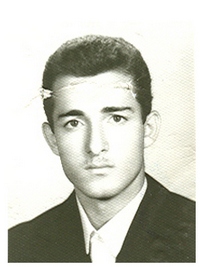 The Iranian regime has executed three Ahwazi Arab political prisoners just days after UN High Commissioner for Human Rights, Louise Arbour, visited Iran.
The three men - Abdulreza Nawaseri (pictured), Mohammad Ali Sawari and Jaffar Sawari - were hanged on charges of preaching Wahabbism and bombing the Zergan oilfields in 2005. They denied the charges in a one-day trial in which they were not given adequate legal representation. Their lawyers complained they were not given time to read their clients' files or meet their clients. The regime has not provided any evidence to substantiate its claims.
Abdulreza Nawaseri, aged 32, was the brother of Mehdi Nawaseri, who was hanged in public in Ahwaz City in March 2006 . He was arrested in 2000 and then sentenced to 35 years in prison. He was in prison at the time of the bomb attacks in Zergan.
Brothers Mohammad Ali Sawari and Jaffar Sawari had been in prison since 2005, along with a third brother, Hamzah Sawari. They were initially accused of attempting to convert Ahwazi Arabs to Sunnism, but they were later blamed for the Zergan oilfield attacks. No evidence has been produced to substantiate the government's charges. Mohammad Ali Sawari is a 37 year old teacher, married with five children.
Following the executions, some Ahwazi Arabs held spontaneous anti-government demonstrations in the streets of Ahwaz. The authorities reportedly fired on the crowds to subdue them. Initial reports suggested that one person has been killed and 20 have been wounded.
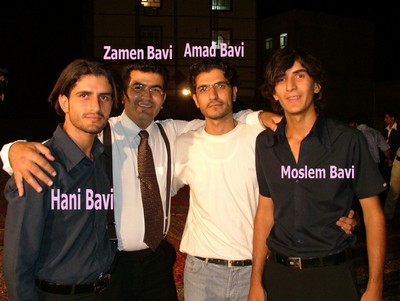 Daniel Brett, Chairman of the British Ahwazi Friendship Society, said: "The Iranian government is not only executing innocent men, it is killing entire families in its attempt to terrorise the Ahwazi Arab people. We know that the entire family of Ahwazi psychologist Dr Awdeh Afrawi have been executed, murdered or imprisoned; Dr Afrawi himself is currently dying in prison. All five sons of tribal leader Hajji Salem Bawi have been sentenced to long prison terms or execution (pictured). Zamel Bawi could be the next Ahwazi Arab to face execution. The wives and children of some executed Ahwazi Arabs have also been imprisoned, including pregnant women and babies.
"The regime is collectively punishing Ahwazi Arabs as part of a broader programme of ethnic cleansing of this indigenous ethnic group. This policy of collective punishment is not applied to ethnic Persians.
"The Sawari and Bawi tribes appear to be key targets, due to the fact that their lands are oil-rich and members of these tribes have been heavily involved in opposition to the government's land confiscation programme and forced displacement of Arabs.
"Every Ahwazi activist is condemned as a separatist, a Wahabbi and a British or Israeli spy and is likely to be executed if arrested. It does not matter if they are accused of distributing Sunni literature or bombing oilfields, they are seen as being mohareb (at war with god) and as such can be executed under Islamic law."
Labels: death penalty
permalink
keywords: ahvaz ahwaz ahwazi arabistan khuzestan khuzistan khuzestani arab arabistan iran iranian human rights security oil news ahmadinejad ethnic cleansing
.......................................................................................
05 August, 2007
 The EU Presidency, currently held by Portugal, has condemned the death sentences on two Kurdish journalists, Adnan Hassanpour and Abdolwahed Boutimar, who the Iranian regime has accused of threatening national security.
In a statement released on Friday (3 August), the EU stated that it was "also particularly troubled by the growing repression against all groups which exercise their right to freely express their opinions, in particular in Kurdish and Arab minority regions."
The EU has urged the regime to fully respect its Criminal Procedure Code and the International Covenant on Civil and Political Rights, which Iran has ratified, to grant the right to a fair trial to all individuals by allowing them to have access to a lawyer from the beginning of the judicial process.
The Presidency reiterated its "longstanding opposition to the death penalty in all circumstances" and expressed its concern about "the series of collective public executions that have been taking place in several regions of Iran during the last month, as well as with the growing number of death sentences both at first level courts and at the Supreme Court."
The EU Presidency's statement was backed by the candidate countries Croatia and the former Yugoslav Republic of Macedonia, the Countries of the Stabilisation and Association Process and potential candidates Albania, Bosnia and Herzegovina, Montenegro, Serbia, and the EFTA countries Iceland, Liechtenstein and Norway, members of the European Economic Area, as well as Ukraine, the Republic of Moldova and Georgia.
In February, the EU Presidency - then headed by Germany - condemned the group execution of Ahwazi Arab opposition activists , who were sentenced to death following secret trials that were dismissed as unfair by UN experts. The activists were accused of threatening national security. The convictions were reportedly based on confessions extorted under torture. Four Ahwazi political prisoners were executed in January during Moharam, a month when executions are forbidden in Islam.
Labels: death penalty , EU
permalink
keywords: ahvaz ahwaz ahwazi arabistan khuzestan khuzistan khuzestani arab arabistan iran iranian human rights security oil news ahmadinejad ethnic cleansing
.......................................................................................
08 June, 2007
 The following is an appeal by Amnesty International regarding the imminent execution of three Ahwazi Arabs - Khaled Hardani, Shahram Pourmansouri and Farhang Pourmansouri - accused of attempting to hijack an aircraft.
Khaled Hardani's execution date has reportedly been set for 4 July. He was sentenced to death for his part in the January 2001 attempted hijacking of a 30-seater passenger aircraft.
The Implementation of Judgements section in Branch 6 of the Revolutionary Court in Tehran reportedly confirmed the execution date on 2 June, and said that Khaled Hardani had been officially informed of the verdict. He is reportedly held in Raja'i Shahr prison, in the city of Karaj, around 50km west of Tehran.
Khaled Hardani was one of 11 members of an extended family who attempted to commandeer a scheduled flight between the southern Iranian cities of Ahvaz and Bandar Abbas, and force it to fly to Dubai, in the United Arab Emirates. Security guards already on board ended the hijack attempt while the plane was still on the runway at Ahvaz, reportedly shooting Khaled Hardani in the process. The family were reportedly trying to escape the poverty and hopelessness they were experiencing as members of Iran's Arab minority. Khaled Hardani was sentenced to death, together with his brothers-in-law, Shahram and Farhang Pourmansouri, on charges of "acts against national security" (eqdam 'aleyhe amniyat) and "enmity against God" (Moharebeh) rather than charges relating specifically to hijacking an aircraft. At the time of the hijacking, the brothers were reportedly aged 17 and 18 respectively.
Khaled Hardani was originally scheduled to hang on 19 January 2005, but the Head of the Judiciary ordered a stay of execution the previous day, apparently to allow lawyers to appeal. As a state party to the International Covenant on Civil and political Rights (ICCPR), Iran has undertaken not to execute anyone for an offence committed when they were under the age of 18. The Head of the Judiciary reportedly ordered the executions of all three men to be stayed because of the ages of the two brothers. In May 2006 Khaled Hardani told Amnesty International from Evin Prison, where he was held at the time, that following the stay of execution his case and those of his brothers-in-law had been referred to the Board of Monitoring and Follow-up (Heyat-e Nezarat va Peigiri).
Amnesty International has no new information regarding the Pourmansouri brothers.
Labels: death penalty
permalink
keywords: ahvaz ahwaz ahwazi arabistan khuzestan khuzistan khuzestani arab arabistan iran iranian human rights security oil news ahmadinejad ethnic cleansing
.......................................................................................
27 April, 2007
 Amnesty International's latest statistics on the death penalty
indicate that last year Iran's execution rate nearly doubled compared to 2005, with at least 177 people killed. Across the world, at least 1,591 prisoners were executed by their own governments in 25 countries last year.
Amnesty International's latest statistics on the death penalty
indicate that last year Iran's execution rate nearly doubled compared to 2005, with at least 177 people killed. Across the world, at least 1,591 prisoners were executed by their own governments in 25 countries last year.
According to reports received by the British Ahwazi Friendship Society (BAFS), around 17 Ahwazi Arabs were executed by the Iranian regime. At least 10 of these were political prisoners. The executions of Ahwazi Arabs were carried out after secret one-day trials which were condemned as flawed by UN experts, the European Parliament, members of the British Parliament, Human Rights Watch, Amnesty International and various Arab and Iranian human rights organisations and activists. Click here for BAFS's reports on the execution of Ahwazis .
With the number of Ahwazis estimated at up to 4.5 million, an Ahwazi Arab is around 13 times more likely to be executed than the global average and 30 per cent more likely than the average Iranian. While Ahwazi Arabs account for just 0.08 per cent of the global population, Ahwazi Arabs comprised around one per cent of global executions.
Labels: Amnesty , death penalty
permalink
keywords: ahvaz ahwaz ahwazi arabistan khuzestan khuzistan khuzestani arab arabistan iran iranian human rights security oil news ahmadinejad ethnic cleansing
.......................................................................................
26 February, 2007
Below is a report by Amnesty International. Click here to download the original .
Amnesty International is greatly concerned by continuing violations of the rights of members of Iran's ethnic minorities, including Iranian Azerbaijanis, Kurds, Baluchis, and Arabs. Within the past two weeks, hundreds of Iranian Azerbaijani linguistic and cultural rights activists have been arrested in connection with demands that they should be allowed to be educated in their own language; Kurdish rights activists have been detained, and demonstrators killed or injured; and a Baluchi accused of responsibility for a bomb explosion on 14 February 2007 was executed just five days later.
As Iran's ethnic minorities face growing restrictions, Amnesty International is calling on the government to ensure that all Iranian citizens are accorded, both in law and practice, the linguistic and cultural rights set out in Iran's constitution as well as in international law, and are able peacefully to demonstrate in support of such rights. The Iranian authorities must also ensure that the police and other law enforcement agencies do not use excessive force, that all detainees are protected from torture or other ill-treatment, and that all reports of torture or other ill treatment, excessive use of force or killings by the security forces are investigated promptly, thoroughly and independently, with the methods and findings made public. Anyone suspected to be responsible for abuses should be brought to justice promptly in a trial that complies with international standards of fairness, and without recourse to the death penalty.
Iranian Azerbaijanis
The arrests of Iranian Azerbaijanis occurred in the run up to, and during, peaceful demonstrations on International Mother Language Day, an annual commemoration initiated by the United Nations Educational, Scientific and Cultural Organisation (UNESCO) on 21 February.
The demonstrations were held to support demands that their own language should be used as the medium of instruction in schools and places of education in those areas of north-west Iran where most Iranian Azerbaijanis reside. The protest organizers are reported to have sought official authorisation in advance, though it is not known whether it was granted. Most of those detained in advance of the demonstrations, which were held in Tabriz, Orumiye and other towns in the north-west, were soon released as of 26 February between 10-20 people may still be held.
Ebrahim Kazemi, Ja'afar 'Abedini and Mehdi Mola'i, were among a group of up to 12 people detained in Qom on or around 11 February 2007, at least two of whom were reportedly arrested for having painted slogans on walls, including 'Türk dilinde medrese' (Schooling in [Azerbaijani] Turkic). They were reportedly held for several days before being released on bail. Ja'afar 'Abedini and Mehdi Mola'i were reportedly ill treated while in detention by being forced by Ministry of Intelligence officials to drink liquids which caused them to vomit.
In Orumiye, up to 60 Iranian Azerbaijanis have reportedly been arrested, including Esmail Javadi, a journalist and Iranian Azerbaijani cultural rights activist. He was arrested on 18 February 2007 and may continue to be held in a Ministry of Intelligence detention facility in the Doqquz Pilleh district of the city.
At least 15 arrests are said to have been made in Zenjan, where a reportedly peaceful demonstration was held in the city's Sabze Square. Those detained include journalist Sa'id Metinpour, well-known locally for his human rights activities; he is said to have had blood on his lips when he was taken away raising concern that he may have been assaulted by police.
Ramin Sadeghi, who was detained in Ardabil on 19 February 2007, is one of approximately 20 who were detained in the city in connection with International Mother Language Day events. Only he remains in detention at the time of writing and his family are reportedly concerned about his medical condition.
Kurds
On 20 February 2007, Kurdish students held an event at Tehran University's Department of Literature. They called for the teaching of Kurdish in Iran's education system and at the University of Sanandaj, the capital of Kurdistan province. The students reportedly signed a public statement which stated, in part, that 'In today's multicultural climate in the world, based on the Universal Declaration of Human Rights and other humanitarian principles, every nation should have a right to develop and advance its language.'
In recent months, several Kurdish journalists and human rights defenders have been detained and some are facing trial. In addition, on 16 February 2007, three Kurds, including one woman, were reportedly killed in the course of a demonstration in Mahabad. An unconfirmed report states that a dispute between demonstrators and security forces resulted in the death of Bahman Moradi, aged 18, a woman called Malihe, whose surname is not known to Amnesty International, and one other. Dozens were reportedly injured in the course of the demonstration.
Iranian security forces have a history of the violent suppression of demonstrations by Kurds. For example, in February 2006 similar clashes between Kurdish demonstrators and the security forces in Maku and other towns reportedly led to at least nine deaths and scores, possibly hundreds, of arrests. In March 2006, Kurdish members of parliament (Majles) wrote to Iranian President Mahmoud Ahmadinejad demanding an investigation into the killings and calling for those alleged to be responsible to be brought to justice. An investigation was reportedly set up, but its findings are not known. Some of those detained later reportedly received prison terms of between three and eight months.
Baluchis
In the province of Sistan-Baluchistan, the circumstances surrounding the extremely summary trial and execution of an Iranian Baluchi man, Nasrollah Shanbeh-Zehi, who was executed on 19 February 2007, calls into question the standards of administration of justice enjoyed by minorities without discrimination. Among five people reportedly arrested following the 14 February bombing of a bus carrying Revolutionary Guard security officials, which to date has killed a total 14 and injured around 30, Nasrollah Shanbeh-Zehi was shown âconfessingâ to the bombing on Iranian television on behalf of an Iranian Baluchi armed opposition group, Jondallah, and was executed in public at the site of the bombing.
Jondallah, which has carried out a number of armed attacks on Iranian officials and has on occasion killed hostages, reportedly seeks to defend the rights of the Baluchi people, though government officials have claimed that it is involved in drug smuggling and has ties to terrorist groups and to foreign governments. In March 2006, Jondallah killed 22 Iranian officials and took at least seven hostage in Sistan-Baluchistan province. Following the incident, scores, possibly hundreds, of people were arrested; many were reportedly taken to unknown locations. In the months following the attacks, the number of executions announced in Baluchi areas increased dramatically. Dozens were reported to have been executed by the end of the year
Amnesty International condemns unequivocally the killing of hostages and urges Jondallah to desist from such and similar practices immediately. However, Amnesty International is concerned that Nasrollah Shanbeh-Zehi's "confession" may have been forced, and that the rapidity of his execution indicates that he did not receive a fair trial and was not permitted an adequate opportunity to appeal against his death sentence, if that was imposed by a court.
Arabs
In January and February 2007, Amnesty International deplored the execution of eight Iranian Arabs convicted after unfair trials of bombings in Khuzestan province in 2005. Other Iranian Arab prisoners are also at risk of execution after unfair trials.
Labels: Amnesty , death penalty , human rights , minorities
permalink
keywords: ahvaz ahwaz ahwazi arabistan khuzestan khuzistan khuzestani arab arabistan iran iranian human rights security oil news ahmadinejad ethnic cleansing
.......................................................................................
18 February, 2007
The Iranian regime has announced that it made an eleventh hour decision to grant an Ahwazi prisoner a reprieve from execution in a bizarre twist to its campaign of violent oppression of Ahwazi Arabs.
On 13 February, the British Ahwazi Friendship Society (BAFS) received reports that Ahwazi teacher Reisan Sawari died from torture wounds during a hunger strike . The following day, the Iranian regime announced that it had executed three men , who BAFS had assumed were the final three of a batch of 10 Ahwazi men executed following convictions for "waging war on God", but did not include Reisan Sawari. The secret trials had been condemned by human rights organisations and UN officials for failing to meet international standards, with defendants denied access to lawyers or the right to call witnesses.
In an extraordinary development, the Iranian Labour News Agency (ILNA) reports that the case of one of the three - possibly 41 year old father of six Ghasem Salami (Salamat) - was referred to the country's Amnesty Commission and the execution had been postponed at the last minute. The regime appears to be suggesting that Reisan Sawari was one of those executed on Wednesday, even though his execution had not been scheduled and there are doubts as to whether the Supreme Court had approved the sentencing by the Ahwaz Revolutionary Court.
BAFS Chairman Daniel Brett said: "Ahwazi activists have accused the Iranian regime of attempting to pass off the illegal killing of Reisan Sawari as a formal execution. Consequently, one of the three scheduled to be executed was given a last-minute reprieve to avoid international censure over illegal killings. In doing so, the regime has revealed the arbitrary nature of Iranian justice. Reisan Sawari was summarily killed and an Ahwazi who was due to be executed was given a summary reprieve.
"Summary justice is being dispensed from the highest echelons of the Islamic theocracy, not by criminal courts. Only the Supreme Leader, Ayatollah Khamenei, has the power to overturn Supreme Court approval of a death sentence just hours before the execution. This is proof that he is directing the justice system for his own political purposes.
"It appears that Khamenei decided last year that a certain number of Ahwazi Arabs had to die following a series of mass demonstrations and did not care whether they were innocent. This is not justice, it is state terrorism and innocent Arab men are being unlawfully killed in a bloody campaign of vengeance against opponents of the Iranian regime.
"The decision to grant a stay of execution also shows that Khamenei is in a weak position, fearing the response of the international community to the treatment of Ahwazi Arabs. He did not anticipate that his execution campaign against Ahwazi Arabs would attract such a high level of international criticism , with the European Union and the UNHRC heavily criticising the executions of Ahwazis. If it had not been for the international solidarity campaign, the regime would not have felt compelled to cover up the reasons for Reisan Sawari's death.
"Khamenei has been shown up as an oppressor of Iran's own Arab population. His actions severely undermine his regime's assumption of leadership in the Islamic world, particularly the Palestinian issue.
"The Ahwazi issue is like a running sore for Iran - the more it is scratched, the more inflamed it gets. The unrest can only be resolved when the minority rights that are enshrined in the Iranian constitution prevail over the vested interests of the religious establishment. This can only occur with free and fair elections, freedom of assembly and freedom of speech so that everyone in Iran has the right to determine their own destinies, without state intimidation and oppression."
Labels: death penalty , human rights
permalink
keywords: ahvaz ahwaz ahwazi arabistan khuzestan khuzistan khuzestani arab arabistan iran iranian human rights security oil news ahmadinejad ethnic cleansing
.......................................................................................
15 February, 2007
 The Unrepresented Nations and Peoples Organisation (UNPO) has appealed to Luis Alfonso de Alba, the President of the UN Human Rights Council, to call on the Iranian regime "to cease in the use of the death penalty as a weapon of fear and oppression" following this week's killing of four Ahwazi Arab opposition activists.
The organisation, which lobbies on behalf of groups representing Iran's Ahwazi, Azeri and Kurdish minorities, also urged de Alba to call on Iran to "uphold its obligations with regard to civil and political rights, including the provision of equal rights to ethnic, religious and minority groups in Iran."
UNPO has suggested the establishment of an investigation team, mandated by the UNHRC, to "consider the series of arrests, trials, and executions, with findings reported to the UN General Assembly."
In his letter to de Alba, UNPO General Secretary Mario Busdachin wrote that "In the wake of this series of executions, UNPO is particularly alarmed at the systematic targeting of ethnic Ahwazi Arabs and the fact that the Iranian Judiciary in many of the cases conducts secret trials, effectively denying the defendants the most fundamental of legal rights ...
"UNPO remains deeply concerned by the routine arrest and execution of Iran's dissidents and has repeatedly called for international action to address the deteriorating human rights situation faced by the Ahwazi Arab population of Iran."
The UNPO is among a number of organisations calling for an end to the execution of Ahwazi Arab activists. Since Wednesday's executions, appeals have been issued by Amnesty International , Human Rights Watch and the Ahwaz Human Rights Organisation .
Labels: death penalty , human rights , UN
permalink
keywords: ahvaz ahwaz ahwazi arabistan khuzestan khuzistan khuzestani arab arabistan iran iranian human rights security oil news ahmadinejad ethnic cleansing
.......................................................................................
Below is a public statement by Amnesty International on the recent executions of four Ahwazis this week:
Amnesty International greatly deplores the execution of four Iranian Arabs on 14 February 2007 and is concerned that other prisoners are at risk of execution after unfair trials.
The organization is calling on the Iranian authorities to immediately halt executions and to ensure that all persons in detention are protected from torture or other ill-treatment. To date in 2007, Amnesty International has recorded no less than 28 executions in Iran, including the four on 14 February 2007.
One of the four men, Risan Sawari, a 32-year-old teacher, was reportedly executed yesterday in an unknown location in Khuzestan. His family was reportedly informed of his execution but his body is yet to be released for burial. Risan Sawari had reportedly been arrested in April 2005, released and arrested again in September 2005.
Although seven men were said to have been convicted of involvement in bomb attacks in October 2005 - which caused the deaths of at least six people and wounded more than a hundred others, in Ahvaz city, Khuzestan province - nine men, including Risan Sawari, were shown "confessing" on Khuzestan TV, a local government-controlled television station in Iran, on 1 March 2006. Among them were Mehdi Nawaseri and Ali Awdeh Afrawi, who were hanged in public the following morning.
On 10 June 2006 Branch 3 of the Revolutionary Court in Ahvaz had reportedly confirmed the death sentences against Risan Sawari along with nine other men. According to reports, the 10 men were accused of being mohareb (at enmity with God) which can carry the death penalty. Evidence against them reportedly included "destabilising the country", "attempting to overthrow the government", "possession of home made bombs", "sabotage of oil installations" and carrying out bombings in Ahvaz, which took place between June and October 2005. It is not known if the death sentence against Risan Sawari was upheld by the Supreme Court.
In a separate case, the other three men executed together - believed to be Abdulreza Sanawati Zergani, Qasem Salamat and Majed Alboghubaish - were reportedly convicted, together with seven others, of being mohareb (at enmity with God) on account of their alleged involvement in bomb attacks in 2005 in Ahvaz city, Khuzestan province. They are reported to have been held in solitary confinement for months during, and possibly after, their pre-trial detention and to have been convicted and sentenced after grossly unfair trials, which included denial of access to lawyers.
In an interview at the end of January 2006 with the Netherlands-based Radio Zamaneh, Iranian human rights defender, Emaddedin Baghi, who has been closely following the cases, stated that "they did not have access to lawyers and were kept in solitary confinement for months. They did not receive a fair trial."
On 13 November 2006, Khuzestan TV, broadcast a documentary film in which the three men executed yesterday and six of the seven others convicted in the same case, were shown "confessing" to involvement in causing bomb explosions. They were said to be members of Al-e, an Iranian Arab militant group that is not known to have been active since the time of the Iran-Iraq war in the 1980s.
On 10 January 2007, three leading UN human rights experts - Philip Alston, UN Special Rapporteur on extrajudicial, summary or arbitrary executions; Leandro Despouy, UN Special Rapporteur on the independence of judges and lawyers; and Manfred Nowak, UN Special Rapporteur on torture - jointly called on the government of Iran to "stop the imminent execution of seven men belonging to the Ahwazi Arab minority and grant them a fair and public hearing." The UN experts stated: "We are fully aware that these men are accused of serious crimes ... However, this cannot justify their conviction and execution after trials that made a mockery of due process requirements."
The seven individuals to whom the UN experts referred were Mohammad Jaab Pour, Abdulamir Farjallah Jaab, Alireza Asakreh and Khalaf Derhab Khudayrawi, all of whom were executed on 24 January 2007 and the three men who were executed earlier today.
Three other Iranian Arabs - named as Abdullah Suleymani, Malek Banitamim and Ali Matouri Zadeh - are reported to have been executed on 19 December 2006 in a prison in Khuzestan province.
At least 17 other Iranian Arabs are believed to be facing execution after unfair trials in which they were convicted of involvement in bombings in Khuzestan in 2005.
For further information please see: Iran: Four Iranian Arabs executed after unfair trials, MDE 13/005/2007, 24 January 2007
Labels: Amnesty , death penalty , human rights
permalink
keywords: ahvaz ahwaz ahwazi arabistan khuzestan khuzistan khuzestani arab arabistan iran iranian human rights security oil news ahmadinejad ethnic cleansing
.......................................................................................
The following is a press release by Human Rights Watch. Click here to download the original .
The Iranian Judiciary should immediately halt all executions of people who have been sentenced to death in secret following unfair trials that do not meet minimal international standards of justice, Human Rights Watch said today. In the past year, at least a dozen Iranians of Arab origin have been condemned in this way.
On February 14, 2007 the Iranian authorities executed three men in the southern province of Khuzistan: Majed Albughbish, 30, Abdolreza Sanawati, 34, and Ghassem Salamat, 41. On February 13, prison officials informed the families, who were visiting the prisoners, that the three men, all Iranians of Arab origin, would be executed the next day.
Since March 2006, the Judiciary has executed a total of 12 men in Khuzistan, also ethnic Arabs, accusing them of carrying out bombings in Ahwaz, capital of Khuzistan, in October 2005 and January 2006. At least another 13 ethnic Iranian-Arabs have been sentenced to death in Khuzistan.
"Iran has accused these men of capital crimes, and it must ensure they receive fair trials and full due process protections," said Sarah Leah Whitson, director of the Middle East and North Africa division at Human Rights Watch. "Instead, the Iranian Judiciary has conducted secret trials that deny the defendants the most basic legal rights."
According to Emad Baghi, an Iranian human rights defender who has vigorously campaigned to stop the executions, the authorities arrested 19 men who belonged to a group named Kataib in March 2006, accusing them of involvement in bombings. The authorities held the men in solitary confinement and denied them access to their lawyers until the day before their trials. The Judiciary did not allow the lawyers access to the accused men's files until one day before their trial.
On July 17, 2006, the revolutionary court in Ahwaz sentenced 10 of the men to death following a one-day secret trial held on July 16. Judge Sha'bani sentenced the men to execution by hanging under Iran's penal code, charging them as Mohareb, meaning "enemies of God." The court sentenced the other nine men to imprisonment.
Iran has now executed all 10 men sentenced on July 17, despite strong international condemnations, including an appeal by three senior United Nations human rights officials: Philip Alston, UN Special Rapporteur on Extrajudicial, Summary or Arbitrary Executions; Leonardo Despouy, UN Special Rapporteur on the Independence of Judges and Lawyers, and Manfred Nowak, UN Special Rapporteur on Torture.
On January 10, the three UN officials issued a public appeal to the Iranian government to stop the executions, stating that the trials "made a mockery of due process requirements." The Iranian authorities ignored this and other international appeals, executing four of the men on January 24, and three more on February 14. Another three men were executed on December 19, 2006.
The judiciary has sentenced to death another 13 Iranians of Arab origin for armed activity against the state. They are: Zamel Bawi; Awdeh Afrawi; Nazem Bureihi; Alireza Salman Delfi; Ali Helfi; Jaafar Sawari; Risan Sawari; Mohammad Ali Sawari; Moslem al-Ha'I; Abdulreza Nawaseri; Yahia Nasseri; Abdulzahra Helichi; and Abdul-Imam Za'eri.
Human Rights Watch calls on the Judiciary to rescind their death sentences, and to grant new trials that meet international fair trial standards and are open to the public.
Iran executes more people annually than any other nation but China. In an alarming development, the number of publicly known executions rose 70 percent in 2006 as compared to 2005. Human Rights Watch believes the true number of executions is higher, but remains unknown due to the Judiciary's lack of transparency and public accountability. Iran also executes more juveniles annually than any other nation.
"Today Iran stands out for handing down the death penalty on a grand scale without giving defendants a fair trial," Whitson said.
Human Rights Watch opposes capital punishment under any circumstances due to its inherent cruelty and irreversibility.
Labels: death penalty , human rights
permalink
keywords: ahvaz ahwaz ahwazi arabistan khuzestan khuzistan khuzestani arab arabistan iran iranian human rights security oil news ahmadinejad ethnic cleansing
.......................................................................................
14 February, 2007
اÛرا٠برخÙا٠Ùظر جÙاÙÛ Ø¯Ø± Ù Ùرد تÙÙ٠اعدا٠عرب ÙØ§Û Ø§ÙÙازÛØ Ø³Ù Ø¹Ø±Ø¨ اÙÙØ§Ø²Û Ø±Ø§ اعدا٠کرد.
The Iranian regime executed three Ahwazi Arabs this morning at a prison in Ahwaz.
The killing of Ghasem Salami (Salamat), 41 years old from Ahwaz City and married with 6 children, Majad Albughbish, 30 years old from Maashur (Mahshahr) and Abdolreza Sanawati (Zergani), 34 years old and married from Ahwaz City, will bring the number of executions of Ahwazi Arabs in the past two months to 10.
The Iranian regime has ignored international outcry over the executions. According to Iranian and international human rights activists, all 10 men were tried in secret courts with no access to lawyers on dubious charges and little evidence. This has prompted governments and politicians in Europe and UN officials to condemn the trials and executions.
Two weeks ago, the Presidency of the European Council - currently held by the German government - called on the Iranian regime to halt the executions of the three men to allow them a fair trial. It also condemned the execution of four Ahwazi men on 24 January. The statement was backed by all the governments of the European Union as well as Norway, Switzerland, Iceland, Ukraine and Moldova ( click here to download the statement ).
In the UK, 49 Members of Parliament signed an Early Day Motion condemning the execution of 10 men. The EDM - backed by a broad spectrum of MPs - noted the persecution of Ahwazi Arabs and backed complaints by human rights organisations over the nature of the trials and the use of torture to extract false confessions ( click here to download the EDM ).
UN condemnation
European condemnation of the Iranian regime follows serious allegations by three UN independent human rights experts that the trials of 10 Ahwazi men - including seven who have been executed since early December - were seriously flawed. Philip Alston (Special Rapporteur on extrajudicial, summary or arbitrary executions), Leandro Despouy (Special Rapporteur on the independence of judges and lawyers) and Manfred Nowak (Special Rapporteur on torture) urged the Iranian Government to "stop the imminent execution of seven men belonging to the Ahwazi Arab minority and grant them a fair and public hearing".
The experts state that the 10 men were not allowed to see the defendants prior to their trial, and were given access to the prosecution case only hours before the start of the trial. The lawyers were also intimidated by charges of "threatening national security" being brought against them. The convictions were reportedly based on confessions extorted under torture. "The only element of the cases of these men not shrouded in secrecy was the broadcast on public television of their so-called confessions", Mr. Nowak said.
The Iranian regime has ignored letters sent by the three special rapporteurs. The executions of three of the men were staged in December, with no regard for the strong concerns expressed on behalf of the UN Human Rights Council.
Iran is a party to the International Covenant on Civil and Political Rights and has a legal obligation to respect its provisions, which include the right to a fair and public hearing, the right not to be compelled to confess guilt, and the right to "adequate time and facilities for the preparation of ones defence" with the assistance of a lawyer of ones own choosing.
Condemnation inside Iran
Ahwazi Arab activists point out that the executions broke Islamic laws which forbid killing during the month of Moharam.
Iranian human rights activists, led by prisoners rights activist Emad Baghi, have also voiced their criticism of the conduct of the trials and the executions. In an interview this week with the Netherlands-based Radio Zamaneh , Baghi said the Iranian regime should admit that the executions were a mistake. He claimed the men "did nothing and did not take part in any explosion" and therefore the executions were against the law.
"They did not have access to lawyer," Baghi added. "They were kept in solitary confinement for months. They did not receive a fair trial. Only four [out of 40 alleged terrorists] were connected directly to the bombings and the rest are not connected."
Baghi said the root causes of unrest among Ahwazi Arabs are poverty and unequal distribution of wealth. He told Radio Zamaneh: "Government policies are wrong. The Arabs do not have good housing, healthy drinking water, electricity and live in poverty, although they live on top of oil reserves. They are also barred from working for the government."
Labels: death penalty , human rights
permalink
keywords: ahvaz ahwaz ahwazi arabistan khuzestan khuzistan khuzestani arab arabistan iran iranian human rights security oil news ahmadinejad ethnic cleansing
.......................................................................................
 The
Ahwaz Human Rights Organisation
(AHRO) has issued the following urgent action in relation to executions of Ahwazi Arabs that were due to be carried out today, as well as Reisan Sawari, an Ahwazi teacher who was tortured to death on Tuesday while on hunger strike.
The
Ahwaz Human Rights Organisation
(AHRO) has issued the following urgent action in relation to executions of Ahwazi Arabs that were due to be carried out today, as well as Reisan Sawari, an Ahwazi teacher who was tortured to death on Tuesday while on hunger strike.
Once again, in a blatant defiance to the United Nations , the European
Commission and international human rights organizations , Iran has began preparation to execute another 3 Iranian (Ahwazi) Arab opposition activists. Their relatives were told that they are due to be executed tomorrow, Wednesday 14 February 2007. Their names are as follows:
1. Ghasem Salami, 41, married with 6 children
2. Majad Albughbish, 30, single from Maashur (Mahshahr)
3 Abdolreza Sanawati, 34, married from Ahwaz City
This will bring the number of executions of Ahwazi Arabs in the past two months to 10.
Also today Mr. Risan Sawari, a 32 years old Ahwazi-Arab teacher, married from Kut-Abdullah in Ahwaz, was killed under torture in Mali-Rah IRGC prison in Ahwaz-City. Mr. Sawari has been on hunger strike for the past 20 days protesting his prison conditions- including over a year detention in solitary confinement, no family visitation rights or the rights to see a lawyer. Mr. Sawari was a civil rights activist, and member of al-Wafagh Party, a reformist political party under former president Khatami.
On 10 January 2007, independent experts appointed by the United Nations Human Rights Council, Mr. Philip Alston, the Special Rapporteur on extrajudicial, summary or arbitrary executions, Mr. Leandro Despouy, the Special Rapporteur on the independence of judges and lawyers, and Mr. Manfred Nowak, the Special Rapporteur on torture, issued a statement urging the Iranian Government to "stop the imminent execution of seven men belonging to the Ahwazi Arab minority and grant them a fair and public hearing." ( click here for details )
On 24 January four out of the seven, Mohammad Chaabpour, Abdolamir Farjolah Chaab, Alireza Asakereh, and Khalaf Khanafereh (Khazirawi) were executed in defiance of the UN plea and the international Community and contrary to Islamic faith which prohibits execution in the month of Moharam . The remaining three are to be executed tomorrow.
On Tuesday December 19, 2006, the Khuzestan branch of the Iranian Students News Agency (ISNA) reported that Malek Banitamim, Abdullah Solaimani, and Ali Matorizadeh were executed for "waging war on God" in Ahwaz City. This was done one day after the UN Security Council passed a resolution condemning Iran's human rights violations.
On March of this year, two other ethnic Ahwazi Arabs, Ali Afrawi (age 17) and Mehdi Nawaseri (20 years old), were publicly hang in Ahwaz City for similar charges, after a TV broadcast of their "confession" was shown a day earlier on Khuzestan TV.
On November 13, 2006, the Iranian regime broadcast videos of forced confessions of 11 Ahwazi Arabs on Khuzestan TV but due to international outrage including unanimous condemnation by the European Parliament in a resolution on November 16, 2006, as well as a resolution by 48 British MPs and similar actions by other EU parliaments, the execution of the these men were delayed.
On November 9, Abbas Jaafari Dowlatabadi, head of Iran's Judiciary in the southern province of Khuzistan, told the Islamic Republic News Agency that Iran's Supreme Court has confirmed the execution sentence of at least 19 of the 35 Iranian Arabs sentenced to death by Ahwaz Revolutionary Court.
On 8 June, 2006, Khuzestan Revolutionary Court announced that 35 indigenous Ahwazi Arabs (including 3 brothers) were sentenced to death following a one-day trial in absence of lawyers or witnesses. Two of these 35 men sentenced to death, Nazem Bureihi and Abdolreza Nawaseri, were already serving prison sentences for insurgency at the time of the bomb attacks for which the regime claims they were responsible for. "One of the wonders of the Iranian Judiciary is that it can accuse a person of carrying out bombings while he's in prison," said Sarah Leah Whitson, director of the Middle East and North Africa division at Human Rights Watch. "That lays bare the arbitrariness of his conviction."
These men have been found guilty of allegedly bombing oil installations at Southwestern Iranian province of Khuzestan (al-Ahwaz), homeland to 5 million Ahwazi-Arabs. All men are members of the persecuted Ahwazi community. The trials were deeply flawed, according to Amnesty International, Human Rights Watch and other international and Iranian human rights organizations... The convictions are evidently arbitrary and are intended to collectively punish Ahwazi Arabs for opposing the regime.
All these men were tortured into making false confessions. Their lawyers were not allowed to see them prior to their trial and they were given the prosecution case only hours before the start of the trial, which was held in secret. The lawyers for the condemned men ( Khalil Saeedi, Mansur Atashneh, Dr Abdulhasan Haidari, Jawad Tariri, Faisal Saeedi and Taheri Nasab), all Ahwazi-Arabs but one, have been arrested for complaining about the illegal and unjust nature of the men's trials. They have been charged with threatening national security.
Although Ahwazi-Arab homeland in Iran's Khuzestan province is one of the most oil-rich regions in the world and represents up to 90 per cent of Iran's oil production. Yet this community endures extreme levels of poverty, unemployment and illiteracy. Ahwazis are subjected to repression, racial discrimination and faced with land confiscation, forced displacement and forced assimilation.
Peaceful opposition among Ahwazi Arabs to the Iranian regime's racist policies of ethnic cleansing has been brutally suppressed. Since April 15, 2005 the beginning of the Ahwazi Intifada (Uprising), over 25,000 Ahwazis were arrested, at least 131 were killed and over 150 were disappeared (believed to have been tortured and killed by Iranian security forces). Iranian authorities level accusations against the USA, Great Britain and Israel as the cause of Ahwazi demands for democracy, social and economic justice. Ethnic cleansing against Iranian-Arabs in Khuzestan has intensified since the mid-1990s, particularly following the election of Mahmoud Ahmadinejad.
Labels: death penalty , human rights
permalink
keywords: ahvaz ahwaz ahwazi arabistan khuzestan khuzistan khuzestani arab arabistan iran iranian human rights security oil news ahmadinejad ethnic cleansing
.......................................................................................
Three Ahwazi Arabs are due to be executed during the early hours of Wednesday morning, according the men's relatives.
The killing of Ghasem Salami (Salamat), 41 years old from Ahwaz City and married with 6 children, Majad Albughbish, 30 years old from Maashur (Mahshahr) and Abdolreza Sanawati (Zergani), 34 years old and married from Ahwaz City, will bring the number of executions of Ahwazi Arabs in the past two months to 10.
European outcry
The Iranian regime has ignored international outcry over the executions. According to Iranian and international human rights activists, all 10 men were tried in secret courts with no access to lawyers on dubious charges and little evidence. This has prompted governments and politicians in Europe and UN officials to condemn the trials and executions.
Two weeks ago, the Presidency of the European Council - currently held by the German government - called on the Iranian regime to halt the executions of the three men to allow them a fair trial. It also condemned the execution of four Ahwazi men on 24 January. The statement was backed by all the governments of the European Union as well as Norway, Switzerland, Iceland, Ukraine and Moldova ( click here to download the statement ).
In the UK, 49 Members of Parliament signed an Early Day Motion condemning the execution of 10 men. The EDM - backed by a broad spectrum of MPs - noted the persecution of Ahwazi Arabs and backed complaints by human rights organisations over the nature of the trials and the use of torture to extract false confessions ( click here to download the EDM ).
UN condemnation
European condemnation of the Iranian regime follows serious allegations by three UN independent human rights experts that the trials of 10 Ahwazi men - including seven who have been executed since early December - were seriously flawed. Philip Alston (Special Rapporteur on extrajudicial, summary or arbitrary executions), Leandro Despouy (Special Rapporteur on the independence of judges and lawyers) and Manfred Nowak (Special Rapporteur on torture) urged the Iranian Government to "stop the imminent execution of seven men belonging to the Ahwazi Arab minority and grant them a fair and public hearing".
The experts state that the 10 men were not allowed to see the defendants prior to their trial, and were given access to the prosecution case only hours before the start of the trial. The lawyers were also intimidated by charges of "threatening national security" being brought against them. The convictions were reportedly based on confessions extorted under torture. "The only element of the cases of these men not shrouded in secrecy was the broadcast on public television of their so-called confessions", Mr. Nowak said.
The Iranian regime has ignored letters sent by the three special rapporteurs. The executions of three of the men were staged in December, with no regard for the strong concerns expressed on behalf of the UN Human Rights Council.
Iran is a party to the International Covenant on Civil and Political Rights and has a legal obligation to respect its provisions, which include the right to a fair and public hearing, the right not to be compelled to confess guilt, and the right to "adequate time and facilities for the preparation of ones defence" with the assistance of a lawyer of ones own choosing.
Condemnation inside Iran
Ahwazi Arab activists point out that the executions broke Islamic laws which forbid killing during the month of Moharam.
Iranian human rights activists, led by prisoners rights activist Emad Baghi, have also voiced their criticism of the conduct of the trials and the executions. In an interview this week with the Netherlands-based Radio Zamaneh , Baghi said the Iranian regime should admit that the executions were a mistake. He claimed the men "did nothing and did not take part in any explosion" and therefore the executions were against the law.
"They did not have access to lawyer," Baghi added. "They were kept in solitary confinement for months. They did not receive a fair trial. Only four [out of 40 alleged terrorists] were connected directly to the bombings and the rest are not connected."
Baghi said the root causes of unrest among Ahwazi Arabs are poverty and unequal distribution of wealth. He told Radio Zamaneh: "Government policies are wrong. The Arabs do not have good housing, healthy drinking water, electricity and live in poverty, although they live on top of oil reserves. They are also barred from working for the government."
Labels: death penalty , human rights
permalink
keywords: ahvaz ahwaz ahwazi arabistan khuzestan khuzistan khuzestani arab arabistan iran iranian human rights security oil news ahmadinejad ethnic cleansing
.......................................................................................
13 February, 2007
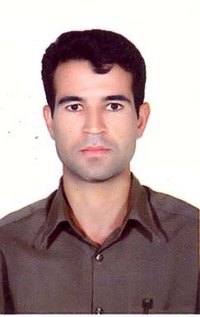
٠رگ ٠عÙ٠عرب
An Ahwazi Arab teacher, Reisan Sawari (pictured), died while on hunger strike on Tuesday.Sawari had been held in solitary confinement for a year and was protesting against his conditions. He was a member of the reformist Lejnat al-Wefagh (Reconciliation Committee), which campaigned for Arab rights by constitutional means, including contesting elections. The party was banned by the regime last year, with government spokesmen claiming it was a threat to national security.
During his imprisonment, Sawari was tortured and his relatives were denied the right to visit him. Reports received by the British Ahwazi Friendship Society claim that he was tortured while on hunger strike at the Revolutionary Guards' Mali-Rah prison and may have died as a result of his injuries. He was 32 when he died. He leaves a wife and no children.
In March 2006, he was one of a number of men shown "confessing" on the state-owned Khuzestan TV to carrying out bomb attacks on oil pipelines in October 2005; televised confessions are made after months of torture and threats to relatives' lives. He was innocent of the charges levelled at him by the Iranian regime as he had been held in custody since September 2005 on unspecified charges.
He was sentenced to death in a secret trial held at Ahwaz Revolutionary Court on 7 June 2006.
Reisan's death while on hunger strike comes just days after another Ahwazi, 26 year old Abdolamir Farjolah Kaab, was executed while on hunger strike while protesting against his prison conditions . He was executed in Ahwaz's Karoun Prison along with three other men.
Amnesty International issued a number of urgent actions due to fears that he would be executed in prison.
Below is a picture of Risan (far left) with his pupils

Labels: death penalty , human rights
permalink
keywords: ahvaz ahwaz ahwazi arabistan khuzestan khuzistan khuzestani arab arabistan iran iranian human rights security oil news ahmadinejad ethnic cleansing
.......................................................................................
01 February, 2007
The Presidency of the European Council has today issued a strong condemnation of Iran's execution campaign against Ahwazi Arabs (
click here to download statement
).
The Presidency, which is currently held by the German government, stated that "the European Union deplores the execution of four Ahwazi Arab men on 24 January sentenced to death in Iran for alleged involvement in terrorist activities in the Ahwaz region.
"The EU has raised with the Iranian authorities its concerns about the conduct of the trial that led to these sentences and the defendants' lack of access to lawyers.
"The EU calls on Iran to halt the executions of the remaining three men, to allow these men a fair and public hearing, and to ensure full openness and transparency in all court proceedings. The EU reiterates its longstanding opposition to the death penalty in all circumstances."
The declaration was supported by the governments of EU and EFTA member states and EU candidate countries, including Turkey. Ukraine and Moldova also backed the European Presidency's condemnation.
UN condemnation
European condemnation of the Iranian regime follows serious allegations by three UN independent human rights experts that the trials of 10 Ahwazi men - including seven who have been executed since early December - were seriously flawed. Philip Alston (Special Rapporteur on extrajudicial, summary or arbitrary executions), Leandro Despouy (Special Rapporteur on the independence of judges and lawyers) and Manfred Nowak (Special Rapporteur on torture) urged the Iranian Government to "stop the imminent execution of seven men belonging to the Ahwazi Arab minority and grant them a fair and public hearing".
The experts state that the 10 men were not allowed to see the defendants prior to their trial, and were given access to the prosecution case only hours before the start of the trial. The lawyers were also intimidated by charges of "threatening national security" being brought against them. The convictions were reportedly based on confessions extorted under torture. "The only element of the cases of these men not shrouded in secrecy was the broadcast on public television of their so-called confessions", Mr. Nowak said.
The Iranian regime has ignored letters sent by the three special rapporteurs. The executions of three of the men were staged in December, with no regard for the strong concerns expressed on behalf of the UN Human Rights Council.
Iran is a party to the International Covenant on Civil and Political Rights and has a legal obligation to respect its provisions, which include the right to a fair and public hearing, the right not to be compelled to confess guilt, and the right to "adequate time and facilities for the preparation of ones defence" with the assistance of a lawyer of ones own choosing.
Condemnation inside Iran
Ahwazi Arab activists point out that the executions broke Islamic laws which forbid killing during the month of Moharam.
Iranian human rights activists, led by prisoners rights activist Emad Baghi, have also voiced their criticism of the conduct of the trials and the executions. In an interview this week with the Netherlands-based Radio Zamaneh , Baghi said the Iranian regime should admit that the executions were a mistake. He claimed the men "did nothing and did not take part in any explosion" and therefore the executions were against the law.
"They did not have access to lawyer," Baghi added. "They were kept in solitary confinement for months. They did not receive a fair trial. Only four [out of 40 alleged terrorists] were connected directly to the bombings and the rest are not connected."
Baghi said the root causes of unrest among Ahwazi Arabs are poverty and unequal distribution of wealth. He told Radio Zamaneh: "Government policies are wrong. The Arabs do not have good housing, healthy drinking water, electricity and live in poverty, although they live on top of oil reserves. They are also barred from working for the government."
Labels: death penalty , EU
permalink
keywords: ahvaz ahwaz ahwazi arabistan khuzestan khuzistan khuzestani arab arabistan iran iranian human rights security oil news ahmadinejad ethnic cleansing
.......................................................................................
27 January, 2007
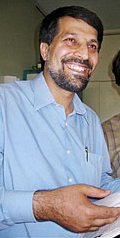 Iran's leading prisoners rights activist,
Emad Baghi
(pictured), has revealed that 26 year old Abdolamir Farjolah Kaab was on hunger strike when he was executed in Karoun Prison on Tuesday (24 January) along with three other Ahwazi Arab political prisoners.
Iran's leading prisoners rights activist,
Emad Baghi
(pictured), has revealed that 26 year old Abdolamir Farjolah Kaab was on hunger strike when he was executed in Karoun Prison on Tuesday (24 January) along with three other Ahwazi Arab political prisoners.
Baghi told Radio Farda that he had staged a hunger strike to protest at being held in solitary confinement for nearly a year. He claimed that all four were held in solitary confinement from the time of their arrest in March 2006 until they were executed.
Baghi also accused the Iranian government of breaking Islamic rules which forbid executions during the month of Moharam.
The names of executed are:
1. Mohammad Lazem Kaab Pour, 28, married with one child, student at Shushtar University
2. Abdolamir Farjolah Kaab, 26, married, student at Shushtar University
3. Alireza Asakereh, 24, single from Maashur (Mahshahr)
4. Khalaf Dohrab Khanafereh (Khazirawi), 34, married with one child from Falahieh
They were among 10 men, all members of Iran's Arab minority, who were reportedly convicted of being mohareb (at enmity with God). On 10 January 2007, three leading UN human rights experts - Philip Alston, UN Special Rapporteur on extrajudicial, summary or arbitrary executions; Leandro Despouy, UN Special Rapporteur on the independence of judges and lawyers, and Manfred Nowak, UN Special Rapporteur on torture - jointly called on the government of Iran to "stop the imminent execution of seven men belonging to the Ahwazi Arab minority and grant them a fair and public hearing." These UN experts stated: "We are fully aware that these men are accused of serious crimes. However, this cannot justify their conviction and execution after trials that made a mockery of due process requirements."
Labels: death penalty
permalink
keywords: ahvaz ahwaz ahwazi arabistan khuzestan khuzistan khuzestani arab arabistan iran iranian human rights security oil news ahmadinejad ethnic cleansing
.......................................................................................
24 January, 2007
The following is a report published by Amnesty International following
today's execution of four Ahwazi Arabs
.
Click here to download the full report :
Amnesty International deplores the executions earlier today of four Iranian Arab men and fears for the lives of other prisoners who are reported to have been sentenced to death recently following unfair trials.
Amnesty International is calling on the Iranian authorities to halt executions and to ensure that all persons in detention are protected from torture or other ill-treatment.
Executions in Iran continue at an alarming rate. Amnesty International recorded at least 177 executions in 2006 but fears that the true figure may have been much higher. At least four of those executed were under the age of 18 at the time of their alleged offences, including one who was still under 18 at the time of his execution. In 2006, Iran and Pakistan were the only countries in the world to continue to execute child offenders (although Pakistan enacted in 2000 the Juvenile Justice System Law which abolished the death penalty for people under 18 at the time of the crime in most parts of the country). To date in 2007, Amnesty International has recorded 19 further executions in Iran, including the four today.
Those executed today are believed to be Khalaf Derhab Khudayrawi, Alireza Asakreh, Mohammad Jaab Pour and Abdulamir Farjallah Jaab. They were among 10 men, all members of Iran's Arab minority, who were reportedly convicted of being mohareb (at enmity with God) on account of their alleged involvement in bomb attacks in October 2005 which caused the deaths of at least six people and wounded more than a hundred others, in Ahvaz city, Khuzestan province. According to reports, the four men were denied access to their lawyers in the two weeks prior to their execution.
On 9 November 2006, the head of the Khuzestan Prosecutor's Office, Abbas Ja'afari Dowlat Abadi, reportedly announced that the Supreme Court had upheld the death sentences against 10 of some 19 people allegedly responsible for bomb explosions in Khuzestan and that they would be publicly hanged.
On 13 November 2006, an Iranian local television station, Khuzestan TV, broadcast a documentary film which included the "confessions" of nine of these men, In the programme, the 10 people, said to be members of a group named Al-e Naser, (a little-known Iranian Arab militant group that is not known to have been active since the time of the Iran-Iraq war in the 1980s) "confessed" to their involvement in the bomb explosions.
On 19 December 2006 three of them, Abdullah Suleymani (initially named as Alireza Asakreh), Malek Banitamim and Ali Matouri Zadeh were reportedly executed in prison in Khuzestan province.
The bodies of the executed men were reportedly not handed to their families for burial, and there were fears that they would be buried in an unmarked, mass grave site called La'natabad (Place of the damned). The security forces reportedly prevented people from visiting the families to offer condolences.
According to information received by Amnesty International, on or around 2 March 2006 and prior to his arrest, Khalaf Derhab Khudayrawi was reportedly shot by the security forces before being taken away. His family believed he had died in the shooting, but a few days later received a phone call from the authorities informing them that he had been transferred to the Sepidar detention centre. His wife, Soghra Khudayrawi, and four-year-old son Zeidan were detained in Ahvaz on 7 March 2006 and both remain in detention. (See UA 65/06, MDE 13/028/2006, 23 March 2006) and Iran: Appeal Case: Four Ahwazi Arab women and two children: Prisoners of conscience, AI Index: MDE 13/059/2006, 17 May 2006, http://web.amnesty.org/library/Index/ENGMDE130592006?open&of;=ENG-IRN). Mohammad Jaab Pour and Abdulamir Farjallah Jaab were also reportedly arrested on 7 March 2006.
At the beginning of June 2006, seven lawyers who appeared before Branch 3 of the Revolutionary Court representing the defendants, including some of the 10 who were sentenced to death, reportedly wrote formally to the court's president complaining about irregularities in the trial. They said they were notified of their clients' trial date only one to two days in advance, instead of the minimum of five days stipulated in Article 64 of the Civil Procedure Code, and could not study their clients' files fully; that they were not allowed to meet in private with their clients although they had requested this and despite the head of the judiciary's stated assurance on 20 May 2006 that "nobody has the right to issue an order in contravention of the law and to deprive the accused of the right of visits by their family and lawyer. They must know quite clearly that they may request private meetings with their lawyers." The lawyers also complained that trial sessions have been held without other defendants or their lawyers being present.
Following this letter, in October 2006 at least five of the lawyers were summoned to appear before Branch 7 of the Revolutionary Court in Ahwaz for allegedly endangering national security by complaining about the legal proceedings and publishing their protest on Ahwazi websites abroad. They were reportedly released upon payment of bail.
On 10 January 2007, three leading UN human rights experts - Philip Alston, UN Special Rapporteur on extrajudicial, summary or arbitrary executions; Leandro Despouy, UN Special Rapporteur on the independence of judges and lawyers, and Manfred Nowak, UN Special Rapporteur on torture - jointly called on the government of Iran to "stop the imminent execution of seven men belonging to the Ahwazi Arab minority and grant them a fair and public hearing." The seven individuals concerned were reported to be Abdulreza Sanawati Zergani, Qasem Salamat, Mohammad Jaab Pour, Abdulamir Farjallah Jaab, Alireza Asakreh, Majed Alboghubaish Khalaf and Derhab Khudayrawi. These UN experts stated: "We are fully aware that these men are accused of serious crimes⦠However, this cannot justify their conviction and execution after trials that made a mockery of due process requirements."
Labels: death penalty
permalink
keywords: ahvaz ahwaz ahwazi arabistan khuzestan khuzistan khuzestani arab arabistan iran iranian human rights security oil news ahmadinejad ethnic cleansing
.......................................................................................
The Iranian regime has hung four more Ahwazis, according to official news agencies.
The four were among up to 20 men recently sentenced to death for undermining national security and "waging war on God" following trials that were condemned as flawed by UN officials , human rights organisations , the British government , the European Commission and the European Parliament . The executions, which reportedly took place last night and this morning in Karoun prison in Ahwaz City, bring the total number of Ahwazis recently killed by the regime to seven; three were executed in December .
The Iranian government has not announced the names of those it has executed. The British Ahwazi Friendship Society (BAFS) has received the name of one of those executed, Mohammad Ka'ab Pour, and unconfirmed reports on the names of the other three.
The executions are related to the Iranian regime's attempts to suppress dissent through state terrorism and the execution of opposition and human rights activists. Ahwazi Arabs endure African levels of poverty, although their homeland produces 80-90 per cent of Iran's oil.
Labels: death penalty
permalink
keywords: ahvaz ahwaz ahwazi arabistan khuzestan khuzistan khuzestani arab arabistan iran iranian human rights security oil news ahmadinejad ethnic cleansing
.......................................................................................
19 January, 2007
The European Commission and the British government have condemned Iran's persecution of Ahwazi Arabs and the imminent execution of opposition activists in recent letters to British Green MEP Dr Caroline Lucas.
Commissioner Benita Ferrero-Waldner , who has responsibility for external affairs, said that the European Union is examining intervening in the cases of men recently condemned to death for their alleged role in bomb attacks in Ahwaz. The planned executions were last week condemned by UN experts , which described their trials as making "a mockery of due process requirements." Amnesty International, Human Rights Watch and Iranian human rights activists such as Emad Baghi have also criticised the trial process of the men accused of "waging war on god."
Ferrero-Waldner added that the EU and its diplomatic missions in Tehran were "monitoring as closely as possible the situation in the Khuzestan province" and acknowledged that Ahwazi Arabs "do indeed suffer from discrimination."
Kim Howells , the British foreign minister with responsibility for the Middle East, said that the British government was "deeply concerned about the situation of religious and ethnic minorities in Iran, who continue to face discrimination and intimidation." He stated that the British government was "closely following" the cases of Ahwazi political prisoners sentenced to death. He added that "we have concerns about the conduct of their trial including whether it was held secretly behind closed doors, whether a jury was present, and whether defendants had adequate access to lawyers before the trial."
Labels: death penalty , EU , human rights , UK
permalink
keywords: ahvaz ahwaz ahwazi arabistan khuzestan khuzistan khuzestani arab arabistan iran iranian human rights security oil news ahmadinejad ethnic cleansing
.......................................................................................
10 January, 2007
The Unrepresented Nations and Peoples Organisation (UNPO) has reiterated
calls by the Ahwaz Human Rights Organisation (AHRO) for an end to mass executions of Ahwazi Arabs
(
click here for UNPO's press release
).
The international lobbying organisation, which supports self-determination for ethnic groups across the world, said that it "remains deeply concerned by the routine execution of Iran's dissidents, strongly condemns the use of public hangings, and has repeatedly called for international action to address the deteriorating human rights situation faced by the Ahwazi Arab population of Iran."
It has written an appeal to Dr. Javier Solana, the Secretary-General/High Representative of the Council of the European Union, Pierre de Boissieu, the Deputy Secretary-General of the Council of the European Union, and Mr. Robert Cooper, Director-General of External Economic Relations and Politico-Military Affairs at the Council of the European Union, to:
- urge Iran to immediately halt the executions of the latest seven Ahwazi Arab activists sentenced to death;
- urge Iran to afford all Ahwazi Arab activists presently detained; free, fair, and open trails, in a manner consistent with international standards of justice;
- call upon the Iranian Government to cease in its use of public executions as a weapon of free and oppression.
Labels: death penalty , EU
permalink
keywords: ahvaz ahwaz ahwazi arabistan khuzestan khuzistan khuzestani arab arabistan iran iranian human rights security oil news ahmadinejad ethnic cleansing
.......................................................................................
 The following is a press release published by the United Nations High Commissioner for Human Rights in relation to Iran's planned execution of seven Ahwazi Arabs:
Philip Alston, the Special Rapporteur on extrajudicial, summary or arbitrary executions, Leandro Despouy, the Special Rapporteur on the independence of judges and lawyers, and Manfred Nowak, the Special Rapporteur on torture, issued the following statement today. They are independent experts appointed by the United Nations Human Rights Council.
The UN Human Rights Council's experts on extrajudicial executions, independence of judges and lawyers and torture today urged the Iranian Government to "stop the imminent execution of seven men belonging to the Ahwazi Arab minority and grant them a fair and public hearing".
Philip Alston, Leandro Despouy and Manfred Nowak, the UN independent experts, called the attention of the international community to the case of ten men who were sentenced to death after a secret trial before a court in the Western Iranian province of Khuzestan. Their lawyers were not allowed to see the defendants prior to their trial, and were given access to the prosecution case only hours before the start of the trial. The lawyers were also intimidated by charges of "threatening national security" being brought against them. The convictions were reportedly based on confessions extorted under torture. "The only element of the cases of these men not shrouded in secrecy was the broadcast on public television of their so-called confessions", Mr. Nowak said.
The three experts indicated that in August and November 2006 they had sent two letters to the Government of Iran, bringing the allegations of unfair trial and torture to their attention and seeking clarification from the Government. No reply to these letters was ever received. Instead, three of the ten men were executed in mid-December with no regard for the strong concerns expressed on behalf of the UN Human Rights Council. On Monday, January 8th, 2007, the authorities in Ahwaz, the capital of Khuzestan province, informed the families of the remaining seven men that they would be executed within the next few days.
"We are fully aware that these men are accused of serious crimes, including having tried to overthrow the Government after having received military training by US and UK forces", the UN experts said. "However, this cannot justify their conviction and execution after trials that made a mockery of due process requirements."
Background
The three men executed in mid-December (named Malek Banitamim, Abdullah Solymani and Ali Matorizadeh) and the seven reportedly at imminent risk of execution are part of a larger group of Ahwazi Arab activists arrested in June 2006 on charges of having received training in Iraq by officials of the United States of America, the United Kingdom and Israel, and of having returned to Iran with the intent to destabilize the country, to sabotage oil installations and to overthrow the Government. In the course of the year 2006, the Special Rapporteur on summary executions has raised his concerns regarding unfair trials on capital charges also with regard to ten other Ahwazi Arabs, as well as other Iranians accused of violently opposing the Government. The Government of Iran systematically refuses to provide information and engage in a dialogue on these matters with the independent experts, violating its obligations under the procedures of the Human Rights Council.
Iran is a party to the International Covenant on Civil and Political Rights and has a legal obligation to respect its provisions. While the Covenant allows it to retain the death penalty, it prescribes that capital punishment can only be imposed after a trial satisfying the strictest fair trial guarantees. These include the right to a fair and public hearing, the right not to be compelled to confess guilt, and the right to "adequate time and facilities for the preparation of ones defence" with the assistance of a lawyer of ones own choosing.
In their correspondence with the Government of Iran, the UN independent experts also expressed their concerns about the charges of "mohareb", which according to the reports published in the Iranian media triggered the application of the death penalty in these cases. "Mohareb" can be translated as "being at war with God" and is a charge typically waged by the Iranian prosecutors against political dissidents, critics of the Government and persons accused of espionage. This charge carries with it the risk of being too vague to satisfy the very strict standards of legality set by international human rights law for the imposition and execution of the death penalty.
The names of the seven men at imminent risk of execution are reported as Ghasem Salami, Mohammad Lazem Kaabpour, Abdolamir Farjolah Kaab, Alireza Asakereh, Majad Albughbish, Abdolreza Sanawati, and Khalaf Dohrab Khanafereh.
UNHCR press release
Labels: death penalty , UN
permalink
keywords: ahvaz ahwaz ahwazi arabistan khuzestan khuzistan khuzestani arab arabistan iran iranian human rights security oil news ahmadinejad ethnic cleansing
.......................................................................................
09 January, 2007
The Iranian government is continuing to defy a UN General Assembly resolution passed in Novemeber that condemned "increasing discrimination and other human rights violations against ethnic and religious minorities" by announcing that a further seven Ahwazi Arab opposition activists will be executed in coming days.
Three Ahwazis were executed in Karoun Prison on 19 December, despite a worldwide campaign backed by the European Parliament which called for a halt to the execution of Arab rights activists ( click here for more information ). Iranian prisoners' rights activist Emadeddin Baghi has also called for a stop to the hangings, claiming that the charges against the men are dubious, the trial process is flawed and the executions are fuelling instability in the Ahwaz region ( click here for his appeal to the Chief of the Judiciary ).
A further three Ahwazis were sentenced to death on 1 January . According to the Tehran-based Ahwazi journalist Youssef Azizi Bani Torouf, 20 Ahwazi Arabs have been sentenced to death in the past year with many more waiting trial for political crimes that carry the death penalty ( click here to read his article in Arabic ).
The Ahwaz Human Rights Organisation (AHRO) has published the names of seven Ahwazis facing imminent execution:
1. Ghasem Salami, 41, married with 6 children
2. Mohammad Lazem Kaabpour, 28, married with one child, student at Shushtar University
3. Abdolamir Farjolah Kaab, 26, married, student at Shushtar University
4. Alireza Asakereh, 24, single from Maashur (Mahshahr)
5. Majad Albughbish, 30, single from Maashur (Mahshahr)
6. Abdolreza Sanawati, 34, married from Ahwaz City
7. Khalaf Dohrab Khanafereh, 34, married with one child from Falahieh
The families of these men were informed yesterday by Iranian authorities in Ahwaz that they will be executed within the next few days.
On November 13, 2006, the Iranian regime broadcast videos of forced confessions of 11 Ahwazi Arabs on Khuzestan TV but due to international outrage including unanimous condemnation by the European Parliament in a resolution on November 16, 2006, as well as a resolution by 48 British MPs and similar actions by other EU parliaments, the execution of the these men was delayed.
There is a great deal of confusion over the number of Ahwazis who are facing execution
On 9 November, Abbas Jaafari Dowlatabadi, head of Iran's Judiciary in the southern province of Khuzistan, told the Islamic Republic News Agency that Iran's Supreme Court had confirmed the execution sentence of at least 19 of the 35 Iranian Arabs sentenced to death by Ahwaz Revolutionary Court.
These men have been found guilty of allegedly bombing oil installations at Southwestern Iranian province of Khuzesatn (al-Ahwaz), homeland to 5 million Ahwazi-Arabs. All men are members of the persecuted Ahwazi community. The trials were deeply flawed, according to Amnesty International, Human Rights Watch and other international and Iranian human rights organizations. All the evidence points to their innocence.
All these men were tortured into making false confessions. Their lawyers were not allowed to see them prior to their trial and they were given the prosecution case only hours before the start of the trial, which was held in secret. The lawyers for the condemned men - all but one of whom are Ahwazi Arabs - have been arrested for complaining about the illegal and unjust nature of the men's trials. They have been charged with threatening national security.
Although Ahwazi-Arab homeland in Iran's Khuzestan province is one of the most oil-rich regions in the world and represents up to 90 per cent of Iran's oil production. Yet this community endures extreme levels of poverty, unemployment and illiteracy. Ahwazis are subjected to repression, racial discrimination and faced with land confiscation, forced displacement and forced assimilation.
The convictions are evidently arbitrary and are intended to collectively punish Ahwazi Arabs for opposing the system of apartheid that they are subjected to.
Peaceful opposition among Ahwazi Arabs to the Iranian regime's racist policies of ethnic cleansing has been brutally suppressed. Since April 15, 2005 the beginning of the Ahwazi Intifada (Uprising), over 25,000 Ahwazis were arrested, at least 131 were killed and over 150 were disappeared (believed to have been tortured and killed by Iranian security forces). Iranian authorities level accusations against the USA, Great Britain and Israel as the cause of Ahwazi demands for democracy, social and economic justice. Ethnic cleansing against Iranian-Arabs in Khuzestan has intensified since the mid-1990s, particularly following the election of Mahmoud Ahmadinejad in 2005.
Labels: death penalty
permalink
keywords: ahvaz ahwaz ahwazi arabistan khuzestan khuzistan khuzestani arab arabistan iran iranian human rights security oil news ahmadinejad ethnic cleansing
.......................................................................................
02 January, 2007
 President Mahmoud Ahmadinejad is planning to visit Ahwaz on Tuesday, the day after three Ahwazi Arabs were sentenced to death for opposing his regime.
According to the President's press department Ahmadinejad is scheduled to tour a number of Arab towns, including Ahwaz, Mohammara (Khorramshahr) and Abadan. He will be accompanied by members of his cabinet, supposedly to meet with the people and discuss their problems.
However, Arabs who have attempted to demonstrate peacefully against Iran's land confiscation and Persianisation programmes have faced arrest, summary execution and torture.
On Monday, three Ahwazi Arabs were sentenced to death by Mashahr Revolutionary Court on charges of "waging war against God" and acting against national security, according to the Iranian Labour News Agency (ILNA) . The Iranian media has referred to the three men only by their initials: H A, A M and H H. They were tortured into giving confessions, but are contesting the verdicts and the cases will be referred to Iran's Supreme Court.
Three Ahwazis were executed in Karoun Prison on 19 December, despite a worldwide campaign backed by the European Parliament which called for a halt to the execution of Arab rights activists ( click here for more information ). Iranian prisoners' rights activist Emadeddin Baghi has also called for a stop to the hangings, claiming that the charges against the men are dubious, the trial process is flawed and the executions are fuelling instability in the Ahwaz region ( click here for his appeal to the Chief of the Judiciary ).
According to the Tehran-based Ahwazi journalist Youssef Azizi Bani Torouf, 20 Ahwazi Arabs have been sentenced to death in the past year with many more waiting trial for political crimes that carry the death penalty ( click here to read his article in Arabic ).
Nasser Bani Assad, spokesman for the British Ahwazi Friendship Society (BAFS), said: "Ahmadinejad claim that he is listening to the poor and dispossessed is belied by the brutal methods meted out to any Ahwazi Arab campaigning for minority rights. Arab groups seeking constitutional means of advancing the rights agenda have been banned and their leaders imprisoned or executed.
"Ahmadinejad has no interest in the poor of Ahwaz and the Ahwazi Arabs despise his government, as shown in the recent muncipal elections. Pro-Ahmadinejad candidates failed to achieve any significant support despite a successful boycott campaign by his opponents which saw turn-out fall to around 40 per cent. His visit to Ahwaz is not welcomed by the local population."
Labels: death penalty
permalink
keywords: ahvaz ahwaz ahwazi arabistan khuzestan khuzistan khuzestani arab arabistan iran iranian human rights security oil news ahmadinejad ethnic cleansing
.......................................................................................
21 December, 2006


 The Iranian regime has named the three men it executed on Tuesday. They are: Ali Matouri Zadeh (pictured on left), Malek Bani Tamim (centre) and Alireza Asakre (right). The regime has prevented relatives of the men from burying them in accordance with Islamic custom and is instead burying them in a mass, unmarked grave site called Lanat Abad or "place of the damned" (
click here for details
).
The Iranian regime has named the three men it executed on Tuesday. They are: Ali Matouri Zadeh (pictured on left), Malek Bani Tamim (centre) and Alireza Asakre (right). The regime has prevented relatives of the men from burying them in accordance with Islamic custom and is instead burying them in a mass, unmarked grave site called Lanat Abad or "place of the damned" (
click here for details
).
The death sentences against 11 men, including the three executed on Tuesday, were condemned in a unanimous vote by the European Parliament as well as an Early Day Motion in the British Parliament ( click here for details ).
Ali Matouri Zadeh, 30, had been forced to confess to heading an insurgent group after months of torture and threats to the lives of his wife and baby daughter, who were also imprisoned by the regime. He had been a founding member of the Lejnat Al-Wefaq (Reconciliation Committee), which attempted to advance Ahwazi Arab minority rights through constitutional and legal means. It was set up in 1999 and participated in elections. However, in the last parliamentary elections in 2004, conservatives in the regime barred candidates nominated by Lajnat Al-Wefagh. The group was dismantled, closing down legal possibilities for demands for Ahwazi rights. In November, it was outlawed for allegedly stirring up communalism against the regime - a claim that is without foundation.
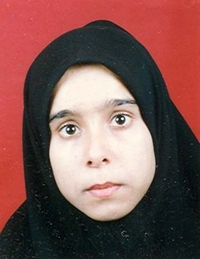 Matouri Zadeh is described by friends as a gentle and principled human rights activist. He was arrested in February along with his pregnant wife, 26 year old school teacher Fahima Ismaili Badawi (pictured). She gave birth to a baby girl named Salma in the notorious Sepidar Prison in March. Both mother and daughter have remained in prison, with intelligence officials putting pressure on Fahima to denounce her husband, divorce him and change the girl's name to a Persian one. She refused and was sentenced in June to 15 years imprisonment by Branch 3 of the Revolutionary court in Ahwaz City.
Amnesty International has suggested the mother and daughter were held to pressure Matouri Zadeh to confess to participating in bomb attacks ( click here for latest report ). Matouri Zadeh's "confession" was probably intended to save his wife and daughter's lives, but has also vindicated the regime's violent clamp-down on Ahwazi Arab reformist groups such as Wefaq.
Nasser Bani Assad, spokesman for the British Ahwazi Friendship Society (BAFS), said: "These men were innocent. The European Parliament, members of the British parliament and international human rights organisations agree that they were not granted a fair trial. The charges against them were false, they were denied access to lawyers and their trials were held in secret revolutionary courts. Despite all evidence that this was a miscarriage of justice, the regime went ahead and killed three innocent Ahwazi men with a further 11 men set to be executed in coming days and weeks.
"The executions are intended to intimidate, terrorise and collectively punish Ahwazi Arabs for daring to speak up against the regime's ethnic cleansing programme in the Ahwazi homeland. This programme of ethnic restructuring involves forced relocation, land confiscation, the elimination of local Arab language and heritage and institutionalised racial discrimination. The regime wants the resources of the Ahwazi homeland and is deliberately impoverishing them and denying them their birthright.
"We call on the international community - particularly the Arab League - to impose direct sanctions on Iran's religious and political elites, including the freezing of financial assets that are held in offshore bank accounts and are used finance terrorism. The wealth of the mullahs comes from the oil-rich and fertile land stolen from the Ahwazi Arabs. They must be denied access to profits made from the slaughter, persecution and impoverishment of Ahwazi Arabs."
Labels: death penalty , human rights
permalink
keywords: ahvaz ahwaz ahwazi arabistan khuzestan khuzistan khuzestani arab arabistan iran iranian human rights security oil news ahmadinejad ethnic cleansing
.......................................................................................
20 December, 2006
 The Iranian regime has defied the UN General Assembly, the European Parliament and Iranian and international human rights organisations and has begun its campaign of mass executions of Ahwazi Arab opposition activists.
The Khuzestan branch of the Iranian Students News Agency (ISNA) has reported that three Ahwazi Arabs have been executed for "waging war on God" ( click here for ISNA article ). ISNA did not name the men and it is believed that the executions were carried out in prison. A further 11 Ahwazis are awaiting execution following trials that were condemned by the European Parliament in a unanimous resolution in November ( click here for details ) as well as 48 British MPs who signed an Early Day Motion ( click here to download the EDM ).
The regime broadcast videos of forced confessions of 11 Ahwazi Arabs on Khuzestan TV in early November ( click here for more information ), but delayed the executions due to international outrage and municipal elections. Today's execution of the three men comes just two days after the results of the Ahwaz municipal and Assembly of Experts elections, which were affected by a mass boycott and the defeat of pro-Ahmadinejad supporters.
The men were convicted following one-day trials in closed sessions of the Revolutionary Court in Ahwaz, with little or no access to lawyers and after being tortured into giving confessions. In some cases, family members were held in custody to put pressure on the men to confess.
Ali Matourizadeh, a founding member of the Lejnat Al-Wefaq (Reconciliation Committee), an Arab group that won control of Ahwaz City Council in the 2003 municipal elections but has subsequently been banned, was among those sentenced to hang. His wife was taken into custody when eight months pregnant and gave birth to a girl called Salma while in prison in March. She was instructed by the regime to denounce and divorce her husband and change the baby's name to a Persian name, but she refused the regime's demands. Both mother and daughter remain in prison.
Labels: death penalty , human rights
permalink
keywords: ahvaz ahwaz ahwazi arabistan khuzestan khuzistan khuzestani arab arabistan iran iranian human rights security oil news ahmadinejad ethnic cleansing
.......................................................................................
07 December, 2006
 The Chair of the British Parliament's Intelligence and Security Committee, Paul Murphy, has signed a parliamentary Early Day Motion (EDM) condemning Iran's persecution of Ahwazi Arabs. Mr Murphy, a former government minister, heads the powerful parliamentary committee which oversees the administration and policies of the
MI6
,
MI5
and
GCHQ
.
The Chair of the British Parliament's Intelligence and Security Committee, Paul Murphy, has signed a parliamentary Early Day Motion (EDM) condemning Iran's persecution of Ahwazi Arabs. Mr Murphy, a former government minister, heads the powerful parliamentary committee which oversees the administration and policies of the
MI6
,
MI5
and
GCHQ
.
The EDM, which is a non-binding declaration by the legislature, was drafted by Labour MP Chris Bryant and has so far attracted the support of 47 MPs from across the political spectrum. Leading members of the Socialist Campaign Group of Labour MPs have also backed the EDM, including Labour leadership candidate John McDonnell.
The EDM states that "this House notes the long-running persecution of the Ahwazi Arabs" by the Iranian regime and condemns the planned execution of 10 Ahwazi Arabs. It "supports Amnesty International and Human Rights Watch in their complaints that Iranian justice has meant that many Ahwazi Arab defendants have had no opportunity to meet their lawyers before their case has begun, have had one-day trials in secret with no witnesses and have had false confessions extracted through torture; and calls on the Iranian Government to respect the human rights of all its peoples and to commute the death penalty in these cases."
Commenting on the victimisation of Iran's Arab minority, Mr Bryant said: "Iran's human rights record is pretty grisly on a wide range of issues, but the Ahwazi Arabs have suffered more than most from the authorities in Tehran.
"Of course Britain should try to have a good relationship with Iran, but it must be on the basis of an honest criticism of their human rights abuses.
"The widespread use of torture to extract so-called confessions, the refusal to allow defendants to have proper consultations with their lawyers before a trial begins, and the fact that many trials last less than a day and have no witnesses, means that many of these convictions would be considered completely unsound in any civilised country.
"I very much hope that the UK and the European Union will call on Iran to commute the death sentences," said Mr Bryant.
John McDonnell told the British Ahwazi Friendship Society (BAFS): "We all have a responsibility to stand up to protect the human rights and security of all those who are at risk. It is for this reason that I join many elected representatives drawn from across the world in calling for the rights of Ahwazi Arabs to be respected and for a halt to the threatened executions."
The EDM follows a successful move by British Green MEPs Caroline Lucas and Jean Lambert to secure unanimous cross-party condemnation in the European Parliament of the planned execution of the 11 Ahwazi activists on 16 November. This was followed on 21 November by a Canadian sponsored UN General Assembly resolution that condemned Iran's "increasing discrimination and other human rights violations against ethnic and religious minorities" and its "persistent failure in Iran to comply fully with international standards in the administration of justice - including the absence of due process of law, the refusal to provide fair and public hearings, and the denial of the right to counsel by detainees."
Related stories: :
British Anti-War MPs condemn Iran's persecution of Ahwazi Arabs - 5 December
British Foreign Minister condemns Iran's treatment of Ahwazis facing execution - 28 November
British MPs condemn Ahwazi trials - 28 November
UN General Assembly Criticises Iran's Discrimination of Minorities - 23 November
Swedish MPs appeal to Ahmadinejad over executions - 19 November
European Parliament condemns Iran over Ahwazi executions - 16 November
Senior European Parliamentarian condemns Iran's ethnic cleansing - 14 November
"Iran is guilty of ethnic cleansing" - Green MEPs - 14 November
Labels: death penalty , UK
permalink
keywords: ahvaz ahwaz ahwazi arabistan khuzestan khuzistan khuzestani arab arabistan iran iranian human rights security oil news ahmadinejad ethnic cleansing
.......................................................................................
04 December, 2006
Iran's President Mahmoud Ahmadinejad's attempts to generate support among critics of Western foreign policy are foundering due to growing concern over his government's treatment of Ahwazi Arabs.
Leading British anti-war MPs have signed an Early Day Motion criticising the Iranian regime's treatment of Ahwazi Arabs and calling for a halt to the execution of a number of Ahwazi men. The EDM, which has so far attracted the support of 42 MPs, notes "the long-running persecution of the Ahwazi Arabs in the south west Khuzestan region of Iran by the authorities in Tehran" and condemns the planned mass execution of Ahwazi Arabs. It also backs complaints by Amnesty International and Human Rights Watch "that Iranian justice has meant that many Ahwazi Arab defendants have had no opportunity to meet their lawyers before their case has begun, have had one-day trials in secret with no witnesses and have had false confessions extracted through torture." ( click here to view the EDM text in full )
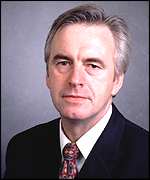 One of the signatories, John McDonnell (pictured), a left-wing MP who plans to stand for the Labour leadership when Tony Blair annouces his resignation, told the British Ahwazi Friendship Society (BAFS): "We all have a responsibility to stand up to protect the human rights and security of all those who are at risk. It is for this reason that I join many elected representatives drawn from across the world in calling for the rights of Ahwazi Arabs to be respected and for a halt to the threatened executions."
He is among eight members of the Socialist Campaign Group of left-wing Labour MPs who are supporting the EDM, along with Welsh nationalist Elfyn Llwyd and two members of Northern Ireland's Social Democratic and Labour Party who are also strong critics of Western foreign policy in the Middle East. The Green Party of England and Wales, which is affiliated to the Stop the War Coalition, has also criticised the treatment of Ahwazis. Last month Green MEPs Caroline Lucas - who is a Vice-President of the Stop the War Coalition - and Jean Lambert accused the Iranian regime of operating a policy of ethnic cleansing against Ahwazi Arabs ( click here for further details ). The Greens backed a cross-party European Parliament resolution condemning the planned executions.
BAFS Chairman Daniel Brett said: "The Ahwazi cause is often portrayed by the Iranian regime as part of a Western imperialist conspiracy to divide Iran and that Ahwazi Arabs are united behind President Ahmadinejad. However, even those opposed to Western military intervention in the Middle East are now highly critical of the persecution of Ahwazi Arabs.
"The regime cannot assume that it has the moral support of critics of Western foreign policy. The world is united in its condemnation of Iran's atrocious human rights violations, with the UN General Assembly strongly criticising the government's record.
"If the Iranian government wants to prove its critics wrong, then it must release all political prisoners, stop its campaign of executions, allow people to exercise their right to speech and freedom of association, halt the land confiscation programmes and end the persecution of women and minority groups."
Eleven Ahwazi Arabs are facing execution. They are:
1. Ali Mutairi from Mashour (Mahshahr)
2. Khalaf Khazeiri from Falahiyah (Shadegan)
3. Mohamad Chaab Pour from Tostar (Shoushtar)
4. Abdullah Farajulaah Chab from Tostar (Shoushtar)
5. Abdullah Solimani from Tostar (Shoushtar)
6. Majed Albu Ghubaish from Mashour (Mahshahr)
7. Ali Reza Asakre from Falahiyah (Shadegan)
8. Ghasem Salamat from Ahwaz City
9. Abdul Reza Sanawati from Ahwaz City
10. Saeed Hemidan from Khalafiyah (Ramshir)
11. Malek Banitamim from Tostar (Shoushtar)
The executions were due to take place on 14 November, but foreign governments have lobbied intensively to save the men's lives. On 16 November, the European Parliament voted unanimously to condemn the executions and on 21 November the UN General Assembly condemned Iran's justice system and the continued persecution of ethnic minority groups ( click here for details ).
Related stories: :
British Foreign Minister condemns Iran's treatment of Ahwazis facing execution - 28 November
British MPs condemn Ahwazi trials - 28 November
Executions of 11 Ahwazis Delayed - 23 November
UN General Assembly Criticises Iran's Discrimination of Minorities - 23 November
Ahwazis and Balochis demonstrate against Iran regime - 19 November
Swedish MPs appeal to Ahmadinejad over executions - 19 November
UNPO Continues Appeal to Halt Executions of Ahwazi Arabs in Iran - 19 November
Iran sentences three more Ahwazis to death - 18 November
European Parliament condemns Iran over Ahwazi executions - 16 November
"The barbaric deaths meant to spread fear" - Daily Mail - 16 November
Balochis and Azeris rally against Iran's executions - 16 November
Iran: Flawed trials and injustice - 15 November
Ahwazi men "confess" to belonging to obscure militant group - 15 November
UNPO Call to Stop Public Executions of Ahwazi Arabs in Iran - 14 November
Senior European Parliamentarian condemns Iran's ethnic cleansing - 14 November
Eleventh Ahwazi added to the list of those facing execution - 14 November
"Iran is guilty of ethnic cleansing" - Green MEPs - 14 November
Iran regime shows forced "confessions" on Khuzestan TV - 13 November
Mass executions of Ahwazis threaten Middle East security - 12 November
Ten Ahwazi Arabs to hang in public - 11 November
Psychologist sentenced to 20 years imprisonment - 18 October
"27 Ahwazi dissidents in custody" - Emadeddin Baghi - 9 September
Death sentence for Ahwazis confirmed by Supreme Court - 31 July
Son of Ahwazi sentenced to death appeals to Kofi Annan - 27 July
Urgent Appeal to EU Foreign Affairs Chief over Iran Executions - 11 July
Iran: Retry Ethnic Arabs Condemned to Death - 24 June
UNPO Urgent Appeal Concerning Ahwazi Executions
Ahwazis face arrest, deportation and execution - 1 June
Amnesty International: Eleven Ahwazis Face Execution - 17 May
Iran prepares for new round of executions in Ahwaz - 13 May
Executed: Young Men Hung by Iranian Tyrants - 2 March
Iran prepares to execute tribal family - 19 February
Iran sentences seven over Ahwaz bombings - 15 February
Labels: death penalty , UK
permalink
keywords: ahvaz ahwaz ahwazi arabistan khuzestan khuzistan khuzestani arab arabistan iran iranian human rights security oil news ahmadinejad ethnic cleansing
.......................................................................................
27 November, 2006
 British Foreign Minister Kim Howells has voiced his opposition to the planned execution of Ahwazi Arabs, who were convicted of "waging war on God" in Iran's secret revolutionary court in Ahwaz City (
click here for his full response
).
British Foreign Minister Kim Howells has voiced his opposition to the planned execution of Ahwazi Arabs, who were convicted of "waging war on God" in Iran's secret revolutionary court in Ahwaz City (
click here for his full response
).
In a reply to a written question by Conservative MP Graham Stuart, Mr Howells, Minister of State with responsibility for the Middle East portfolio, said that the UK government had "closely monitored" the cases of 11 men facing execution. He said: "We oppose and condemn the death penalty in all its forms. In this case, we have specific concerns about the conduct of the trial including whether it was held secretly behind closed doors; whether a jury was present; and whether the defendants had adequate access to lawyers before the trial.
"The presidency of the EU raised our concerns about this case with the Director General of the International Department of the Judiciary on 20 November and highlighted the EU's longstanding objection to the death penalty in all its forms. We will continue to monitor this case closely with EU colleagues."
Mr Howells' condemnation coincides with an Early Day Motion (EDM) in the House of Commons condemning the trials and executions ( click here for more information ). The EDM was drafted by Labour MP Chris Bryant and supported by MPs across the political spectrum, from Jeremy Corbyn on the left to Michael Gove on the right. It follows a successful move by British Green MEPs Caroline Lucas and Jean Lambert to secure unanimous cross-party condemnation in the European Parliament of the planned execution of the 11 Ahwazi activists on 16 November ( click here for further details ). On 21 November the UN General Assembly approved a Canadian-sponsored motion condemning Iran's "increasing discrimination and other human rights violations against ethnic and religious minorities" and its "persistent failure in Iran to comply fully with international standards in the administration of justice - including the absence of due process of law, the refusal to provide fair and public hearings, and the denial of the right to counsel by detainees." ( click here for further information )
Related stories: :
British MPs condemn Ahwazi trials - 28 November
Executions of 11 Ahwazis Delayed - 23 November
UN General Assembly Criticises Iran's Discrimination of Minorities - 23 November
Ahwazis and Balochis demonstrate against Iran regime - 19 November
Swedish MPs appeal to Ahmadinejad over executions - 19 November
UNPO Continues Appeal to Halt Executions of Ahwazi Arabs in Iran - 19 November
Iran sentences three more Ahwazis to death - 18 November
European Parliament condemns Iran over Ahwazi executions - 16 November
"The barbaric deaths meant to spread fear" - Daily Mail - 16 November
Balochis and Azeris rally against Iran's executions - 16 November
Iran: Flawed trials and injustice - 15 November
Ahwazi men "confess" to belonging to obscure militant group - 15 November
UNPO Call to Stop Public Executions of Ahwazi Arabs in Iran - 14 November
Senior European Parliamentarian condemns Iran's ethnic cleansing - 14 November
Eleventh Ahwazi added to the list of those facing execution - 14 November
"Iran is guilty of ethnic cleansing" - Green MEPs - 14 November
Iran regime shows forced "confessions" on Khuzestan TV - 13 November
Mass executions of Ahwazis threaten Middle East security - 12 November
Ten Ahwazi Arabs to hang in public - 11 November
Psychologist sentenced to 20 years imprisonment - 18 October
"27 Ahwazi dissidents in custody" - Emadeddin Baghi - 9 September
Death sentence for Ahwazis confirmed by Supreme Court - 31 July
Son of Ahwazi sentenced to death appeals to Kofi Annan - 27 July
Urgent Appeal to EU Foreign Affairs Chief over Iran Executions - 11 July
Iran: Retry Ethnic Arabs Condemned to Death - 24 June
UNPO Urgent Appeal Concerning Ahwazi Executions
Ahwazis face arrest, deportation and execution - 1 June
Amnesty International: Eleven Ahwazis Face Execution - 17 May
Iran prepares for new round of executions in Ahwaz - 13 May
Executed: Young Men Hung by Iranian Tyrants - 2 March
Iran prepares to execute tribal family - 19 February
Iran sentences seven over Ahwaz bombings - 15 February
Iran increases repression in Ahwaz - 8 February
Ahwaz Bombings Come After Weeks of Unrest - 24 January
Labels: death penalty , UK
permalink
keywords: ahvaz ahwaz ahwazi arabistan khuzestan khuzistan khuzestani arab arabistan iran iranian human rights security oil news ahmadinejad ethnic cleansing
.......................................................................................
Thirty-three British MPs, from Labour, Conservative, Liberal Democrat, Plaid Cymru (Party of Wales) and Northern Ireland's Social Democrat and Labour Party, have signed an Early Day Motion condemning as unfair the recent trials of 10 Ahwazi Arab rights activists (
click here for EDM text
). They are calling on the Iranian government to commute the death sentences. Since the EDM was submitted, a further five Ahwazi activists are known to have been sentenced to death and many more are awaiting trial.
The EDM was drafted by Labour MP Chris Bryant and supported by MPs across the political spectrum, from Jeremy Corbyn on the left to Michael Gove on the right. It follows a successful move by British Green MEPs Caroline Lucas and Jean Lambert to secure unanimous cross-party condemnation in the European Parliament of the planned execution of the 11 Ahwazi activists on 16 November ( click here for further details ). This was followed on 21 November by a Canadian sponsored UN General Assembly resolution that condemned Iran's "increasing discrimination and other human rights violations against ethnic and religious minorities" and its "persistent failure in Iran to comply fully with international standards in the administration of justice - including the absence of due process of law, the refusal to provide fair and public hearings, and the denial of the right to counsel by detainees." ( click here for further information )
Commenting on the victimisation of Iran's Arab minority, Mr Bryant said: "Iran's human rights record is pretty grisly on a wide range of issues, but the Ahwazi Arabs have suffered more than most from the authorities in Tehran.
"Of course Britain should try to have a good relationship with Iran, but it must be on the basis of an honest criticism of their human rights abuses.
"The widespread use of torture to extract so-called confessions, the refusal to allow defendants to have proper consultations with their lawyers before a trial begins, and the fact that many trials last less than a day and have no witnesses, means that many of these convictions would be considered completely unsound in any civilised country.
"I very much hope that the UK and the European Union will call on Iran to commute the death sentences," said Mr Bryant.
Daniel Brett, Chairman of the British Ahwazi Friendship Society, said: "The Ahwazi community, particularly the families of those facing execution, will be thankful of the international solidarity with the men on trial and the efforts of British politicians such as Chris Bryant, Caroline Lucas and Jean Lambert to campaign on their behalf. The solidarity shown by the British and European Parliaments and the UN General Assembly has given Ahwazis a sense of hope and optimism, showing that there is an alternative to armed conflict to advance their campaign for equality, freedom and justice.
"It was widely expected that the death sentences would be carried out two weeks ago, following forced confessions by the 11 Ahwazi human rights activists on Khuzestan TV. However, there appears to be a delay. We hope that this is in response to international and domestic pressure and that the government is considering either commuting the death penalties, ordering a retrial that meets international standards and Iran's own obligations, or that the men will be set free.
"No country's judicial system is perfect. But in Iran's case, these miscarriages of justice appear to be the result of political interference at the highest level. Is the Iranian government strong and confident enough to admit the mistakes in these cases? It will certainly prove its critics wrong if it does."
The following is the text of the Early Day Motion in the House of Commons:
EDM 128 EXECUTION OF AHWAZI ARABS
16.11.2006
Moved by Chris Bryant, MP
That this House notes the long-running persecution of the Ahwazi Arabs in the south west Khuzestan region of Iran by the authorities in Tehran; further notes that 10 Ahwazi Arabs named Ali Motairi, Abdullah Solaimani, Abdulreza Sanawati (Zergani), Ghasem Salamat, Mohamad Chaab Pour, Abdulamir Farajullah Chaab, Alireza Asakreh, Majed Alboghubaish, Khalaf Khaziri and Malek Banitamim have been sentenced to death; supports Amnesty International and Human Rights Watch in their complaints that Iranian justice has meant that many Ahwazi Arab defendants have had no opportunity to meet their lawyers before their case has begun, have had one-day trials in secret with no witnesses and have had false confessions extracted through torture; and calls on the Iranian Government to respect the human rights of all its peoples and to commute the death penalty in these cases.
Signatories:
Chris Bryant (Labour)
Michael Gove (Conservative)
Bob Russell (Liberal Democrat)
Peter Bottomley (Conservative)
Andrew George (Liberal Democrat)
David Drew (Labour)
Mark Durkan (Social Democrat and Labour Party)
Robert N Wareing (Labour)
Stephen Williams (Liberal Democrat)
Greg Pope (Labour)
Kelvin Hopkins (Labour)
Lynne Jones (Labour)
Elfyn Llwyd (Plaid Cymru - Party of Wales)
Albert Owen (Labour)
Derek Conway (Conservative)
Jeremy Corbyn (Labour)
Mark Williams (Liberal Democrat)
Bob Spink (Conservative)
Nick Harvey (Liberal Democrat)
Mark Lazarowicz (Labour)
Alasdair McDonnell (Social Democratic and Labour Party)
Tom Brake (Liberal Democrat)
Colin Breed (Liberal Democrat)
Martin Caton (Labour)
Derek Wyatt (Labour)
Edward Vaizey (Conservative)
Julie Morgan (Labour)
Evan Harris (Liberal Democrat)
Brian Jenkins (Labour)
Ann Cryer (Labour)
Janet Dean (Labour)
Neil Gerrard (Labour)
John Hemming (Liberal Democrat)
Related stories: :
Executions of 11 Ahwazis Delayed - 23 November
UN General Assembly Criticises Iran's Discrimination of Minorities - 23 November
Ahwazis and Balochis demonstrate against Iran regime - 19 November
Swedish MPs appeal to Ahmadinejad over executions - 19 November
UNPO Continues Appeal to Halt Executions of Ahwazi Arabs in Iran - 19 November
Iran sentences three more Ahwazis to death - 18 November
European Parliament condemns Iran over Ahwazi executions - 16 November
"The barbaric deaths meant to spread fear" - Daily Mail - 16 November
Balochis and Azeris rally against Iran's executions - 16 November
Iran: Flawed trials and injustice - 15 November
Ahwazi men "confess" to belonging to obscure militant group - 15 November
UNPO Call to Stop Public Executions of Ahwazi Arabs in Iran - 14 November
Senior European Parliamentarian condemns Iran's ethnic cleansing - 14 November
Eleventh Ahwazi added to the list of those facing execution - 14 November
"Iran is guilty of ethnic cleansing" - Green MEPs - 14 November
Iran regime shows forced "confessions" on Khuzestan TV - 13 November
Mass executions of Ahwazis threaten Middle East security - 12 November
Ten Ahwazi Arabs to hang in public - 11 November
Psychologist sentenced to 20 years imprisonment - 18 October
"27 Ahwazi dissidents in custody" - Emadeddin Baghi - 9 September
Death sentence for Ahwazis confirmed by Supreme Court - 31 July
Son of Ahwazi sentenced to death appeals to Kofi Annan - 27 July
Urgent Appeal to EU Foreign Affairs Chief over Iran Executions - 11 July
Iran: Retry Ethnic Arabs Condemned to Death - 24 June
UNPO Urgent Appeal Concerning Ahwazi Executions
Ahwazis face arrest, deportation and execution - 1 June
Amnesty International: Eleven Ahwazis Face Execution - 17 May
Iran prepares for new round of executions in Ahwaz - 13 May
Executed: Young Men Hung by Iranian Tyrants - 2 March
Iran prepares to execute tribal family - 19 February
Iran sentences seven over Ahwaz bombings - 15 February
Iran increases repression in Ahwaz - 8 February
Ahwaz Bombings Come After Weeks of Unrest - 24 January
Labels: death penalty , UK
permalink
keywords: ahvaz ahwaz ahwazi arabistan khuzestan khuzistan khuzestani arab arabistan iran iranian human rights security oil news ahmadinejad ethnic cleansing
.......................................................................................
22 November, 2006
Iran appears to have delayed the execution of 11 Ahwazi Arabs, whose forced confessions were shown on Khuzestan TV last week.
The 11 men are:
1. Ali Mutairi from Mashour (Mahshahr)
2. Khalaf Khazeiri from Falahiyah (Shadegan)
3. Mohamad Chaab Pour from Tostar (Shoushtar)
4. Abdullah Farajulaah Chab from Tostar (Shoushtar)
5. Abdullah Solimani from Tostar (Shoushtar)
6. Majed Albu Ghubaish from Mashour (Mahshahr)
7. Ali Reza Asakre from Falahiyah (Shadegan)
8. Ghasem Salamat from Ahwaz City
9. Abdul Reza Sanawati from Ahwaz City
10. Saeed Hemidan from Khalafiyah (Ramshir)
11. Malek Banitamim from Tostar (Shoushtar)
They were all convicted of threatening national security and "waging war on God" after one-day closed trials in which they had little or no access to lawyers. They are widely believed to have been framed for bomb attacks on oil pipelines in 2005 - had been in prison since 2000 - which the regime has blamed on the obscure dissident group, the Mohi-eldain Al-Nasir Martyrs Brigade.
The executions were due to take place on 14 November, but foreign governments have lobbied intensively to save the men's lives. On 16 November, the European Parliament voted unanimously to condemn the executions and on 21 November the UN General Assembly condemned Iran's justice system and the continued persecution of ethnic minority groups ( click here for details ).
The delay in executions is unofficial and the death sentences have not been commuted. It is thought that the executions will be carried out after Bashar Assad's visit to Tehran this weekend, in order to prevent embarrassment for the Syrian leader whose Ba'athist government was founded on the principles of pan-Arab unity.
Related stories: :
UN General Assembly Criticises Iran's Discrimination of Minorities - 23 November
Ahwazis and Balochis demonstrate against Iran regime - 19 November
Swedish MPs appeal to Ahmadinejad over executions - 19 November
UNPO Continues Appeal to Halt Executions of Ahwazi Arabs in Iran - 19 November
Iran sentences three more Ahwazis to death - 18 November
European Parliament condemns Iran over Ahwazi executions - 16 November
"The barbaric deaths meant to spread fear" - Daily Mail - 16 November
Balochis and Azeris rally against Iran's executions - 16 November
Iran: Flawed trials and injustice - 15 November
Ahwazi men "confess" to belonging to obscure militant group - 15 November
UNPO Call to Stop Public Executions of Ahwazi Arabs in Iran - 14 November
Senior European Parliamentarian condemns Iran's ethnic cleansing - 14 November
Eleventh Ahwazi added to the list of those facing execution - 14 November
"Iran is guilty of ethnic cleansing" - Green MEPs - 14 November
Iran regime shows forced "confessions" on Khuzestan TV - 13 November
Mass executions of Ahwazis threaten Middle East security - 12 November
Ten Ahwazi Arabs to hang in public - 11 November
Psychologist sentenced to 20 years imprisonment - 18 October
"27 Ahwazi dissidents in custody" - Emadeddin Baghi - 9 September
Death sentence for Ahwazis confirmed by Supreme Court - 31 July
Son of Ahwazi sentenced to death appeals to Kofi Annan - 27 July
Urgent Appeal to EU Foreign Affairs Chief over Iran Executions - 11 July
Iran: Retry Ethnic Arabs Condemned to Death - 24 June
UNPO Urgent Appeal Concerning Ahwazi Executions
Ahwazis face arrest, deportation and execution - 1 June
Amnesty International: Eleven Ahwazis Face Execution - 17 May
Iran prepares for new round of executions in Ahwaz - 13 May
Executed: Young Men Hung by Iranian Tyrants - 2 March
Iran prepares to execute tribal family - 19 February
Iran sentences seven over Ahwaz bombings - 15 February
Iran increases repression in Ahwaz - 8 February
Ahwaz Bombings Come After Weeks of Unrest - 24 January
Labels: death penalty
permalink
keywords: ahvaz ahwaz ahwazi arabistan khuzestan khuzistan khuzestani arab arabistan iran iranian human rights security oil news ahmadinejad ethnic cleansing
.......................................................................................
19 November, 2006
 Swedish members of parliament have stepped up pressure on Iranian President Mahmoud Ahmadinejad to halt the executions of Ahwazi Arabs.
Egon Frid and Siv Holma of the Left Party, Helena Leander of the Green Party and Fredrik Malm of the Liberal Party voiced their concern over imminent execution of Ahwazi Arabs named in a motion passed by the European Parliament on Thursday ( click here for details ). In the letter, they reiterate statements by Amnesty International and other international and Iranian human rights organizations that the trials were deeply flawed and that "all the evidence points to their innocence."
"All 10 men were tortured into making false confessions," the Swedish MPs add in their letter. "Their lawyers were not allowed to see them prior to their trial and they were given the prosecution case only hours before the start of the trial, which was held in secret. The lawyers for the condemned men have been arrested for complaining about the illegal and unjust nature of the men's trials. They have been charged with threatening national security."
They contrast the Ahwazi region's oil-rich with the "extreme levels of poverty, unemployment and illiteracy" suffered by the indigenous inhabitants. "Ahwazis are subjected to repression, racial discrimination and faced with land confiscation, forced displacement and forced assimilation," they say. "The convictions are evidently arbitrary and are intended to collectively punish Ahwazi Arabs for opposing the system of apartheid that they are subjected to."
They have also pledged to ensure that the EU and European governments will continue to follow the situation of the Ahwazi Arabs in the future.
Labels: death penalty , EU
permalink
keywords: ahvaz ahwaz ahwazi arabistan khuzestan khuzistan khuzestani arab arabistan iran iranian human rights security oil news ahmadinejad ethnic cleansing
.......................................................................................
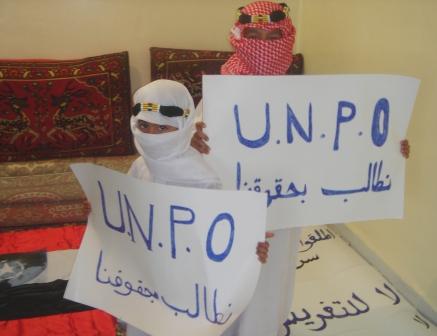 The following is a statement from the Unrepresented Nations and Peoples Organisation (UNPO) -
click here to download the original
.
The following is a statement from the Unrepresented Nations and Peoples Organisation (UNPO) -
click here to download the original
.
UNPO remains deeply concerned about the fate of the 10 ethnic Ahwazi-Arab activists recently sentenced to death by Iranian Courts, as well as an eleventh activist also to be hanged, but without formal trial or sentencing.
The European Parliament yesterday expressed also their concern, adopting a resolution which calls for an immediate halt to their executions, as well as the release of all other prisoners of conscience, many of whom are at present languishing without trial in Iranian jails. The resolution also expresses a broader concern with the treatment of minorities within Iran, many of whom are UNPO Members, as well as the prevalence and methods of execution used as a means to silence political opposition.
The Resolution in Full
The 10 men, Ali Motairi, Abdullah Solaimani, Abdulreza Sanawati (Zergani), Ghasem Salamat, Mohamad Chaab Pour, Abdulamir Farajullah Chaab, Alireza Asakreh, Majed Alboghubaish, Khalaf Khaziri, Malek Banitamim, were all found guilty of charges relating initially to an incident of terrorism, and later to Mohareb (enmity with God), in secret one-day trials which have received extensive international condemnation. Both Amnesty International and Human Rights Watch have indicated also a general concern with the fairness of any trail involving Ahwazi-Arabs in Iran.
In addition to having their trials conducted in secret, the defendants were not permitted to meet with their lawyers, several of whom have also been arrested following their complaints over the fairness of the proceedings. There are also reports suggesting that the defendants were tortured during detention, and forced to make confessions later broadcasted on Iranian television. It was the televised confession of the untried eleventh individual, Mr. Saeed Hamedan, which indicated he is also to be amongst the executed.
As international leaders consider the potential benefits of softening their stance and increasing cooperation with the Iranian Regime, UNPO is part of the growing number of politicians, international institutions, and members of civil society demanding Iran commute the death sentences of the 11 men, as well as cease entirely in their use of the death sentence as a means of punishing political activists.
UNPO has issued appeals to Philip Alston, the United Nations' (UN) Special Rapporteur on Extrajudicial, Summary, or Arbitrary Executions, and Mrs. Louise Arbour, the UN High Commissioner for Human Rights. The Ahwaz Human Rights Organization (AHRO) has also issued appeals to several MEPs; Hon. Ms. Angelika Beer, Chairwoman of the Iran Delegation in the European Parliament; Hon. Mr. Josep Borrell Fontelles, President of the European Parliament, Member of European Parliament (MEP); Elmar Brok, Chair of the Foreign Affairs Committee; Helene Flautre; Paolo Casaca; and Baroness Nicholson of Winterbourne.
British and European Parliamentary members contacted by the British Ahwazi Friendship Society (BAFS), including Chris Bryant MP and Michael Gove MP, joined by Green Party MEPs Caroline Lucas and Jean Lambert, have also called on UN Secretary General Mr. Annan, as well as a range of senior EU and UN leaders, to step in and demand Tehran commutes the death sentences.
Their calls will be echoed this weekend, when a number of Ahwazi and Azeri groups will be joined also by UNPO Member from Balochistan to protest outside the Iranian Embassy in London. International Media are also sure also to support the gathering, featuring a number of prominent articles, such as in; The Guardian (UK) and The Daily Mail (UK).
UNPO remains deeply concerned about the imminent executions and the ongoing situation for Ahwazi Arabs in Iran, and will continue to appeal for:
- Iran to stop the execution of the 11 convicted men and grant fair trials to the 19 men convicted of the bombing;
- The Iranian government to cease its execution of Ahwaz Arabs for peaceful protest; and
- Iran to address the issue of unfair trials and extrajudicial and summary executions of the indigenous Ahwaz Arab people.
Related links
Appeal to UN Secretary General Kofi Annan
Information about Protest in London
Article in The Guardian (UK)
Labels: activism , death penalty , human rights
permalink
keywords: ahvaz ahwaz ahwazi arabistan khuzestan khuzistan khuzestani arab arabistan iran iranian human rights security oil news ahmadinejad ethnic cleansing
.......................................................................................
17 November, 2006
The Iranian regime has sentenced three more Ahwazi Arabs to death, despite condemnation over planned execution of 11 Ahwazis.
The three - Abdul Housain Haribi, Housain Maramazi and Housain Asakre - were sentenced to hang by a one-day closed trial at the Revolutionary Court in Falahiyah (Shadegan) on Thursday. They were accused of bombing oil pipelines in the Al-Ahwaz region, which produces 90 per cent of Iran's oil output. The trials of Ahwazi Arabs have been mired in controversy, with complaints from human rights organisations of political interference in the judicial process, lack of access to lawyers, torture and televised forced confessions.
The European Parliament voted unanimously to condemn the imminent execution of 11 Ahwazi Arabs by the Iranian regime in a motion supported by all political groups. The motion highlighted the Iranian regime's discrimination against ethnic minorities, particularly the Ahwazi Arabs who are "being displaced from their villages according to statements by Miloon Kothari, UN Special Rapporteur on Adequate Housing, while some of them remain in detention or have been sentenced to death."
It "condemns the current disrespect of minority rights and demands that minorities be allowed to exercise all rights granted by the Iranian Constitution and international law" and "calls upon the authorities to eliminate all forms of discrimination based on religious or ethnic grounds or against persons belonging to minorities, such as Kurds, Azeris, Arabs and Baluchis."
Iran's defiance of the European Parliament's condemnation is likely to sour EU relations with Iran. The mass executions of Ahwazi Arabs have focused attention on the regime's violent racism, with the campaign for a halt in executions gathering pace. The Finnish government - which currently holds the EU presidency - is reportedly preparing to take up the matter of executions of Ahwazis with the Iranian government on behalf of the EU.
Related stories: :
European Parliament condemns Iran over Ahwazi executions - 16 November
"The barbaric deaths meant to spread fear" - Daily Mail - 16 November
Balochis and Azeris rally against Iran's executions - 16 November
Iran: Flawed trials and injustice - 15 November
Ahwazi men "confess" to belonging to obscure militant group - 15 November
UNPO Call to Stop Public Executions of Ahwazi Arabs in Iran - 14 November
Senior European Parliamentarian condemns Iran's ethnic cleansing - 14 November
Eleventh Ahwazi added to the list of those facing execution - 14 November
"Iran is guilty of ethnic cleansing" - Green MEPs - 14 November
Iran regime shows forced "confessions" on Khuzestan TV - 13 November
Mass executions of Ahwazis threaten Middle East security - 12 November
Ten Ahwazi Arabs to hang in public - 11 November
Psychologist sentenced to 20 years imprisonment - 18 October
"27 Ahwazi dissidents in custody" - Emadeddin Baghi - 9 September
Death sentence for Ahwazis confirmed by Supreme Court - 31 July
Son of Ahwazi sentenced to death appeals to Kofi Annan - 27 July
Urgent Appeal to EU Foreign Affairs Chief over Iran Executions - 11 July
Iran: Retry Ethnic Arabs Condemned to Death - 24 June
UNPO Urgent Appeal Concerning Ahwazi Executions
Ahwazis face arrest, deportation and execution - 1 June
Amnesty International: Eleven Ahwazis Face Execution - 17 May
Iran prepares for new round of executions in Ahwaz - 13 May
Executed: Young Men Hung by Iranian Tyrants - 2 March
Iran prepares to execute tribal family - 19 February
Iran sentences seven over Ahwaz bombings - 15 February
Iran increases repression in Ahwaz - 8 February
Ahwaz Bombings Come After Weeks of Unrest - 24 January
Labels: death penalty
permalink
keywords: ahvaz ahwaz ahwazi arabistan khuzestan khuzistan khuzestani arab arabistan iran iranian human rights security oil news ahmadinejad ethnic cleansing
.......................................................................................
16 November, 2006
 The European Parliament has condemned the imminent execution of 11 Ahwazi Arabs by the Iranian regime in a motion supported by all political groups.
The motion highlighted the Iranian regime's discrimination against ethnic minorities, particularly the Ahwazi Arabs who are "being displaced from their villages according to statements by Miloon Kothari, UN Special Rapporteur on Adequate Housing, while some of them remain in detention or have been sentenced to death."
It "condemns the current disrespect of minority rights and demands that minorities be allowed to exercise all rights granted by the Iranian Constitution and international law" and "calls upon the authorities to eliminate all forms of discrimination based on religious or ethnic grounds or against persons belonging to minorities, such as Kurds, Azeris, Arabs and Baluchis."
The motion also "calls on the Iranian authorities to immediately halt the imminent execution of the Arabs Abdullah Suleymani, Abdulreza Sanawati Zergani, Qasem Salamat, Mohammad Jaab Pour, Abdulamir Farjallah Jaab, Alireza Asakreh, Majed Alboghubaish, Khalaf Derhab Khudayrawi, Malek Banitamim, Sa'id Saki and Abdullah Al-Mansouri."
The vote of condemnation was supported by the Conservative, Socialist, Green, Liberal Democrat, Radical and Communist groups, representing the entire spectrum of political opinion in Europe. British Green MEPs Caroline Lucas and Jean Lambert have pushed the issue of Ahwazi Arab rights at the European Parliament and have strongly condemned the Iranian regime's violent persecution of minorities ( click here for further details ).
The European Parliament's unanimous censure of the Iranian regime's treatment of minorities will have a major impact on EU relations with Iran. The mass executions of Ahwazi Arabs have focused attention on the regime's violent racism, with the campaign for a halt in executions gathering pace. The Finnish government - which currently holds the EU presidency - is reportedly preparing to take up the matter of executions of Ahwazis with the Iranian government on behalf of the EU.
The lobbying effort in the UK has been intense. William Hague, the Shadow Foreign Secretary and former leader of the Conservative Party, met with Foreign Office officials yesterday to highlight concerns about the execution of Ahwazi Arabs. His office told the British Ahwazi Friendship Society that the officials "assured him that they are taking the case extremely seriously, and that the FCO regularly raises the issue of individual death sentences with the Iranian government. Mr Hague believes it is important that international condemnation of this case is heard in Tehran, and he will continue to follow the matter closely."
Labour MP Chris Bryant, a long-standing critic of Iran's atrocious human rights record, is preparing to table an Early Day Motion in the British parliament which will condemn Iran's mass execution of Ahwazis.
DEMONSTRATION AGAINST EXECUTIONS AND ETHNIC CLEANSING OF AHWAZI ARABS:
DATE: SATURDAY 18 NOVEMBER
TIME: 1PM-3PM
PLACE:
IRANIAN EMBASSY
PRINCE'S GATE
LONDON
NEAREST TUBE: SOUTH KENSINGTON
CLICK HERE FOR DIRECTIONS
Related stories: :
"The barbaric deaths meant to spread fear" - Daily Mail - 16 November
Balochis and Azeris rally against Iran's executions - 16 November
Iran: Flawed trials and injustice - 15 November
Ahwazi men "confess" to belonging to obscure militant group - 15 November
UNPO Call to Stop Public Executions of Ahwazi Arabs in Iran - 14 November
Senior European Parliamentarian condemns Iran's ethnic cleansing - 14 November
Eleventh Ahwazi added to the list of those facing execution - 14 November
"Iran is guilty of ethnic cleansing" - Green MEPs - 14 November
Iran regime shows forced "confessions" on Khuzestan TV - 13 November
Mass executions of Ahwazis threaten Middle East security - 12 November
Ten Ahwazi Arabs to hang in public - 11 November
Psychologist sentenced to 20 years imprisonment - 18 October
"27 Ahwazi dissidents in custody" - Emadeddin Baghi - 9 September
Death sentence for Ahwazis confirmed by Supreme Court - 31 July
Son of Ahwazi sentenced to death appeals to Kofi Annan - 27 July
Urgent Appeal to EU Foreign Affairs Chief over Iran Executions - 11 July
Iran: Retry Ethnic Arabs Condemned to Death - 24 June
UNPO Urgent Appeal Concerning Ahwazi Executions
Ahwazis face arrest, deportation and execution - 1 June
Amnesty International: Eleven Ahwazis Face Execution - 17 May
Iran prepares for new round of executions in Ahwaz - 13 May
Executed: Young Men Hung by Iranian Tyrants - 2 March
Iran prepares to execute tribal family - 19 February
Iran sentences seven over Ahwaz bombings - 15 February
Iran increases repression in Ahwaz - 8 February
Ahwaz Bombings Come After Weeks of Unrest - 24 January
Labels: death penalty , EU
permalink
keywords: ahvaz ahwaz ahwazi arabistan khuzestan khuzistan khuzestani arab arabistan iran iranian human rights security oil news ahmadinejad ethnic cleansing
.......................................................................................
The following is an article from the Daily Mail, one of the UK's most popular newspapers, on Iran's planned execution of 11 innocent Ahwazi Arabs for "waging war on God" -
click here to download the original
As Tony Blair warms to Iran, Tehran's hard-line Islamic regime is preparing to hoist 11 Iranian Arabs from cranes and slowly strangle them to death in public.
The men were convicted of involvement in a bombing spree after secret trials. But activists insist they are innocent and paying the price for merely hailing from the country's downtrodden Arab minority.
It is feared they could be hanged as early as today because their 'confessions' were broadcast on Iranian television on Monday night.
Two other ethnic Arabs were publicly hanged from a crane in March just two days after their heavily-edited 'confessions' were televised.
Public executions are not uncommon in the Islamic Republic. It carries out more every year than any country but China. Some are particularly gruesome.
The 11 were convicted for their alleged role in explosions that killed more than 20 people in Iran's oil-rich province of Khuzestan last year.
The slow strangulation method to be used on them is designed to maximise suffering. It prolongs the agony and 'intimidates the public', said Dr Karim Abdian, executive director of the Ahwaz Human Rights Organisation in Washington.
The 11 were due to be hanged in the city of Ahwaz, capital of Khuzestan, where ethnic Arabs are a majority.
Now it is believed the hangings will take place in several cities with largely Arab populations to spread the fear, said Dr Abdian.
The imminent executions are raising a storm of protest from British MPs. Human rights campaigner Peter Tatchell, backed by Labour MP Chris Bryant and Tory MP Michael Gove, is urging the Government to petition Iran to commute the executions. 'The men were tortured into giving false confessions,' said Mr Tatchell.
The sentences were imposed after trials behind closed doors which human rights groups say did not meet international standards. One of the condemned men was even in jail at the time of the bombings.
Iranian and foreign activists say the trials of the 11 were flawed, the charges baseless and the sentencing based on a spurious interpretation of the law.
'We've challenged the regime if they have any evidence whatsoever of any crime to show it and they haven't been able to show a shred of evidence,' said Dr Abdian.
The condemned men come from three groups, he added. Most are from a reformist ethnic Arab party whose goal is to win rights for Ahwazi Arabs through legal and constitutional means.
The peaceful group was banned last week after the Iranian judiciary accused it of inciting unrest and opposing the Islamic system.
Some are human rights activists and others 'are just professionals like engineers and doctors who have been picked just because they are smart people of the Arabs'.
Labels: death penalty , features
permalink
keywords: ahvaz ahwaz ahwazi arabistan khuzestan khuzistan khuzestani arab arabistan iran iranian human rights security oil news ahmadinejad ethnic cleansing
.......................................................................................
15 November, 2006
The following is an article by Peter Tatchell, which appeared on the Guardian's website today -
click here to download the original and participate in the on-line debate
.
The planned hanging of 11 activists in Iran look like a deliberate attempt by Tehran to intimidate and silence Ahwazi Arab protests.
This week, 11 Ahwazi Arab rights activists are scheduled to be hanged in Iran. They will by strung up by cranes in public squares, using the slow strangulation method, which is deliberately designed to maximise and prolong their suffering. This is "justice" in the Islamic Republic of Iran.
Instead of pressing President Ahmadinejad to commute these death sentences, Tony Blair seems more interested in enlisting Iran's help to get him and George Bush out of the mess in Iraq. Mr Blair's speech at the Guildhall on Monday night implored Tehran to stop supporting terrorism in Iraq and abide by its international obligations on nuclear non-proliferation. Not a word about Iran's duty to uphold international human rights laws.
Mr Blair may not care about human rights in Iran, but the international campaign against the execution of the 11 Arab activists is backed by Labour MP Chris Bryant, Conservative MP Michael Gove and Green MEPs Caroline Lucas and Jean Lambert.
The condemned men were found guilty of bombing oil installations in 2005. But no material evidence of their guilt was offered at their trial. In fact, all the evidence points to their innocence. Amnesty International and Human Rights Watch have repeatedly expressed serious concern about the fairness of trials involving Ahwazi Arabs and the safety of their convictions.
The men's lawyers were not allowed to see them prior to their trial and they were given the prosecution case only hours before the start of the court proceedings. The trials were held in secret. Witnesses for the defence were refused permission to testify. The lawyers for the condemned men were recently arrested for complaining about the illegal and unjust nature of the trials. They face charges of threatening national security.
Family members say the men sentenced to death were tortured into making false confessions, which were broadcast on Iranian television on Monday night. In a recent letter to the chief of the judiciary, Ayatollah Mahmoud Hashemi Shahroudi, one of Iran's leading human rights advocates, Emadeddin Baghi, said that the trials of Ahwazi Arabs were flawed, the charges baseless, and that the sentencing was based on a spurious interpretation of the law.
According to the Ahwazi Human Rights Organisation and the British-Ahwazi Friendship Society, these men have been framed as part of Tehran's on-going persecution of its Ahwazi Arab ethnic minority population in the south-west Iranian province of Khuzestan.
Ahwazi Arabs accuse Tehran of Persian chauvinism, racism and ethnic cleansing, as I recently exposed in Tribune. The response from Islamists and their far left apologists was to accuse me of being racist and anti-Muslim. How can it be Islamophobic or racist to defend Arab Muslims against Tehran's persecution?
Anyway, don't take my word for it. Amnesty International has also expressed concern about the victimisation of the Arab minority in Iran. The planned hangings look like a deliberate attempt by Tehran to intimidate and silence Ahwazi Arab protests against ethnic subjugation and mass impoverishment.
The Ahwazi Arab homeland produces 90% of Iran's oil output and 10% of Opec's global production. Tehran expropriates all the oil revenues, leaving the region as the third poorest in the country, with near-African levels of poverty.
Tehran treats Arabs similarly, in some respects, to the way the South African apartheid regime treated black people. Under apartheid, black pupils were compelled to take school lessons in the oppressor language of Afrikaans. Likewise, Tehran has banned Arabic in Ahwazi schools and made instruction in Farsi (Persian) compulsory. The result is a 30% Arab drop-out rate at primary level and a 50% drop-out rate at secondary level. Illiteracy rates among Arabs are at least four times those of non-Arabs.
This ethnic persecution is one aspect of Tehran's systemic human rights abuses. Iran also executes Muslims who turn away from their faith, unchaste women and gay people. According to Amnesty International, its prisons are full of political prisoners: Sunni Muslims, Bahais, Kurds, trade unionists, students, journalists, lawyers, communists and human rights advocates.
On land confiscated from Ahwazi Arabs, Iran is training, financing and arming Islamist death squads in Iraq. With Tehran's approval, these killers are murdering Sunni Muslims, men wearing jeans and shorts, unveiled women, barbers, sellers of alcohol and videos, and people who listen to western music or who have a stylish haircut.
Contrary to Tehran's misinformation campaign, the vast majority of Ahwazi Arabs reject separatism. They want regional self-government, not independence. Nor do they support a US invasion. This would, they argue, strengthen the position of the hardliners in Tehran, allowing President Ahmadinejad to use the pretext of defence and security to play the nationalist card and to further crack down on dissent. Many Ahwazis believe the route to reform - for the benefit of all the people of Iran - is an internal alliance of Iranian democrats, leftists, trade unionists, minority nationalities and local civic organisations.
DEMONSTRATION AGAINST EXECUTIONS AND ETHNIC CLEANSING OF AHWAZI ARABS:
DATE: SATURDAY 18 NOVEMBER
TIME: 1PM-3PM
PLACE:
IRANIAN EMBASSY
PRINCE'S GATE
LONDON
NEAREST TUBE: SOUTH KENSINGTON
CLICK HERE FOR DIRECTIONS
Related stories: :
Ahwazi men "confess" to belonging to obscure militant group - 15 November
UNPO Call to Stop Public Executions of Ahwazi Arabs in Iran - 14 November
Senior European Parliamentarian condemns Iran's ethnic cleansing - 14 November
Eleventh Ahwazi added to the list of those facing execution - 14 November
"Iran is guilty of ethnic cleansing" - Green MEPs - 14 November
Iran regime shows forced "confessions" on Khuzestan TV - 13 November
Mass executions of Ahwazis threaten Middle East security - 12 November
Ten Ahwazi Arabs to hang in public - 11 November
Psychologist sentenced to 20 years imprisonment - 18 October
"27 Ahwazi dissidents in custody" - Emadeddin Baghi - 9 September
Death sentence for Ahwazis confirmed by Supreme Court - 31 July
Son of Ahwazi sentenced to death appeals to Kofi Annan - 27 July
Urgent Appeal to EU Foreign Affairs Chief over Iran Executions - 11 July
Iran: Retry Ethnic Arabs Condemned to Death - 24 June
UNPO Urgent Appeal Concerning Ahwazi Executions
Ahwazis face arrest, deportation and execution - 1 June
Amnesty International: Eleven Ahwazis Face Execution - 17 May
Iran prepares for new round of executions in Ahwaz - 13 May
Executed: Young Men Hung by Iranian Tyrants - 2 March
Iran prepares to execute tribal family - 19 February
Iran sentences seven over Ahwaz bombings - 15 February
Iran increases repression in Ahwaz - 8 February
Ahwaz Bombings Come After Weeks of Unrest - 24 January
Labels: death penalty , features
permalink
keywords: ahvaz ahwaz ahwazi arabistan khuzestan khuzistan khuzestani arab arabistan iran iranian human rights security oil news ahmadinejad ethnic cleansing
.......................................................................................
14 November, 2006
Forced confessions of 11 Ahwazi men broadcasted on Khuzestan TV blamed a little-known militant group that has supposedly resurfaced more than 20 years after it vanished during the Iran-Iraq War.
After months of incarceration in which they were tortured and their families threatened, the men "confessed" to belonging to the Mohi-eldain Al-Nasir Martyrs Brigade, which the Iranian regime blames for bomb attacks in Ahwaz. Khuzestan TV broadcast heavily edited clips from the confessions, which appear to be dubbed over ( click here to download the television programme ).
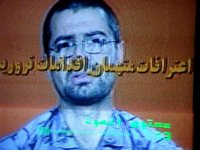 In the broadcast, 30 year old Ali Matouri Zadeh (pictured) "confessed" to heading the group. He had been a founding member of the Lejnat Al-Wefaq (Reconciliation Committee), which attempted to advance Ahwazi Arab minority rights through constitutional and legal means. It was set up in 1999 and participated in elections. Its general secretary, Jasem Shadidzadeh Al-Tamimi, succeeded in winning a parliamentary seat in the Sixth Majlis (2000-04) and Wefaq-backed candidates won all but one seat on the Ahwaz municipal council in 2003. However, in the last parliamentary elections in 2004, conservatives in the regime barred candidates nominated by Lajnat Al-Wefagh. The group was dismantled, closing down legal possibilities for demands for Ahwazi rights. This month it was outlawed for allegedly stirring up communalism against the regime - a claim that is without foundation.
Matouri Zadeh was arrested in February along with his pregnant wife, 26 year old school teacher Fahima Ismaili Badawi (pictured). She gave birth to a baby girl named Salma in the notorious Sepidar Prison in March. Both mother and daughter have remained in prison, with intelligence officials putting pressure on Fahima to denounce her husband, divorce him and change the girl's name to a Persian one. She refused and was sentenced in June to 15 years imprisonment by Branch 3 of the Revolutionary court in Ahwaz City.
In the broadcast, 30 year old Ali Matouri Zadeh (pictured) "confessed" to heading the group. He had been a founding member of the Lejnat Al-Wefaq (Reconciliation Committee), which attempted to advance Ahwazi Arab minority rights through constitutional and legal means. It was set up in 1999 and participated in elections. Its general secretary, Jasem Shadidzadeh Al-Tamimi, succeeded in winning a parliamentary seat in the Sixth Majlis (2000-04) and Wefaq-backed candidates won all but one seat on the Ahwaz municipal council in 2003. However, in the last parliamentary elections in 2004, conservatives in the regime barred candidates nominated by Lajnat Al-Wefagh. The group was dismantled, closing down legal possibilities for demands for Ahwazi rights. This month it was outlawed for allegedly stirring up communalism against the regime - a claim that is without foundation.
Matouri Zadeh was arrested in February along with his pregnant wife, 26 year old school teacher Fahima Ismaili Badawi (pictured). She gave birth to a baby girl named Salma in the notorious Sepidar Prison in March. Both mother and daughter have remained in prison, with intelligence officials putting pressure on Fahima to denounce her husband, divorce him and change the girl's name to a Persian one. She refused and was sentenced in June to 15 years imprisonment by Branch 3 of the Revolutionary court in Ahwaz City.
Amnesty International has suggested the mother and daughter were held to pressure Matouri Zadeh to confess to participating in bomb attacks ( click here for latest report ). Matouri Zadeh's "confession" was probably intended to save his wife and daughter's lives, but has also vindicated the regime's violent clamp-down on Ahwazi Arab reformist groups such as Wefaq.
The sudden re-emergence of the Mohi-eldain Al-Nasir Martyrs Brigade has raised suspicions over its true origins. The group was named after Mohi-eldain Al-Nasir, an Ahwazi militant who was executed by Iran's monarchist regime in the 1970s, and played a small, brief part in Iraq's war with Iran (1980-88). The group was forgotten until last year, when the Iranian regime linked it to bomb attacks in Ahwaz. The attacks used powerful plastic explosives and the group has broadcast its own propaganda videos. It has also reportedly used Peugeot-brand cars, which few Ahwazis can afford to buy let alone destroy in bomb attacks. Some have claimed the group is linked to Iranian intelligence, attempting to terrorise ordinary Ahwazis and turn them against the civil rights movement. The regime itself has blamed the British government, although it has provided no proof to substantiate its claim.
The British Ahwazi Friendship Society (BAFS) has called for a full and open investigation in the bomb attacks. It has also called for a retrial for the accused, pointing to the fact that the 11 men facing execution were sentenced after one-day trials in secret courts with little or no access to their lawyers.
Related stories: :
UNPO Call to Stop Public Executions of Ahwazi Arabs in Iran - 14 November
Senior European Parliamentarian condemns Iran's ethnic cleansing - 14 November
Eleventh Ahwazi added to the list of those facing execution - 14 November
"Iran is guilty of ethnic cleansing" - Green MEPs - 14 November
Iran regime shows forced "confessions" on Khuzestan TV - 13 November
Mass executions of Ahwazis threaten Middle East security - 12 November
Ten Ahwazi Arabs to hang in public - 11 November
Psychologist sentenced to 20 years imprisonment - 18 October
"27 Ahwazi dissidents in custody" - Emadeddin Baghi - 9 September
Death sentence for Ahwazis confirmed by Supreme Court - 31 July
Son of Ahwazi sentenced to death appeals to Kofi Annan - 27 July
Urgent Appeal to EU Foreign Affairs Chief over Iran Executions - 11 July
Iran: Retry Ethnic Arabs Condemned to Death - 24 June
UNPO Urgent Appeal Concerning Ahwazi Executions
Ahwazis face arrest, deportation and execution - 1 June
Amnesty International: Eleven Ahwazis Face Execution - 17 May
Iran prepares for new round of executions in Ahwaz - 13 May
Executed: Young Men Hung by Iranian Tyrants - 2 March
Iran prepares to execute tribal family - 19 February
Iran sentences seven over Ahwaz bombings - 15 February
Iran increases repression in Ahwaz - 8 February
Ahwaz Bombings Come After Weeks of Unrest - 24 January
Labels: death penalty
permalink
keywords: ahvaz ahwaz ahwazi arabistan khuzestan khuzistan khuzestani arab arabistan iran iranian human rights security oil news ahmadinejad ethnic cleansing
.......................................................................................
The British Ahwazi Friendship Society (BAFS) has branded Iran's planned public execution of 11 Ahwazi Arabs as a "public relations disaster" for the regime.
The imminent mass executions have led to a wave of condemnation in Europe that will only build if they go ahead.
Members of the British Parliament and the European Parliament as well as international human rights organisations are mobilising against the killings, with increasing awareness of the regime's ethnic cleansing programme against the Ahwazi Arab minority.
BAFS Chairman Daniel Brett said: "Previous public executions carried out in March received little attention in the West. Perhaps the Iranian government thought it could carry out more executions without international censure. But the number due to be executed coupled with serious doubts about the trials and the arrest of lawyers for the defendants has generated considerable publicity and support for the Ahwazi rights movement.
"Iran will no doubt face condemnation from the European Parliament and this will have a major impact on the EU's dialogue with Iran if the executions go ahead. It will also damage Iran's efforts to claim leadership over the Arab world, particularly on the issue of Palestinian statehood. Killing innocent Ahwazis will reveal the regime's innate contempt for Arabs and show that its supposed solidarity with the Palestinians and Lebanese is nothing but a front for expanding its sphere of influence.
"If the regime thought that killing its opponents would kill off opposition, it is very naive. Iran's leaders have the option of cancelling the executions, annulling the verdicts and demanding a retrial that meets international standards of justice. They can also quell unrest by legalising Ahwazi Arab parties like the Lejnat Al-Wefaq (Reconciliation Committee), which was recently outlawed, and allowing them to compete in free and fair elections. An immediate halt to land confiscations is also necessary to end the continuing impoverishment of Ahwazi Arabs.
"We don't think the regime has the confidence or the strength to allow its citizens the equal social, economic and political rights and democratic freedoms they are entitled to. But they can always call their opponents' bluff and prove them wrong by cancelling the executions."
DEMONSTRATION AGAINST EXECUTIONS AND ETHNIC CLEANSING OF AHWAZI ARABS:
DATE: SATURDAY 18 NOVEMBER
TIME: 1PM-3PM
PLACE:
IRANIAN EMBASSY
PRINCE'S GATE
LONDON
NEAREST TUBE: SOUTH KENSINGTON
CLICK HERE FOR DIRECTIONS
Related stories: :
UNPO Call to Stop Public Executions of Ahwazi Arabs in Iran - 14 November
Senior European Parliamentarian condemns Iran's ethnic cleansing - 14 November
Eleventh Ahwazi added to the list of those facing execution - 14 November
"Iran is guilty of ethnic cleansing" - Green MEPs - 14 November
Iran regime shows forced "confessions" on Khuzestan TV - 13 November
Mass executions of Ahwazis threaten Middle East security - 12 November
Ten Ahwazi Arabs to hang in public - 11 November
Psychologist sentenced to 20 years imprisonment - 18 October
"27 Ahwazi dissidents in custody" - Emadeddin Baghi - 9 September
Death sentence for Ahwazis confirmed by Supreme Court - 31 July
Son of Ahwazi sentenced to death appeals to Kofi Annan - 27 July
Urgent Appeal to EU Foreign Affairs Chief over Iran Executions - 11 July
Iran: Retry Ethnic Arabs Condemned to Death - 24 June
UNPO Urgent Appeal Concerning Ahwazi Executions
Ahwazis face arrest, deportation and execution - 1 June
Amnesty International: Eleven Ahwazis Face Execution - 17 May
Iran prepares for new round of executions in Ahwaz - 13 May
Executed: Young Men Hung by Iranian Tyrants - 2 March
Iran prepares to execute tribal family - 19 February
Iran sentences seven over Ahwaz bombings - 15 February
Iran increases repression in Ahwaz - 8 February
Ahwaz Bombings Come After Weeks of Unrest - 24 January
Labels: death penalty
permalink
keywords: ahvaz ahwaz ahwazi arabistan khuzestan khuzistan khuzestani arab arabistan iran iranian human rights security oil news ahmadinejad ethnic cleansing
.......................................................................................
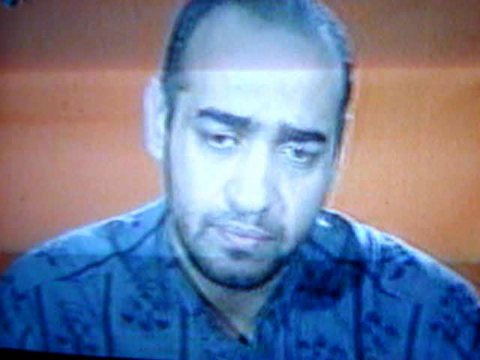
Saeed Hamedan was among the Ahwazi Arabs shown confessing to insurgency on Iran's Khuzestan TV, bringing the total number facing public execution in Ahwaz to 11.
Hamedan was sentenced to 20 years imprisonment in Ghaen, Isfahan province, some weeks ago. The 32 year old's appearance in the televised forced "confessions" indicate he will be in the mass executions of Arabs planned this week. Hamedan was a councillor from Ramshir City and is a licenced dealer of Fuji photographic products. His appearance on television among the accused is surprising as he has not been sentenced by the courts, indicating that his execution is the result of an illegal summary judgement by the Iranian authorities.
The 11 Ahwazi Arabs were convicted following one-day secret trials that have been condemned by human rights organisations inside and outside Iran as well as the lawyers for the accused.
The 11 men are:
1. Ali Mutairi from Mashour (Mahshahr)
2. Khalaf Khazeiri from Falahiyah (Shadegan)
3. Mohamad Chaab Pour from Tostar (Shoushtar)
4. Abdullah Farajulaah Chab from Tostar (Shoushtar)
5. Abdullah Solimani from Tostar(Shoushtar)
6. Majed Albu Ghubaish from Mashour (Mahshahr)
7. Ali Reza Asakre from Falahiyah (Shadegan)
8. Ghasem Salamat from Ahwaz City
9. Abdul Reza Sanawati from Ahwaz City
10. Saeed Hemidan from Khalafiyah (Ramshir)
11. Malek Banitamim from Tostar (Shoushtar)
Picture from Arabistan.org
Related stories: :
"Iran is guilty of ethnic cleansing" - Green MEPs - 14 November
Iran regime shows forced "confessions" on Khuzestan TV - 13 November
Mass executions of Ahwazis threaten Middle East security - 12 November
Ten Ahwazi Arabs to hang in public - 11 November
Psychologist sentenced to 20 years imprisonment - 18 October
"27 Ahwazi dissidents in custody" - Emadeddin Baghi - 9 September
Death sentence for Ahwazis confirmed by Supreme Court - 31 July
Son of Ahwazi sentenced to death appeals to Kofi Annan - 27 July
Urgent Appeal to EU Foreign Affairs Chief over Iran Executions - 11 July
Iran: Retry Ethnic Arabs Condemned to Death - 24 June
UNPO Urgent Appeal Concerning Ahwazi Executions
Ahwazis face arrest, deportation and execution - 1 June
Amnesty International: Eleven Ahwazis Face Execution - 17 May
Iran prepares for new round of executions in Ahwaz - 13 May
Executed: Young Men Hung by Iranian Tyrants - 2 March
Iran prepares to execute tribal family - 19 February
Iran sentences seven over Ahwaz bombings - 15 February
Iran increases repression in Ahwaz - 8 February
Ahwaz Bombings Come After Weeks of Unrest - 24 January
Labels: death penalty
permalink
keywords: ahvaz ahwaz ahwazi arabistan khuzestan khuzistan khuzestani arab arabistan iran iranian human rights security oil news ahmadinejad ethnic cleansing
.......................................................................................
13 November, 2006
Amnesty International has issued an urgent action to stop the execution of ten Ahwazi Arabs wrongly accused of insurgency.
It urges human rights activists to write to Iran's Supreme Leader Ayatollah Sayed Ali Khamenei ( or ) and Head of the Judiciary Ayatollah Mahmoud Hashemi Shahroudi () to:
* express grave concern that the nine men (naming them) may be in imminent danger of execution
* urge the Iranian authorities to commute their death sentences immediately
* ask for details of the men's trial proceedings, including the specific charges against them, whether they have been granted access to independent lawyers of their choice, and of any appeals they may have made against their sentences
Click here for latest news on the executions
Labels: death penalty
permalink
keywords: ahvaz ahwaz ahwazi arabistan khuzestan khuzistan khuzestani arab arabistan iran iranian human rights security oil news ahmadinejad ethnic cleansing
.......................................................................................
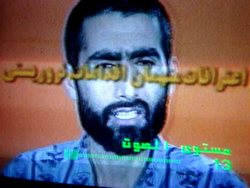 Khuzestan TV shown forced confessions of 10 Ahwazi Arabs due to be executed by public hanging this week.
International human rights organisations and Iranian and Ahwazi activists have condemned the trials and sentencing. Members of the British and European Parliaments contacted by BAFS - including Green MEP Caroline Lucas, Labour MP Chris Bryant and Conservative MP Michael Gove - have expressed horror at the executions and are appealing for the British government and the European Commission to take urgent action.
Click here to download "confessions"
Picture from Arabistan.org
Related stories: :
Mass executions of Ahwazis threaten Middle East security - 12 November
Ten Ahwazi Arabs to hang in public - 11 November
Psychologist sentenced to 20 years imprisonment - 18 October
"27 Ahwazi dissidents in custody" - Emadeddin Baghi - 9 September
Death sentence for Ahwazis confirmed by Supreme Court - 31 July
Son of Ahwazi sentenced to death appeals to Kofi Annan - 27 July
Urgent Appeal to EU Foreign Affairs Chief over Iran Executions - 11 July Iran: Retry Ethnic Arabs Condemned to Death - 24 June
UNPO Urgent Appeal Concerning Ahwazi Executions
Ahwazis face arrest, deportation and execution - 1 June
Amnesty International: Eleven Ahwazis Face Execution - 17 May
Iran prepares for new round of executions in Ahwaz - 13 May
Executed: Young Men Hung by Iranian Tyrants - 2 March
Iran prepares to execute tribal family - 19 February
Iran sentences seven over Ahwaz bombings - 15 February
Iran increases repression in Ahwaz - 8 February
Ahwaz Bombings Come After Weeks of Unrest - 24 January
Labels: death penalty
permalink
keywords: ahvaz ahwaz ahwazi arabistan khuzestan khuzistan khuzestani arab arabistan iran iranian human rights security oil news ahmadinejad ethnic cleansing
.......................................................................................
12 November, 2006
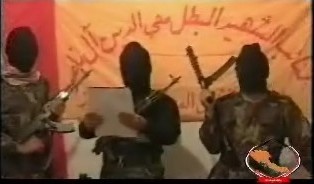
Militant groups are engaging in a recruitment drive among disillusioned Ahwazi Arab youth and have pledged a wave of attacks on oil installations in revenge for planned mass executions in Ahwaz City this week.
The separatist Arab Struggle Movement for the Liberation of Arabistan's armed wing has issued a statement warned of "consequences" for the Iranian regime, which it described as a brutal racist system. It claimed that if executions of 10 Ahwazi Arabs go ahead this week, it would attack cities across Iran. Click here to view a call to war by the Mohieldain Al-Naser Martyrs Brigade .
Another separatist group, the Ahwazi Arab Renaissance Party, has claimed that two bomb attacks in commercial areas of Ahwaz over the weekend were the work of the "Ahwazi resistance", although the party itself has not claimed responsibility. A party spokesman, Kazem Hamed Alvarhani, said that if the executions are carried out, the Iranian authorities will "pay dearly." He indicated that ethnic Persians living in the Ahwaz region "will not be able to live in safety." ( click here to download the statement )
The Iranian regime has effectively quashed all moderate Ahwazi movements by banning Ahwazi NGOs and jailing cultural and human rights activists. This month, the government outlawed the Lejnat Al-Wefaq, an Arab reformist group led by former parliamentarian Jasem Shahdidzadeh Al-Tamimi that supported legal and constitutional means to campaign for human rights for Ahwazi Arabs ( click here for details ). Wefaq had been condemned by Arab separatist groups who claimed it was set up by the regime to distract Ahwazis from seeking the recreation of an independent Arabistan, the name for the Ahwazi homeland before its invasion by Persian monarch Reza Pahlavi in 1925.
Nasser Bani Assad, spokesman for the British Ahwazi Friendship Society (BAFS), said: "We will be calling on Ahwazis to ignore calls for communal violence, for this will give the regime reasons for more violent action against peaceful, freedom-loving Ahwazi Arab civilians. President Ahmadinejad will use any call to arms for his own benefit. We also call on all Iranians to show solidarity with Ahwazi Arabs, so that they do not feel isolated and abandoned by democratic forces in Iran.
"However, with Wefaq banned, moderates facing execution and the international community failing to respond to the ethnic cleansing of Ahwazi Arabs from their traditional lands, militant groups will attempt to step up their campaign, which has so far been limited to arson attacks and sabotage. There is a very real prospect that these militias will look for alliances and arms supplies from other groups in the Middle East.
"Failure to address the plight of the Ahwazi Arabs could broaden the conflict in Iraq and sideline the Ahwazi Arab majority who favour peace and human rights. The extremists will attempt to succeed where the moderates fail and this is entirely due to the violent aggression of the Iranian state and the indifference of the international community.
"The world cannot continue to ignore the unrest as militants will target oil installations in the Ahwaz region, which supplies 90 per cent of Iranian oil. This will have a major impact on oil markets, which are already experiencing sustained high prices."
Labels: death penalty
permalink
keywords: ahvaz ahwaz ahwazi arabistan khuzestan khuzistan khuzestani arab arabistan iran iranian human rights security oil news ahmadinejad ethnic cleansing
.......................................................................................
11 November, 2006
A bomb has exploded in a residential area of Ahwaz ahead of mass executions of Ahwazi Arabs in the restive city.
No-one was hurt in the bomb blast, which occurred at 23:46 local time on Friday night and shattered the windows of nearby buildings. Iran has blamed past bomb attacks on Ahwazi groups it alleges are supported by the British government, although it has failed to provide any evidence to substantiate its claims.
The regime is planning to execute 10 Ahwazi Arabs after their convictions for mohareb (enmity with God) following trials that have been condemned by Iranian and international human rights organisations ( click here for further details ). The men are expected to appear in televised 'confessions' on Khuzestan TV in the next day or two, as was the case with the public executions of Mehdi Nawaseri and Ali Afrawi in March ( click here for further details ).
Many Ahwazis suspect that the Directorate General of Special Operations (DGSO) is behind some or all of the bomb attacks in Ahwaz. The DGSO was responsible for an attack on Imam Reza shrine which killed a number of pilgrims in June 1994, during Rafsanjani's administration. At the time, the attack was blamed on opposition groups. Iranian defectors later revealed that the attacks were a stage-managed by the DGSO in an attempt to force foreign governments into halting the activities of exiled opposition groups. The DGSO was reponsible for the murders of Christian priests, which were also initially blamed on foreign opposition groups but later revealed to be masterminded by the group. Yesterday's bomb attack in Ahwaz was probably intended to stir up public sentiment against Ahwazi Arabs ahead of the executions.
Nasser Bani Assad, spokesman for the British Ahwazi Friendship Society (BAFS), said: "No Ahwazi group would attack residents of an Arab city since this would undermine their attempts to win support from the local population. There are suspicions that these bomb attacks are the work of the government's Bassij militias in an attempt to create the casus belli for violence against Ahwazi Arab rights activists. Last year, the government blamed Ahwazi separatists for simultaneous attacks in Ahwaz and Tehran, caused by powerful plastic explosives. It is impossible for any Ahwazi group to carry out such attacks - they would not have the resources or the organisational capacity.
"We are convinced that all the men facing execution are entirely innocent of the charges against them. Their execution will be a crime against humanity and we will be campaigning for an international arrest warrant for Abbas Jafari, the Director General of Khuzestan's Justice Department who prevented the men from having a fair trial and directed the judges in the revolutionary courts to deliver guilty verdicts."
Labels: death penalty
permalink
keywords: ahvaz ahwaz ahwazi arabistan khuzestan khuzistan khuzestani arab arabistan iran iranian human rights security oil news ahmadinejad ethnic cleansing
.......................................................................................
10 November, 2006
The Iranian Supreme Court has confirmed death sentences for 10 Ahwazis convicted of bomb attacks in Ahwaz and will be publically hung very soon, according to the Iranian media.
 Abbas Jafari (pictured), the Director General of Khuzestan's Justice Department, said 19 people had been convicted of
mohareb
(enmity with God) and 10 will be hung in Ahwaz City. The others have been exiled or sentenced to long prison terms.
Abbas Jafari (pictured), the Director General of Khuzestan's Justice Department, said 19 people had been convicted of
mohareb
(enmity with God) and 10 will be hung in Ahwaz City. The others have been exiled or sentenced to long prison terms.
He told Khuzestan TV: "These people, according to Islamic punishment laws, have been identified as elements who have waged war on God and therefore execution rulings have been issued in their cases. The rulings have been reviewed at the highest judicial levels and then endorsed. The cases were quite large and many senior judges were involved in reviewing them. We will pave the way for the rulings to be carried out."
The judgements on the men have been condemned by their lawyers and Iranian human rights activists as well as activists abroad. The lawyers of the accused have written to the President and senior judicial officials regarding the serious irregularities in the court cases, including preventing them from meeting with their clients and forced confessions. The regime responded by arresting the lawyers, all but one of whom are Ahwazi Arabs. According to a recent report by the official Iranian Labour News Agency (ILNA), Khalil Saeedi, Mansur Atashneh, Dr Abdulhasan Haidari, Jawad Tariri, Faisal Saeedi and Taheri Nasab - the lawyers representing the accused - were questioned in Branch 7 of the Ahwaz Revolutionary Court and later released on bail. They were accused of threatening national security by making his letter of complaint public - the letter was subsequently published on websites belonging to Ahwazi Arab groups. ( click here to read the ILNA report )
Human Rights Watch has released a statement calling for an immediate halt to the executions and the revoking of the death penalty. It said: "The death sentences were imposed following secret trials that Human Rights Watch said could not be considered to meet international standards."
Sarah Leah Whitson, Director of HRW's Middle East and North Africa division, said: "Iran's opaque judicial system denies people due process and then hands down a death sentence after a one-day trial. The Judiciary should stop these executions."
Those facing the death penalty include Zamel Bawi, Jaafar Sawari, Risan Sawari and Abdulreza Nawaseri, who were sentenced on 8 June after a one-day trial in which there were no witnesses. According to HRW, "the Judiciary has not provided dates and details of trials for the other nine men sentenced to death."
Two of those sentenced to death, Nazem Bureihi and Abdolreza Nawaseri, were already serving prison sentences for insurgency at the time of the bomb attacks for which the regime claims they were responsible.
"One of the wonders of the Iranian Judiciary is that it can accuse a person of carrying out bombings while he's in prison," said Whitson. "That lays bare the arbitrariness of his conviction."
In an article in The Times, British human rights campaigner Peter Tatchell also raised concerns about the trial, pointing out that three of the accused â Hamza Sawa- eri, Jafar Sawari and Reisan Sawari â say that they were nowhere near the Zergan oilfield the day it was bombed ( click here to read the article ).
Tatchell wrote: "The death sentences seem designed to silence protests by Iran's persecuted ethnic Arabs." He has also accused Iran of ethnic cleansing Ahwazi Arabs from their homeland.
Related stories: :
Psychologist sentenced to 20 years imprisonment - 18 October
"27 Ahwazi dissidents in custody" - Emadeddin Baghi - 9 September
Death sentence for Ahwazis confirmed by Supreme Court - 31 July
Son of Ahwazi sentenced to death appeals to Kofi Annan - 27 July
Urgent Appeal to EU Foreign Affairs Chief over Iran Executions - 11 July Iran: Retry Ethnic Arabs Condemned to Death - 24 June
UNPO Urgent Appeal Concerning Ahwazi Executions
Ahwazis face arrest, deportation and execution - 1 June
Amnesty International: Eleven Ahwazis Face Execution - 17 May
Iran prepares for new round of executions in Ahwaz - 13 May
Executed: Young Men Hung by Iranian Tyrants - 2 March
Iran prepares to execute tribal family - 19 February
Iran sentences seven over Ahwaz bombings - 15 February
Iran increases repression in Ahwaz - 8 February
Ahwaz Bombings Come After Weeks of Unrest - 24 January
Labels: death penalty
permalink
keywords: ahvaz ahwaz ahwazi arabistan khuzestan khuzistan khuzestani arab arabistan iran iranian human rights security oil news ahmadinejad ethnic cleansing
.......................................................................................
18 October, 2006
A 52 year old respected psychologist at Ahwaz's Shahid Chamran hospital, whose son was executed and daughter was murdered, has been sentenced to 20 years imprisonment in Ardabil prison, hundreds of miles away from his home.
Dr Awdeh Afrawi is an Ahwazi Arab human rights activist. In October 2005, he and his 17 year old son Ali were arrested following bomb attacks on oil facilities. Ali was executed in March (pictured) after giving a forced confession on Khuzestan TV while drugged by his torturers (
click here for more information
). Dr Afrawi's daughter was killed by security forces during demonstrations. He has remained in solitary confinement since his arrest and has been denied contact with his lawyers. He and his son, a highly intelligent and promising high school student, were both accused of carrying out the bomb attacks on oil facilities. No-one was injured or killed in the attacks which shut down five oil wells (
click here for more information
). Dr Afrawi and his son were charged with "waging war on God", a vaguely defined crime covering any opposition to the regime's policies which carries the death penalty.
According to family members, Dr Afrawi repeated his claim during his closed trial and throughout his detention that he has done nothing wrong and has not broken any law. He simply advocated the legitimate basic human rights of indigenous Ahwazi Arabs, including the right to study in their own native Arabic language and participation in the socio-political and economic process of their homeland, al-Ahwaz or Khuzestan.
The Iranian regime has destroyed Dr Afrawi's family, who were entirely innocent. Dr Afrawi is now a broken man who is likely to die a miserable death in prison. He has been punished for calling for the government to act in accordance with Article 19 of the Iranian Constitution, which states that "All people of Iran, whatever the ethnic group or tribe to which they belong, enjoy equal rights; color, race, language, and the like, do not bestow any privilege." Ahwazi rights activists are calling on the international community to press for Dr Afrawi's release from prison and compensation for the regime's illegal killing of his children.
Labels: death penalty
permalink
keywords: ahvaz ahwaz ahwazi arabistan khuzestan khuzistan khuzestani arab arabistan iran iranian human rights security oil news ahmadinejad ethnic cleansing
.......................................................................................
13 October, 2006
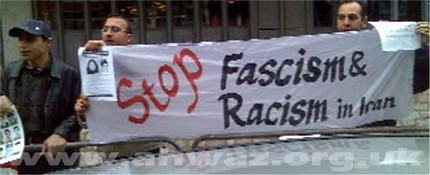
Three Ahwazis have been sentenced to death on trumped up charges of theft in order to intimidate Iran's restive Ahwazi Arab population.
Twelve people were convicted of armed robbery in Ahwaz, Ramez, Tostar and Amedeya, involving the theft of 22 cows, 104 sheep, a television set and one million toman (US$1,100) in cash, according to the government-owned Rozan newspaper.
A local Persian language newspaper reported the following sentences for theft:
- Abbas (aka Zeabel), 33 years old - public execution, 300 lashes and five million rials (US$550) fine
- Hamad, 45 years old - 10 years imprisonment, public execution
- Al C (aka Ka'abi), 37 years old - 10 years imprisonment, public execution
- Rahim A (aka Askarawi and Bejawi) - amputation of right hand and left foot, 10 years imprisonment
- Sabbah M - amputation of right hand and left foot, 10 years imprisonment
- Hanash A (aka Kasraji) - 10 years imprisonment, 74 lashes
- Salah Sh - 10 years imprisonment, 74 lashes
- Karim Sh (aka Bader Na'ami) - 10 years imprisonment, 74 lashes
- Marzogh A, 45 years old - 10 years imprisonment, 74 lashes
- Mohammed Sh, 43 years old - 10 years imprisonment, 74 lashes
- Jalil Kh (aka Jenadeleh), 27 years old - 10 years imprisonment, 74 lashes
- Sadegh L - 10 years imprisonment, 74 lashes
Nasser Bani Assad, spokesman for the British Ahwazi Friendship Society (BAFS), said: "The nature and timing of the convictions and the harshness of the punishments meted out by the courts is alarming. We do not pretend that Ahwazis do not commit crime or that the region does not suffer its share of criminality. But we are aware that the regime wants to use executions, amputations, beatings and long prison sentences against Ahwazis as a show of force. Yet, they are accused of nothing more than theft and could well be entirely innocent, given Iran's poor standards of justice.
"Last year's Eid al-Fitr was marked by peaceful protests by Ahwazis who used the Islamic festival to display their cultural identity. The protests were violently put down by the government and hundreds were subsequently arrested. This year, the regime wants to remind Ahwazis of its cruelty and that it is prepared to kill to silence dissent.
"These sentences are also intended to smear the Ahwazi people, sending out a message to the rest of Iran that Arabs are uncivilised and criminal. Such racism against non-Persian minorities is endemic in Iran - Arabs are criminals, Azeris are stupid, Balochis are drug smugglers, etc - and is intended to justify poor treatment of these groups.
"Like fascism in Europe, the Iranian regime is resorting to state terrorism and racism to divide and rule the Iranian population."
Labels: death penalty
permalink
keywords: ahvaz ahwaz ahwazi arabistan khuzestan khuzistan khuzestani arab arabistan iran iranian human rights security oil news ahmadinejad ethnic cleansing
.......................................................................................
28 September, 2006
The British Ahwazi Friendship Society (BAFS) has received reports that Nazem Boraihi and other Ahwazis sentenced to death by the Revolutionary Courts in Ahwaz have had their sentences over-turned by the Diwan Aali Kol Keshwar (High Bureau for Justice) in Tehran.
Boraihi is one of 16 Ahwazis sentenced to death for allegedly participating in bomb attacks in Ahwaz in 2005. Serious doubts have been raised over the conduct of the trials by human rights campaigners inside Iran, international NGOs and Ahwazi activists in exile. Boraihi has been in prison since 2000 serving a lengthy jail term for peaceful opposition activities. His trial, conviction and death sentence are widely seen as an act of political retribution against Ahwazis. An unknown number of other Ahwazis convicted at the same time as Boraihi are also believed to have had their death sentences over-turned.
Amnesty International, the Unrepresented Nations and Peoples Organisation (UNPO), the Ahwaz Human Rights Organisation and BAFS have campaigned for a retrial for Ahwazis convicted of "waging war on God" based on international standards of justice. The campaign was boosted by one of Iran's leading human rights advocates, Emad Baghi, who appealed to the high bureau of justice to commute the death sentences, raising concerns about the conduct of the trials ( click here for more information ). The European Commission was also intensively lobbied by Ahwazis and their supporters. In response to a recent letter to Portuguese Socialist MEP Paulo Casaca regarding the Ahwazis on death row, EU foreign policy chief Javier Solana expressed concern over the treatment of minorities and the deteriorating human rights situation in Iran. Solana pledged to raise the issue of human rights violations against minorities with the Iranian regime.
BAFS spokesman Nasser Bani Assad said: "Pragmatists within the Iranian establishment have decided that the execution of Ahwazis is more trouble that it is worth. While Boraihi and maybe some others appear to have had their death sentences commuted, they are still victims of a grotesque miscarriage of justice. We will not stop campaigning until the hundreds of Ahwazi political prisoners are released from Iranian custody."
Labels: death penalty
permalink
keywords: ahvaz ahwaz ahwazi arabistan khuzestan khuzistan khuzestani arab arabistan iran iranian human rights security oil news ahmadinejad ethnic cleansing
.......................................................................................
19 September, 2006
According to BBC Persian Service, one of Iran's leading human rights activists, Emadeddin Baghi, the head of the the Society for Defending Prisoners' Rights and editor of the banned Jumhuriyat (Republic) newspaper, has identified 27 Ahwazi Arab political prisoners in custody, including 18 alleged members of the Kataeb party. They are among 146 dissidents being held by the regime, which also include 50 members of the Democratic Party of Iranian Kurdistan and five members of the Kurdish Komala party.
The regime does not recognise dissidents in its custody as political prisoners and therefore does not publish statistics. This makes it difficult to assess the true number of prisoners of conscience held by the regime. Most are accused by the regime of posing a threat to national security. Baghi himself received a three-prison sentence in 2000 for "attacking national security" and "disseminating false news." He was released in February 2003, but his passport has still not been returned to him.
Baghi wrote an appeal in June in relation to death sentences issued to Ahwazis who the regime claims were "waging war on God". He wrote: "Discussions with the families and lawyers of those sentenced have convinced me that the court decision made about the fate of these individuals requires your close attention in order to prevent the possibility of grave injustice."
He called on the authorities to reduce the sentences, allow the accused to meet with their lawyers and added that "the possibility of defendants admitting to uncommitted crimes under duress is not unheard of and in this case of particular national sensitivity all possibilities must be investigated in order to avoid costly mistakes not only in relation to the taking of precious human lives but also because of the real potential for heightening and injuring ethnic sensibilities."
Click here for Mr Baghi's letter to Ayatollah Hashemi Shahroudi, Chief of the Judiciary
Labels: death penalty
permalink
keywords: ahvaz ahwaz ahwazi arabistan khuzestan khuzistan khuzestani arab arabistan iran iranian human rights security oil news ahmadinejad ethnic cleansing
.......................................................................................
09 September, 2006
Iran's pro-regime media have confirmed that a further 20 Ahwazis blamed for leading unrest in Al-Ahwaz (Khuzestan) in April 2005 have been referred to tribunal court to confirm death sentences against them.
According to a government spokesman, these death sentences are separate from previous sentences. The Ahwaz Human Rights Organisation (AHRO) has stated that 16 Ahwazis have already had their death sentences confirmed and are likely to be executed after the Muslim holy month of Ramadan. All 36 Ahwazis have been sentenced to death by the Revolutionary Court 3 in Ahwaz City.
The pro-regime media claim that all Ahwazis who have been sentenced to death have confessed to participating in bomb attacks in Ahwaz last year and earlier this year. However, their solicitors have stated that their clients have not confessed to any crime and they have lodged strong protests over the trial procedure, which they claim is unfair. The British Ahwazi Friendship Society (BAFS) has received the solicitors' letters and is in the process of translating them into English.
Related stories: :
Death sentence for Ahwazis confirmed by Supreme Court - 31 July
Son of Ahwazi sentenced to death appeals to Kofi Annan - 27 July
Urgent Appeal to EU Foreign Affairs Chief over Iran Executions - 11 July Iran: Retry Ethnic Arabs Condemned to Death - 24 June
UNPO Urgent Appeal Concerning Ahwazi Executions
Ahwazis face arrest, deportation and execution - 1 June
Amnesty International: Eleven Ahwazis Face Execution - 17 May
Iran prepares for new round of executions in Ahwaz - 13 May
Executed: Young Men Hung by Iranian Tyrants - 2 March
Iran prepares to execute tribal family - 19 February
Iran sentences seven over Ahwaz bombings - 15 February
Iran increases repression in Ahwaz - 8 February
Ahwaz Bombings Come After Weeks of Unrest - 24 January
Labels: death penalty
permalink
keywords: ahvaz ahwaz ahwazi arabistan khuzestan khuzistan khuzestani arab arabistan iran iranian human rights security oil news ahmadinejad ethnic cleansing
.......................................................................................
09 August, 2006
Ahwazis recently sentenced to death for "waging war on God" have staged a hunger strike in defiance of the regime's authority.
Six Ahwazis have had their death sentences upheld by the Supreme Court and many others are waiting for their appeals to be heard, although their convictions are based on false charges. One of the detained, Nazem Berihi, was sentenced to death for carrying out bomb attacks in Ahwaz City in 2005, despite being in prison since 2000. The regime has accused those sentenced to death of working as British agents, but has failed to provide any evidence of British involvement in Ahwaz. The executions are widely believed to be a way of terrorising even the most moderate Ahwazi opponent of government policy in an effort to put down the Ahwazi intifada (uprising) that began in April 2005.
Five Ahwazis recently deported to Iran by Syria, including four UNHCR registered refugees resident in Damascus and a Dutch national who was visiting the country, are also believed to be undergoing torture in an effort to force them to confess to false charges ( click here for more details ).
Related stories: :
Death sentence for Ahwazis confirmed by Supreme Court - 31 July
Son of Ahwazi sentenced to death appeals to Kofi Annan - 27 July
Urgent Appeal to EU Foreign Affairs Chief over Iran Executions - 11 July Iran: Retry Ethnic Arabs Condemned to Death - 24 June
UNPO Urgent Appeal Concerning Ahwazi Executions
Ahwazis face arrest, deportation and execution - 1 June
Amnesty International: Eleven Ahwazis Face Execution - 17 May
Iran prepares for new round of executions in Ahwaz - 13 May
Executed: Young Men Hung by Iranian Tyrants - 2 March
Iran prepares to execute tribal family - 19 February
Iran sentences seven over Ahwaz bombings - 15 February
Iran increases repression in Ahwaz - 8 February
Ahwaz Bombings Come After Weeks of Unrest - 24 January
Labels: death penalty
permalink
keywords: ahvaz ahwaz ahwazi arabistan khuzestan khuzistan khuzestani arab arabistan iran iranian human rights security oil news ahmadinejad ethnic cleansing
.......................................................................................
31 July, 2006
Tribal leaders, teachers, businessmen, students and mothers are among those Ahwazis who are destined for the gallows or the dungeons, following closed trials by Iran's notorious revolutionary courts.
The British Ahwazi Friendship Society (BAFS) has received the names and details of those set to be executed, imprisoned or banished as part of Iran's increased repression in the restive Arab-majority province of Khuzestan, known to the indigenous inhabitants as Al-Ahwaz.
The following people have had their death sentences for "waging war on God" - in references to bomb attacks that hit Al-Ahwaz in 2005 and earlier this year - upheld by the Supreme Court:
> Mohamad Ali Sawari, a teacher from Ahwaz City
> Yahya Naseri from Ahwaz City
> Nazem Berihi from Ahwaz City, who has been in prison since 2000 after receiving a 30-year prison sentence and therefore could not have carried out the recent bomb attacks
> Abdulzahra Helichi from Ahwaz City
> Abdul Emam Zaeri from Ahwaz City
Others have faced serious penalties after trials that Human Rights Watch claims failed to meet international standards. Some have been sentenced to death, but are awaiting confirmation from the Supreme Court.
Mothers are among those sentenced by the revolutionary court in Ahwaz:
> Mrs Fahima Esmaeili (pictured) - sentenced to 15 years prison in Yasuj city, outside Khuzestan province (she gave birth in prison in March to a baby girl, Salma, but it is unclear what will happen to the baby)
> Mrs Hoda Hawashem - one year in prison in Ahwaz City (she is being held in prison with her sons, aged two and four - it is unclear what will happen them while she is in prison)
Click here for more information on Ahwazi women and children in custody
Other Ahwazis sentenced to death or long jails terms include:
> Ali Motari Zadeh from Mashour (Mashar) - sentenced to death
> Khalaf Khazraei from Falahiya (Shadgan) - sentenced to death
> Mohamad Kaabi from Tostar city (Shushtar) - sentenced to death
> Abdulamir Faraj Allah Chaab from Tostar city(Shushtar) - sentenced to death
> Mohamad Salmani Kaabi from Tostar city(Shushtar) - sentenced to death
> Majed Albu Ghubaish from Mashur city (Mashar) - death penalty
> Alireza Asakre from Mashur (Mashar) - sentenced to death
> Ghasem Salamat from Ahwaz city - sentenced to death
> Abdulreza Zergani from Ahwaz city - sentenced to death
> Saeed Hamidan - sentenced to 18 years prison in Ghaen city in Isfahan
> Jalil Moghadam from Ahwaz City - sentenced to 10 years prison in Ashtiyan city in Isfahan
Many others are also incarcerated and their fates have yet to be decided by the Iranian regime.
BAFS has obtained a leaked report from the Bassij addressed to commanders in the Revolutionary Guards which lists 15 suspected terrorists it says have been trained and armed by British army commanders in Iraq. None of those sentenced to death are among those accused in the letter of responsibility for the terrorist attacks. BAFS has enquired about those named in the letter and none are known Ahwazi political activists. The document and a translation can be downloaded here .
BAFS spokesman Nasser Bani Assad said: "The document we have obtained and published is the only publically available Iranian intelligence report on the Ahwaz bombings. As far as this document is concerned, there is no proven link between those who have been incarcerated and sentenced to death and those the Iranian intelligence has supposedly identified as terrorists.
"The intelligence document fails to mention any particular Ahwazi group involved in the bombings, although the government's line is that the bomb attacks are the work of several exiled political parties supported by the British, American, Canadian, Israeli and Saudi governments and oil companies.
"As the trials of those accused have been held in camera with even defence lawyers being barred from representing their clients in court, we have no way of judging the veracity of the intelligence used to prosecute the accused.
"As far as we are concerned, 20 innocent people are about to lose their lives and liberty without any proper legal representation or any evidence. Their crime appears to be their ethnicity and political beliefs, rather than any proven terrorist activity."
Related stories: :
Son of Ahwazi sentenced to death appeals to Kofi Annan - 27 July
Urgent Appeal to EU Foreign Affairs Chief over Iran Executions - 11 July Iran: Retry Ethnic Arabs Condemned to Death - 24 June
UNPO Urgent Appeal Concerning Ahwazi Executions
Ahwazis face arrest, deportation and execution - 1 June
Amnesty International: Eleven Ahwazis Face Execution - 17 May
Iran prepares for new round of executions in Ahwaz - 13 May
Executed: Young Men Hung by Iranian Tyrants - 2 March
Iran prepares to execute tribal family - 19 February
Iran sentences seven over Ahwaz bombings - 15 February
Iran increases repression in Ahwaz - 8 February
Ahwaz Bombings Come After Weeks of Unrest - 24 January
Labels: death penalty , human rights
permalink
keywords: ahvaz ahwaz ahwazi arabistan khuzestan khuzistan khuzestani arab arabistan iran iranian human rights security oil news ahmadinejad ethnic cleansing
.......................................................................................
27 July, 2006
 The young son of Zamel Bawi, who has been sentenced to death after a show trial by the Iranian regime, has delivered a heart-wrenching appeal to UN Secretary General Kofi Annan to intervene to save his father's life.
Zamel Bawi is among several Ahwazi Arabs who have endured months of torture in Iran following bomb attacks in Ahwaz last year. He and his brothers, who are sons of moderate Ahwazi tribal leader Hajj Salem Bawi, have all been charged with "waging war on God".
Zamel's son writes: "I have spent my nights wailing, crying and appealing to God who advised me to ask you for help. God of the universe told me that there still exist a few people on this earth who believe in justice, rightness, and truth. God also told me that some of his decent humankinds who will be able to help are people like you, those who organize to protect human rights and humanity, and those just loving people.
"Please help quickly with all means, I do not want to be disappointed about the United Nations and those human loving organization in the world.
"I love my father; I want to grow up with a father who cares for and loves me. I want him to hug me, console me and feel for me. Please do not let them tpunish me by depriving me of my father's kindness and love. Trust and believe me that my father does not deserve to be executed. He speaks for freedom and aspires for it like many did before him and sought justice for humankind.
"Mr. Kofi Annan, since the death sentence was issued against my father, my mother has been hospitalized. During this period there is no one who takes care of me, there was no one I could speak to about my sadness. Until I saw you on the TV talking about freedom and justice, It came to my mind as my God told me to appeal to you, the human rights organization, and appeal to America, Canada, European countries and to all children of the world to stand with me and with all those children whose fathers might be executed at any time by the Iranian anti-human regime. I am appealing to you: please ask them to return my father to me and please to prevent them from the killing my father. I have nothing but him in this world and I need him back. Who could bring happiness and the love to me, but him? Please help me as soon as possible and as much as you can.
"People of the world, innocent children of the world, please include your voice with mine so that I can be heard loudly and say: do not kill my father. Please call with me for his release, my call alone is not enough since I called and cried many times alone, but I could not do any thing. Please help me so that I can stop the death sentence against my father and fathers of other Ahwazi children. Please, please, please."
Click here to download the full text of the letter from the Ahwazi Studies website.
Related stories: :
Urgent Appeal to EU Foreign Affairs Chief over Iran Executions - 11 July Iran: Retry Ethnic Arabs Condemned to Death - 24 June
UNPO Urgent Appeal Concerning Ahwazi Executions
Ahwazis face arrest, deportation and execution - 1 June
Amnesty International: Eleven Ahwazis Face Execution - 17 May
Iran prepares for new round of executions in Ahwaz - 13 May
Executed: Young Men Hung by Iranian Tyrants - 2 March
Iran prepares to execute tribal family - 19 February
Iran sentences seven over Ahwaz bombings - 15 February
Iran increases repression in Ahwaz - 8 February
Ahwaz Bombings Come After Weeks of Unrest - 24 January
Labels: death penalty
permalink
keywords: ahvaz ahwaz ahwazi arabistan khuzestan khuzistan khuzestani arab arabistan iran iranian human rights security oil news ahmadinejad ethnic cleansing
.......................................................................................
11 July, 2006
The Ahwaz Human Rights Organisation has issued the following appeal to Javier Solana, High Representative for the EU's Common Foreign and Security Policy, over continuing executions and human rights violations against Ahwazis by the Iranian regime:
We are writing to inform you of the imminent execution of 10 ethnic Arab-Iranian (Ahwazi Arab) youth in Ahwaz, provincial capital of Khuzestan in southwestern Iran.
On June 7 and 8 the Islamic Revolutionary Court of Ahwaz, in secret trials, sentenced these human rights activists to death. They are awaiting the execution order from the Supreme Court in Tehran. Their names are as follows:
1. Yahia Nasseri
2. Nazem Boraihi
3. Abdolemam Zaeri
4. Abdolzahar olichi
5. Hamza Sawaeri
6. Jafar Sawari
7. Reisan Sawari
8. Abdolreza Nawaseri
9. Ali Helfi
10. Zamel Bawi
After the public hanging of Ali Afrawi (age 17) and Mehdi Nawaseri (20 years old) in Ahwaz and seven other political prisoners inside prisons in March and April of this year, the Iranian regime is once again embarking on a new wave of executions of Ahwazi Arabs.
Last month, Prosecutor-General Iraj Amirkhani, in an interview with Iranian official news agency ISNA, announced that 22 Ahwazi Arab political activists had been arrested and are expected to be tried and sentenced to death. These men, like the 10 named above, are also being tried in secret without the presence of independent observers. They are accused of being "Mohareb" or enemies of god which carries death sentence. Other charges are "Destablizing the Country", "attempt to overthrow the government", "possession of home made bombs" and "sabotage of oil installations". However, no evidence has been presented. The government has accused them of working as agents for the US, the UK and Israel, and claimed they have received training in Iraq. Again, the regime has failed to produce any evidence.
This brings the Ahwazi men who face death and risk of executions to thirty two. This number includes three brothers, university students, who are among a number of activists listed below:
1. Imad Bawi
2. Mohsen Bawi
3. Taregh Obiat
4. Dr Awdeh Afrawi
5. Tarigh Obeyat
6. Ali Manbouhi
7. Jallil Bureihi
8. Hadi Bateyli
9. Mohammad Sawari
10. Moslem Al-Ha'
11. Saeed Hameydan
12. Abdulamam M Zaeri
13. Abdulzahra Khazali
14. Hamzeh Lefteh
15. Aliredha Salman Delfi
16. Ali Matouri-Zadeh
We are also concerned about the arrest of the wives and young children of political activists in what appears to be an attempt to pressure them into making false confessions or returning from exile. Ali Matourzadeh and his wife Fahima Ismaili Badawi have been detained since February 28; Fahima gave birth to their daughter, Salma, in Sepidar Prison in Ahwaz in March. Matourzadeh is founder of the reformist Hizb-i Vifaq (Unity Party). His whereabouts are unknown, while his wife and daughter are being held at Sepidar Prison in Khuzestan Province. Amnesty International has suggested Fahima and Salma are being held in order to force Ali Matourzadeh to cooperate and the group demanded their unconditional release.
Other recently arrested Ahwazi women and children are:
1. Ma'soumeh Ka'abi (f) and her sons Imad (m), aged 4, she is the wife of political activists, Habib Nabgan. (Released and re-arrested several times).
2. Sograh Khudayrawi (f) and her son Zeidan (m) aged 4. Her husbandâs name is Khalaf Khudayrawi, who is currently being held at Sepidar Prison.
3. Sakina Naisi (f), mother of five and wife of Ahwazi opposition activist Ahman Naisi.
4. Hoda Hawashem (f) and her son Osameh (m), aged 2 and her other son Ahmad (m), aged 4 and wife of opposition activist, Habib Faraj-allah.
Iran and its ally Syria are also violating the Geneva Conventions on refugees by returning or threatening to return Ahwazi refugees registered with the UNHCR back to Iran, where they face arrest and likely torture and execution. Iranian Arab refugee Saeed âAwda al-Saki was arrested on 11 May in the Syrian capital, Damascus, at the request of the Iranian authorities. He was forcibly returned to Iran three days later and now is held incommunicado at an undisclosed place. Saeed âAwda al-Saki, is registered and recognized as a political refugee by the UNHCR. According to Amnesty International he is also facing torture and ill-treatment, and possibly death sentence.
Under pressure from Iran, on May 11, 2006, eight Ahwazi men were detained by the Syrian authorities. These are all mandate holder political refugees, registered and recognized by UNHCR in Syria:
1. Mousa Sawari
2. Issa Alyassin
3. Gamal Obaidy
4. Ahmad Abiat
5. Taher Ali Mazraeh
6. Rasool Mezrea'
7. Jamal 'Abdawi
Three of the above have been released and four remain in detention in Syria. Faleh 'Abdullah al-Mansouri, a Dutch national, has also been detained and has yet to be released.
Since the Ahwazi Intifada (uprising) began on April 15, 2005, more than 25,000 Ahwazis have been detained, at least 131 have been executed and over 150 have "disappeared" (believed to have been tortured and killed by Iranian security forces). Confiscation of Ahwazi Arab farmland, forced displacement and other measures of ethnic cleansing and ethnic restructuring are other examples of repression and persecution of Arab ethnic minority in Iran. Iranian authorities level accusations against the US, UK and Israel as the cause of Ahwazi demands for democracy, social and economic justice.
We urge you and the Council of EU to take immediate action to prevent the executions of these political prisoners.
Links :
Iran: Retry Ethnic Arabs Condemned to Death - 24 June
UNPO Urgent Appeal Concerning Ahwazi Executions
Ahwazis face arrest, deportation and execution - 1 June
Amnesty International: Eleven Ahwazis Face Execution - 17 May
Iran prepares for new round of executions in Ahwaz - 13 May
Executed: Young Men Hung by Iranian Tyrants - 2 March
Iran prepares to execute tribal family - 19 February
Iran sentences seven over Ahwaz bombings - 15 February
Iran increases repression in Ahwaz - 8 February
Ahwaz Bombings Come After Weeks of Unrest - 24 January
Labels: death penalty , human rights
permalink
keywords: ahvaz ahwaz ahwazi arabistan khuzestan khuzistan khuzestani arab arabistan iran iranian human rights security oil news ahmadinejad ethnic cleansing
.......................................................................................
24 June, 2006
Report from Reuters Alertnet/Human Right Watch:
Iran's judiciary should rescind the death sentences of at least 10 Iranians of Arab origin convicted of plotting against the state, and retry them before courts that meet international fair trial standards, Human Rights Watch said today.
At least 10 Iranians of Arab origin have been condemned to death following secret trials in the southwestern province of Khuzistan, which has seen ethnic unrest among its Iranian-Arab population in the past year [pictured is 30 year old teacher Raisan Hassan Sawari, one of those sentenced to death - click here for more information ]. All the men were charged with armed activity against the state and were tried before Revolutionary Courts. Human Rights Watch spoke with one of the two defense lawyers for the men sentenced most recently, who confirmed that all trials were held behind closed doors and without any independent and impartial observers present.
"These men are accused of serious crimes, but they clearly haven't had a fair trial," said Sarah Leah Whitson, executive director of the Middle East and North Africa division at Human Rights Watch. "We always oppose the death penalty, because it is cruel and flawed. But sentencing people to death after such an inadequate trial is especially outrageous."
The lawyers did not have an opportunity to meet with their clients to discuss their case with them, but had to prepare a defense based on the prosecution file presented to them. The trials have all been closed to the public, and defense lawyers remain the sole source of non-official information as to what occurred.
On March 2, the authorities hanged Ali Afrawi and Mehdi Nawaseri in Ahwaz, the capital of Khuzistan province. The authorities accused them of carrying out two bombings in Ahwaz that killed six people on October 15, 2005.
On June 6, Judiciary spokesman Jamal Karimirad said that a Revolutionary Court had sentenced six men to death, after it found them guilty of bombing oil pipelines in July 2005. He did not provide any information about the condemned men, or about when or where their trial was held.
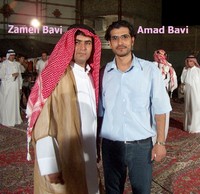 Defense lawyers told Human Rights Watch that on June 8, the Third Branch of the Revolutionary Court in Ahwaz sentenced another four men to death following a one-day trial on June 7. The court found the men, Zamel Bawi, Jaafar Sawari, Raisan Sawari, and Abdulreza Nawaseri, guilty of armed activity against the state.
Human Rights Watch said that the Iranian government is obliged as a party to the International Covenant on Civil and Political Rights to provide persons accused of crimes with "fair and public hearing by a competent, independent, and impartial tribunal."
"A summary trial behind closed doors does not meet the international standards binding Iran," said Whitson. "For Iran to put these defendants to death would be the ultimate violation of their rights."
Zamel Bawi's lawyer, Saleh Nikbakht, told Human Rights Watch that during his client's trial on June 7, the Revolutionary Court prosecutor charged the four men under Iran's penal code as mohareb, meaning "enemies of God." The accusation of being mohareb is leveled against anyone charged with taking up arms against the state and committing violent acts, and is punishable by death.
According to Nikbakht, the state presented evidence that the defendants had purchased homemade bombs which they deactivated and hid, a charge that carries a 10-year prison sentence. But the lawyer said that since the prosecutor presented no evidence that the men had actually carried out any violent acts, they had not committed a capital offense under Iranian law.
Human Rights Watch called on the Iranian government to stop using the death penalty, due to its inherent cruelty and irrevocability.
Links :
Reuter report
UNPO Urgent Appeal Concerning Ahwazi Executions
Ahwazis face arrest, deportation and execution - 1 June
Amnesty International: Eleven Ahwazis Face Execution - 17 May
Iran prepares for new round of executions in Ahwaz - 13 May
Executed: Young Men Hung by Iranian Tyrants - 2 March
Iran prepares to execute tribal family - 19 February
Iran sentences seven over Ahwaz bombings - 15 February
Iran increases repression in Ahwaz - 8 February
Ahwaz Bombings Come After Weeks of Unrest - 24 January
Labels: death penalty
permalink
keywords: ahvaz ahwaz ahwazi arabistan khuzestan khuzistan khuzestani arab arabistan iran iranian human rights security oil news ahmadinejad ethnic cleansing
.......................................................................................
15 June, 2006
Iran's persecuted Ahwazi Arab minority are being subjected to an ethnic cleansing programme in their homeland, Al-Ahwaz (Khuzestan), with their lands confiscated to build racially exclusive settlements such as the Persian township of Sharinshahr.
The British Ahwazi Friendship Society (BAFS) has found that many of those who object to forcible relocation have 'disappeared' or have been executed, with hundreds of Ahwazis dumped in mass graves. BAFS has published photographic proof of shallow graves where Ahwazis have been buried in a place the government calls "Lanat Abad", the place of the "damned people". The bodies do not stay long in the unmarked graves, before they are dug up and eaten by dogs (click on image for larger size).
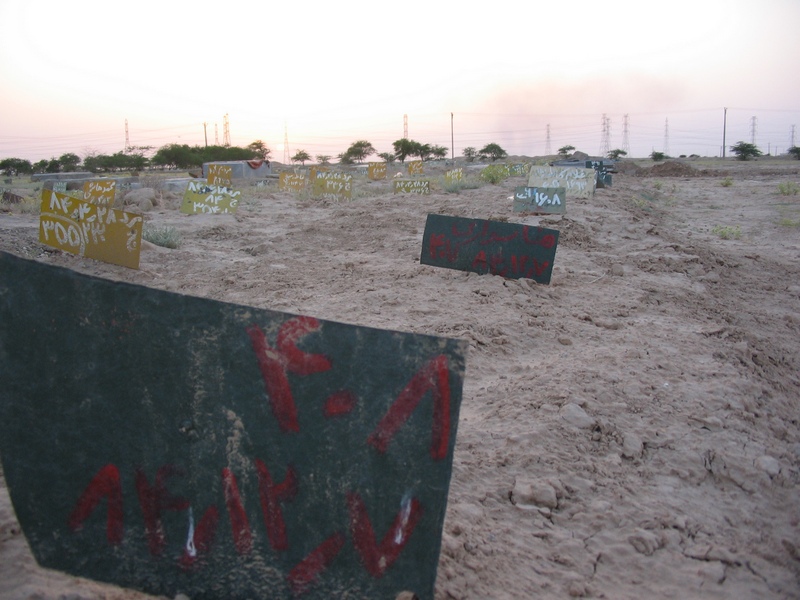
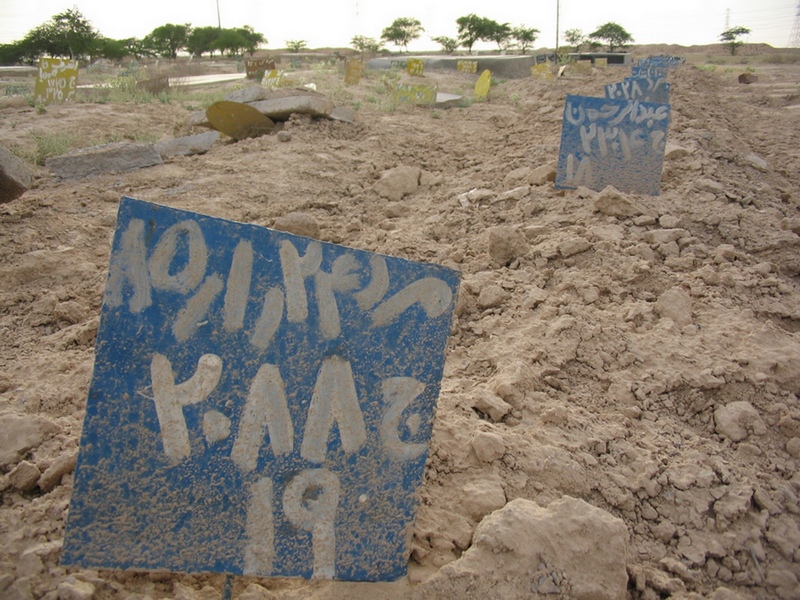
Around 160 Ahwazi Arabs were killed in the Ahwazi intifada (uprising) in April 2005 when the regime lost control over large parts of Khuzestan, but more have been murdered, incarcerated and 'disappeared' as unrest has continued.
They include Seyed Sultan Albu-Shokeh , a 45 year old disabled farmer from Falahya (Shadegan) ( click here for more information ):

Mehdi Nawaseri , who was hung after being forced to confess on Khuzestan TV to being a terrorist:
Muhammed-Ali Afrawi , who was also hung alongside Mehdi after a television "confession" - his sister was murdered by the security forces the following day and his father, a leading psychologist at Chamram Hospital, is now on death row:
Click here for more information on the execution of Mehdi and Ali .
Kamal Daghaghleh , who was shot dead by the security forces in a demonstration in Ahwaz's Hey Althowra district which followed the executions ( click here for more information ):
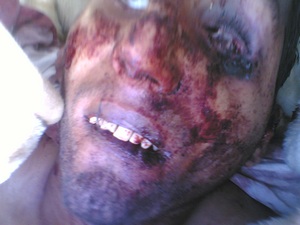
A number of bodies showing signs of torture have been found up washed up on the shores of the Karoon River, which flows through Ahwaz City, or found in fishing nets ( click here for more information ):
Meanwhile, the wives and young children of Ahwazi activists campaigning to stop the killings and land confiscations have been held hostage by the regime. They include the world's youngest political prisoner, Baby Salma, the daughter of Fahima Ismail Badawi (pictured below) and moderate opposition leader Ali Madouri-Zadeh:
Other minorities are also suffering violent persecution, notably the Balochis. The Iranian military is using helicopter gun ships and air strikes to kill innocent Balochis in their homeland, which straddles the Iran-Pakistan border ( click here for the Balochistan Peoples Party website ):
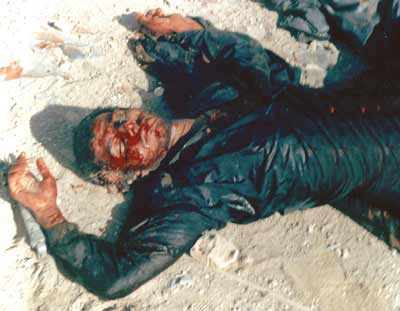
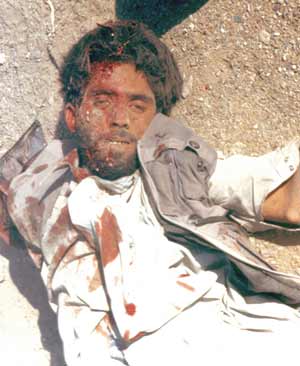
BAFS spokesman Nasser Bani Assad said: "Despite high profile appeals by European politicians and human rights activists, the European Union and the British government have ignored Ahwazi appeals for the issue of ethnic cleansing to be addressed at an international level.
"Meanwhile, Chinese, Indian and European firms are profiting from the genocidal policies of the Iranian regime, with the full support of their governments. Companies such as Britain's Costain Group ( click here for more information on Costain ) are investing large sums on money in industries that exploit natural resources extracted from land forcibly taken from Ahwazis. The Ahwazis themselves are rewarded with mass unemployment, poverty, disease and anonymous mass graves - none of the revenue generated from the oil-rich lands stolen from the Ahwazis is redistributed.
"Last year, the Costain Group won a US$1.6 billion deal to construct the Bid Boland 2 gas treatment facility for the National Iranian Gas Company near Behbahan City, a facility that relies on state terror to maintain Costain profits. The deal was assisted with the support of the UK's ambassador to Tehran, Richard Dalton ( click here for details ).
"We want to ask Prime Minister Tony Blair how his government's assistance in the pillaging of Al-Ahwaz and the terrorising of the Ahwazi Arabs is in any way conducive to the creation of a stable and democratic Middle East? Why are the killings in Ahwaz less important than the killings in Halabja?"
Labels: death penalty , human rights
permalink
keywords: ahvaz ahwaz ahwazi arabistan khuzestan khuzistan khuzestani arab arabistan iran iranian human rights security oil news ahmadinejad ethnic cleansing
.......................................................................................
14 June, 2006
The following is a statement published by the
Unrepresented Nations and Peoples Organisation
(UNPO) regarding the continuing state killings of Ahwazi Arabs.
The South-western governor-general of Khuzestan has announced publicly that the ongoing Ahwazi executions will continue. Twenty one detainees face imminent execution by aggressive Iranian security force aimed at targeting the Ahwazi-Arabs.
UNPO is deeply concerned at current developments in Iran, specifically concerning the indigenous Ahwazi Arab people. Last week, the south-western provincial Governor-General of Khuzestan (Al-Ahwaz) - General Amir Hayat-Moqaddam, reportedly told the Iranian News Agency (IRNA) that the executions of Ahwaz-Arabs would continue after the government has issued more than eight executions over the past two months. Taking all events into account it would indicate that the Iranian repressive regime is undertaking a new wave of arbitrary executions targeting political and human rights activists of the indigenous Ahwazi Arab nation in Iran.
According to our information, on 01 June 2006, the Revolutionary Court's 3rd Branch in the city of Ahwaz sentenced eleven political activists to death. Two days later, Iraj Amirkhani, Ahwaz Prosecutor General reportedly announced over public radio that twenty five people have been arrested and are also to be sentenced to death. This currently brings the total to thirty six Ahwazis recently arrested since this critical announcement.
Since April 2005, over 25,000 Ahwazis have been detained and an approximate 130 executed so far. To date, over 150 individuals have disappeared and are believed to have been held, tortured and then executed by the Iranian security forces. The Ahwazi-Arabs have faced confiscation of their farm lands, forced displacement and have suffered sustained human rights violations. The scale and continuation of repression against the Ahwazis demands urgent international attention and address by the United Nations (UN) and bodies mandated to the uphold respect for human rights worldwide.
Based on the above facts, UNPO has appealed to Mr. Philip Alston, Special Rapporteur on Extrajudicial, Summary or Arbitrary Executions to:
1) urgently request the individuals facing threat of immediate execution to be granted due legal proceedings and/or be released;
2) urgently alert the United Nation's Secretary General, Kofi Annan, to the current situation in Iran regarding the ongoing arbitrary executions of the Ahwazi peoples;
3) urge Iran to respect and uphold its obligations under International Humanitarian law and to end practices of unlawful arbitrary detention and execution; especially in executions towards minors, and;
4) put renewed pressure on Iran to end its acts of repression against the Ahwazi Arab peoples in Khuzestan.
Links
Six of sixteen Ahwazis on trial face execution - 4 June 2006
Ahwazis face arrest, deportation and execution - 1 June
Amnesty International: Eleven Ahwazis Face Execution - 17 May
Iran prepares for new round of executions in Ahwaz - 13 May
Executed: Young Men Hung by Iranian Tyrants - 2 March
Iran prepares to execute tribal family - 19 February
Iran sentences seven over Ahwaz bombings - 15 February
Iran increases repression in Ahwaz - 8 February
Ahwaz Bombings Come After Weeks of Unrest - 24 January
Labels: death penalty
permalink
keywords: ahvaz ahwaz ahwazi arabistan khuzestan khuzistan khuzestani arab arabistan iran iranian human rights security oil news ahmadinejad ethnic cleansing
.......................................................................................
04 June, 2006
According to information received by the Mohamara News Agency (Mona), six of 16 Ahwazis on trial in the revolutionary court in Ahwaz City have been convicted of "waging war on God" and are set to face execution.
The intelligence services have ordered the revolutionary court, which sits in closed sessions, to sentence the following Ahwazi detainees to death: brothers Zamel Bawi, Mohsen Bawi and Emad Bawi, all of whom run computer shops in Ahwaz City, along with teacher Risan Sawary (pictured), Tariq Abayat and Ali Manbohi.
Mohsen Bawi has been accused of masterminding an attack on a sugar plantation settlement with the involvement of two other detainees, Abdulreza Noasseri and Abbas Jamossi (aka Abu Mokhtar).
Their convictions were secured in a trial that fell far short of international standards, with defendants denied access to lawyers or to see the "evidence". The charges against the men are widely believed to be false and the evidence fabricated. The presiding judge, Dadfr, has reportedlt told tribal leader and businessman Hajj Salem Bawi, the father of six brothers accused of terrorist acts, that the role of the revolutionary court was to give approval to sentences decided by the authorities before the trial.
Meanwhile, the court has reportedly rejected an appeal by Hani Bawi, one of six Bawi brothers accused of insurgency, against his sentence. He was given an 11-year prison sentence and two years house arrest in the northern Iranian city of Baafq earlier this year. Hani Bawi is a university student studying accounting at Chamran University in Ahwaz City. The sixth brother, 16 year old Muslim Bawi, is due to face trial at a youth court.
Hedi Battili (Abu Mohammed) and Saeed Hamedan (Abu Mohie) are also set to face trial in coming days and are likely to face the death penalty.
Links
Ahwazis face arrest, deportation and execution - 1 June
Amnesty International: Eleven Ahwazis Face Execution - 17 May
Iran prepares for new round of executions in Ahwaz - 13 May
Executed: Young Men Hung by Iranian Tyrants - 2 March
Iran prepares to execute tribal family - 19 February
Iran sentences seven over Ahwaz bombings - 15 February
Iran increases repression in Ahwaz - 8 February
Ahwaz Bombings Come After Weeks of Unrest - 24 January
Labels: death penalty
permalink
keywords: ahvaz ahwaz ahwazi arabistan khuzestan khuzistan khuzestani arab arabistan iran iranian human rights security oil news ahmadinejad ethnic cleansing
.......................................................................................
01 June, 2006
Six Ahwazi Arabs have been sentenced to death this week at Section 3 of the Ahwaz Revolutionary Court.
They were convicted of involvement in bomb attacks in the city, although the names of those sentenced have not been confirmed. Reports suggest that three of those facing execution are among the six sons of moderate Ahwaz tribal leader Hajj Salem Bawi who have been the subject of an intense campaign for their release. The Bawi brothers are believed to be among the victims of the government's retribution against the Ahwazi population for unrest that has gripped the province of Khuzestan, the Ahwazi Arab homeland. However, reports from Ahwaz are unclear as the proceedings of the Revolutionary Courts are held in private, with defendents denied access to defence lawyers. In a recent report, Amnesty International has listed 11 men threatened with execution, including Zamal and Imad Bawi, pictured (
click here for report
).
 Meanwhile, a number of Ahwazi refugees are being held in custody in Syria while their fate is decided by the Syrian government, an ally of the Iranian regime. Saeed Saki, an Ahwazi refugee registered with the Office of the UN High Commissioner for Refugees, has already been extradited to Iran by Syria and human rights groups have expressed concern over his treatment (
click here for details
).
Meanwhile, a number of Ahwazi refugees are being held in custody in Syria while their fate is decided by the Syrian government, an ally of the Iranian regime. Saeed Saki, an Ahwazi refugee registered with the Office of the UN High Commissioner for Refugees, has already been extradited to Iran by Syria and human rights groups have expressed concern over his treatment (
click here for details
).
Syria's extradition of registered Ahwazi refugees contravenes the Geneva Convention on refugees and Ahwazi activists have appealed to the Syrian government to release the refugees. The refugees' UNHCR registration documents state that they should be "protected from forcible return where he/she would face threats to his or her life or freedom." The British Ahwazi Friendship Society (BAFS) has obtained proof of the UNHCR refugee registration for Jamal Obeidi, a 34-year-old student and Chair of Ahwazi Student Union in Syria (click on picture for larger version).
Dutch national Faleh Abdullah al Mansouri (60), who leads the Ahwaz Liberation Organisation (ALO), is also being held by Syria. The Iranian regime claims all those arrested in Syria are Salafists, followers of a Sunni Islamist sect. However, the ALO has never propagated any religious views and has a secular nationalist ideology.
Labels: death penalty , Mansouri , refugees
permalink
keywords: ahvaz ahwaz ahwazi arabistan khuzestan khuzistan khuzestani arab arabistan iran iranian human rights security oil news ahmadinejad ethnic cleansing
.......................................................................................
17 May, 2006
The following is an urgent action published by Amnesty today regarding the detention and possible execution of members of Iran's persecuted Ahwazi Arab community.
At least 11 men, all members of Iran's Arab minority, are reportedly under sentence of death and at risk of execution. They are believed to have been accused of involvement in bomb explosions in the city of Ahvaz, in Khuzestan province, southwest Iran; distributing material against the state; having contact with dissident organizations operating abroad; and endangering state security. Amnesty International recognizes the rights and responsibilities of governments to bring to justice those suspected of criminal offences, but is unconditionally opposed to the death penalty as the ultimate violation of the right to life.
Brothers Zamel Bawi, 29, and Imad Bawi, 31, were reportedly arrested by security forces on 11 August 2005 along with their three other brothers and a cousin. Their father and uncle, Hajj Salem Bawi, a tribal leader and a businessman who runs a number of computer stores in Khuzestan province, was arrested by security forces after enquiring about where his sons and nephew were being detained. He was released on 28 August 2005 and had apparently met three of his sons while he was held in Amaniya Prison, in the city of Ahvaz. He could see that they had been ill-treated.
Zamel Bawi (pictured) is a businessman who owns shops in Ahvaz. He is married and has an 11 month-old son, Hareth. Imad Bawi was studying law at the Lebanese University of Beirut. He was visiting his family in Ahvaz during the summer holiday when the Iranian authorities banned him from returning to Lebanon. Amnesty International has no further information on the reasons for the ban.
At the end of October 2005, Amnesty International received reports that both Zamel and Imad had been sentenced to death. Further reports indicated that the brothers appeared before a Tehran court on 21 February 2006 accused of distributing material against the state, having contact with dissident organizations operating abroad, and endangering state security, possibly in connection with bomb explosions in Ahvaz city. These reports also suggested that they had not been allowed legal representation and that the court sessions took place behind closed doors. On 19 March 2006 the death sentence was reportedly confirmed for Zamel Bawi. No details of the hearing or the outcome were divulged. Amnesty International has no further information about Imad Bawi.
The nine remaining men, Dr Awdeh Afrawi, Nazem Bureihi, Aliredha Salman Delfi, Ali Helfi, Ali Manbouhi, Jaafar Sawari, Risan Sawari, Mohammad Ali Sawari, Moslem al-Haâi, may also have been sentenced to death for their alleged involvement in bomb explosions in the city of Ahvaz, which took place in October 2005. Seven of them have been shown "confessing" on local television, with one other mentioned as a participant in the bombings. Another has reportedly been convicted of the same offence. Two other men have already been executed.
There has been confusion over the convictions as the trials have been held behind closed doors. Government officials have also given conflicting statements on whether the nine men have been sentenced to death in relation to the bombings.
According to the Minister of Justice, 45 people have been arrested in connection with the October explosions. On 14 February 2006, the Minister of Justice told the state news agency IRNA that seven of them had been convicted on charges including "enmity with God and corruption on earth (moharebeh and ifsad fil-arz, for which the penalty is execution, cross amputation, crucifixion or banishment), and murder" and that their sentences would be announced shortly. On 20 February 2006, the Prosecutor General reportedly said that "some of those convicted in this case have been sentenced to death, including the two main culprits, whose presence in the recent Ahvaz incidents was proved and their execution verdict is definite". On 21 February, in a statement to IRNA commenting on this report, the Minister of Justice stated that only two had been sentenced to death and these sentences were under review by the Supreme Court. He noted that "the seven convicts have not all committed crimes that call for the death penalty."
Although seven men were said to have been convicted of involvement in the October bombings, nine men were shown "confessing" on Khuzestan Provincial TV on 1 March 2006. Among them were Mehdi Nawaseri and Ali Awdeh Afrawi, who were hanged in public the following morning; Dr Awdeh Afrawi (father of executed Ali Awdeh Afrawi), Risan Sawari, Jaafar Sawari, Aliredha Salman Delfi, Ali Manbouhi, Ali Helfi, and Nazem Burehi.
Dr Awdeh Afrawi, 52, is a psychologist at Ahvaz's Shahid Chamran hospital. He and and his son, Ali Awdeh Afrawi, were reportedly arrested in Ahvaz shortly after the October 2005 explosions.
Teacher Risan Sawari, 30, (pictured) was reportedly arrested in April 2005, released and arrested again in September.
Jaafar Sawari and Aliredha Salman Delfi were reportedly arrested in September 2005. Mehdi Nawaseri was reportedly arrested on 19 October 2005 and teacher, Mohammad Ali Sawari, on or around 4 November 2005. Moslem al-Ha'i was mentioned during the "confessions" as a participant in the bombings, but it is not known when he was arrested.
Ali Manbouhi, Ali Helfi and Nazem Bureihi have reportedly been in custody since 2000, when they were arrested on charges of "insurgency" and were each sentenced to 35 years' imprisonment. However, they also featured in the "confessions" footage. In March 2006 there were unconfirmed reports that they were to face a retrial on charges of moharebeh and murder.
On 10 May 2006, according to E'temad newspaper, the Governor of Khuzestan, Amir Hayat Moqaddam, announced that the cases of an unspecified number of people suspected of involvement in the bombings had been transferred to the judiciary and would be tried soon. He said, "It is anticipated that, on account of the type of crime committed, a number of these people will be executed."
Links
Iran prepares for new round of executions in Ahwaz - 13 May
Executed: Young Men Hung by Iranian Tyrants - 2 March
Iran prepares to execute tribal family - 19 February
Iran sentences seven over Ahwaz bombings - 15 February
Iran increases repression in Ahwaz - 8 February
Ahwaz Bombings Come After Weeks of Unrest - 24 January
Labels: Amnesty , death penalty
permalink
keywords: ahvaz ahwaz ahwazi arabistan khuzestan khuzistan khuzestani arab arabistan iran iranian human rights security oil news ahmadinejad ethnic cleansing
.......................................................................................
13 May, 2006
Ahwazi Arab activists are warning of a potential massacre in Ahwaz as the Iranian regime prepares to execute up to seven Arabs in its campaign to stop anti-government unrest in the region in the southwest of Iran.
The Governor of Khuzestan has promised more "trials" and executions of Ahwazis, according to IRNA, an Iranian government news agency.
The British Ahwazi Friendship Society (BAFS) has received a list of seven Ahwazis currently in custody who are likely to be executed by the regime in the immediate future:
Ali Matouri Zadeh
Abdullah Abdulhousain Salman
Abdulamir Farajulla Chaab
Mohammad Chaab Pour
Khalaf Khazirawi
Malek Banitamim
Jalil Moghadam
Ali Matouri Zadeh's wife, Fahima Ismail Badawi, is also in custody. In March, she gave birth to a baby girl Salma in prison. At just under eight weeks old, Salma is the world's youngest political prisoner ( click here for more information ).
Ahwaz previously witnessed a wave of executions in March, including the public hangings of Ali Afrawi and Mehdi Nawaseri following show trials over recent bomb attacks in the city ( click here for report ). The executions were broadcast around the world, including a special report on human rights in Iran by the UK's Channel 4 News. The trials, televised "confessions" and executions were condemned by Amnesty International, the world's leading human rights organisation.
Ahwaz is a focus of anti-government anger, with Ahwazi Arabs enraged by ongoing persecution, land confiscation, poverty and state terrorism. Unrest began in April 2005 after revelations that the government had a 10-year plan to reduce the Arab proportion of the province's population from 70 per cent to 30 per cent, contained in a leaked secret letter by former Vice-President Ali Abtahi ( click here to download ). Thousands have been arrested and scores killed since the uprising began.
Ahwazi activists have written to the British Ahwazi Friendship Society (BAFS) fearing a "big massacre in Ahwaz" and calling on the "international community to take a stand against this crime against humanity."
Labels: death penalty
permalink
keywords: ahvaz ahwaz ahwazi arabistan khuzestan khuzistan khuzestani arab arabistan iran iranian human rights security oil news ahmadinejad ethnic cleansing
.......................................................................................
20 March, 2006
Teacher Risan Hassan Sawari, 30, is facing imminent execution, according to his relatives.
He was one of several men "confessing" on the state-owned Khuzestan TV to carrying out bomb attacks in October 2005. He is completely innocent of the charges levelled at him by the Iranian regime as he has been held in custody since September 2005 on unspecified charges.
Risan is among several men shown on Khuzestan TV in early March confessing to the attacks. Two have already been publically executed in Ahwaz City ( click here for report ).
Amnesty International has released an urgent action on behalf of Risan and eight other men, including Dr Awdeh Afrawi, a respected psychologist at Ahwaz's Shahid Chamran hospital ( click here for report ). Dr Afrawi's son was one of the two executed on 2 March. His daughter has since been murdered by security officials.
Risan's family fear that he will be executed in prison. Most executions in Ahwaz have been carried out in prison, without relatives being informed. Rioting followed the public executions carried out earlier this month and further hangings are likely to inflame the situation in Ahwaz.
Below is a picture of Risan (far left) with his pupils
Labels: death penalty
permalink
keywords: ahvaz ahwaz ahwazi arabistan khuzestan khuzistan khuzestani arab arabistan iran iranian human rights security oil news ahmadinejad ethnic cleansing
.......................................................................................
13 March, 2006
The world's leading human rights organisation, Amnesty International, has lodged an appeal on behalf of nine Ahwazi Arabs sentenced to death.
The men have reportedly been convicted of carrying out bomb attacks in Ahwaz in October 2005, although Amnesty says the exact charges are unclear. There is confusion over the convictions as the trials are held in secret religious courts that are not usually open to the public. Government officials have also given conflicting statements on whether the nine men have been convicted in relation to the bombings. The Ministry of Justice claims that 45 people have been arrested in connection with the bombings, but statements by other officials suggest that the number could be higher.
Seven of the men have already been shown "confessing" on Khuzestan TV and have been convicted of "waging war on God, corruption on the earth and murder", according to some government officials, These crimes carry the death penalty, either by hanging or crucifixion.
Earlier this month, two Ahwazi Arabs - Mehdi Nawaseri and Muhammad-Ali Afrawi - were executed in a street in Ahwaz City after their "confessions" were read out on Khuzestan TV. Muhammad-Ali Afrawi's father, Dr Awdeh Afrawi, 52, is among those listed in Amnesty's appeal. He is a respected psychologist at Ahwaz's Shahid Chamran hospital, although the Iranian regime insists that he is a terrorist working on behalf of the British government. He was arrested shortly after the October 2005 bombings. Muhammad-Ali's sister was murdered by the security services during demonstrations that followed the executions.
Amnesty is concerned that Aliredha Salman Delfi, Ali Manbouhi, Jaafar Sawari, Ali Helfi, Nazem Burehi and Risan Sawari could also face execution in relation to the October 2005 bombings. However, Ali Manbouhi, Ali Helfi and Nazem Bureihi have been in custody since 2000, when they were arrested on charges of "insurgency" and each sentenced to 35 years' imprisonment. They were featured in the "confessions" footage on Khuzestan TV. Risan Sawari was previously arrested in April 2005, but then released and re-arrested in September 2005 - a month before the bombings. Jaafar Sawari and Aliredha Salman Delfi were also reportedly arrested in September 2005. Moslem al-Ha'i was mentioned during the "confessions" as a participant in the bombings, but it is not known when he was arrested, according to Amnesty.
The latest urgent action is the tenth issued by Amnesty on behalf of Ahwazi Arabs since last April's Arab intifada in Ahwaz.
Links:
Latest Amnesty International report on Ahwazis facing execution
Executed: Young Ahwazi Men Hung by Iranian Tyrants - British Ahwazi Friendship Society, 2 March 2006
Iran Slammed for 'Barbarian' Treatment of Ahwazi Arabs - British Ahwazi Friendship Society, 13 March 2006
Labels: Amnesty , death penalty
permalink
keywords: ahvaz ahwaz ahwazi arabistan khuzestan khuzistan khuzestani arab arabistan iran iranian human rights security oil news ahmadinejad ethnic cleansing
.......................................................................................
09 March, 2006
Iran is continuing its ritual executions in Al-Ahwaz (Khuzestan) with three men facing the death penalty for recent bombings - despite the fact that they were in prison at the time of the attacks.
Ali Manbouhi, Ali Helfi and Nazem Bereihi have been serving sentences of 35 years imprisonment since their arrests for insurgency in 2000. They were among those made to confess to recent attacks on Khuzestan TV last week. Reports suggest they are likely to face a retrial on charges of "waging war on God" and murder soon, with the regime seeking to make them scapegoats for unrest in Al-Ahwaz. The punishments for these crimes include hanging, crucifixion and amputation.
Nasser Bani Assad, spokesman for the British Ahwazi Friendship Society, said: "We know for certain that these men could not be responsible for the bomb attacks in Al-Ahwaz because they are being held in a high security prison. The retrial and execution of these men is illegal even by Iranian law. It is an act of vengeance and intimidation against the Ahwazi people and is part of the government's campaign to portray all Arabs as enemies of the state.
"President Mahmoud Ahmadinejad believes that once the Ahwazi Arabs are scared into silence, the ethnic cleansing programme in Al-Ahwaz can be stepped up to secure oil supplies and to tighten Iranian control over neighbouring areas of Iraq. But state violence is only inflaming the situation. Recent developments indicate that Ahwazi Arabs are now seeking to cripple the national economy by attacking oil installations."
Labels: death penalty
permalink
keywords: ahvaz ahwaz ahwazi arabistan khuzestan khuzistan khuzestani arab arabistan iran iranian human rights security oil news ahmadinejad ethnic cleansing
.......................................................................................
08 March, 2006
A man identified as "Iraj D" was hanged in public on Monday in Shooshtar, Al-Ahwaz (Khuzestan). The man was charged with murder but no detail of his trial was released. This is the sixth execution in Al-Ahwaz within the space of a week. The Iranian regime does not publicise all the executions it carries out, with most carried out inside prison. The number of state killings is likely to be higher than reported.
Link: Executed: Young Men Hung by Iranian Tyrants
Labels: death penalty
permalink
keywords: ahvaz ahwaz ahwazi arabistan khuzestan khuzistan khuzestani arab arabistan iran iranian human rights security oil news ahmadinejad ethnic cleansing
.......................................................................................
03 March, 2006
The British Ahwazi Friendship Society (BAFS) has received reports that throughout Friday demonstrators clashed with police in Hay Althwra (Shilangabad), Hay Zerghan, Zowyeh, Malasheyah and Koot Abdoula. There are reports of three deaths, including two women, at the hands of security forces. Four children are also reported to have been injured.
The protests came a day after two Ahwazi Arab men were hung in Ahwaz City. Khadija Afrawi, known as Foziya, the sister of Ali Afrawi, one of the men who was executed, was killed by the Iranian intelligence services. Her crime was to complain about her brother's execution. The hangings were followed hours later with a percussion bomb attack in the Kianpars area of Ahwaz City.
BAFS had warned that the execution of Ahwazi Arab political prisoners would result in an upsurge in anti-government protests. It also believes that the government will use any violence in Ahwaz as a pretext of vigilantism by Basiji forces, an intensification of its ethnic cleansing programme and a real danger of genocide against Ahwazi Arabs.
Ahwazi activists have called on the international community to seek ways of preventing further state violence and human rights abuses. However, they stress that the Ahwazi cause should not be used to justify military intervention in Iran. Ahwazis say they need a voice at an international level and do not want a return to the dark days of the Iran-Iraq War when their homeland attacked with chemical and biological weapons by the warring Iraqi and Iranian forces.
Labels: death penalty , intifada
permalink
keywords: ahvaz ahwaz ahwazi arabistan khuzestan khuzistan khuzestani arab arabistan iran iranian human rights security oil news ahmadinejad ethnic cleansing
.......................................................................................
A percussion bomb exploded in the Kianpars area of Ahwaz City just hours after two young Ahwazi Arab men were executed in Naderi Street.
No deaths or injuries were reported, although the windows of nearby buildings were smashed by the blast.
Meanwhile, the government's Islamic Republic News Agency has reported that the two men the regime had executed in Ahwaz City were responsible for the bomb attacks of 24 January ( click here for report ). However, reports from human rights organisations, including Amnesty International, indicate that they were arrested immediately following bomb attacks in October 2005 and had remained in custody.
On Wednesday evening, a Khuzestan TV programme broadcast "confessions" for recent bombings by a number of Ahwazis in custody, including Ali Monbohi, who has been in custody since 2000. The "confessions", which were read out by the accused, did not implicate any foreign government in the attacks.
Nasser Bani Assad, spokesman for the British Ahwazi Friendship Society, said: "The regime's inconsistency casts serious doubt on the veracity of its accusations against the Ahwazis currently in custody as well as its claims that the British were responsible - claims that have not been substantiated with any evidence. Despite arresting hundreds and killing scores of Ahwazi Arabs accused of terrorist acts, including pregnant women and children, the frequency of bomb attacks in Ahwaz is rising.
"If the international community ignores the plight of the Ahwazis, then many angry and impoverished Ahwazi Arabs are bound to look for solutions that are not peaceful. We have always stressed the need for non-violent resistance and international solidarity, but we fear that as state terrorism increase in Al-Ahwaz, more and more disillusioned and angry Ahwazi Arabs will seek methods that are not peaceful. For the sake of stability and peace in the Middle East, multi-lateral bodies must start addressing the Ahwazi issue or the situation will escalate further."
Labels: death penalty , intifada
permalink
keywords: ahvaz ahwaz ahwazi arabistan khuzestan khuzistan khuzestani arab arabistan iran iranian human rights security oil news ahmadinejad ethnic cleansing
.......................................................................................
02 March, 2006
Two young men - Mehdi Nawaseri and Muhammad-Ali Afrawi - were hung in Ahwaz today by the Iranian regime.
Mehdi and Muhammad-Ali, who the regime claims are Salafist extremists working on behalf of the British forces in Iraq, were met with taunts and jeers by Basijis shouting "Death to Israel!" Witnesses say they were gradually hoisted into the air, causing them to die slowly of strangulation. They were convicted of carrying out bomb attacks in Ahwaz on 15 October 2005 by a secret religious court. Their death sentences were approved by the Supreme Court. They died after months of torture and forced confessions by the regime. But they were not alone as Ahwazis in Al-Ahwaz and across the world held all-night vigils for the two young men.
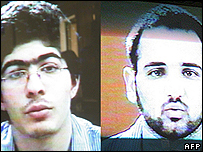 The night before, the two young men in their early 20s were shown on Khuzestan TV, frightened and barely able to speak as they were forced to confess to crimes many believe they did not commit (
right click here and save to download "confessions"
). Their executions follow the hanging of three Ahwazi Arabs in Karoon Prison on Tuesday morning.
The night before, the two young men in their early 20s were shown on Khuzestan TV, frightened and barely able to speak as they were forced to confess to crimes many believe they did not commit (
right click here and save to download "confessions"
). Their executions follow the hanging of three Ahwazi Arabs in Karoon Prison on Tuesday morning.
Amnesty International, Unrepresented Nations and Peoples Organisation (UNPO) Ahwaz Human Rights Organisation (AHRO) and the British Ahwazi Friendship Society (BAFS) sent out appeals to governments, UNHCR and Members of the European Parliament to intervene to stop the executions. However, the appeals were ignored as the international community tried to appease the Iranian regime to forge a deal on the nuclear issue. Human rights in Iran have been kept off the international agenda, despite reports of an upsurge in abuses and executions.
President Ahmadinejad has cancelled public visits to Khuzestan on three occasions due to anti-government unrest among Ahwazi Arabs. He has been embarrassed and humiliated and now he is attempting to prove his hard-line credentials by taking violent revenge on Ahwazi Arabs. The unrest is the result of the government's ethnic cleansing of Khuzestan, which involves land confiscation, forced migration and enticements to non-Arabs from outside the province to settle in plush new residential areas. The regime is clearing out the Arabs to secure its control of local resources and to extend its political influence over Iraq.
BAFS spokesman Nasser Bani-Assad said: "This is yet another tragic day for the Ahwazi Arabs. We thank Amnesty, UNPO, AHRO and countless sympathetic individuals for trying their best to stop this latest wave of executions. The regime thinks that public hangings will weaken the resolve of Ahwazi Arabs to fight for their rights. They could not be more wrong. Every abuse strengthens the will to overcome oppression. Every bullet fired, every punch and kick of a prison guard, every man and woman that dies at the hands of the tyrants of Tehran will only help unite the Ahwazis.
"The Ahwazi Arab homeland is the most oil-rich region on the planet, but the Ahwazi Arabs are among the world's poorest people. They hold the destiny of Iran, the Middle East and the world in their hands. The more they are oppressed and impoverished, the stronger they will rise up and change the course of history. The international community will not be able to ignore the Ahwazi Arabs for long."
Labels: death penalty
permalink
keywords: ahvaz ahwaz ahwazi arabistan khuzestan khuzistan khuzestani arab arabistan iran iranian human rights security oil news ahmadinejad ethnic cleansing
.......................................................................................
The British Ahwazi Friendship Society (BAFS) has received footage from the Iranian government-owned Khuzestan TV showing the "confessions" of those accused of carrying out bomb attacks in Ahwaz, who were due to be publically executed in Ahwaz City on Thursday morning (download: http://www.tv.ahwazmedia.com/video/documentary/khuzestantv.rm - right click and save).
Those shown in the clip include two young men in their early 20s, Mehdi Nawaseri and Muhammad-Ali Afrawi, whose cases have been publicised by BAFS, the Ahwaz Human Rights Organisation and Amnesty International. Ali Monbohi, who was detained in 2000, is also featured. This indicates that he could also be facing execution, although he was in prison during the time of the recent bomb attacks in Ahwaz. There is no mention by the accused of British involvement in the attacks, despite the allegations made by Iranian officials that the bombers were British agents. Both Mehdi and Muhammad-Ali appear to be reading out their "confessions" and seem to be hesitating as they speak. It is widely believed that the men have been tortured, a common practice by Iranian interrogators.
BAFS has also received video phone clips of protests by Ahwazi Arabs against state terrorism and executions:
http://www.tv.ahwazmedia.com/video/Inside/film1.3gp
Labels: death penalty
permalink
keywords: ahvaz ahwaz ahwazi arabistan khuzestan khuzistan khuzestani arab arabistan iran iranian human rights security oil news ahmadinejad ethnic cleansing
.......................................................................................
01 March, 2006
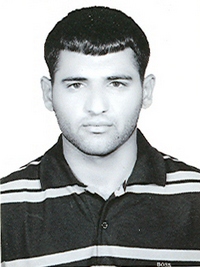 Reports from Iran claim that three Ahwazi Arabs were executed on the morning of 28 February and two are set to be publically executed on 2 March. Meanwhile, a critically ill pregnant woman and a four year old in ill health along with his mother and grand-mother are among those Ahwazis suffering Iran's over-crowded prisons, where the regime extracts confessions through torture.
Atef Nour Mosawi, Anwar Nour Mosawi and Jalal Nasser Al-Nasser were executed in Karoon Prison. The two awaiting execution are Mehdi Nawaseri (pictured) and Muhammad-Ali Afrawi, whose cases have been publicised by the British Ahwazi Friendship Society (BAFS). They are accused of carrying out the 15 October bombings in Ahwaz City and have been convicted of "waging war on God". Khuzestan province's deputy governor Mohsen Farokh-Nejad claims that they are "individuals with Wahabi and Salafist tendencies", an accusation that normally infers Saudi involvement. He has previously claimed that those responsible for the bombings were British agents, although the regime has not published any proof to support its allegations.
Amnesty International and the Unrepresented Nations and Peoples Organisation (UNPO) have both sent appealed for executions in Ahwaz to be halted. According to reports from Iran, the two men will be hung in Naderi Street in Ahwaz City. Five others - Aouda Afrawi (a medical doctor), Aliredha Salman Delfi, Ali Manbouhi, Raisan Sawari and Jafar Sawari - are also set for long prison sentences.
The regime claims they are the culprits for bomb attacks in Ahwaz, although human rights groups, former prisoners and relatives of prisoners claim that they have suffered torture. The regime has instructed the local television station to broadcast confessions made by the men during their incarceration.
Abuse of Ahwazi women and children - shame on the mullahs
Ahwazi activists are highlighting the cases of two female Ahwazi political prisoners: Sakina Naisi and Mousma Kaabi. Sakina is 40 years old and pregnant and reportedly bleeding, which suggests that she is in danger of a miscarriage and possible death due to her prison conditions.
Masouma is 28 years old and is the wife of Habib Nabgani, an Ahwazi political activist. She is in prison with her four year-old son Aimad, who is reportedly ill due to poor conditions, and her mother-in-law.
BAFS spokesman Nasser Bani Assad said: "The Iranian regime is depraved. It treats Ahwazi Arab women as less than dogs. Anyone in the regime with any sense of decency should release Sakina, Mousma, Aimad and Mousma's mother-in-law immediately and see that they receive adequate medical treatment. It must stop executions and torture and release all Ahwazi political prisoners immediately. The UNCHR and the European Commission must send fact-finding teams to Al-Ahwaz to assess the human rights situation there.
"The world is obsessed with Iran's nuclear programme, but is ignoring the human rights of the people of Iran and ignoring the brutal ethnic cleansing of Ahwazi Arabs. What options are the Ahwazis left with when their appeals go unheeded and their women are brutalised by the Iranian regime's policy of state terrorism and ethnic cleansing?"
Labels: death penalty , women
permalink
keywords: ahvaz ahwaz ahwazi arabistan khuzestan khuzistan khuzestani arab arabistan iran iranian human rights security oil news ahmadinejad ethnic cleansing
.......................................................................................
25 February, 2006
Amnesty International has expressed its outrage over an "alarming rate" of executions in Iran, particularly the use of the death penalty against children.
The human rights organisation has recorded 28 executions so far in 2006, following at least 94 in 2005 - although it states that "the true figure is likely to be much higher." The use of the death penalty is increasingly being used against political prisoners.
An Amnesty press release highlighted the case of two Ahwazi Arabs who face imminent execution - Mohammad Ali Sawari and Mehdi Nawaseri. The British Ahwazi Friendship Society (BAFS) highlighted the cases of Mehdi Nawaseri and his brother Abdolreza Nawaser on 21 February ( click for details ).
The Iranian regime has stated that seven of 45 people accused of bomb attacks in Ahwaz had been convicted of "enmity with God, corruption on earth and murder". Amnesty says the offences carry heavy penalties, including "execution, cross amputation [amputation of right hand and left foot], crucifixion for three days, or banishment."
Amnesty states that it "recognizes the rights and responsibilities of governments to bring to justice those suspected of committing recognizably criminal offences, but the organization is unconditionally opposed to the use of the death penalty as the ultimate violation of the right to life. It therefore urges the Iranian authorities to impose an immediate moratorium on the use of the death penalty and to abide by its international obligations not to execute anyone for an offence committed when they were a child."
Link: "Iran: Worrying trends in use of death penalty" - Amnesty International Press Release, 24 February 2006
Labels: Amnesty , death penalty
permalink
keywords: ahvaz ahwaz ahwazi arabistan khuzestan khuzistan khuzestani arab arabistan iran iranian human rights security oil news ahmadinejad ethnic cleansing
.......................................................................................
23 February, 2006
The
Unrepresented Nations and Peoples Organisation
(UNPO) has issued an appeal for urgent action to Philip Alston, United Nations Special Rapporteur Extrajudicial, Summary or Arbitrary Executions to pay urgent attention to the imminent execution of the two Ahwazi Arab brothers in Ahwaz City on the conviction of "waging war against Allah". The appeal comes after the British Ahwazi Friendship Society publicised their cases -
click here for further details
.
Mehdi Nawaser, 21, and Abdolreza Nawaser, 31, were arrested in November 2005 before the Eid-al-Fitr anti-government demonstrations and are reportedly facing impending execution by hanging. Following their conviction they are reported to have told the court that they refused to accept the ruling of a non-indigenous, non-Arab, discredited and undemocratic regime.
The appeal follows the statement by Iran's State Prosecutor General Ghorban-Ali Dori-Najafabadi, indicating that the execution verdict of the two Ahwazi Arabs is "definitive", quoted by the hard-line Mehr News Agency on Monday 20 February.
In the appeal, UN expresses concerns about "the fairness of the proceedings leading to Mehdi Nawaser and Abdolreza Nawaser's conviction and fears that political factors may have influenced the way in which their cases were prosecuted; that the Nawaser brothers are prisoners of conscience, convicted for their peaceful criticism of the government. The Iranian regime has a history of execution of Ahwaz Arab people and political dissidents on the basis of similar arguments."
UNPO calls upon Iran to stop the execution of Mehdi Nawaser and Abdolreza Nawaser. Meanwhile, it also urges the UN Rapporteur to address the issue of unfair trials, extrajudicial and summary executions concerning indigenous Ahwaz Arab people, and to urge Iran to comply with minimum international standards for fair prosecution.
Labels: death penalty
permalink
keywords: ahvaz ahwaz ahwazi arabistan khuzestan khuzistan khuzestani arab arabistan iran iranian human rights security oil news ahmadinejad ethnic cleansing
.......................................................................................
21 February, 2006
According to Iran's official Islamic Republic News Agency (IRNA), Justice Minister Jamal Karim-Rad has dismissed suggestions that seven Ahwazi Arabs accused by the regime of masterminding bomb attacks in Ahwaz will face the death penalty ( click for report ).
Karim-Rad claimed that "the foreign media had fabricated news that the persons convicted of the bombings in Ahvaz had received the death sentence," according to IRNA. However, on Monday State Prosecutor General Ghorban-Ali Dori-Najafabadi was quoted by the hard-line Mehr News Agency stating : "Some of the convicted in this case have received execution verdict, including the two main culprits, whose presence in the recent Ahvaz incidents was proved and their execution verdict is definitive."
Karim-Rad appears to have over-ruled the death penalty. He told IRNA: "Islam lays down four types of punishment for enemies of God and the crimes committed by all the seven convicts do not call for the death sentence." The news agency said that he "did not say what punishment their crimes deserved." He simultaneously acknowledged that two of the seven have been sentenced to death, but said their cases were under review by the Supreme Court, which has the power to over-turn sentences handed down by lower courts.
Nasser Bani Assad, spokesman for the British Ahwazi Friendship Society (BAFS), said: "There is a lot of confusion over who is facing execution as the regime is not revealing the identities of those it has convicted or what crimes they are accused of committing. The trials have been held in secret religious courts and relatives are not allowed direct contact with the accused. Matters have not been helped by contradictory statements by officials of the regime. It gives the impression that the justice system is in chaos and hands down arbitrary and politically motivated sentences.
"Over the past few days, BAFS have obtained the names of 12 people who are known to have been sentenced to death. We have also received reports that two people have been executed in Dezful prison and two in a public square in Shiraz. Whether there is any relation between these people and those mentioned by the regime is a mystery.
"We hope that Karim-Rad's statement indicates that lives will be spared. This will go some way to restoring justice for the accused, particularly for the six sons of the Ahwazi tribal leader Hajj Salem Bawi who we are convinced are innocent. Any executions would be highly provocative in a situation where tensions are running high in Ahwaz.
"We back calls by the relatives of the accused for transparent, fair and open trials. We also call on the authorities to release all political prisoners that have been detained since last April's uprising in Ahwaz. We urge the EU and the UNCHR to support the deployment of human rights monitors in Khuzestan in order to review the situation facing Ahwazi Arabs."
Relevant articles
Iran prepares to execute two Ahwazi Arab brothers - 21 February
Iran carries out executions as prisons overflow with Arabs - 21 February
Iran prepares to execute tribal family - 19 February
Labels: death penalty
permalink
keywords: ahvaz ahwaz ahwazi arabistan khuzestan khuzistan khuzestani arab arabistan iran iranian human rights security oil news ahmadinejad ethnic cleansing
.......................................................................................
Two Ahwazi Arab brothers convicted of "waging war against Allah" have been sentenced to death in relation to recent bombings in Ahwaz City. Their execution will come after a long period of incarceration and torture by the Iranian regime and a trial by a religious kangaroo court.
Mehdi Nawaser, 21, (left) and Abdolreza Nawaser, 31, (right) are facing execution by hanging, either in the prison where they are being held or in a public square. Mehdi was arrested in November before the Eid-al-Fitr anti-government demonstrations. Following his conviction he reportedly told the court that he refused to accept the ruling of a non-indigenous, non-Arab, discredited and undemocratic regime.
The Nawaser brothers cases are not thought to be related to the six sons of Ahwazi Arab tribal leader Hajj Salem Bawi, who are all facing execution for "waging war against Allah". Click here for further details on the Bawi brothers .
Labels: death penalty
permalink
keywords: ahvaz ahwaz ahwazi arabistan khuzestan khuzistan khuzestani arab arabistan iran iranian human rights security oil news ahmadinejad ethnic cleansing
.......................................................................................
20 February, 2006
The British Ahwazi Friendship Society (BAFS) has received reports that two Ahwazi Arab political prisoners were executed in the courtyard of a prison in Dezful while another two were executed by hanging in a public square in Shiraz. We do not have the names of those killed by the Iranian regime.
On 16 February, the Ahwaz Revolutionary court sentenced 10 Ahwazi Arabs to death for alleged connection to recent bombings: Amar Bawi, Hani Bawi, Zamal Bawi, Said Abiat, Mehdi Nawaseri, Ali Aodeh Afrawi (medical doctor), Mohamadali Saweri (teacher), Raisan Sawaeri and Moslem Alhani. BAFS has been following the cases of the Bawi brothers, who are the sons of Ahwazi tribal leader and businessman Hajj Salem Bawi. Click here for further details .
Prisons in Ahwaz are overflowing due to mass arrests by the Iranian authorities. At least 100 people were arrested in demonstrations in Ahwaz City and Fallahieah (Shadegan) on 16 February for wearing the kafieh and white dishdasha, Arab clothes recently banned in Khuzestan by the regime, and for carrying the Ahwazi national flag. Witnesses reported that Sepidar prison was refusing new prisoners due to over-crowding, a problem that is also affecting Karoon, Chahrshir, Amanieh and Serah prisons.
Labels: death penalty
permalink
keywords: ahvaz ahwaz ahwazi arabistan khuzestan khuzistan khuzestani arab arabistan iran iranian human rights security oil news ahmadinejad ethnic cleansing
.......................................................................................
18 February, 2006
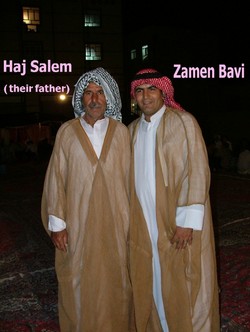
The British Ahwazi Friendship Society has received photographs and the personal details of the sons of an Ahwazi Arab tribal leader who face imminent execution in an act of vengeance against mass demonstrations by Ahwazis against the Iranian regime.
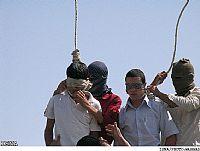 Six sons of tribal leader Hajj Salem Bawi are currently in custody with three reportedly convicted of "war against Allah" and sentenced to death. The Iranian regime has executed an unknown number of Ahwazis in the past year. Some have "disappeared" after their arrest and their mutilated bodies have been found washed up in the Karoon River -
click here for more details
. Others have been officially executed, either in prison or in public squares on truck-mounted cranes, after trial by secretive religious courts.
Six sons of tribal leader Hajj Salem Bawi are currently in custody with three reportedly convicted of "war against Allah" and sentenced to death. The Iranian regime has executed an unknown number of Ahwazis in the past year. Some have "disappeared" after their arrest and their mutilated bodies have been found washed up in the Karoon River -
click here for more details
. Others have been officially executed, either in prison or in public squares on truck-mounted cranes, after trial by secretive religious courts.
It is not known where or when the Bawi brothers will be executed. Last week, Hajj Salem Bawi wrote an appeal to President Ahmadinejad to spare his sons' lives - click here for more details . The Bawi family are not known for involvement in political activism and own a number of computer shops in Ahwaz City.
Nasser Bani Assad, BAFS spokesman, said: "Two of the Bawi brothers have children, two others are students and all work hard in an expanding family business. The Iranian regime is claiming that these young men are willing to sacrifice their family lives and business and bomb fellow Arabs on the instruction of the British government. It is absurd.
"The regime wants to punish Ahwazi Arabs for daring to raise a voice against oppression and injustice. They have extracted confessions from Ahwazis in their custody using torture. They have set up a kangaroo religious court to try the men without any members of the public, press or their own family present. On the basis of this corrupt and abominable system of 'justice', they are prepared to wipe out an entire generation of a law-abiding Arab family.
"If the hard-liners think executions will pacify Ahwazi Arabs, they are very wrong. Ahwazis can only conclude that there is no fair system of justice in Iran and that Arabs cannot run businesses and rescue themselves from the crushing poverty they endure on a daily basis. Further despair and anger will heighten unrest in Al-Ahwaz and in turn give the authorities excuses for stepping up the ethnic cleansing of Ahwazi Arabs from their homeland."
Details of Bawi family members:
Asad Habib Dakhil Bawi
Born: 22 June 1972
ID #773
Married with two sons
Arrested: 11.00am, 11 August 2005 at family computer shop.
Mohsen Salem Dakhil Bawi
Born: 11 September 1973
ID #9024
Single
Arrested: 9.00pm 11 August 2005 at family computer shop
Sohrab (Amad) Salem Dakhil Bawi
Born: 11 November 1975
ID #9026
Single
Arrested: 9.00pm, 10 August 2005 at family computer shop
Zamen Salem Dakhil Bawi
Born: 23 August 1977
ID #9027
Married with one son
Arrested: 2.30pm, 10 August 2005 in Akherasfalt street
Hani Salem Dakhil Bawi
Born: 21 September 1984
ID #2619
Single, student of Ahwaz University
Arrested: 9.00pm, 10 August 2005 at family computer shop
Moslem Salem Dakhil Bawi
Born: 21 September 1987
ID #8642
Single, student
Arrested: 10 August 2005 at an internet cafe
Labels: death penalty
permalink
keywords: ahvaz ahwaz ahwazi arabistan khuzestan khuzistan khuzestani arab arabistan iran iranian human rights security oil news ahmadinejad ethnic cleansing
.......................................................................................


An Ahwazi Arab tribal leader has begun a public appeal to save his sons from imminent execution (pictures above are from the Arabistan.org website).
Hajj Salem Bawi, the father of six members of the Bawi tribe currently in Iranian custody, has complained to President Mahmoud Ahmadinejad about their arrest, imprisonment and "physical and psychological torture." In a letter dated 8 February, the tribal leader states that it has been six months since his sons were "arbitrarily arrested and kept in prison by the security forces without charge, without court proceedings and without any information [from the authorities] as to their situation despite my continuous inquiry."
The tribal leader, a businessman who owns computer shops in Ahwaz City, calls on Ahmadinejad to explain the charges against his sons and a review of their cases by "qualified courts" in accordance with article E 37-177 of the Iranian constitution. He also requests a three minute private audience with the President.
He writes that the arrests "have greatly affected our family, left us without support and bread winners and without protection. Furthermore, the mother of my six sons is extremely ill and her condition is deteriorating daily as a result."
The Bawi brothers have been the subject of a number of appeals by human rights groups, such as Amnesty International, which have highlighted their incommunicado detention and possible torture. Recent reports suggest that three of the Bawi brothers are among the seven recently sentenced to execution for "war against God" by religious courts. Two of the others reportedly facing the death penalty are Ali Mehdi Nawaseri and Muhammad-Ali Afrawi.
The Bawi brothers and others likely to face execution have no history of political activism. Those currently detained are are either university students or business men. They are accused of involvement in a series of bomb attacks in Ahwaz. One of the men was visiting family in Ahwaz during a break from studies at university in Beirut when he was arrested and was reportedly away from the country during the bomb attacks of October 2005.
The threat of executions comes after Hamid Zangeneh, a non-Arab Majlis member for Khuzestan aligned with the former Revolutionary Guards commander Mohsen Rezaei, called for Arabs to be taught a lesson with high profile executions, martial law and a crack-down by security forces. In an interview with the Mehr News Agency earlier this month, Zangeneh accused the regime of not doing enough, despite the killings and mass arrests of Arabs. President Ahmadinejad is under pressure from the religious establishment to prove his hard-line credentials by killing Arabs.
Links
-->Amnesty International Urgent Action --> , 2 November 2005
Amnesty International Urgent Action , 9 September 2005
Iran's mass arrest of Ahwazi tribal leaders and intellectuals - British Ahwazi Friendship Society, 9 September
Labels: death penalty
permalink
keywords: ahvaz ahwaz ahwazi arabistan khuzestan khuzistan khuzestani arab arabistan iran iranian human rights security oil news ahmadinejad ethnic cleansing
.......................................................................................
14 February, 2006
Seven people have been sentenced in relation to the bomb attacks in Ahwaz in January, according to reports in the Iranian media.
Little is known of the seven that have been sentenced or the 38 others still awaiting trial as court proceedings for political crimes are usually carried out in secret. An Iranian official claimed that the men were convicted of "murder, war against God and being corrupt on the earth." These crimes carry the death penalty.
Nine people died in the bombings and at least 40 were injured. The authorities have claimed that the British were directly responsible, but have yet to publish evidence of a link. Previous bombings have also been blamed on the British, although the Iranian regime has been reluctant to take any retaliatory measures or prove a link with alleged bombers. The British government has denied the allegations. The regime has also failed to present the British government a list of Ahwazi exiles for extradition to face trial, which it had threatened to do after the October bombings in Ahwaz.
One relatively unknown Canada-based group which has little influence within the Ahwazi community has claimed responsibility for a number of attacks, including the explosions in January. It is impossible to verify their claims and the Iranian regime has not singled out any Ahwazi movement for responsibility.
A statement signed by a number of Ahwazi groups, including the Democratic Solidarity Party of Al-Ahwaz and the National United Movement of Al-Ahwaz, condemned all forms of political violence following the January attacks. The statement, which was also signed by the British Ahwazi Friendship Society and supported by the Balochistan Peoples Party (BPP) and the Congress of Nationalities for a Federal Iran (CNFI), can be downloaded by clicking here .
Labels: death penalty
permalink
keywords: ahvaz ahwaz ahwazi arabistan khuzestan khuzistan khuzestani arab arabistan iran iranian human rights security oil news ahmadinejad ethnic cleansing
.......................................................................................
26 January, 2006
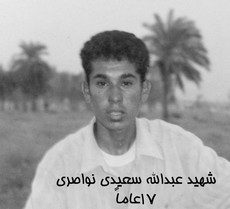
These are the pictures of two young Ahwazi Arab men murdered by Iranian security forces during recent anti-government demonstrations: Abdolah Saidi-Nawaseri (age 17) and Asmad Mojadam (age 24).
An unknown number of Ahwazi Arabs have been summarily executed by Iran in the past two weeks following peaceful demonstrations in Eid-al-Adha. The British Ahwazi Friendship Society (BAFS) has received the names of five unarmed Ahwazis killed by the Iranian regime during the protests: Ahmad Naseri (age 22), Jaber Sawari, Sayed Chabawi, Abdolah Saidi-Nawaseri (17) and Asmad Mojadam (24).
There has been a complete global media blackout on the killings and mass arrests of Ahwazi Arabs and violent state repression. This is in contrast to this week's bombings in Ahwaz, which are believed to be the work of the Baseej paramilitaries seeking to justify the oppression of Arabs and portray the Iran state as the victim instead of the perpetrator of terrorism. Bomb attacks by the quasi-military religious vigilante group are increasingly common in Iran.
Links
Iran's crack-down as Ahwaz Eid protests continue
Iran authorities arrest hundreds and shoot demonstrators in Ahwaz
More arrests in Ahwaz
Labels: death penalty , human rights , intifada
permalink
keywords: ahvaz ahwaz ahwazi arabistan khuzestan khuzistan khuzestani arab arabistan iran iranian human rights security oil news ahmadinejad ethnic cleansing
.......................................................................................
29 December, 2005
Two Arabs were executed in Ahwaz City, according to reports by Iranian news agencies on Wednesday.
It is unclear what crimes the men were accused of committing, with one source suggesting they had been found guilty of armed robbery and another of "waging war on God", which usually constitutes opposing the Islamic Republic.
The men were identified only by their first names: Naeem-Abdollah and Jaleel. Their names are not known to the British Ahwazi Friendship Society, which has helped to highlight a number of cases involving Ahwazis detained by the authorities. However, hundreds of Ahwazis have been arrested in recent months and their relatives have been unable or unwilling to give the names of detainees to human rights organisations.
Amnesty International has recently expressed its concern over the incommunicado detention and possible torture of relatives of Ahwazi tribal leader Hajj Salem Bawi , two Ahwazi teachers and a local newspaper editor , and Ahwazis who had allegedly participated in demonstrations in Ahwaz City .
Labels: death penalty
permalink
keywords: ahvaz ahwaz ahwazi arabistan khuzestan khuzistan khuzestani arab arabistan iran iranian human rights security oil news ahmadinejad ethnic cleansing
.......................................................................................
03 November, 2005
Amnesty International highlighted the possibility of the imminent execution of the sons of Ahwazi Arab tribal leader Hajj Salem Bawi in a report published on Wednesday. The text of the report (AI Index MDE 13/065/2005) is below:
-->Iran: Further information on fear of torture and ill-treatment / Incommunicado detention and new concern: Death Sentence. -->
Imad Bawi and his brother Zamel Bawi have reportedly been sentenced to death. It is not known what they were convicted of, or whether there will be an appeal. If there is no appeal, and the sentence goes directly to the Supreme Court for ratification, they could be executed at any time.
The brothers' father, Hajj Salem Bawi, was reportedly released on 28 August. He apparently met three of his sons while he was held in Amaniya Prison, in the city of Ahwaz. He could see that they had been ill-treated.
The five Bawi brothers and their cousin Asad Bawi were reportedly arrested on 11 August, and Hajj Salem Bawi later that day when he made enquiries about their whereabouts. It is not known precisely when Mansour Tayouri or Hassan Boughedar were arrested. The Bawi family are prominent in Ahvaz, in the province of Khuzestan, which is home to most of Iran's Arab minority. Relatives have reportedly claimed that at least three of the detainees have been tortured physically and psychologically.
Labels: Amnesty , death penalty
permalink
keywords: ahvaz ahwaz ahwazi arabistan khuzestan khuzistan khuzestani arab arabistan iran iranian human rights security oil news ahmadinejad ethnic cleansing
.......................................................................................
25 October, 2005
Two close relatives of the Ahwazi Arab tribal leader, Haj Salam Bawi, are facing imminent execution as the Iranian regime attempts to tighten its grip on the indigenous population of Khuzestan.
Amad Bawi and Zamil Bawi are among the six relatives of the tribal leader recently arrested for alleged insurrection against the Iranian regime. Reports from family members indicate that the six men are undergoing psychological and physical torture. All six are likely to face trial and execution as a way of subduing local tribesman ahead of an intensification of the government's land confiscation programme. Click here to download Amnesty International's report on the arrests.
Amad Bawi, the owner of a computer repair shop, is charged with distributing CDs containing human rights reports from the Ahwaz Human Rights Organisation (AHRO) and the UN Commission on Human Rights (UNCHR). Zamal Bawi, a university student, is being prosecuted in connection with bomb attacks in Ahwaz City on the basis of trumped up charges and false evidence. The two young men are likely to be tried and executed in coming days as the state attempts to intimidate the local population ahead of a new wave of ethnic cleansing along the Shatt Al-Arab .
In the past week a political prisoner at Karoon prison, Said al-Khalafi, was executed in the prison yard. Also, last week the body of an Ahwazi Arab activist was found in Karoon Rover, which runs through Ahwaz City, and another was lynched in the Arab city of Hamidieh and hung from a street light.
The regime has staged a massive crack-down on the local Ahwazi population due to growing unrest in the province. On 11 October, Esmail Ghasem Abyat and Lefteh Sarkhi, both human rights activists and students at the Chamran University in Ahwaz, were arrested. Meanwhile, Reza Salman Delphi, a 34-year-old businessman also known as B. Behjat, has been detained since 11 August and denied medical treatment for heart and kidney diseases.
Labels: death penalty
permalink
keywords: ahvaz ahwaz ahwazi arabistan khuzestan khuzistan khuzestani arab arabistan iran iranian human rights security oil news ahmadinejad ethnic cleansing
.......................................................................................
