




A hardline Iranian cleric, Shiekh Samir Dorakwandi, has escaped an assassination attempt in the Arab city of Ahwaz in southwest Iran.
Dorakwandi was shot an wounded by gunmen while he was on his way to the Khatam al-Anbiya mosque in the Alawi (Hay al-Thawra) district. He was shot in the shoulder and the stomach. He is currently being treated in hospital and his condition is reportedly stable. Dorakwandi is believed to be a member of the Bassij, which has been used to suppress ethnic Arab unrest in the region.
The assassination attempt follows successful high profile assassinations of a leading hardline the imam of Zahraa mosque in the Hay al-Thawra district, Sheikh Hesham Saimari , in June and a Revolutionary Guards commander, Mehdi Bayat , this month. Iranian security forces have reportedly set up road blocks throughout the region in an effort to capture those responsible.
The Iranian government claimed it had arrested the assassins of Sheikh Saimari in June, but this has not stopped militants from targetting other senior members of the paramilitary Bassij and the Revolutionary Guards. The authorities have described those responsible as Wahhabis (Sunni fundamentalists) and Monafeqin (hypocrites), a term used to refer to the Iraq-based Mujahideen-e-Khalq (MEK). The government has also tried to associate the killings with the Israeli, US and British governments, although it has presented no evidence to substantiate its claims.
The Iranian regime portrays Ahwazi Arab unrest as foreign-instigated religious sectarianism, although human rights groups and UN experts have criticised institutional discrimination against Ahwazi Arabs, who endure the highest levels of poverty in Iran.
The impoverished Hay al-Thawra district of Ahwaz has witnessed significant ethnic unrest in recent years and is the focus of violent repression by the Bassij forces.
Labels: intifada
permalink
keywords: ahvaz ahwaz ahwazi arabistan khuzestan khuzistan khuzestani arab arabistan iran iranian human rights security oil news ahmadinejad ethnic cleansing
.......................................................................................
26 September, 2007
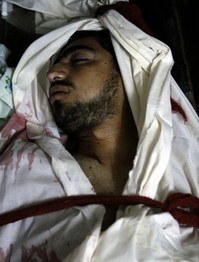 A Revolutionary Guards commander died after an ambush on 20 September by Ahwazi militants, according to Iran's Fardanews this week and confirmed by Ahwazi groups.
Ambush near Hamidiyah
Mehdi Bayat was killed near the Revolutionary Guards base in Hamidiyah, 25km from Ahwaz City, after returning from military training. According to Fardanews, he and his colleagues had escaped one ambush only to fall into a second ambush. He died of his injuries the following day. There are no reports of injuries or deaths among his colleagues. According to some Ahwazi group, the ambush took place in a village called Al-Shuish, near Hamydia, and was assassination was retribution for recent executions.
The actual rank Bayat held has not been announced, but Ahwazi and official Iranian sources indicate he was a commanding officer responsible for training members of the Bassij militia in Khaffajiyah. The town of Khaffajiyah has witnessed a number of disturbances by Ahwazi Arab groups which have been brutally put down by the Revolutionary Guards' Ashura Brigades, which were formed nearly 15 years ago to crush dissent in Iran.
Responsibility
A number of assassinations and attempted assassinations have been carried out in Ahwaz in recent months with members of the Revolutionary Guards, the police and clerics targetted. In June, militants assassinated Hisham Saimeri, the imam of Zahraa mosque in the Hay al-Thawra district of Ahwaz City, which has experienced the highest levels of Arab unrest. At the time, the provincial governor blamed "saboteurs, evildoers and Wahhabis." ( click here for further details )
At the time, the Canada-based Hizb al-Nahda al-Ahwaziya (Ahwazi Renaissance Party (ARP)) welcomed the assassination and warned Hijazi of " the consequences of continuing the criminal policies committed against Ahwazis ." The ARP has also welcomed the assassination of Bayat, stating that "Ahwazis have proved through this heroic act to the Persian invader authorities that their repressive practices and executions would not stop their struggle to regain their usurped rights." ( click here for their report ) It is unclear what, if any, links the ARP has with the assassins. It is a separate group from the Harkat al-Nedhal Alarabi (Arabic Struggle Movement for Liberation of Al-Ahwaz (ASMLA)) which claimed responsibility for a number of bomb attacks in Ahwaz City.
Iranian officials claim that a group called Jebheyia Khalghi Al-Ahwazyeh (Ahwazi Nation or People Front) was responsible. It is unclear which Ahwazi group they are referring to and no group has claimed responsibility for the killing.
Labels: intifada
permalink
keywords: ahvaz ahwaz ahwazi arabistan khuzestan khuzistan khuzestani arab arabistan iran iranian human rights security oil news ahmadinejad ethnic cleansing
.......................................................................................
24 August, 2007
The following article was written by the Iranian journalist Amir Taheri and appeared in Arab News .
Is the Islamic Republic of Iran facing a growing revolt by its Arab minority?
Until a couple of years ago, the question would have sounded naive or provocative. In the 1980s, Arab-Iranians had fought bravely against Saddam Hussein's forces despite the fact that they were linked to the invading Iraqis by ethnic, tribal, linguistic and religious ties going back 1300 years.
According to data from the Foundation for the Martyrs, an organization supposed to look after war veterans and the families of the war dead, the number of Arab-Iranians who died for the fatherland was proportionally four times higher than Iranians from other ethnic backgrounds. And, yet, in the past two years evidence has mounted that Arab-Iranians, disenchanted by the Islamic republic and angry at Tehran's increasingly repressive policies under President Mahmoud Ahmadinejad, are drawn toward dissidence and revolt.
Last year, rising tension in a number of Khuzestani towns and villages forced Ahamdinejad to cancel his much-publicized visit to the province. (Later, he managed a shortened version of the trip amid tight security.)
In the past few weeks, the authorities have executed 11 men in connection with the nascent Arab revolt. Hundreds more have been arrested and shipped to jails in unknown destinations. Earlier this month, bands of Arab youths ran riot in the streets of Ahvaz, capital of the southwestern province of Khuzestan, attacking government offices and banks and setting official cars on fire. According to eyewitnesses, the authorities had to bring in special Baseej (Mobilization) militia units to regain control. The pro-government militia later raided a number of neighborhoods, including Khazaalyiah and Kut-Abdallah, where ethnic Arabs form a majority, arresting dozens of people. Among them was Thamer Ahvazi, regarded as one of the province's top musical pop stars. His crime? Singing "defiant" rap-style songs in Arabic.
There are no accurate figures regarding the number of ethnic Arabs in Iran. The best estimates, however, put the number at around 2.2 million, or more than three percent of the total population. They are stretched over 600 kilometers of territory, from the borders of Iraq to the Straits of Hormuz on the Gulf of Oman. More than half, however, live in Khuzestan, Iran's oil-rich province that also produces a good part of the nation's food, including almost all of its sugarcane and 80 percent of its date crops.
Until the late 1940s, ethnic Arabs were in majority in Ahvaz, the provincial capital and Khorrmashahr, the nation's biggest port until its destruction by Saddam Hussein in 1981.
Now, however, ethnic Arabs account for less than 25 percent of the population in Ahvaz, and just some 40 percent in Khorramshahr. Nevertheless, ethnic Arabs still form a majority in smaller towns along the border with Iraq, including Shadegan, Howeyzeh, Karkheh, and Dasht-Mishan. The population of the Iranian portion of the Mesopotamian marshlands is also almost entirely Arab.
The province's mainly Arab feature changed for several reasons.
First, the discovery of oil in 1908 led to an economic boom that created new job opportunities that the locals could not fulfill. Hundreds of thousands of peoples from provinces in the Iranian heartland poured into Khuzestan, first as temporary laborers and then as permanent residents.
The second reason was a government policy, formulated in 1928, to "Persianize" Arab majority areas by bringing whole families of farmers from distant provinces, including Khorassan some 1000 miles away. The newcomers revived the province's moribund agriculture, introduced new crops and, as they prospered, multiplied faster than native Arabs who remained largely excluded from the new economy.
The introduction of the military draft also helped the change. Many ethnic Arabs decided to smuggle their male children to the Arab coast of the Gulf to avoid obligatory military service. Most never returned.
Sometimes whole families and clans emigrated to avoid the draft and taxation by an increasingly assertive central government in Tehran. At the same time, the better-educated ethnic Arabs moved north to settle in Tehran, the capital, and other major cities in the Iranian heartland where they gradually lost their Arab identity.
It is hard to identify the exact causes of the current tension in Khuzestan. One source of tension is the emergence in neighboring Iraq of a new government dominated by Arab Shiites. In the Islamic republic, however, not a single ethnic Arab is in any key government position. Many Arab Shiites try to live on both sides of the Iran-Iraq border without having lost their ancient bonds of blood and tradition. The Bani Kaab, the Bani Amer, the Bani Tamim and other smaller tribes have always moved and intermarried regardless of the border fixed in 1921 when the British crated the new Iraqi state out of three Ottoman provinces.
The dream of a unified Arab Shiite state, encompassing central and southern Iraq as well as the Iranian province of Khuzestan, which Arab nationalists call "Arabistan", appeals to many activists on both sides of the border. Not surprisingly, some local tribal chiefs and even Shiite mullahs are trying to use that dream to build a constituency for themselves.
Another source of the tension is the activities of a number of armed groups, some of which set up by Saddam Hussein in the 1970s as a means of exerting pressure on Tehran. These groups, often linked to armed smuggling networks operating in both Iran and Iraq, have been mainly responsible for attacks on border posts and police stations in a number of towns close to the border.
The main source of the tension, however, is the central government's policy of implicit discrimination against the Arab minority. This is especially manifest in state-owned corporations where non-Arabs have an automatic advantage in terms of job opportunities, grades and pay.
Arabs are also at a disadvantage when it comes to places in higher education. Entry into Iranian universities is through a tough set of examinations known as "konkour". Ethnic Arabs disadvantaged at the examination because they usually come from worst rated secondary schools, do not quite master the Persian, the language of the tests, and are unfamiliar with specific questions dealing with Persian culture and literature. As a result, an ethnic Arab's chance of getting into an Iranian university is 12 times lower than his compatriots from Tehran, Shiraz or Isfahan. Demands that at least 10 percent of places at local universities be reserved for ethic Arabs have been turned down by successive Islamic republic administrations in Tehran. Ahmadinejad regards positive discrimination as "un-Islamic".
One outlet for Arab-Iranian grievances is the so-called Khuzestan Welfare Party that calls for greater autonomy for the province within the Iranian state. Created in 1946, the party disappeared in the mid-1950s, to reappear in 2005. No one can gauge its strength. But it provides a moderate alternative to the radical Ahvaz Liberation Front (ALF) that has preached armed struggle since the 1970s.
The revolt of Arab-Iranians is in its early stages. There is, as yet, no evidence that it might degenerate into secessionism. Ahmadinejad's repressive policies, however, could help those who claim that ethnic Arabs would be better off in a secular democratic state with their Iraqi Shiite Arab brethren than remaining within an Islamic republic dominated by chauvinistic mullahs.
The outside world should pay attention to what is happening in Khuzestan if only because it produces almost 70 percent of the oil that Iran exports each day.
Labels: intifada
permalink
keywords: ahvaz ahwaz ahwazi arabistan khuzestan khuzistan khuzestani arab arabistan iran iranian human rights security oil news ahmadinejad ethnic cleansing
.......................................................................................
The Iranian regime has arrested a number of Ahwazis and massively increased the presence of Baseej paramilitaries following the assassination of a senior police commander in the ethnically Arab city of Abadan.
The regime this week announced that it had arrested a group of six Ahwazi "separatists", claiming they are Sunni extremists ( click here for Baztab report ). It is unclear whether the men are among the Ahwazis arrested earlier this month, who were accused of being British agents ( click here for report ).
The Baztab website, which is owned by Mohsen Rezai, a former commander of Iran's elite Islamic Revolutionary Guards, reports that Baseejis have been sent to guard the Azadegan oilfield from bomb attacks . The Baseej commander in Ahwaz, Colonel Karim Karimi, has deployed around 300 Baseej paramilitaries to protect oil facilities.
Meanwhile, according to Khuzestan TV, an Ahwazi youth, Mohammad Jasem Sawari, was shot dead by Iranian intelligence officers who claimed he was responsible for killing Colonel Amiri in Abadan's Ghosba district. Sawari is from Shilangabad (Hay Al-Thurah) district.
Ahwazi activists state that the Iranian regime is using national security as a pretext to terrorise the Arab population and perform summary executions.
Labels: human rights , intifada
permalink
keywords: ahvaz ahwaz ahwazi arabistan khuzestan khuzistan khuzestani arab arabistan iran iranian human rights security oil news ahmadinejad ethnic cleansing
.......................................................................................
14 August, 2007
The Iranian regime has arrested five Ahwazi Arabs while claiming that it had broken up an Ahwazi "terrorist" group it claims is backed by the US, British and Israeli government.
Issa Mahdi Sawari, Mohammad Hatab Sari, Issa Zaeri, Abdulrahman Haidari and Abdolnaser Hamadi were arrested earlier this month and are being held at an undisclosed location. According the British Ahwazi Friendship Society's (BAFS) sources in Ahwaz, none of the men were known to have been involved in serious political activities. Abdulrahman Haidari shares the same name as a well-known Ahwazi activist who was interviewed by Al-Jazeera TV, talking about Arab political demands. However, they are not the same person.
According to the semi-official Fars News Agency, Intelligence Minister Gholam Hossein Mohseni Ejeie said: "Iranian intelligence agents, in their latest operation, have prevented a terrorist act by an anti-revolutionary group, They were aiming to carry out a terrorist act in the south of the (southwestern) Khuzestan province but they were arrested before carrying out any action." ( click here for statement )
Ejeie did not reveal the names of those arrested, but BAFS believes the five arrested Ahwazis have been held in connection with the alleged "terrorist" plot. He claimed the US government was trying "to spread division and splits between forces of revolution and those loyal to the system by utilising some naive and uninformed people."
Further reports from Iran claim that the British government was assisting Ahwazis in smuggling weapons into Iran. The Baztab website claimed that a "British agent" had been arrested. ( click here for report )
The regime has yet to publish any evidence to support its claim that foreign governments are using Ahwazis to carry out bomb attacks in Iran, beyond forced confessions shown on the local television network. A number of Ahwazi political prisoners have been executed in recent months, accused of waging war on God. Two executed Ahwazis were accused of carrying out bomb attacks in Ahwaz in 2005 and 2006, although they had been in prison since 2000. UN experts and international human rights organisations have condemned the regime's secret trials of Ahwazi Arabs and their lack of legal representation .
Craig Murray, Britain's former ambassador to Uzbekistan and a strong critic of British foreign policy, told BAFS of his doubts about Iranian claims of British involvement in any Ahwazi insurgency. He said that the UK "would only consider providing training for insurgent groups if there was a clearly defined military objective and good chance of success. I cannot imagine [the British] are doing anything like this in Iran."
Ejeie also said that in recent months a "number of anti-revolutionaries" had been arrested by Iran's neighboring countries and extradited back to the Islamic republic. Although Ejeie did not reveal the name of the states involved, the Syrian Ba'athist regime is co-operating with Iran in the arrest and deportation of Ahwazi refugees. ( click here for more information on Ahwazi refugees )
Labels: human rights , intifada , terrorism
permalink
keywords: ahvaz ahwaz ahwazi arabistan khuzestan khuzistan khuzestani arab arabistan iran iranian human rights security oil news ahmadinejad ethnic cleansing
.......................................................................................
14 July, 2007
The Iranian regime's new English language television station, Press TV, has broadcast claims that the British government is providing military training for Ahwazi militants in Jordan ( click for details ).
The television channel launched this month claims that "anti-Iranian forces" have been receiving training at a British army base near the Iraqi border since March 2007. It alleges that "retired Jordanian officers" are involved in the training.
It adds: "The large volume of personnel presently housed in the camp indicates that long-term plans are being orchestrated against the Iranian national security particularly in southern areas such as Khuzestan province."
Nasser Bani Assad, spokesman for the British Ahwazi Friendship Society, said: "The claims of British training for militants is not new, but this is one of the craziest allegations made by the Iranian government. If these claims were true, the regime would have evidence and would be making a great deal about it at the United Nations. Ahwazis have not received any such training from Britain, but there are people gullible enough to believe this propaganda.
"We caution people to read between the lines. The Jordanians are attempting to broker peace between Israel and the Palestinians, which is a direct threat to Iran's Hamas allies. So the Iranian regime is smearing Jordan by blaming it for unrest in Ahwaz.
"Previously, Iran has blamed Canada for unrest among Ahwazis when the Canadian government placed pressure on the regime over the arrest, torture, rape and murder of Canadian journalist Zahra Kazemi while she was in Iranian custody.
"Saudi Arabia, Al-Qaeda, Baathists, Wahhabists, Shell Oil and Satanists have also been blamed for Ahwazi unrest in order to portray Arabs as a fifth column in Iranian society. These conspiracies do not exist. They are the products of the colourful imagination of Iranian propagandists who are playing on feelings of insecurity in the Middle East and are rallying nationalist sentiment at home."
Labels: intifada
permalink
keywords: ahvaz ahwaz ahwazi arabistan khuzestan khuzistan khuzestani arab arabistan iran iranian human rights security oil news ahmadinejad ethnic cleansing
.......................................................................................
Bahrainis protesting against Iran's call for their island to become an Iranian province chanted slogans calling for the "liberation of Ahwaz" from Iranian occupation .
Protests erupted after Hussain Shariatmadari, an aide to Iranian President Mahmoud Ahmadinejad, claimed that Bahrainis wanted the "reunification" of Bahrain with its "motherland", Iran. Writing in an Iranian newspaper, Shariatmadari also alleged that Bahrain was separated from Iran on the basis of an agreement signed by the former Shah and the US and British governments.
Bahraini protestors stated that Bahrain has always been Arab. They also accused Iran of illegal occupation of Ahwazi Arab land. Bahrain's Shura Council has also condemned Shariatmadari's comments.
The controversial statements by the presidential aide come weeks after former Iranian Consul General in to Dubai, Adel Assadinia, revealed that the regime had set up sleeper cells in Arab countries in the Gulf. Although Dubai is the principal base of Iranian intelligence operations in the Gulf, Iran has recruited extremists within the Bahraini Shi'ite population. In an interview with the Sunday Telegraph , he said: "The Iranian government believes that to survive it needs permanent bases throughout the Middle East. Anybody who contemplates threatening or invading Iran will have those cells unleashed against them."
permalink
keywords: ahvaz ahwaz ahwazi arabistan khuzestan khuzistan khuzestani arab arabistan iran iranian human rights security oil news ahmadinejad ethnic cleansing
.......................................................................................
25 June, 2007
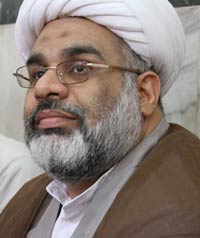 Armed Ahwazi Arabs assassinated a mullah close to the Iranian regime on Sunday in response to the pledge by the newly appointed governor of Khuzestan, Jaafar Hijazi, to attack "saboteurs, evildoers and Wahhabis."
The Iraqi-born cleric, named Hisham Saimeri, was involved in recruiting Ahwazi youth into the Bassij paramilitary forces and was a local spokesman for hardliners in the Iranian regime. He was a known agent of the Iranian intelligence services while serving as the imam of Zahraa mosque in the Hey al-Thawra district of Ahwaz City.
Saimeri preached against Ahwazi Arab rights at Zahraa mosque and had described Ahwazi rights activists as Wahhabis and separatists.
Hijazi was appointed provincial governor on 21 June. During the hand-over ceremony, his predecessor, Amir Hayati-Moghadam, denounced the Ahmadinejad administration for drinking water shortages in the region and accused the government of withholding development aid he had promised. However, over one million Ahwazi Arabs wrote letters of complaint to President Ahmadinejad over government policies, particularly endemic employment, during a visit to the region in January. Ahmadinejad appears to be scapegoating local politicians for government failures, which have fuelled unrest among Arabs. Jaafar Hijazi is the third person to occupy the position of governor of Khuzestan, known locally as Al-Ahwaz or Arabistan, in the space of a year, indicating that Tehran is in a state of panic.
No group has claimed responsibility for the attacks, but the Ahwazi Renaissance Party (ARP) has welcomed the assassination and warned Hijazi of " the consequences of continuing the criminal policies committed against Ahwazis ."
Labels: intifada
permalink
keywords: ahvaz ahwaz ahwazi arabistan khuzestan khuzistan khuzestani arab arabistan iran iranian human rights security oil news ahmadinejad ethnic cleansing
.......................................................................................
08 June, 2007
By Ahmed Janabi, Al-Jazeera
Iranian Arabs in the oil-rich province of Khuzestan in southwest Iran have expressed a strong will to split from Iran and restore their own state, accusing Tehran of suppressing them racially, economically, and politically.
Ahwaz has been witnessing sporadic bombings and confrontations between residents and Iranian police.
In 2006, a bomb exploded in the city, causing tension between Britain and Iran after Manouchechr Mottaki, the Iranian foreign minister, accused Britain of involvement in the unrest.
Arab activists have complained about Iranian indifference to their demands and calls for dialogue.
They have voiced concerns over the low living standards, and the lack of education and medical services in their community.
Tahir Aal Sayyed Nima, chairman of the Ahwaz National Liberation Movement (ANLM), told Al Jazeera.net that Iran was treating its Arab nationals as second-class citizens.
He said: "Arabic is banned in government departments and parliament. Arabic is not allowed to be taught at schools or learning centres. We see this as a bid to assassinate our Arab identity.
"Schools are not available in villages, peasants' children have to go to the city on daily basis to be able to study, which is very impractical of course. Hence, illiteracy in Ahwaz is estimated at 90 per cent, and as long as the Iranian government blocks education, it is unlikely that this percentage would ever go down."
Illiteracy in Iran in general is estimated at 33 per cent.
Federalism
Most of Ahwazi political movements demand full independence for their region, but the Democratic Solidarity Party of al-Ahwaz (DSPA) demands self-rule within a federal state.
Mansour al-Ahwazi, a spokesman for the DSPA, told Al Jazeera.net: "We think it is closer to logic for the time being if we ask for self-rule within a federal state, provided that we enjoy the right of self-determination.
"We have come to the conclusion that the current Iranian regime cannot be reformed, and that is why the reformists have failed to achieve something.
"Our party along with 15 Iranian opposition organisations, have formed the Congress of Iranian Nationalities for Federal Iran. It includes all ethnicities in Iran, and we hope that its outcome will be the appropriate replacement for current regime."
Discrimination
Despite the difference in their approaches, Nima and al-Ahwazi are united in their belief that Ahwazi Arabs are discriminated against by the Iranian government.
Nima said: "An Arab cannot have a job even in his own region. Government departments in our region are full of Persian Iranians. It is nearly impossible for an Arab to get a job at a government department in Ahwaz. How can we get jobs when the Persians call us Kwawla, meaning Gypsies?"
He continued: "Iranians have established agricultural settlements just like those in Israel. By doing this, they are filling the region with Persians and eventually they will achieve their strategic goal of changing the area's demography and make the Persians a majority."
Iran has launched several big projects in the Ahwaz region, such as the Sheeren Shah settlement and the Sheelat settlement, for the fishing industry.
Khuzestan is an oil-rich region
Abd Allah al-Nafisi, a Kuwaiti political analyst and author, told Al Jazeera that the Ahwaz region was vital to Iran's economy. But it is also inhabited by non-Persians, which makes it tricky for Tehran to strike a balance between economic interests and national security.
"Ahwaz is an oil-rich province, so it would be a fundamental region to the government, but at the same time it is inhabited by Arabs. Moreover, geographically it is adjacent to Iraq and Kuwait and stretches along the west shore of the Gulf.
"For the sake of argument, if this region is granted independence or even a self-rule, it would form with Iraq and the Arab states of the Gulf a huge Arab bloc at the gates of Iran," he said.
Constitution
The Iranian constitution states that non-Persian Iranian communities should enjoy the right to preserve their ethnic and religious identities, along with citizenship rights.
Persians constitute 51 per cent of Iran's population of 69 million people. Iran says its Arab population is about two million, but Ahwazis dispute that and say their community has at least five million.
Said Al-Ahwazi: "The Iranian constitution touches on non-Persians' rights, but not clearly and directly. However, we would stick to what we have now.
"We have a problem with the government which is still in a state of denial about its own constitution. If the constitution were implemented fairly, at least we would have been able to teach our language to our children and we would have been able to get jobs."
He said that the first to ask the government to abide by the constitution and give Arabs and other non-Persian Iranians their rights, was a former member of parliament, Jassim al-Tamimi, of the Ahwazi Accordance party.
But the Iranian parliament considered al-Tamimi's requests as a threat to Iranian national security, and banned him from running for the 2005 parliamentary elections.
He was also imprisoned for a week during the Ahwazi uprising in April 2005.
Al Jazeera contacted al-Tamimi at his house in Iran, but his family said he was out of Iran and refused to reveal his whereabouts or give any contact details.
Al Jazeera also contacted the Iranian government for its comments, but no Iranian official was forthcoming.
permalink
keywords: ahvaz ahwaz ahwazi arabistan khuzestan khuzistan khuzestani arab arabistan iran iranian human rights security oil news ahmadinejad ethnic cleansing
.......................................................................................
02 June, 2007

This week marks the 27th anniversary of Black Wednesday, when the Iranian regime massacred 817 Ahwazi Arabs shortly after the overthrow of the monarchy. The Black Wednesday massacre led to the formation of Ahwazi insurgent groups, including the group involved in the Iranian Embassy Siege of 1980.
General Madani imposed a brutal clamp-down on Arabs in Mohammerah (Khorramshahr) in May 1979 which Ahwazi Arabs regards as a crime against humanity. At the time, Arabs were demonstrating for cultural rights and were supported by Ayatollah Mohammed Taher al-Khaqani, an Ahwazi Shi'ite mullah. Following the massacre, al-Khaqani was put under house arrest in Qom, where he died. His son Sheikh Mohammed Kazem al-Khaqani continues to campaign for secularism, religious tolerance and human rights. In March, Sheikh al-Khaqani addressed a meeting at the House of Commons in London ( click here for further details ). Meanwhile, Ahwazi groups have raised their demands for Madani's arrest and prosecution for the massacre which was intended to strengthen the power of the Islamic revolutionaries.
The following is the declaration submitted by the Ahwazi Arab delegates to the Interim government on April 1979 which was published in Iranian newspapers. The appeal centred on demands for regional autonomy and cultural identity, while demanding equal rights in a modern economy:
In the name of God, the most Compassionate, Most Merciful
April 1979
Mr. Mehdi Bazargan, the respected Interim Premier of Iran,
The Muslim Arab people's delegates appeal to your ministry to listen to the demands of a consensus among Arab people, in cities and rural areas, that has emerged through demonstrations. These demands have been supported by Ayatollah Sheikh Mohammed Taher al Shobair Khaqani. The demands include the legitimate rights of the Arab people and their right to self-government, within the framework of the Islamic Republic, and maintaining the unity of Iranian territory.
Mr. President,
The delegates assure you that matters relating to foreign policy, the army, defence of the country's borders, currency, international agreements and long-term economic policies are under the jurisdiction of the central state, and our people condemn all conspiracies designed to fragment the unity of Iran. We condemn imperialism, racism, reactionary ideologies and defend a political Non-Aligned Movement, and reject all colonial agreements, which are harmful to Iran national independence.
Our people believe in the autonomy of "Khuzestan", which was historically called Arabistan and geographically belongs to the Arab people.
The basic demands of the Arab people are as follows:
1. Recognition of the Arab people as a distinct ethnic group and enshrine this in the Constitution of the Islamic Republic of Iran.
2. Establish a local parliament in the autonomous area with powers to legislate and enforce laws and ensure the participation of the Arab people in the Iranian Constituent Assembly, the National Council and the cabinet on the basis of their proportion of tht total population.
3. Establishing an Arab-led judiciary in Arab areas, conforming with the laws of the Islamic Republic.
4. Arabic language should become the official language in the autonomous region, while the Persian language should remain the official language for all Iran.
5. The Arabic language should be taught in primary schools, while education in the Persian language will be conducted in the autonomous area.
6. An Arabic language university along with Arabic language schools and educational institutions should be established in the autonomous regime in order to enhance the role of the Arab people, with support given to young Arab people to study abroad.
7. Freedom of expression and publication should be emphasised with the independent publication of Arabic language books and newspapers and independent broadcasting on radio and television networks, without any kind of censorship.
8. Priority should be given to employment for Arabs in the autonomous area in public and private sectors.
9. Oil revenues should be used to develop the Arab region's industry and agriculture.
10. The names of cities, villages and districts should revert to their original Arabic names, which the fascist Pahlavi regime had changed to Persian.
11. Arabs should be able to participate in the army and local security forces, operating under the autonomous govenment, with the possibility of promotion to high military ranks, which had been denied under the Pahlavi regime.
12. A review of the agrarian reform law, with land redistributed to peasants, based on the laws of the Islamic Republic which say that "the earth is for people who cultivate it."
Finally, we ask the government of Mehdi Bazargan to refrain from negotiations with the opportunistic and reactionary elements on resolving issues related to the Arab people.
Signed,
Delegates of the Muslim Arab people of Iran.
Labels: human rights , intifada , land
permalink
keywords: ahvaz ahwaz ahwazi arabistan khuzestan khuzistan khuzestani arab arabistan iran iranian human rights security oil news ahmadinejad ethnic cleansing
.......................................................................................
15 April, 2007
 The Iranian regime has arrested at least 100 Ahwazi Arabs ahead of protests marking the second anniversary of the Ahwazi intifada.
The Ahwaz Human Rights Organisation (AHRO) has published the names some of those arrested in the past few days - see the bottom of this article. ( click here for report ) Security forces conducted the arrests in an attempt to prevent a traditional Arabic cultural event in Hamidiya town. Poets were among those detained. Some reports put the number of arrests at over 200.
Today (15 April) marks the second anniversary of the Ahwazi intifada , in which the Iranian regime lost control over large parts of Khuzestan - a region known locally as Al-Ahwaz or Arabistan - during massive anti-government protests. The protests were sparked by revelations on Al-Jazeera TV that the Khatami administration was conducting an "ethnic restructuring" project to reduce the proportion of Arabs in the province from around 60 per cent to under a third. A letter written by Ali Abtahi while he was Vice-President detailed the plans, which involved moving non-Arabs into the province. ( click here to download the Abtahi letter and translation ) Over 160 Ahwazi Arab demonstrators were killed by security forces in the uprising.
Abtahi denied he wrote the letter, but the Iranian regime has continued its ethnic cleansing programme with the confiscation of 155 sq km of land on the left bank of the Shatt al-Arab waterway for the military-industrial Arvand Free Zone. Thousands of farmers are being displaced as entire villages are taken over.
Meanwhile, demonstrations have continued in Arab-populated urban slums, where many of the displaced end up. The regime has moved to clear the slums of Arabs and has bombed the Sepidar district of Ahwaz City, destroying hundreds of homes.
The government has responded to unrest by arresting and executing human rights activists and members of the Lejnat al-Wefaq (Reconciliation Committee), which had sought to challenge ethnic persecution of Arabs through constitutional means including contesting elections.
Voice of Ahwaz article on intifada
Click here for BAFS's archive of articles on the Ahwazi intifada
Recent arrests:
1. Ghaleb Manabi (artist)
2. Najem Cheldawi
3. Ali Manabi
4. Chamel Sawari
5. Ali Haidari
6. Razagh Haidari
7. Ali Ayed Badawi (poet)
8. Karim Hazbawi
9. Ali Khanfari (poet)
10. Abdul ali Mazraee
11. Hashem Mazraee
12. Hamzah Zergani
13. Mohammad Zergani
14. Salem Zergani
15. Mossa Thamer Zergani
16. Mustafa Sawari
17. Kazem Helichi
18. Ahmad Huwaizah
19. Abbas Hamadi
20. Yasser Sayahi
21. Yusof Sawari
22. Fahad Silawi
23. Mustafa Silawi
24. Hamed Cheldawi
25. Najem Cheldawi
26. Ahmad sawari
27. hamid sawari
28. Hasan Sawari (son of Chamel Sawari)
29. Ali Sawari (son of Chamel Sawari)
30. Abdulrahman Cheldawi
31. Haidar Haidari
32. Ammar Mahawi
33. Maher Mahawi
34. Aref Abbasi
35. Abbas Torfi
Mossa Dahimi and Ahmad Salemi have gone missing and their whereabouts are unknown.
Labels: human rights , intifada
permalink
keywords: ahvaz ahwaz ahwazi arabistan khuzestan khuzistan khuzestani arab arabistan iran iranian human rights security oil news ahmadinejad ethnic cleansing
.......................................................................................
15 December, 2006
Ahwazi Arabs have staged a mass boycott of the elections to the Ahwaz municipal council and the Assembly of Experts amid accusations of electoral fraud, intimidation and political repression.
Writing in the Arabic media, leading Ahwazi journalist Youssef Azizi Bani Torouf has highlighted the regime's ban on Arab candidates, with members of the Ahwaz council prevented from seeking re-election.
In the 2003 elections to the council, all but one of the winning candidates were supported by the Lejnat Al-Wefaq (Reconciliation Committee) which advocated Arab minority rights on the basis of the equal rights enshrined in the Iranian Constitution. The elections were widely praised for being free, fair and transparent. Since then, the party has been outlawed and Wefaq members have been imprisoned, with leading members such as Ali Matouri Zadeh now facing execution.
In this year's elections, the regime has blocked over 170 Ahwazi Arabs from running for election to the Ahwaz municipal council following a racist vetting procedure conducted by the regime. While Ahwaz City is 70 per cent Arab, the vast majority of candidates allowed to stand for election are non-Arabs, including hardliners from the Revolutionary Guards which has conducted ethnic cleansing programmes in the province.
In the run-up to the polls, the regime conducted mass arrests of Ahwazi Arabs and fired on crowds of demonstrators with live ammunition ( click here for further details ). The Ahwaz Human Rights Organisation reports that three Ahwazis arrested by the security services during recent demonstrations - Hassan Mola Niassi (31), Jassim Nadhan Niassi (30) and Nasseri Ramadan (26) - are being tortured in custody.
Nasser Bani Assad, spokesman for the British Ahwazi Friendship Society, said: "These elections have been marred by state violence, intimidation and electoral fraud. The bar on Arab council members from seeking re-election in order to elect hardline non-Arab outsiders is yet more proof of violent institutional anti-Arab racism in Iran.
"The elections violate the spirit of Iran's constitution, particularly Articles 15, 19 and 20 which guarantee equal rights for ethnic minorities. If the government is violating the constitution, then the government has no mandate to govern and no authority over the Ahwazi Arabs.
"Ahwazis have the right to disrupt peacefully all the activities of illegitimate municipal authorities and sabotage the instruments of their oppression. We urge Ahwazi Arabs to adopt civil disobedience tactics to overthrow the new Ahwaz City Council, whoever is declared the winner."
Labels: activism , elections , intifada
permalink
keywords: ahvaz ahwaz ahwazi arabistan khuzestan khuzistan khuzestani arab arabistan iran iranian human rights security oil news ahmadinejad ethnic cleansing
.......................................................................................
26 November, 2006
Iranian Parliament Speaker Gholam Ali Haddad Adel has made a major gaffe in his accusation that the "enemies of Islam" are attempting to set Shi'ites and Sunnis against each other in Ahwaz.
According to the official Fars News Agency, Haddad Adel said: "Enemies of Islam intend to exercise the same policy and sow discord between the Shiites and Sunnites in a number of border provinces, such as Sistan and Balouchestan, Khuzestan, Kurdistan, etc. in a bid to hinder materialization of the goals of the Islamic Revolution and prevent our revolution from setting a paradigm for other countries." ( click here to read report )
Khuzestan province has seen an upsurge in unrest over the past 18 months, with the local Arab population rebelling against racial discrimination, land confiscation programmes and political oppression.
Nasser Bani Assad, spokesman for the British Ahwazi Friendship Society, said: "Haddad Adel's comments are sheer nonsense. He is deliberately trying to misrepresent the Ahwazi uprising as evidence of foreign attempts to divide Shia and Sunni. Up to 70 per cent of Khuzestan's population is Arab, but 80 per cent of Arabs are Shi'ite. Arab protestors have used Islamic festivals to launch mass demonstrations against the regime, but their campaign is not against Shi'ism but against the regime's anti-Arab racism. Haddad Adel is inventing conspiracy theories for the regime's ignorant sympathisers abroad, but anyone with any understanding on this region knows that there is not one hint of religious communalism in the uprising nor is any foreign government involved in instigating the rebellion."
Labels: intifada
permalink
keywords: ahvaz ahwaz ahwazi arabistan khuzestan khuzistan khuzestani arab arabistan iran iranian human rights security oil news ahmadinejad ethnic cleansing
.......................................................................................
18 October, 2006
Colonel Matin-Rad, commander of Iran's State Security Forces in the border city of Abadan, has announced that 1,442 people were arrested in the Arab-majority province of Khuzestan in the space of just one month, according to the local Persian language Asr Karoun newspaper.
During the Iranian month of Shahrivar (23 August-23 September), which precedes the holy month of Ramadan, hundreds of mostly Ahwazi Arab people were rounded up and detained. During raids, the security forces seized 200 satellite dishes, 120 low-noise block (LNB) converters used to convert satellite signals, 167 relays, 100 receivers and 250 antennas. Meanwhile, three Ahwazi Arabs have been sentenced to death for allegedly stealing livestock and will face public execution after the end of Ramadan ( click here for more information ). Ahwazi activists believe the executions for crimes that do not normally carry the death penalty are an attempt to intimidate and punish the Arab population.
The regime claimed it was running a crack-down on drug trafficking and the smuggling of satellite equipment. However, the real reason for the arrests was the government's attempt to pre-empt Ahwazi Arab demonstrations that have marked Ramadan in the past. The confiscation of satellite television equipment is related to the government's attempts to stop the transmission of Ahwazi television programmes into Iran from abroad.
During last year's Ramadan, in November 2005, 81 Ahwazi Arabs were arrested while conducting a cultural play called Mahibis , a popular event performed during iftaar , following fasting in the month of Ramadan. The arrested included Zahra Nasser-Torfi, a feminist leader and director of the Ahwaz Al-Amjad cultural center, Arab-Iranian poet Hamid Haydari and the entire Mojadam family - Mohammad Mojadam, Hamid Mojadam, Mehdi Mojadam, Rasoul Mojadam, Khaled Bani-Saleh and Hassan Naisi.
These arrests were a contributing factor to protests held in Eid ul-Fitr, when more than 3,000 Ahwazis staged a peaceful march towards the centre of Ahwaz City. When it reached Ahwaz City's 5th Bridge, the demonstration was fired on by security forces armed with tear gas grenades. Two Arab youths were overcome by tear gas and drowned after they fell into the Karoon river. More than 200 demonstrators were arrested. The security forces were ordered to attack by General Amir Hayat Moghadam, appointed the Governor of Khuzestan by President Ahmadinejad.
The following day, the families of those arrested during the protests marched to the Governor's provincial headquarers wearing traditional Arabic clothing, dishdasha (ankle-length robe) and kafieh (scarf). The families demonstrated to demand the release of those arrested during Friday's demonstration and requested a meeting with the Governor. Using a loudhailer, Governor General Heyat Mojadam began calling them terrorists and Arab nomads, using foul language to insult the families' dignity, culture and identity. He warned the demonstrators that any Ahwazi Arab wearing traditional Arabic clothing would be arrested and ordered the security forces to disperse the crowd violently.
A youth arrested by the security forces gave an account to the British Ahwazi Friendship Society (BAFS) after his release. He said that those detained in prison included children and elderly men, adding that "we were kept in a room for two days without any food or water." Five days after his arrest, the young man was put on trial without legal representation. The judge acted as an interrogator, accusing the man of being a separatist and Wahabi extremist. He was then handcuffed and severely beaten by guards in order to force him to confess to the judge's allegations. He insisted that he had no contact with any organisation and was not an extremist, but had simply wanted to express his cultural identity. He was sentenced to three years imprisonment, but was soon released due to prison over-crowding.
The mass pre-Ramadan arrests are widely seen as collective punishment in an attempt to put down any peaceful resistance to the regime by Ahwazi Arabs.
Labels: intifada
permalink
keywords: ahvaz ahwaz ahwazi arabistan khuzestan khuzistan khuzestani arab arabistan iran iranian human rights security oil news ahmadinejad ethnic cleansing
.......................................................................................
20 July, 2006
 A Moody's economist has warned that unrest in Ahwaz (Khuzestan) could send global oil prices soaring.
Speaking to Dow Jones Market Watch, Rakesh Shankar indicated that sabotage of oil pipelines running through the Ahwazi Arab homeland in southwestern Iran is a greater threat than the country's involvement in the Lebanese crisis, which he claimed would "largely be relegated to bombast, rather than any particular action."
"Destabilizing agents within Iran's Southern Khuzestan province, home to the vast majority of Iran's oil reserves, could attack and damage one of Iran's oil targets," he said.
"This is a very real threat, and one that would be immensely destabilizing both to the Iranian government and to oil markets."
Oil installations have been the target of saboteurs since the Ahwazi intifada against the Iranian regime began in April 2005. The Ahwazi homeland holds up to 90 per cent of Iran's oil reserves and represents around 10 per cent of OPEC's total output. Large oilfields have been virtually untapped and represent an important financial resource to sustain the regime in the future - as well as immense power over global markets.
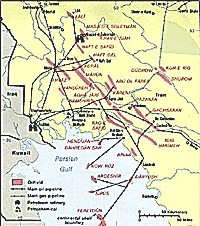 The Ahwazi Arabs have paid a heavy price for Iran's greed for oil. In 1925, the autonomous sheikhdom of Arabistan was invaded by the forces of Reza Pahlavi, who went on to overthrow the Qajar dynasty to become the Shah of Persia. Since then, Ahwazi lands have been confiscated, the indigenous Arab culture has been oppressed and the local population has endured war and poverty. Attempts by local members of parliament to redistribute a fraction of oil revenues back to the region have been blocked by hard-liners. Growing frustration has led many Ahwazi Arabs to attack the oil industry, which they regard as the source of their problems and the regime's Achilles' Heel. In their desperation, the Ahwazi Arabs are beginning to realise that regime could to be brought to its knees if oil supplies are disrupted by a relentless Ahwazi intifada, but the rest of the world will also feel the heat.
Some Ahwazi Arab tribal leaders have been politically co-opted and armed by the regime to help guard oil installations. They have an in-depth knowledge of the pipeline infrastructure. If the current ethnic repression continues, it is possible that some members of these tribes will attack the installations they were meant to be guarding.
Sabotage acts have been focused on pipelines feeding the 450,000 barrels per day capacity refinery in Abadan on Iran's border with Iraq. The Abadan refinery represents around 30 per cent of Iran's total refining capacity.
Disruptions to oil supply in Ahwaz on a scale seen in the Niger Delta will have global economic and political implications. Any major attack on Abadan refinery, which represents over a quarter of Iran's refining capacity, or export pipelines from Al-Ahwaz's massive oilfields will hit the country's oil exports as well as its own fuel supplies.
Links
Number of Ahwaz dead rises, oil installations attacked - 19 April 2005
Oil wells sabotaged in Ahwazi Arab homeland - 3 September 2005 Iran loses thousands of barrels of oil in attack - 12 September 2005
Iran's oil exports in danger due to rising Ahwaz unrest - 8 March 2006
Second attack on Ahwaz-Abadan pipeline - 21 March 2006
Labels: intifada
permalink
keywords: ahvaz ahwaz ahwazi arabistan khuzestan khuzistan khuzestani arab arabistan iran iranian human rights security oil news ahmadinejad ethnic cleansing
.......................................................................................
05 June, 2006
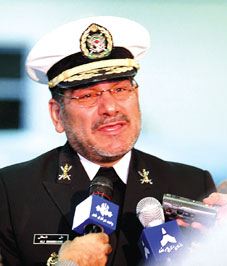 Former Defence Minister Ali Shamkhani has launched a stinging rebuke of the Ahmadinejad's policies towards ethnic minorities, particularly Ahwazi Arabs, according to a report by Iran's Aftab News Agency.
An ethnic Arab, Shamkhani served in the cabinet of President Mohammad Khatami (1997-2005) and had led the ground forces in the Iran-Iraq War. In the interview with Aftab, Shamkhani warns that Iran will face a rise in ethnic tensions in the near future and will become a major challenge to the regime.
Shamkhani does not share President Mahmoud Ahmadinejad's view that ethnic unrest is being encouraged and organised by the British government. Instead, he says that 27 years after the Iranian Revolution, the regime is failing to address the widening gap between people's expectations and its ability to fulfill them. According to Shamkhani, ethnic unrest is a result of the regime's failure to provide any solutions for minority demands and unless the government provides a democratic framework for these demands to be met, Iran should expect large-scale unrest.
Shamkhani pointed to the difference in the way the government has addressed recent unrest among Azeris, who form 25 per cent of the Iranian population, and disturbances by smaller ethnic groups in Khuzestan, Balochistan and Kurdistan. Unrest among Azeris was sparked by a racist cartoon in a conservative newspaper, which compared Azeris to cockroaches. The government stopped the newspaper's publication and arrested the cartoonist and editor, following confrontational demonstrations in Azeri-populated cities such as Tabriz. While the regime put down the demonstrations by force, it also took action against those responsible for the offensive cartoon. In contrast, Ahwazi Arab unrest has been met with state violence, the kidnapping and imprisonment of the wives and children of dissidents, regular public executions of opposition activists and a string of other human rights violations. Shamkhani appeared to condemn the difference in the treatment of ethnic groups and called on the government to stop regarding ethnic Arabs as a fifth column.
Shamkhani is currently runs the Institute of Iran Studies and the Defence Research Centre. He has been involved in dialogue between Ahwazi Arabs and the government in an attempt to bring an end to the intifada in Khuzestan, the homeland of the Ahwazi Arabs. In April, the British Ahwazi Friendship Society (BAFS) received a video of one meeting between angry Ahwazi leaders and Shamkhani ( click here to download the video, in 3gp format - playable in RealPlayer ).
Despite being Iran's most successful Arab figure in post-revolution Iran, Shamkhani did little to advance the Ahwazi cause while in office. The massacre of around 160 Ahwazis in the April 2005 uprising occurred while Shamkhani was still defence minister in Khatami's government.
The Ahwazis' chief demands include: respect for Arab culture and customs, poverty alleviation, an end to racial discrimination and land confiscations, the redistribution of oil revenues generated by the oil industry in Ahwaz and respect for human rights and freedom of speech. Peaceful demonstrations by Ahwazis have been met with brutal violence by the security forces, including the Bassij paramilitaries, who have killed a large number of protestors and activists over the past year.
Shamkhani is not the only establishment figure to criticise the government's policies towards ethnic minorities. In January, the Islamic Majlis Centre for Research - a think tank attached to the Majlis (parliament) - warned that Iran could face ethnic conflict and unrest unless the government addresses the needs of Iran's ethnic minorities ( click here for more information ).
Links
Aftab News Agency article
Iran pays for counter-demonstrations in Ahwaz
Parliamentary Think Tank Warns of Ethnic Unrest
Labels: human rights , intifada
permalink
keywords: ahvaz ahwaz ahwazi arabistan khuzestan khuzistan khuzestani arab arabistan iran iranian human rights security oil news ahmadinejad ethnic cleansing
.......................................................................................
24 May, 2006
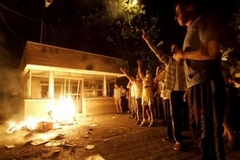 Iranian intelligence officials have linked a riot in Tabriz by thousands of ethnic Azeri Turks with "issues in Khuzestan".
The security services reportedly fired at the crowd killing up to 20 Azeris after demonstrators chanted slogans such as "Azeri people will not tolerate sufferings" and "Chehraganli, the hero of Azerbaijan", a reference Mahmudali Chehraganli, the leader of the Southern Azerbaijan National Awakening Movement (SANAM) which campaigns for self-determination of ethnically Azeri areas of Iran.
Speaking to the Iranian Students News Agency (ISNA), a local intelligence ministry official said: "the ones inciting unrest and vandalism [...] were all supported by foreigners." He also accused the US and Israel of seeking to incite ethnic disputes in Iran, saying: "Now that we are more united than ever, American and Israeli intelligence services have put Iran's ethnic issues on the agenda. Exploiting yesterday's move was in line with that."
The Azeri riot was sparked by a cartoon in a conservative Iranian newspaper in which the Azeri people, who comprise around a quarter of Iran's population, were caricatured as cockroaches.
The government closed down the newspaper for "creating divisions within the people", condemned the cartoon and arrested the cartoonist and one of the newspaper's editors who are now being held in the notorious Evin Prison where political dissidents are usually imprisoned.The regime has also arrested 54 Azeris on charges of vandalism. The police have vowed to arrest more accused of violence.
The scale of the Azeri unrest has shaken the regime and forced it to take drastic action to quell the anger shown by Iran's second largest ethnic group. However, a ban on a weekly newspaper published in Iran's ethnic Azeri provinces was closed in March on charges of ethnic bias and of acting against national security. The banning of newspapers due to their protrayal of ethnic issues has inflamed ethnic divisions in Iran.
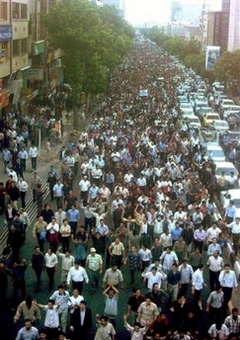 Ethnic Azeris are often subjected to ethnic slurs in Iran and the Azeri language is effectively banned in schools and restricted in the media. Although some of Iran's most senior religious and political leaders are Azeri, Persian culture and the Farsi language is imposed on the non-Persian minorities who make up at least half the country's population.
These include Ahwazi Arabs, Kurds, Balochis, Turkmen and other groups. Some regional ethnically Persian groups which have their own dialects and cultures, such as the traditionally nomadic Lurs, also hold grievances against the regime over its model of economic development which often leaves them marginalised.
The Iranian Azeri population is larger than the population of Azerbaijan, while Iran's Arab population, estimated at up to five million, is greater than the size of Gulf states such as Kuwait or the UAE.
Ethnic minorities are increasingly mobilised in their opposition to the government, with a large number of mass demonstrations and rising militancy seen in provinces such as Kurdistan, Balochistan and Khuzestan, which is the homeland of the Ahwazi Arabs.
The Ahmadinejad administration is keen to portray the growth of ethnic movements as a foreign plot, although it has refused to publish the evidence it claims to have linking ethnic movements to foreign governments.
Links
Azerbaijan Cultural Society
Congress of Nationalities for a Federal Iran
Labels: intifada
permalink
keywords: ahvaz ahwaz ahwazi arabistan khuzestan khuzistan khuzestani arab arabistan iran iranian human rights security oil news ahmadinejad ethnic cleansing
.......................................................................................
08 May, 2006
Iran's Acting Deputy Interior Minister Brigadier General Mohammad Baqer Zolqadr on Monday blamed the Mojahedin-e Khalq Organisation (MKO) for bomb attacks in Al-Ahwaz (Khuzestan) just hours after Iran said it was submitting evidence of Sunni extremist involvement.
His accusations against the MKO, an armed populist group once sheltered by Saddam Hussein in Iraq, appear to contradict the claims by Deputy Governor General of Khuzestan Mohsen Farrokhi Nezhad that Arab Wahhabi fundamentalists were responsible for a string of bombings in Ahwaz. Zolqadr referred to "Farsi speaking mercenaries", whereas previous government statements had blamed Arab separatists.
On Monday morning, Iranian news agencies reported that Iran was submitting documents it says prooves "interference by foreigners in the terrorist incidents in Khuzestan province last year" to the United Nations. Khuzestan's Deputy Governor had blamed the 'occupiers of Iraq' and also claimed that the group they were sponsoring was affiliated to Al-Qaeda and held Wahhabi and anti-Shi'ite views. However, the government has not revealed the name of the group.
The government has claimed it has arrested all those involved in the bombings. However, among the detainees are the wives and young children of members of moderate Arab groups, such as the Wefagh Party which campaigns for Arabs rights but opposes armed opposition and separatism. Some of those accused have been in prison for the past five years and therefore could not have been responsible for the recent spate of bomb attacks.
Nasser Bani Assad, spokesman for the British Ahwazi Friendship Society (BAFS), said: "The Iranian regime has so many enemies, it does not know who to blame for its domestic problems. It is highly unlikely that the MKO, Al-Qaeda, Ba'athists, Arab separatists and Western governments could all be colluding in a bombing campaign in Ahwaz. But the Iranian regime is propagating this absurd conspiracy theory and expecting the world to believe it.
"It will be interesting to see what 'evidence' the regime has presented to the UN. The evidence published so far is riddled with inconsistencies and contradictions that lead us to believe that Iran has very little evidence to back up its claims.
"The only people who have benefitted from the bomb attacks are those seeking a hardening of the government's stance against its opponents. The attacks have given the authorities a licence to arrest, imprison, torture and execute innocent Ahwazi Arab civilians. As a result of the attacks, hardliners have successfully developed a security policy based on paranoia and prejudice against religious and ethnic minorities as well as trade unionists and human rights activists.
"If the hardliners are the only ones to benefit from the bombing campaign and if they are the ones weaving conspiracy theories, it is not inconceivable that the government's Basseej paramilitaries planted the bombs, which have killed many Ahwazi Arab civilians over the past year.
"We challenge the government to publish all its 'evidence' and let the world judge for itself the veracity of Iran's claims."
Labels: intifada
permalink
keywords: ahvaz ahwaz ahwazi arabistan khuzestan khuzistan khuzestani arab arabistan iran iranian human rights security oil news ahmadinejad ethnic cleansing
.......................................................................................
The Iranian government is submitting documents it says prooves "interference by foreigners in the terrorist incidents in Khuzestan province last year" to the United Nations.
Deputy Governor General of Khuzestan Mohsen Farrokhi Nezhad told Fars News Agency that the 'evidence', including documents, showed that those responsible for the bomb attacks and sabotage operations had been organised and trained by the 'occupiers of Iraq'. He also alleged that they had carried out a number of armed robberies over the past two years to finance their operations.
The government claims that the US, Israel and UK backed group was affiliated to Al-Qaeda and held Wahhabi and anti-Shi'ite views. However, the government has not revealed the name of the group.
Nasser Bani Assad, spokesman for the British Ahwazi Friendship Society (BAFS), said: "The government has been making these claims for the past year, but has failed to publish the proof. So, the submission to the UN is a welcome development, allowing the international community to assess Iran's various claims. We would like the Iranian authorities to publish the 'evidence' publically. We want the regime to state which individuals and organisations it is accusing of responsibility for the bomb attacks.
"Several Ahwazis - mostly Shi'ites - have been arrested for possessing 'terrorist' or 'separatist' propaganda, which has turned out to be reports by human rights groups such as Amnesty International as well as UN agencies. It would be ironic if the documents submitted to the UN include UNCHR reports!
"There are several inconsistencies in the government's claims. If the alleged terrorist group was sponsored by the British and Americans, why would it rely on the proceeds of armed robberies to fund its activities? This raises the question of what Iran means by 'foreign influence'. If the regime is suggesting that the presence of terrorists in Iraq is proof of British or American involvement in the Ahwaz bomb attacks, then it will have a tough time selling its case.
"We know that Iran is assisting Shia militias associated with Iraqi political parties. The downing of the British helicopter in Basra last week probably utilised equipment brought in from Iran. The attempt to accuse Western governments of terrorist acts in Iran could back-fire, highlighting Iran's involvement in militia activity in Iraq."
Labels: intifada , UN
permalink
keywords: ahvaz ahwaz ahwazi arabistan khuzestan khuzistan khuzestani arab arabistan iran iranian human rights security oil news ahmadinejad ethnic cleansing
.......................................................................................
16 April, 2006
The Iranian regime is considering bringing the Iraq-based Ayatollah Sayyid Ali Husayni Sistani to mediate with Ahwazi Arabs to bring the uprising in Al-Ahwaz (Khuzestan) to an end.
Reports from Ahwaz received by the British Ahwazi Friendship Society (BAFS) indicate that the regime wants to involve Iraqi Arab Shia leaders in negotiating a compromise, which could including the dismissal of General Hayat-Moghaddam as Governor of Khuzestan. Hayat-Moghaddam's hardline response to the uprising has included the shooting of unarmed Arabs holding cultural demonstrations marking the Eid ul-Fitr and Eid ul-Adha religious festivals. His actions have inflamed Ahwazi Arab hostility to Iranian rule.
The regime has attempted dialogue with Ahwazi Arabs through Khuzestan Majlis member Nasser Sudani and former defence minister Ali Shamkhani, both of whom are ethnic Arabs ( click here for report and video ). However, the dialogue has foundered as the regime is unwilling to negotiate an end to land confiscation and the release of political prisoners, including pregnant women and children as young as two years old.
The Islamic Republic is now seeking to use Arab Shi'ite religious figures. This mirrors the tactic followed shortly after the revolution when local Ahwazi cleric Sheikh Karami succeeded in negotiating an end to an Arab rebellion in the province.
BAFS spokesman Nasser Bani Assad said: "Our source in Ahwaz is very reliable. The regime appears to be running a carrot and stick approach to the Ahwazi uprising. The stick is the imprisonment of thousands of men, women and children and a systematic programme of executions, designed to instill fear. The carrot is being dangled in front of Ahwazi community leaders in an effort to co-opt them, with the offer of money and increased influence. The regime is tackling the issue on both the tribal and religious fronts, but its efforts display a complete lack of understanding of the opposition movement which is rooted in injustices that remain unaddressed.
"In the past few weeks, the government has been working hard to co-opt some tribal leaders. These efforts have largely failed, with many tribal figures incensed about the treatment of Ahwazi Arabs, in particular the sons of the moderate tribal leader Hajj Salem Bawi who are facing the death penalty for allegedly distributing seditious literature. Even if some tribal leaders have been won around, it could never have been enough to quell the rebellion. Tribal leadership does not necessarily mean political leadership. Significant parts of the Ahwazi population distrust tribal leaders or believe them incapable of representing their interests while they are ruled by a regime intent on ethnic cleansing Arabs from their homeland.
"Now the authorities are trying to win over the local Arab clergy by involving Sistani. It is unlikely to work as most of the Ahwazi opposition is rejecting the Iranian system of government, not just government policies. This includes the rejection of rule by the mullahs. No flattery by Ayatollah Sistani - who wants to turn Iraq into another Iran - is likely to allay the fears the Ahwazis have over their future and their political protests against oppression. The religious establishment believes that the Arabs will forever remain loyal to them, no matter the injustices perpetuated by the 'politicians'. Yet, pictures of Khomeini have been burned in the streets of Ahwaz and Ahwazi flags have been raised in demonstrations. Iran's leaders won't accept that Shi'ism is not enough to rally Iranians behind the religious establishment."
Labels: intifada
permalink
keywords: ahvaz ahwaz ahwazi arabistan khuzestan khuzistan khuzestani arab arabistan iran iranian human rights security oil news ahmadinejad ethnic cleansing
.......................................................................................
14 April, 2006
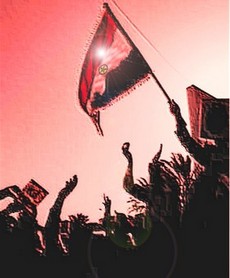 This is a joint statement by the British Ahwazi Friendship Society, the Ahwazi Human Rights Organisation and the Ahwaz Studies Centre on the anniversary of the 15 April 2005 Ahwazi Arab uprising against the Iranian regime:
Today marks the first anniversary of the Ahwazi intifada against the Iranian government.
Today we remember the killing of hundreds of men, women and children; innocent people killed because they are Arab; killed by one of the world's worst human rights abusers - the Iranian regime.
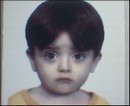 Today we remember the babies who were kidnapped and are being held in prison by the Iranian regime: four year old Aimad Nabgan, four year old Ahmad Faraj-Allah, two year old Osameh Faraj-Allah (
pictured, left
) and four year old Zeidan Khudayrawi. We remember their mothers Masouma Kaabi, Hoda Hawashem and Soghra Khudayrawi who are in prison with them. These are the sons and wives of those who dared to raise a voice against the tyranny of Tehran. We also remember the many other men, women and children who the Iranian regime has disappeared, who are being held in torture chambers waiting for their deaths. Kidnapping and murder are the tactics of an Iranian government which stops at nothing to oppress and brutalise the Ahwazi Arabs.
Today we remember the babies who were kidnapped and are being held in prison by the Iranian regime: four year old Aimad Nabgan, four year old Ahmad Faraj-Allah, two year old Osameh Faraj-Allah (
pictured, left
) and four year old Zeidan Khudayrawi. We remember their mothers Masouma Kaabi, Hoda Hawashem and Soghra Khudayrawi who are in prison with them. These are the sons and wives of those who dared to raise a voice against the tyranny of Tehran. We also remember the many other men, women and children who the Iranian regime has disappeared, who are being held in torture chambers waiting for their deaths. Kidnapping and murder are the tactics of an Iranian government which stops at nothing to oppress and brutalise the Ahwazi Arabs.
 This is a situation the Ahwazi Arabs have endured since their homeland, Al-Ahwaz, was over-run by Iranian forces in 1925. For more than 80 years, the Ahwazi Arabs have been subjected to ethnic cleansing, land confiscation, state terrorism and higher and higher levels of poverty. For more than 80 years, the Ahwazi Arabs have suffered in silence under Iranian occupation, suffered while the world closed its eyes and ears to the voice of the Ahwazi.
The Ahwazis are a peaceful people. But they are also a dignified people. When their women and children are kidnapped, when their sons are murdered in the streets, when the Karoon River flows with Ahwazi Arab blood, the Ahwazis have a right to stand up against this injustice and they have a right to determine their own destinies. The Ahwazis have a right to say "no more". On 15 April 2005, the Ahwazis said "no more" and protested in the streets of their homeland. More than 160 were killed in cold blood by the regime - and the killings continue to this day.
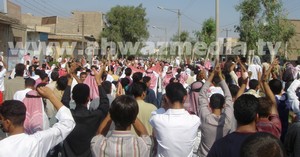 We call on the European Union to support the Ahwazis' right to say "no more" to oppression. We call on the European Union to condemn the imprisonment and murder of innocent men, women and children. We call on the European Union to try to bring an end to ethnic cleansing in Al-Ahwaz and to make this issue central to its relations with Iran. We call for international solidarity with the oppressed Ahwazi Arabs on the first anniversary of the Ahwazi intifada.
Ahwazi groups based in Europe will be holding a demonstration outside the European Parliament in Brussels on 15 April at 12 noon. Click here for more information.
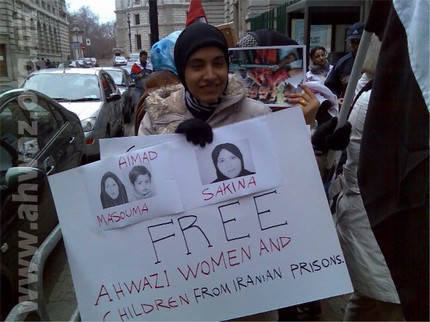
Labels: intifada
permalink
keywords: ahvaz ahwaz ahwazi arabistan khuzestan khuzistan khuzestani arab arabistan iran iranian human rights security oil news ahmadinejad ethnic cleansing
.......................................................................................
The British Ahwazi Friendship Society (BAFS) has received the following messages of solidarity from Portuguese Socialist MEP Paulo Casaca, who heads the European Parliament's delegation to NATO, and the prominent British human rights activist and Green Party member Peter Tatchell ahead of the anniversary of last year's 15 April Ahwazi Arab uprising in Iran.
Paulo Casaca
It has been with a deep revulsion that I have been receiving the sad news of the brutal and criminal repression of the ethnic Arab minority in Iran, most specially, the attack on the families of dissident political activists.
I would ask you to convey to the families and closest friends of those who are murdered, of those who see their wives and children been dragged to prison and torture, my full solidarity.
In this occasion, I would like to convey to you my full solidarity to the struggle of the democratic Ahwazi Resistance against this barbaric regime that in the name of religion and holy values practices the most vile and sordid acts.
Link: Paulo Casaca MEP
Peter Tatchell
As a gay and human rights campaigner, and as a member of the Green Party of England and Wales, I express my solidarity with the freedom struggle of the Ahwazi Arab people.
Human rights are universal and indivisible. Wherever there is injustice and oppression, people have a right to rebel. It is the duty of all people everywhere to stand together, united in solidarity against oppression.
Iran is a racist state, with a covert agenda for the ethnic cleansing of the Ahwazi Arab nation. This is a crime against humanity under international law.
The massacres, arrests, jailing, tortures and executions of Ahwazi Arabs are a blot on the conscience of the world.
Despite living in the region of Iran richest in oil, the Ahwazi Arab people are victims of a cruel, deliberate impoverishment by the Iranian regime.
This monstrous injustice must end. The tyrannical clerical dictatorship in Tehran must go, and be replaced by a democratic, secular state that ensures human rights and self-government for the Ahwazi Arab people and freedom for all ethnic, sexual, religious and cultural minorities.
Link: Peter Tatchell
Ahwazi groups based in Europe will be holding a demonstration outside the European Parliament in Brussels on 15 April at 12 noon. Click here for more information .
permalink
keywords: ahvaz ahwaz ahwazi arabistan khuzestan khuzistan khuzestani arab arabistan iran iranian human rights security oil news ahmadinejad ethnic cleansing
.......................................................................................
13 April, 2006
 Amnesty International has called on the Iranian government to show restraint in policing any demonstrations marking the anniversary of the Ahwazi Arab intifada in Ahwaz City, southwest Iran.
April 15th became known as "Black Friday" and was followed by days of unrest, in which more than 160 Arab civilians were killed by security forces. During the uprising, the regime lost control over parts of Al-Ahwaz (Khuzestan), an Arab homeland. Since then, security forces including the paramilitary Baseej have led a brutal crack-down on dissent. The regime has attempted to force Ahwazi opposition activists to surrender by kidnapping their wives and young children. The men are accused of "waging war on God", which carries the death penalty.
Over the past year, cultural and religious gatherings and peaceful demonstrations have been met by violent force from Iranian forces who used tear gas and live ammunition to disperse people. Recent reports on Radio Farda suggest that hundreds have been killed over the past year in lynchings and executions by the regime and around 28,000 Ahwazi Arabs have been arrested. Amnesty International says it has received the names of at least 448 Ahwazi Arabs who are reported to have been arrested since April 2005, but believes the true figure may be higher.
The source of unrest and anti-government agitation among Ahwazi Arabs is racial discrimination, land confiscation, state terrorism and high levels of poverty and unemployment, which are the consequences of a government programme of "ethnic restructuring". The programme was outlined in a letter by former Vice President Abtahi which was leaked from the office of the then President Khatami. The letter stated the government's intention to reduce the Arab population in Khuzestan from 70 per cent to 30 per cent through forced migration ( click here to read the letter and translation ).
Amnesty International report states: "Frustration and economic deprivation has spilled over in the past year into a cycle of violent protest and repression which seems likely to continue unless the Iranian authorities take the measures necessary to address the social, economic and other grievances that gave rise to the unrest."
Following a visit to Al-Ahwaz in July 2005, UNCHR's Special Rapporteur on Housing, Miloon Kothari, spoke of the forced relocation of Ahwazi Arabs: "We looked in detail in some areas on the issue of compensation and, for example, in Khuzestan the compensation being offered to the Arab villagers who were being displaced is sometimes one fortieth of the market value - and there's nothing they can do about it. It's a fait accompli. That's how it is. And all of these phenomena are continuing. It's something that is happening almost every day."
Amnesty International is calling on the Iranian authorities to:
- Release all prisoners of conscience immediately and unconditionally;- Review law and practice to ensure that no one is imprisoned as a prisoner of conscience or discriminated against solely on account of their political opinions, race, ethnicity, gender, or language;
- Review as a matter of urgency, through an independent judicial body, the cases of all political prisoners held without trial or convicted after unfair trials, and order the immediate release of all of those against whom there is no evidence that they have committed a recognizably criminal offence;
- Grant all such prisoners prompt and regular access to lawyers of their own choosing and their families and to appropriate medical care if necessary;
- Ensure that all trials, including in capital cases, respect, as a minimum standard, the relevant provisions of the ICCPR;
- Investigate all allegations of torture or ill-treatment promptly and thoroughly. The methods and findings of any such investigation should be made public. Anyone implicated in human rights violations should be brought to justice promptly and fairly and victims of torture and ill-treatment should be granted compensation;
- Take effective measures to eradicate the use of torture, including the full implementation in practice of Iran's own legislation and the ratification of the UN Convention against Torture and Other Cruel, Inhuman or Degrading Treatment or Punishment and complying with its provisions;
- Demonstrate its respect for the inherent right to life by ordering a moratorium on executions;
- Investigate all possible unlawful killings or extra-judicial executions promptly and fairly in accordance with the UN Principles on the Effective Prevention and Investigation of Extralegal, Arbitrary and Summary Executions, and bring to justice, fairly and promptly, any members of the security forces responsible for unlawful killings or other grave violations of human rights.
- End any policy of deliberate, discriminatory land expropriation or population transfer aimed at dispossessing minority populations from their traditional lands;
- Cease any practice of forced evictions: that is evicting people from land or housing without consultation, due process of law, and assurances of adequate alternative accommodation;
- Cease forced internal displacement linked to forced evictions and "land grabbing";
- Take immediate steps towards the elimination of de facto discrimination in the exercise of economic, social and cultural rights such as the rights to education, adequate housing, water and sanitation as well as in access to utilities such as electricity adopting special measures, such as multilingual education, as necessary.
Reports
"Iran: Need for restraint as anniversary of unrest in Khuzestan approaches" - Amnesty International statement, 13 April 2006
Iran: New government fails to address dire human rights situation - Amnesty International report, 16 February 2006
Release Ahwazi Women and Children! - BAFS leaflet
Interview with Human Rights Special Rapporteur on Adequate Housing, Miloon Kothari - IRIN, 9 August 2005
BAFS reports from April 2005
Names of those killed in Ahwaz
Ahwaz Intifada intensifies
A tragic week in the history of Ahwaz
Iran's "Bloody Friday" massacre in city of Ahwaz
Labels: Amnesty , intifada
permalink
keywords: ahvaz ahwaz ahwazi arabistan khuzestan khuzistan khuzestani arab arabistan iran iranian human rights security oil news ahmadinejad ethnic cleansing
.......................................................................................
07 April, 2006
Reports from Iran claim that the Iranian regime is handing out large amounts of cash to some members of the Ahwazi Arab community, including tribal leaders, to encourage them to participate in government-sponsored demonstrations of support for President Mahmoud Ahmadinejad.
The British Ahwazi Friendship Society (BAFS) has received a video of a meeting between former defence minister Ali Shamkhani, who is an Arab, and Ahwazis. But the Ahwazis are visibly angry, chanting slogans at Shamkhani as he walks to the meeting place. Click here to download the video, in 3gp format - playable in RealPlayer .
The President has had to cancel three public visits to Khuzestan province due to anti-government demonstrations by Ahwazi Arabs, who are protesting against land confiscation, cultural repression, discrimination, state violence and poverty.
The latest move signals that the government is resorting to buying the loyalty of local leaders, while simultaneously maintaining its confrontational stance with the Ahwazi population. Mass arrests, including kidnapping of children of Ahwazi opponents of the regime, and public executions have helped inflame anger among Arabs. As the first anniversary of the Ahwazi intifada approaches, on 15 April, the government is using bribery to stem the tide of insurrection.
The peaceful uprising last year, which occurred before Ahmadinejad's election as president, saw the regime lose control over large parts of Khuzestan, including Ahwaz and Abadan, the province's largest cities. More than 160 people were killed by security forces in the crackdown that followed, with thousands of arrests and an unknown number of summary executions.
As the anniversary of the intifada approaches, the province is witnessing an upsurge in protests. This week saw clashes between Ahwazi youths and security forces in the Dar-al-thura (Dayereh) district of Ahwaz City. A young man and two boys were shot and injured by Baseeji forces. They included 10 year old Haidar Saadi and seven year old Hassanali Saki.
The regime has blamed the British for the unrest in Ahwaz, but has failed to produce any evidence of a link between the demonstrators and foreign governments.
Nasser Bani Assad, spokesman for the British Ahwazi Friendship Society, said: "Shamkhani and Khuzestan Majlis member Nasser Sudani are running the campaign to buy up loyalty among tribal leaders. This may have a limited effect on some tribes, but not all Ahwazis will simply obey tribal leaderships and not all tribes are politically united. It will not placate the Ahwazi opposition to the government, but it may provide some propaganda opportunities for the government.
"We would not be surprised if, in the next few days ahead of the intifada anniversary, there was a large pro-regime demonstration by the Baseej paramilitaries with Ahwazis featured prominently. It will be used to give the impression that dissent is marginal and that those who demonstrate against the regime's ethnic cleansing policies are extremists.
"But the fact that mass protests are now a weekly phenomenon in Ahwaz indicates that the truth is far different. This is a rebellion against the government that no amount of bribery or state violence will stop. The protests are gathering momentum."
Labels: intifada
permalink
keywords: ahvaz ahwaz ahwazi arabistan khuzestan khuzistan khuzestani arab arabistan iran iranian human rights security oil news ahmadinejad ethnic cleansing
.......................................................................................
20 March, 2006
The pipeline between Ahwaz City and Abadan, site of one of the world's largest oil refineries, was damaged and set on fire on Sunday.
This is the second time the pipeline has been damaged this month. On the night of 7-8 March, firefighters took at least 10 hours to put out a fire that an oil company official blamed on sabotage.
The latest blazed occurred near Om Alghizlan. Officials did not rule out sabotage.
The Abadan refinery has a capacity of 450,000 barrels per day, around 30 per cent of Iran's total refining capacity. Al-Ahwaz produces around 80-90 per cent of Iran's total crude output, representing at least 10 per cent of OPEC's output.
Pipelines in Al-Ahwaz (Khuzestan) were previously bombed in September 2005, temporarily disrupting supplies ( click here for story ). The regime also claimed in October that it had foiled an attempt to bomb Abadan refinery following major bomb attacks on Ahwaz City ( click for story ).
Al-Ahwaz (Khuzestan) has witnessed rising anger and despair among Ahwazi Arabs, who are being subjected to a large-scale land confiscation programme accompanied by violent repression, which many regard as a campaign of ethnic cleansing.
Ahwazi tribal leaders, journalists, businessmen, opposition activists, imams, teachers and even a mayor are among those being rounded up and imprisoned and executions have increased dramatically as the regime attempts to stamp out dissent. This has led to a climate of confrontation between the Ahwazis and the regime, with anti-government demonstrations and rioting regularly breaking out in Arab districts and city slums.
Ahwazi Arab tribes have in the past been co-opted by the government and armed to protect oil installations. However, the climate of unrest may have led some members of these tribes to attack the facilities they are employed to protect, using their in-depth knowledge of the pipeline infrastructure.
Nasser Bani Assad, spokesman for the British Ahwazi Friendship Society, said: "In their desperation, the Ahwazi Arabs are beginning to realise that regime could to be brought to its knees if oil supplies are disrupted by a relentless Ahwazi intifada, but the rest of the world will also feel the heat. The question is, will the international community intervene to stabilise the situation in Al-Ahwaz or will it wait until the problems have a direct impact on world oil supply?"
Labels: intifada
permalink
keywords: ahvaz ahwaz ahwazi arabistan khuzestan khuzistan khuzestani arab arabistan iran iranian human rights security oil news ahmadinejad ethnic cleansing
.......................................................................................
09 March, 2006
The Iranian regime says it has arrested more than 50 Ahwazi Arabs in a clamp-down on anti-government protests in Al-Ahwaz (Khuzestan).
Officials claim the arrests are related to a series of bomb attacks, but the charges against those in custody are not known. The government claims that the latest people seized following massive protests against the persecution of Ahwazi Arabs are insurgents being directed by the British government.
Several figures in Iran, including former reformist presidential candidate Mustafa Moin, have suggested that the bombings are probably the work of the pro-regime Basij militias seeking to strengthen the power of hard-liners within the government.
There have been six executions of Ahwazi Arabs in the past week with three more likely within the next month ( click here for report ).
Labels: intifada
permalink
keywords: ahvaz ahwaz ahwazi arabistan khuzestan khuzistan khuzestani arab arabistan iran iranian human rights security oil news ahmadinejad ethnic cleansing
.......................................................................................
08 March, 2006
Oil pipelines supplying Abadan with crude caught fire on Tuesday night in what some believe was an act of sabotage coinciding with weeks of unrest among Ahwazi Arabs.
Abdolreza Asadi, head of the state-owned Karoun oil company, said that the fires near Ahwaz City were possibly the result of sabotage, although the fire service later reported that they were caused by a leak. The Abadan refinery has a capacity of 450,000 barrels per day, around 30 per cent of Iran's total refining capacity. Al-Ahwaz produces around 80-90 per cent of Iran's total crude output, representing at least 10 per cent of OPEC's output.
Pipelines in Al-Ahwaz (Khuzestan) were previously bombed in September 2005, temporarily disrupting supplies ( click here for story ). The regime also claimed in October that it had foiled an attempt to bomb Abadan refinery following major bomb attacks on Ahwaz City ( click for story ).
Al-Ahwaz has witnessed rising anger and despair among Ahwazi Arabs, who are being subjected to a large-scale land confiscation programme accompanied by violent repression, which many regard as a campaign of ethnic cleansing. Ahwazi tribal leaders, journalists, businessmen, opposition activists, imams, teachers and even a mayor are among those being rounded up and imprisoned and executions have increased dramatically as the regime attempts to stamp out dissent. This has led to a climate of confrontation between the Ahwazis and the regime, with anti-government demonstrations and rioting regularly breaking out in Arab districts and city slums.
Nasser Bani Assad, spokesman for the British Ahwazi Friendship Society, said: "We know that certain Ahwazi Arab tribal leaders have been politically co-opted and armed by the regime to help guard oil installations. Consequently, they have an in-depth knowledge of the pipeline infrastructure. If the current ethnic repression continues, it is possible that some members of these tribes will attack the installations they were meant to be guarding.
"Disruptions to oil supply in Ahwaz on a scale seen in the Niger Delta will have global economic and political implications. Any major attack on Abadan refinery, which represents over a quarter of Iran's refining capacity, or export pipelines from Al-Ahwaz's massive oilfields will hit the country's oil exports as well as its own fuel supplies. Oil prices will shoot through the roof if the Ahwazi intifada begins to strike at Iran's oil industry.
"In their desperation, the Ahwazi Arabs are beginning to realise that regime could to be brought to its knees if oil supplies are disrupted by a relentless Ahwazi intifada, but the rest of the world will also feel the heat. The question is, will the international community intervene to stabilise the situation in Al-Ahwaz or will it wait until the problems have a direct impact on world oil supply?"
Labels: intifada
permalink
keywords: ahvaz ahwaz ahwazi arabistan khuzestan khuzistan khuzestani arab arabistan iran iranian human rights security oil news ahmadinejad ethnic cleansing
.......................................................................................
07 March, 2006
Saeed Ehmidan, the mayor of Khalafiyeh (Khalafabad), is among the latest wave of arrests by the Iranian regime in Al-Ahwaz (Khuzestan). Khalafiyeh is a own of 30,000 inhabitants lying 58 miles south-east of Ahwaz City.
Others residents of Khalafiyeh arrested by the regime include:
Aref Ghali Hidari
Ahmed Karim Hidari
Mousa Karim Hidari
Hossien Saeed Moramadhi
Ahmed Saeed Moramazi
Yousef Saeed Moramazi
Hadi Badily (Madori)
Prominent Ahwazi Arabs are being rounded up in a wave of repression designed to stop the anti-government demonstrations in the province. Mass arrests and executions follow pressure on President Mahmoud Ahmadinejad from his hard-line supporters who have called for a tougher line on the political opposition. In February, Hamid Zangeneh, a non-Arab Majlis member for Khuzestan aligned with the former Revolutionary Guards commander Mohsen Rezaei, called for Arabs to be taught a lesson with high profile executions, martial law and a crack-down by security forces. In an interview with the Mehr News Agency, Zangeneh accused the regime of not doing enough, despite the killings and mass arrests of Arabs. President Ahmadinejad is under pressure from the religious establishment to prove his hard-line credentials by killing Arabs.
Labels: intifada
permalink
keywords: ahvaz ahwaz ahwazi arabistan khuzestan khuzistan khuzestani arab arabistan iran iranian human rights security oil news ahmadinejad ethnic cleansing
.......................................................................................
06 March, 2006
The Al-Ahwaz Democratic Popular Front (ADPF) has denied any involvement in bomb attacks in Ahwaz after being implicated in forced television "confessions" by two Ahwazis before they were executed last week.
The two men in their early 20s had read out scripts written by the regime that claimed they had contacted Ahwazi groups based in the UK and Canada, including the ADPF.
In response, the ADPF's spokesman Abu Sharif issued a statement claiming that the men had been tortured into confessing responsibility for the explosions in October 2005, which killed six people. He accused the Iranian government of carrying out the attacks to provide an excuse to impose martial law.
Despite its pro-independence line, which is at odds with many other Iranian minority parties who advocate decentralisation within a united Iran, the ADPF is not one of the groups that has claimed responsibility for attacks in Ahwaz. The Iranian government has failed to produce evidence linking any Ahwazi group or foreign governments to the attacks, beyond the "confessions" issued by the accused on Khuzestan TV.
Link: Iran regime shows forced confessions on television
Labels: intifada
permalink
keywords: ahvaz ahwaz ahwazi arabistan khuzestan khuzistan khuzestani arab arabistan iran iranian human rights security oil news ahmadinejad ethnic cleansing
.......................................................................................
03 March, 2006
The British Ahwazi Friendship Society (BAFS) has received reports that throughout Friday demonstrators clashed with police in Hay Althwra (Shilangabad), Hay Zerghan, Zowyeh, Malasheyah and Koot Abdoula. There are reports of three deaths, including two women, at the hands of security forces. Four children are also reported to have been injured.
The protests came a day after two Ahwazi Arab men were hung in Ahwaz City. Khadija Afrawi, known as Foziya, the sister of Ali Afrawi, one of the men who was executed, was killed by the Iranian intelligence services. Her crime was to complain about her brother's execution. The hangings were followed hours later with a percussion bomb attack in the Kianpars area of Ahwaz City.
BAFS had warned that the execution of Ahwazi Arab political prisoners would result in an upsurge in anti-government protests. It also believes that the government will use any violence in Ahwaz as a pretext of vigilantism by Basiji forces, an intensification of its ethnic cleansing programme and a real danger of genocide against Ahwazi Arabs.
Ahwazi activists have called on the international community to seek ways of preventing further state violence and human rights abuses. However, they stress that the Ahwazi cause should not be used to justify military intervention in Iran. Ahwazis say they need a voice at an international level and do not want a return to the dark days of the Iran-Iraq War when their homeland attacked with chemical and biological weapons by the warring Iraqi and Iranian forces.
Labels: death penalty , intifada
permalink
keywords: ahvaz ahwaz ahwazi arabistan khuzestan khuzistan khuzestani arab arabistan iran iranian human rights security oil news ahmadinejad ethnic cleansing
.......................................................................................
A percussion bomb exploded in the Kianpars area of Ahwaz City just hours after two young Ahwazi Arab men were executed in Naderi Street.
No deaths or injuries were reported, although the windows of nearby buildings were smashed by the blast.
Meanwhile, the government's Islamic Republic News Agency has reported that the two men the regime had executed in Ahwaz City were responsible for the bomb attacks of 24 January ( click here for report ). However, reports from human rights organisations, including Amnesty International, indicate that they were arrested immediately following bomb attacks in October 2005 and had remained in custody.
On Wednesday evening, a Khuzestan TV programme broadcast "confessions" for recent bombings by a number of Ahwazis in custody, including Ali Monbohi, who has been in custody since 2000. The "confessions", which were read out by the accused, did not implicate any foreign government in the attacks.
Nasser Bani Assad, spokesman for the British Ahwazi Friendship Society, said: "The regime's inconsistency casts serious doubt on the veracity of its accusations against the Ahwazis currently in custody as well as its claims that the British were responsible - claims that have not been substantiated with any evidence. Despite arresting hundreds and killing scores of Ahwazi Arabs accused of terrorist acts, including pregnant women and children, the frequency of bomb attacks in Ahwaz is rising.
"If the international community ignores the plight of the Ahwazis, then many angry and impoverished Ahwazi Arabs are bound to look for solutions that are not peaceful. We have always stressed the need for non-violent resistance and international solidarity, but we fear that as state terrorism increase in Al-Ahwaz, more and more disillusioned and angry Ahwazi Arabs will seek methods that are not peaceful. For the sake of stability and peace in the Middle East, multi-lateral bodies must start addressing the Ahwazi issue or the situation will escalate further."
Labels: death penalty , intifada
permalink
keywords: ahvaz ahwaz ahwazi arabistan khuzestan khuzistan khuzestani arab arabistan iran iranian human rights security oil news ahmadinejad ethnic cleansing
.......................................................................................
28 February, 2006
The hard-line Kayhan International newspaper has once again accused the British of carrying out bomb attacks in Ahwaz.
"The bomb blasts in the cities of Dezful and Abadan on Monday were undoubtedly the dastardly work of mercenaries operating from British bases across the border in southern Iraq," said the newspaper, which operates as a government mouthpiece.
It claimed that British bases had turned into "training camps for terrorists." This comes a day after Iran Focus, an organ of the National Council for Resistance in Iran (NCRI), listed 20 alleged terrorist training camps in Iran, six of which are in Khuzestan province (see: http://www.iranfocus.com/modules/news/article.php?storyid=5956 ).
"The ministries of the interior and information have documented evidence of British meddling," said the paper. However, the regime has consistently failed to produce any evidence or stage public trials for those it has accused of being "British mercenaries." The regime has also taken no action against the British government or its diplomats in Tehran, indicating that its accusations are baseless propaganda designed to deflect attention from the controversies surrounding its nuclear programme.
The paper stated: "Fed up with the increasingly impudent behaviour of the British they are demanding that the interior and intelligence ministries as well as the judiciary make public the files of the British agents nabbed in Khuzestan."
Nasser Bani Assad, spokesman for the British Ahwazi Friendship Society (BAFS), said: "The British are blamed every time there is a bomb attack or demonstration in Al-Ahwaz. For a group of religious fanatics, the mullahs are incredibly reluctant to publish this damning 'evidence' of British involvement in terrorist attacks.
"It is unusual for those fighting a jihad to be so cautious about upsetting their enemies. The mullahs' Basij forces that violently attack foreign embassies in Tehran do not show the same restraint, nor do those suicide bombers recruited and trained by the regime to attack foreign countries. So why the reticence to reveal the 'evidence' of British complicity in the Ahwaz bombings? Could it be that the mullahs are liars and hypocrites?
"Either the Iranian regime has a very tenuous grip on Al-Ahwaz and is not in control of events, or its ministers are lying and the attacks are the responsibility of some other group. It is evident that the only people who benefit from bomb attacks in Al-Ahwaz are hard-liners in the regime who wish to create excuses for increasing their ethnic cleansing of Ahwazi Arabs."
Labels: intifada
permalink
keywords: ahvaz ahwaz ahwazi arabistan khuzestan khuzistan khuzestani arab arabistan iran iranian human rights security oil news ahmadinejad ethnic cleansing
.......................................................................................
27 February, 2006
Three bomb blasts occurred across Al-Ahwaz (Khuzestan) on Monday, in Malashieh near the provincial capital Ahwaz City, Dezful in the north of the province and Abadan which lies on the banks of the Shatt Al-Arab near Iraq's Basra province, according to the Fars News Agency. Later reports by the Islamic Republic News Agency (IRNA) did not mention a bomb attack in Malashieh.
The attacks come after weeks of anti-regime demonstrations by Ahwazi Arabs, which have prevented President Mahmoud Ahmadinejad from making a public visit to Al-Ahwaz. Ahmadinejad made a secret visit to the province in late January, staying in Shahrak Naft near Ahwaz City at the house of the regional executive of the National Iranian Oil Company (see: http://www.ahwaz.org.uk/2006/02/president-ahmadinejad-in-secret-visit.html ).
Ahwaz's prisons are over-flowing as the regime conducts a massive crack-down on tribal leaders, journalists, opposition activists and those wearing the kufiya (Arab scarf), which has now been banned for its association with the Arab rights movement. A number of unarmed demonstrators have been killed in cold blood by Iranian security forces.
The regime has recently announced that it will execute a number of activists and tribal leaders, prompting outrage among Ahwazi Arabs. Among those facing execution are the sons of Ahwazi Arab tribal leader Hajj Salem Bawi. The regime is intent on destroying the Bawi tribal leadership to intimidate and quash dissent in Al-Ahwaz (see: http://www.ahwaz.org.uk/2006/02/iran-prepares-to-execute-tribal-family.html ).
Amnesty International has recently published a report condemning the persecution of ethnic minorities in Iran (see: http://www.ahwaz.org.uk/2006/02/amnesty-condemns-irans-treatment-of.html . Paulo Casaca, who heads the European Parliament's delegation to NATO, has condemned the Iranian government's policies in Khuzestan as "ethnic cleansing" (see: http://www.ahwaz.org.uk/2006/01/iran-is-ethnic-cleansing-ahwazis.html ).
Labels: intifada
permalink
keywords: ahvaz ahwaz ahwazi arabistan khuzestan khuzistan khuzestani arab arabistan iran iranian human rights security oil news ahmadinejad ethnic cleansing
.......................................................................................
24 February, 2006
London's Financial Times has reported that the US Marines Corps Intelligence has launched a probe into unrest in Ahwaz with fears heightening that increased ethnic oppression by the Iranian could lead to the country's fragmentation.
The Iranian regime has already accused the British government of responsibility for bomb attacks in Ahwaz, although it has failed to produce any evidence to back up its claims. There is no suggestion as yet that the US's interest in the Ahwazi issue is anything but an attempt to better understand the ethnic composition and commonalities between Iran and Iraq. The FT states that Lieutenant-Colonel Rick Long, a marines spokesman, confirmed that the marines had commissioned Hicks and Associates, a defence contractor, to conduct two research projects into Iraqi and Iranian ethnic groups. Hicks and Associates is a subsidiary of Science Applications International Corporation (SAIC).
The FT reports that: "US intelligence experts suggested the marines' effort could indicate early stages of contingency plans for a ground assault on Iran. Or it could be an attempt to evaluate the implications of the unrest in Iranian border regions for marines stationed in Iraq, as well as Iranian infiltration.
"Other experts affiliated to the Pentagon suggest the investigation merely underlines that diverse intelligence wings of the US military were seeking to justify their existence at a time of plentiful funding."
Karim Abdian, head of the Ahwaz Human Rights Organisation, participated in the research on the understanding that the results would be made public, but did not know the motives behind the research. Hicks and Associates was referred to him by the British Ahwazi Friendship Society (BAFS) several months ago after it was approached to give evidence. BAFS did not participate in the research and has had no further contacts with the US government or its contractors.
Abdian told the FT that the SAIC researcher had asked him questions relating to "the ethnic breakdown of Khuzestan province on the Iraq border, populations in cities, the level of discontent, the percentage of Arabs working in the oil industry, how they were represented in the central government, and their relations and kinship with Iraqi Arabs next door." He speculated that the Marines were probably seeking a better understanding of the region that directly affects them or formulating contingency plans.
The FT said analysts believed that the upsurge in ethnic unrest in Iran was related to the adoption of a federal constitution in Iraq, which has served as a catalyst for a politicisation of economic and cultural grievances.
Reuel Gerecht, a former CIA specialist on the Middle East, told the FT that the State Department, not the Pentagon, is running Iran policy. He said the State Department was was "nowhere near the point" of trying to use separatist tendencies among minorities to undermine the regime's authority, adding that they were unsure that such a move would work.
BAFS spokesman Nasser Bani Assad: "US interest in Ahwaz appears to have been generated by the intifada last April, when Iran lost control over parts of Khuzestan province. It is natural that the US authorities would want to commission their own research on the unstable situation in Ahwaz and its effects on Iraq. From what we understand, the Pentagon is gathering its own information separate from the State Department.
"BAFS does not support any invasion of Iran and cautions against government funding for separatist groups. We support the Democratic Solidarity Party of Ahwaz's platform of non-violent direct action, a federal Iranian state and opposition to separatism.
"We believe the international community should regard the Ahwazi issue as a human rights and humanitarian crisis, rather than an issue of military strategy. Ahwazis need land, jobs and democratic freedoms, not bullets and bombs. The UN and its agencies need to be more proactive on the Ahwazi issue to prevent ethnic cleansing."
Click here for the Financial Times report "US marines probe tensions among Iran's ethnic minorities", by Guy Dinmore, 23 February
Labels: intifada
permalink
keywords: ahvaz ahwaz ahwazi arabistan khuzestan khuzistan khuzestani arab arabistan iran iranian human rights security oil news ahmadinejad ethnic cleansing
.......................................................................................
20 February, 2006
Reuters news agency reported that a percussion bomb exploded in Ahwaz City at 9.45pm local time, shattering windows but causing no fatalities or injuries. This is the fourth bomb attack in Ahwaz so far this year. On 26 January, a bomb exploded in a bank killing eight or nine people. At the same time, a percussion bomb exploded outside a government building causing no fatalities. Percussion bombs were also detonated in Ahwaz City on 29 January and 7 February with no reported injuries or deaths.
The Iranian regime has blamed bomb blasts in Ahwaz City on Ahwazi Arabs organised and directed by British forces in Iraq's Basra province. The British deny the accusations. One small and non-influential group based in Canada has claimed responsibility for the 26 January attacks, but it is impossible to verify the claims. The regime itself has not accused any particular Ahwazi group of responsibility for the attacks.
The Ahwazi opposition party, the Democratic Solidarity Party of Ahwaz, which represents the Ahwazis in UNPO, along with the National United Movement of Al-Ahwaz, Ahwaz Studies Centre, British Ahwazi Friendship Society, Congress of Nationalities for a Federal Iran and the Balochistan Peoples Party have united in condemnation of all political violence in Ahwaz. In a joint statement , they urged "politicians, non-governmental organisations and international bodies to recognise the suffering of the Ahwazi Arab people and the repression, economic marginalisation and state terrorism they face."
Labels: intifada
permalink
keywords: ahvaz ahwaz ahwazi arabistan khuzestan khuzistan khuzestani arab arabistan iran iranian human rights security oil news ahmadinejad ethnic cleansing
.......................................................................................
16 February, 2006
The head of Iran's Revolutionary Guards General Rahim Safavi has stated on Iranian television that he does not believe that the US is planning a military offensive against Iran.
In recent weeks, some Western journalists have claimed that the US and British governments are plotting to invade Iran via the Ahwazi Arab majority province of Khuzestan. In a recent article entitled "The Next War: Crossing the Rubicon" , British-Australian journalist John Pilger claims that "Pentagon has no plans to occupy all of Iran, it has in its sights a strip of land that runs along the border with Iraq. This is Khuzestan, home to 90 per cent of Iran's oil." His "evidence" consists of an editorial in Beirut's Daily Star newspaper and claims by the Iranian regime of British involvement in the Ahwaz bombings, although no proof has been published. Others have even argued that the Ahwazi rights movement is being supported by Western governments as a vanguard for an offensive to capture Khuzestan's oil wealth.
Safavi said that "currently there is no military threat against our country," and accused the US of running a psychological war on the issue of Iran's nuclear programme. He did not mention Khuzestan, indicating that the regime did not believe that the province was an issue in the context of US policy towards Iran. His statement undermines conspiracy theories that suggest a link between the Ahwazi movement to invasion plans.
However, the regime continues to maintain that the British are fomenting ethnic unrest among Ahwazis to threaten its hold on power. This claim is denied by Ahwazi groups who state that land confiscation, human rights abuses, social inequality and cultural repression are the principle causes of anti-government demonstrations. Several leading Ahwazi groups have condemned all forms of political violence in Khuzestan.
Nasser Bani Assad, spokesman for the British Ahwazi Friendship Society, said: "In parts of the Western media there have been concerted efforts to malign the Ahwazi movement. The legitimate Ahwazi rights movement has been portrayed as a tool of some nefarious plan to conquer Iran. Not even the most hard-line elements within the regime, such as Safavi, are seriously considering the notion that the Ahwazis are part of an invasion plan, even if they do claim the unrest is inspired by the British - a claim that is without foundation.
"Such groundless conspiracy theories alienate and insult the Ahwazis, who represent a popular democratic force in Iran. The Ahwazis don't need the British to tell them when to stand up for their rights. They don't need the British to train them how to wear keffiyeh. Ahwazis are not dogs that perform tricks for foreign masters.
"It is time to listen to the Ahwazi voice of reason instead of conspiracy theorists who effectively act as cheerleaders for state terrorism. Progressives across the world have to ask themselves whether they wish to sacrifice their principles on the basis of 'my enemy's enemy is my friend' or support the democratic struggle against a right-wing militaristic racist and theocratic regime. Sacrificing principles would be an act of betrayal against the poor and oppressed, such as the Ahwazi Arabs.
"Are the Ahwazis less worthy of support than the Palestinians simply because they are oppressed by a government that is hostile towards the US?"
Labels: intifada
permalink
keywords: ahvaz ahwaz ahwazi arabistan khuzestan khuzistan khuzestani arab arabistan iran iranian human rights security oil news ahmadinejad ethnic cleansing
.......................................................................................
09 February, 2006
A bomb exploded at Chamran University in Ahwaz on Tuesday, according to Al-Arabiyeh TV. Chamran University has been a source of controversy for many Ahwazi Arabs. Although 75 per cent of Ahwaz City is Arab, the proportion of Arab university students is little more than 6 per cent. This ratio has remained the same over the past two decades due to discriminatory practices in higher education.
Labels: intifada
permalink
keywords: ahvaz ahwaz ahwazi arabistan khuzestan khuzistan khuzestani arab arabistan iran iranian human rights security oil news ahmadinejad ethnic cleansing
.......................................................................................
08 February, 2006
The Iranian regime's campaign of political repression against Ahwazi Arabs has intensified.
The Deputy Governor of Khuzestan, Mohsen Farokhinejad, claimed that a further 40 suspects have been arrested in connection with the 26 January bombings in Ahwaz, according to the Hamsaieaha newspaper.
The British Ahwazi Friendship Society (BAFS) has received the names of seven more of those arrested, in addition to the 40 reported previously. These are:
Hassan Telali son of Mansour
Said Naderi son of Hanshool
Hadi Jalali son of Ghasem
Abdolah Obeidawi son of Haj Rahim
Haj Hossein Obeidawi (teacher)
Hamid Hamidawi (65 years old)
Jamal Obeidi son of Naji
Amnesty International has also sent an urgent action regarding the incarceration of children and imams by the regime. Click here for further details .
According to the Hamsaieaha newspaper, Ahmadinejad signed legislation to give more powers to security forces and militias to clamp down on protests by Ahwazi Arabs. This is in response to demands by the Basij, a quasi-military vigilante group loyal to Iran's mullahs, for sweeping powers to deal "more harshly" against "Arab separatists" in Ahwaz. Basijis have been firebombing Arab-owned businesses. Two weeks ago, a store by owned by Arab businessman Rahim Chaldawi was attacked with hand grenades and fire bombs thrown by Basijis.
Meanwhile, the Iranian government is relocating members of the non-Arab Bakhtiari and Ghashghaei tribes from outside Khuzestan onto land confiscated from Arabs. They have been provided with free land, tractors and cattle as well as cash and credit schemes not available to Arabs. The regime has a long-term goal to ethnically restructure Khuzestan to reduce the proportion of the Arab population from 70 per cent to around a third through forced out-migration of Arabs and enticement of non-Arabs from outside the province. Click here for further information .
Labels: intifada
permalink
keywords: ahvaz ahwaz ahwazi arabistan khuzestan khuzistan khuzestani arab arabistan iran iranian human rights security oil news ahmadinejad ethnic cleansing
.......................................................................................
02 February, 2006
Amnesty International has issued an urgent action appeal on behalf of scores of Ahwazi Arabs, including children, arrested during the Eid-al-Adha protests in Ahwaz City on 11 January.
The leading human rights organisation listed the names of seven of those arrested and being held in custody. Five of those listed by Amnesty are under the age of 21, including an 11-year-old and a 14-year-old. The other two are imams Saleh 'Abidawi and Sheikh Saleh al-Haidari. Amnesty states that they are among scores of those arrested following demonstrations "demanding an end to the persecution of Arabs, poverty and unemployment among Arabs, and the release of political prisoners arrested following unrest in Khuzestan province which began in April 2005." The group says that those arrested could be at risk of torture. It has also highlighted reports on Sheikh al-Haidari's hunger strike, which were originally published by the Mohammara News Agency (MONA).
Amnesty says it has received reports of three killings of demonstrators by security forces. The British Ahwazi Friendship Society (BAFS) has a list of five names of those killed, but the number could be higher.
Links
Amnesty International Urgent Action - 1 February
Liberty or Death for Ahwaz Imam on Hunger Strike - BAFS report, 29 January
Photos of two Ahwazis martyred by Iran - BAFS report, 26 January
Iran: More arrests in Ahwaz - BAFS report, 20 January
Iran authorities arrest hundreds and shoot demonstrators in Ahwaz - BAFS report, 17 January
Iran's crack-down as Ahwaz Eid protests continue - BAFS report, 13 January
Iran security forces attack Ahwazi anti-government protest - BAFS report, 12 January
Labels: Amnesty , intifada
permalink
keywords: ahvaz ahwaz ahwazi arabistan khuzestan khuzistan khuzestani arab arabistan iran iranian human rights security oil news ahmadinejad ethnic cleansing
.......................................................................................
31 January, 2006
Iran's President Mahmoud Ahmadinejad has paid a secret visit to Ahwaz a week after bomb attacks in the city, according to a report sent from Ahwaz to the British Ahwazi Friendship Society (BAFS).
Ahmadinejad was reportedly staying in Shahrak Naft near Ahwaz City at the house of the regional executive of the National Iranian Oil Company . He had talks related to the oil industry at the same time as the Iranian government has called for cuts in OPEC's oil output. There was a high level of security surrounding his visit, including an official media black-out. On Wednesday, Ahmadinejad travelled to neighbouring Bushehr.
Meanwhile, the Iranian government has announced that it has arrested at least 50 Ahwazi Arabs in connection with the bomb attacks, which it blames on the British government. Although ministers claim they have evidence of the direct involvement of British soldiers from Basra, they have not published any evidence.
Hamid Zangeneh, a non-Arab Majlis member for Khuzestan aligned with the former Revolutionary Guards commander Mohsen Rezaei, has said that Arabs should be taught a lesson with high profile executions, martial law and a crack-down by security forces. In an interview with the Mehr News Agency, Zangeneh accused the regime of not doing enough, despite the killings and mass arrests of Arabs. Ahwazi Arab leaders are concerned that he is trying to fuel violent vigilantism against Arab civilians, particularly Arab leaders such as former Majlis member Jasem Shadidzadeh Al-Tamimi and the journalist and writer Yousuf Azizi Bani Toruf.
Labels: intifada
permalink
keywords: ahvaz ahwaz ahwazi arabistan khuzestan khuzistan khuzestani arab arabistan iran iranian human rights security oil news ahmadinejad ethnic cleansing
.......................................................................................
29 January, 2006
According to the Mohammara News Agency (MONA), Sheikh Saleh Haidari, the imam of Dayiereh mosque, has been on hunger strike since Wednesday.
Sheikh Haidari was arrested after he led the Eid-ul-Adha mass prayer and peaceful demonstration on 11 January . The demonstration was fired upon by Iran's security forces, killing an unknown number of civilians. Sheikh Haidari is reportedly refusing both food and water and is certain to die soon. He is being charged with threatening national security. The protest he led was peaceful and demanded an end to ethnic cleansing, the persecution of Arabs, poverty and unemployment and called for the release of political prisoners arrested following the Ahwazi uprising of April 2005.
Meanwhile, in Ahwaz City, the government is currently cracking down on Ahwazi Arab street vendors. Many Arab farmers made landless due to the government's land confiscation programme have been forced into informal sector employment in the cities, selling items by the roadside to feed their families. Street vendors live on the margins in the shanty towns of Khuzestan, one of the world's most oil-rich areas. The government's ban on street vending will worsen poverty among Ahwazi Arabs and is likely to prompt further anti-government demonstrations in the province.
Labels: human rights , intifada
permalink
keywords: ahvaz ahwaz ahwazi arabistan khuzestan khuzistan khuzestani arab arabistan iran iranian human rights security oil news ahmadinejad ethnic cleansing
.......................................................................................
28 January, 2006
The Iranian regime has blamed Britain for this week's Ahwaz bombings and claimed that the British intelligence services had armed and trained the bombers, but has refused to disclose any evidence or take any diplomatic action.
It is the third time Iran has blamed Britain for bombings in Ahwaz. Following the June and October 2005 bombings in the city, senior Iranian officials said they had evidence in the form of confessions and documents that proved British complicity and had arrested British agents involved in the bombings. However, the regime has not published any proof or convicted anyone of involvement in terrorism, despite rounding up and detaining hundreds of Ahwazis including tribal leaders and intellectuals. President Mahmoud Ahmadinejad has also failed to take any action against the British embassy in Tehran, which continues to operate despite the severity of the allegations.
Ahmadinejad this week accused the "occupiers of Iraq" for two bombings that killed nine people in Ahwaz. Foreign Minister Manouchehr Mottaki repeated the claim that the bombings were supported by the British military from Iraq's Basra province. He said that the bombs were planted by people "who have taken souvenir pictures with British officials in London, while enjoying the intelligence facilities and the support of the British military commander in Basra." Following this week's bombings, ten people, described as local citizens "deceived by the intelligence agents of the enemies", have reportedly been arrested in connection with the recent bombings. Their names have not been released.
Mottaki appeared to play down the significance of supposed British involvement on Saturday. In a press conference on Saturday, Mottaki was quoted by the government's Islamic Republic News Agency (IRNA) saying that the information and evidence of British involvement in the bombings would be put "at the disposal of related British officials" and "expressed the hope to attain concrete results in that connection to prevent the occurrence of such incidents."
In relation to this week's bombings, the only people who knew about the bombings were about to occur were the President and his ministers, who cancelled their visit to Ahwaz the day before citing "heavy rain". It transpired that there was sunshine all the way from Ahwaz to Tehran. Either Iran's weather forecasters are bad at their job or the President and his government already knew the bomb attacks would occur on Tuesday and invented a lame excuse for their non-attendance. Nevertheless, Interior Minister Mostafa Pour-Mohammadi - accused by Human Rights Watch of leading prison massacres and serial killings of opponents - made a public visit to the city later in the week, undeterred by the threat of rain and bombs. This has raised a few eyebrows among Iran observers.
Nasser Bani Assad, spokesman for the British Ahwazi Friendship Society (BAFS), said: "The Iranian regime has repeatedly accused Britain of backing terrorism in Iran, but now says it will hand the evidence to the British government. It is highly unusual for a state supposedly under terrorist attack to give its military intelligence to the alleged sponsor of terrorism. If Ahmadinejad is so certain that the British are responsible, then isn't the best place for this intelligence the UN General Assembly? Why has he not expelled British diplomatic staff from Iran if the British were such a threat to his government?
"There is no evidence to link any Western governments to the Ahwaz bombings and there is only a few hastily penned words from publicity-seeking extremists to proove 'separatist' involvement. The regime knows this and is not so foolish to take action against the British government on the basis of mere suspicion. But many are beginning to suspect the terrorists live somewhat closer to Tehran than London.
"Blaming the British and the Ahwazis is part of Ahmadinejad's psychological warfare. Blaming the British is no doubt a way of playing victim in the dispute over Iran's nuclear programme. The regime is also generating fear and hatred against a marginalised ethnic minority it alleges are in league with a foreign enemy to fuel nationalist sentiment and purge the Ahwazi Arabs from their homeland.
"The regime has lost all credibility with the Iranian people. It is weak and corrupt, so has to resort to state terrorism. Who knows what crimes such a regime is capable of carrying out?"
Labels: intifada
permalink
keywords: ahvaz ahwaz ahwazi arabistan khuzestan khuzistan khuzestani arab arabistan iran iranian human rights security oil news ahmadinejad ethnic cleansing
.......................................................................................
This statement is a response by the largest Ahwazi groups and their supporters to the bomb attacks of 26 January in Ahwaz City, which killed nine people and injured at least 40 others. They are unequivocal in their condemnation of all political violence in Iran and reassert their long-standing commitment to non-violent resistance and democracy. They also highlight the difficulties faced by Ahwazis and the need for international support for their campaign for human rights, devolution of power and an end to ethnic cleansing.
We, the groups supporting Ahwazi Arab rights and democracy, condemn all political violence and killings in Iran, no matter what their origin. We stand by the principle of non-violent resistance and embrace all like-minded movements that support minority rights and democracy in Iran, no matter their ethnicity, religion or gender. We do not support separatism, but advocate a devolved federal system of government similar to the systems adopted by some of the world's largest democracies.
The Ahwazis endure high levels of poverty due to a land confiscation programme that has profited only the Iranian elite and foreign oil companies. Over the past year, Ahwazi Arabs have staged mass protests against the government which started as peaceful demonstrations against tyranny and destitution. They have used symbols of their identity to display their resistance to ethnic cleansing, notably the kuffiyeh, which have subsequently been banned by the regime. The regime has provoked riots by shooting demonstrators and arresting anyone wearing the kuffiyeh, including the elderly and children. However, no Ahwazi has used arms or explosive bombs in these demonstrations. Moreover, the Iranian government has not published any proof that Ahwazi Arabs or their democratic supporters abroad were involved in the bomb attacks that occurred in June, September and October 2005 and January 2006.
Despite frequent reports by human rights organisations and condemnation of the treatment of Ahwazis by the UNCHR and the European Parliament, their brutal treatment goes unreported by the world media. But we believe that democracy can only exist in the Middle East when democratic movements such as the Ahwazi rights movement are given support and solidarity.
We call on politicians, non-governmental organisations and international bodies to recognise the suffering of the Ahwazi Arab people and the repression, economic marginalisation and state terrorism they face.
Democratic Solidarity Party of Ahwaz
National United Movement of Al-Ahwaz
Ahwaz Studies Centre
British Ahwazi Friendship Society
Congress of Nationalities for a Federal Iran
Balochistan Peoples Party
Labels: intifada
permalink
keywords: ahvaz ahwaz ahwazi arabistan khuzestan khuzistan khuzestani arab arabistan iran iranian human rights security oil news ahmadinejad ethnic cleansing
.......................................................................................
27 January, 2006
A group supporting a separate state for Al-Ahwaz (Khuzestan) has claimed responsibility for this week's bomb attacks in Ahwaz City, which killed nine people and maimed at least 40.
In a statement on the separatist "Ahwazi Arabic Revolution" website based in Canada, a group calling itself the "Arab Struggle Movement for the Liberation of Ahwaz" said that it had carried out explosions that targetted a private bank and a government environmental office. The statement can be downloaded here . In the past, the group has claimed responsibility for other bomb attacks in Ahwaz along with a number of other little-known separatist groups.
Ahwazi democrats have condemned the use of violence and stated that the only people that will benefit from terrorism is the regime. Ahwazi Arabs in Iran have overwhelmingly condemned the attacks in demonstrations in Ahwaz City. Although the city has witnessed massive anti-government protests in recent weeks, Ahwazis are rejecting terrorism and violence carried out in their name.
The Democratic Solidarity Party of Al-Ahwaz (DSPA), which represents the Ahwazis at the Unrepresented Nations and Peoples Organisation (UNPO), has released a statement condemning all violence and terrorism on its website: www.alahwaz.info . The DSPA campaigns on a platform of social justice, devolution, human rights and peace, a message that it broadcasts to Iran through the Al-Ahwaz television station .
The British Ahwazi Friendship Society (BAFS), which campaigns alongside Ahwazi democratic and human rights groups, has also issued its own statement, which has been sent to all members of the European Parliament. BAFS's statement has the support of the DSPA and the Ahwaz Studies Centre . It states: "We, the groups supporting Ahwazi Arab rights and democracy, condemn all political violence and killings in Iran, no matter what their origin. We stand by the principle of non-violent resistance and embrace all like-minded movements that support minority rights and democracy in Iran, no matter their ethnicity, religion or gender. We do not support separatism, but advocate a devolved federal system of government similar to the systems adopted by some of the world's largest democracies."
BAFS spokesman Nasser Bani-Assad said: "We want the world to know that the vast majority of Ahwazis oppose the killing of civilians in their name. We do not know whether the group that claimed responsibility is in fact behind the attacks. Previous bombings have been claimed by a number of different publicity-seeking organisations. We also do not rule out the idea that the regime itself is responsible to undermine democratic Ahwazi Arab opposition to the regime and to portray the British government as a sponsor of terrorism.
"An extremist minority is present in any nation or people, but unfortunately the world is not paying attention to the vast majority of Ahwazis who want an end to poverty and tyranny through non-violent means. There have been no reports in the international media of state killings in Ahwaz and the regime's ethnic cleansing programme in Khuzestan. There has been a complete media blackout on months of peaceful protests by Ahwazis against their oppression by the regime.
"From past experience, we know that these attacks will be followed by an intensification of martial law in Khuzestan, further mass arrests of Ahwazi Arabs, torture, executions and the repression of cultural and political expression. The bomb attacks will serve as justification for the brutalisation of Ahwazi Arabs.
"Ahwazi Arabs need international support for their rights more than ever. The international community needs to hear the voice of the peaceful majority and not let it get drowned out by extremists and the propaganda of the Iranian regime. That is why we urge the European Union and the UNCHR to send a mission to Iran to carry out an objective investigation of the condition of the Ahwazi people and their plight. This is all we are asking for."
Labels: intifada
permalink
keywords: ahvaz ahwaz ahwazi arabistan khuzestan khuzistan khuzestani arab arabistan iran iranian human rights security oil news ahmadinejad ethnic cleansing
.......................................................................................
26 January, 2006
These are the pictures of two young Ahwazi Arab men murdered by Iranian security forces during recent anti-government demonstrations: Abdolah Saidi-Nawaseri (age 17) and Asmad Mojadam (age 24).
An unknown number of Ahwazi Arabs have been summarily executed by Iran in the past two weeks following peaceful demonstrations in Eid-al-Adha. The British Ahwazi Friendship Society (BAFS) has received the names of five unarmed Ahwazis killed by the Iranian regime during the protests: Ahmad Naseri (age 22), Jaber Sawari, Sayed Chabawi, Abdolah Saidi-Nawaseri (17) and Asmad Mojadam (24).
There has been a complete global media blackout on the killings and mass arrests of Ahwazi Arabs and violent state repression. This is in contrast to this week's bombings in Ahwaz, which are believed to be the work of the Baseej paramilitaries seeking to justify the oppression of Arabs and portray the Iran state as the victim instead of the perpetrator of terrorism. Bomb attacks by the quasi-military religious vigilante group are increasingly common in Iran.
Links
Iran's crack-down as Ahwaz Eid protests continue
Iran authorities arrest hundreds and shoot demonstrators in Ahwaz
More arrests in Ahwaz
Labels: death penalty , human rights , intifada
permalink
keywords: ahvaz ahwaz ahwazi arabistan khuzestan khuzistan khuzestani arab arabistan iran iranian human rights security oil news ahmadinejad ethnic cleansing
.......................................................................................
24 January, 2006
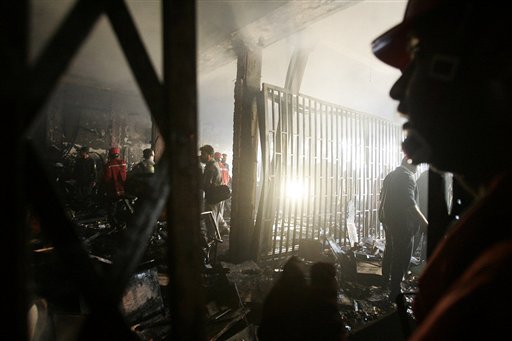 A bomb has exploded in Ahwaz killing six people and injuring at least 30 others.
According to Iranian government news agencies, the targets were a bank and a state environmental agency. President Ahmadinejad and his cabinet cancelled their visit to Ahwaz shortly before the attacks due to rain, according to the Islamic Republic News Agency (IRNA). However, weather forecasts indicated that both Tehran and Ahwaz were enjoying sunny weather on Tuesday with light rain expected on Thursday or Friday. This suggests that Ahmadinejad was forewarned of the attacks or was complicit in them. Some "reformists" and opponents of the regime have in the past suggested that bomb attacks in Iran are the work of state agents seeking political leverage within Iran's complex political system rather than insurgents.
The regime has blamed previous bombings in the Arab majority province of Khuzestan on Arab separatists backed by Britain. Iran had claimed that it had arrested British agents responsible for the bombings in October 2005, but later the Ahwaz public prosecutor denied any arrests had been made. The regime has not published any evidence linking the bomb attacks to Arab groups or the British government and it has failed to charge any individual with responsibility.
In Iran, doubts have emerged over the regime's claims that bomb attacks have been carried out by British-backed terrorists. Shargh, a reformist daily newspaper, has suggested that members of the hardline Coalition Party are exagerrating foreign involvement in the explosions. Meanwhile, the reformist politician Mustafa Moin has speculated that bomb attacks in Ahwaz ahead of the June presidential elections were the work of those seeking to elect Mahmoud Ahmadinejad. It is no coincidence that bomb attacks have come in the wake of the former Revolutionary Guards commander's rise to power.
Today's bombings come after weeks of unrest in which security guards have shot at unarmed anti-government protestors. The British Ahwazi Friendship Society (BAFS) has published a list of names of those known to have been detained, including children as young as 11, and three people killed by the Baseej paramilitaries.
BAFS spokesman Nasser Bani-Assad said: "There has been a complete media black-out on the events in Ahwaz. Thousands have been arrested over the past year and many have been murdered or executed. Not one Western journalist has written a single word on the killings of Ahwazi demonstrators over the past few days. The only time the world media pays attention to Ahwaz is when bombs are exploding and journalists join in the chorus of blaming Arabs.
"The world media is operating a news agenda set down by Tehran, with a complete absence of reporting on the brutal suppression of dissent and deaths at the hands of government forces. In following this line, journalists are skewing the debate away from the issue of the regime's illegitimacy, with anti-government protests going unreported. The media's portrayal of Ahwazis as terrorists without any acknowledgement of the violent oppression they face on a daily basis suits the regime very well.
 "The fact Ahmadinejad used a bogus weather forecast to cancel a trip to Ahwaz
before
the bombings shows that he must have known about the attacks before they happened. Even Ahmadinejad's rivals within the Iranian political system are suggesting that bomb attacks are perpetrated by the Revolutionary Guards, the President's allies.
"The fact Ahmadinejad used a bogus weather forecast to cancel a trip to Ahwaz
before
the bombings shows that he must have known about the attacks before they happened. Even Ahmadinejad's rivals within the Iranian political system are suggesting that bomb attacks are perpetrated by the Revolutionary Guards, the President's allies.
"Today's bomb attacks and those carried out in October occurred at the most politically expedient time for the regime: when it is being put under pressure over its nuclear programme. This is an attempt to distract attention from concerns over nuclear weapons and to make the regime appear to be the victim of so-called imperialism. The world should recognise that the Iranian people are the real victims of the Iranian regime."
Links
Ahwaz Fact File
Iran authorities arrest hundreds and shoot demonstrators in Ahwaz - 17 January
More arrests in Ahwaz - 20 January
Weather report by findlocalweather.com
Labels: intifada
permalink
keywords: ahvaz ahwaz ahwazi arabistan khuzestan khuzistan khuzestani arab arabistan iran iranian human rights security oil news ahmadinejad ethnic cleansing
.......................................................................................
20 January, 2006
 The Mohammara News Agency (MONA) has issued its own compilation of arrests of Ahwazi protestors in addition to the one received by the British Ahwazi Friendship Society (BAFS). MONA reports that Molotov cocktails have been used against offices of state-run corporations and banks as anti-government protests have escalated.
The attacks on government buildings came after mass arrests during peaceful demonstrations in Eid Al-Adha last week. Security forces fired on the crowd killing an unknown number of civilians (BAFS has received the names of three of the dead) and injuring many more. Children were present in the demonstration and some were imprisoned by the police, including an 11 year old and two 14 year old boys.
There are reports that the government is using agents provocateur to heighten violence in the province of Khuzestan, although the organisers of the Eid-al-Adha demonstrations had called for peaceful protests to mark the Muslim festival celebrating the end of Hajj (pilgrimage to Makkah). For more information, click on the following link: http://www.ahwaz.org.uk/2006/01/iran-authorities-arrest-hundreds-and.html
| F Name | L Name | F Name | Age | |
| 1 | Rahim | Asl Abaidawi | Abdulzahra | 19 |
| 2 | Kadhem | Abaidawi | Amtani | 23 |
| 3 | Salim | Afrawi | Niama | 21 |
| 4 | Mahdi | Abaidawi | Ghalib | 19 |
| 5 | Adel | Naisi | Nabi | 20 |
| 6 | Hayder | Saadi | Rahim | 32 |
| 7 | Ahmed | Mazrae | Salih | 19 |
| 8 | Mohammed | Saiwani | Mahmoud | 19 |
| 9 | Redha | Naderi | Mohammed | 23 |
| 10 | Khalid | Abaidawi | 17 | |
| 11 | Tahir | Atshani | Yaralla | 24 |
| 12 | Hamza | Hilfi | Kiniz | 23 |
| 13 | Arif | Shahaimawi | 27 | |
| 14 | Hashim | Atshani | Mohammed | 25 |
| 15 | Hamoud | Abaidawi | Imtani | 19 |
| 16 | Abbas | Jallali | Maris | 20 |
| 17 | Saeed | Khalaifi | Shanshoul | 37 |
| 18 | Hanoon | Hilfi | Rahim | 20 |
Labels: intifada
permalink
keywords: ahvaz ahwaz ahwazi arabistan khuzestan khuzistan khuzestani arab arabistan iran iranian human rights security oil news ahmadinejad ethnic cleansing
.......................................................................................
17 January, 2006
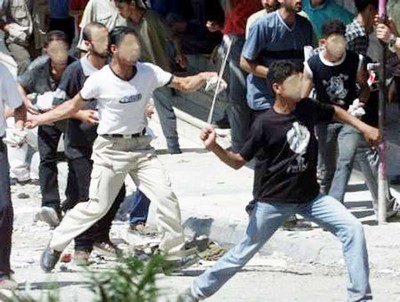
Clashes between Ahwazi Arabs and security forces, which began with a peaceful demonstration on Eid-al-Adha, are continuing and have spread throughout Al-Ahwaz (Khuzestan), including the cities of Ahwaz, Hamidieh, Mohammarah (Khorammshahr), Abadan and Sarbander.
There have been more reports of deaths and injuries in the past few days as Baseej forces violently repress Ahwazi protests. Residents report that the cell phone network and internet are being intermittently cut off. A curfew has been imposed from 10:30 pm to 7:00 am in Arab areas of Ahwaz City and surrounding towns and villages. The authorities and the state oil company NIOC have banned the wearing of the khaffieh (Arab headscarf), a symbol of Arab identity that is now regarded as subversive.
At least seven of the hundreds arrested and detained are aged below 21 years, including an 11 year old. Two imams have also been detained. The British Ahwazi Friendship Society (BAFS) has received the names of at least 20 Ahwazis who are being held in custody as well as three Ahwazis murdered by the security forces. According to the Mohammarah News Agency, some of those injured by the police are not going to hospital for fear of arrest.
The following names are those who are known to have been killed by security forces in the Arab-populated districts of Mallashieh, Halali, Dayereh, and Shilangabad:
Ahmad Naseri (age 22 - died on the way to the hospital from a bullet wounds in his chest)
Jaber Sawari (Ahwaz)
Sayed Chabawi (Fallahieah/Shadegan)
Around 40 have been injured, including Said Silawai and Jabar Jabari-Sewari, who both reported that hospitals refused to admit them on the instruction of the authorities. Khaled Haidari, who was shot on the face and arrested in Ahwaz on Wednesday 11 January, was reportedly transferred from Gohardasht to Erwin prison in Tehran. The authorities are said to be denying him medical care for infected injuries to his jaw and face.
The following Ahwazis are known to have been arrested in Ahwaz City and are currently detained by police:
Sayed Mastoid Helal-Musawai
Mustafa Hanoor Sawari
Majid Khalaf Haidari
Reza Haidari (11 years old)
Habib Naimeh-Sawari
Fuad Khalaf-Sakhrawi (14 years old)
Kazem Majid-Fazeli
Sayed Aref
Kazem Sayahi (14 years old)
Yossef Sharifi
Syeid Kazem Mosawi (17 year old)
Hassan Jasem Sawari (18 year old) - reportedly undergoing torture during interrogations
Saleh Obidawi (Imam of Dayereh Mosque)
Hamza Haidari
Shaykh Saleh Haidari (Mosque Imam)
The following names are those who are known to have been arrested in Hamidieh and detained by the police:
Said Menabi (20 years old)
Hadi Washahi (17 years old)
Ahmad Naisi
Ebrahim Obeyat
Hamid Badawi is among some 120 Ahwazis arrested in Falehieh (Shadegan) and transported to a prison in the central province of Yazd. Jabber Jaberi and Said Sawari were shot and injured by the police and their families report that both were refused to be admitted by the only hospital there.
The Iranian authorities have banned the wearing of khaffieh to work. A ban on the khaffieh was imposed ahead of a soccer match in Abadan, when security forces prevented Arabs wearing khaffieh and dishdasha from watching the game. The Iranian oil company NIOC, which is the largest employer in the province, has also banned the khaffieh and there are reports that Ahwazis displaying any symbols of their Arab identity have been fired from their jobs. On 14 January, at least 20 Arab homes in the village of Ewaifi were demolished by NIOC. The families evicted from their homes are now staging a vigil outside the office of the governor of Khuzestan.
On 15 January, about 1,000 residents of Hamidieh demonstrated peacefully against the regime's heavy handed tactics and the killing of Arabs. They were attacked and beaten by Baseej forces from Disfuli and Shushtar. In revenge, youths attacked and set alight nearby oil installations. In Arab-populated Ghosbeh, where there is a significant Sunni population, there were demonstrations against appointment of a non-Arab Shi'ite Imam. In Abadan, around 100 Arabs working for the Iranian navy were arrested and held in an undisclosed location, according to their families.
The picture above was taken from the Arabistan.org website
Labels: intifada
permalink
keywords: ahvaz ahwaz ahwazi arabistan khuzestan khuzistan khuzestani arab arabistan iran iranian human rights security oil news ahmadinejad ethnic cleansing
.......................................................................................
13 January, 2006
Clashes between Ahwazi Arab youth and security forces have erupted after Iranian security forces fired on demonstrators in Ahwaz City on Wednesday, killing an unknown number of people.

On Thursday, there were mass demonstrations in the Arab towns of Maashor (Mahshahr) and Sarbandar, with reports of clashes between protestors and the police. There are unconfirmed reports that one of those injured in the shootings, 26-year-old Mashaf Neamani, died in hospital. There are also reports of other deaths, but the names of those killed are not yet known.
A bomb exploded in the the Dar-al-thura (Dayereh) district of Ahwaz City, which was the site of protests marking the Muslimn festival of Eid-al-Adha. A second bomb exploded between the Khashayar and Dar-al-thura neighborhoods, shattering the windows of nearby building.
Residents suspect that security forces were responsible for the bombs and were attempting to provoke further confrontation. Bomb attacks in June and October last year were also thought to be the work of the security forces or allies of President Mahmoud Ahmadinejad, according to many opposition figures, including reformist presidential candidate Mustafa Moin.
Ahwazi community leaders continue to call for calm, advocating peaceful demonstrations. Around 200 people have been arrested, including Sheikh Sari, the Imam of Dar-al-thura (Dayereh) mosque.

Ahwazis are using officially sanctioned religious festivals as a space for protest against the regime's policy of ethnic cleansing in Khuzestan and extreme poverty. In defiance of the regime's persecution, they have displayed symbols of Arab cultural identity, including wearing of the red keffiyeh and dishdasha, flying the Ahwaz national flag and performing Arab cultural plays in the streets.
Security chiefs have previously indicated that the wearing of the keffiyeh - a traditional Arab headdress - was forbidden. In November's Eid-al-Fitr demonstrations in Ahwaz, Governor General Heyat Mojadam ordered all those wearing keffiyeh be arrested . An Ahwazi Arab youth freed from prison following his arrest during the Eid-al-Fitr protests spoke of how the prosecutor, Mr Farhadi-Rad, argued that the wearing of the red keffiyeh was a "political statement" that indicated support for secessionism .
This month, the Majlis Centre for Research think tank, which is attached to the Iranian parliament, published a report that warned that Iran could face ethnic conflict and unrest unless the government addresses the needs of Iran's ethnic minorities .
Labels: intifada
permalink
keywords: ahvaz ahwaz ahwazi arabistan khuzestan khuzistan khuzestani arab arabistan iran iranian human rights security oil news ahmadinejad ethnic cleansing
.......................................................................................
12 January, 2006
Iranian security forces attacked thousands of Ahwazi Arabs staging peaceful demonstrations during the Muslim festival of Eid-ul-Adha on Wednesday, with dozens arrested and injured and reports of deaths among the protestors.
State violence
Demonstrations were held in Hay-al-thura (al-Dayereh) district of Ahwaz City following morning prayers that mark the end of hajj (pilgrammage) to Makkah. The protests were called by a number of civil society groups and political organisations against ethnic cleansing, the persecution of Arabs, poverty and unemployment and calling for the release of political prisoners arrested following the Ahwazi uprising of April 2005.
Leaflets were distributed in Arab areas by the Ahwazi Arab National Committee for Peaceful Demonstration. In response, the regime deployed security forces to stop the demonstration, including 50,000 troops from the Iranian Revolutionary Guard Corps, Baseej, the army and police who were brought in from Tehran and other provinces.
Up to 4,000 Ahwazis, including women and children, joined the march, which was peaceful. Protestors carried placards with slogans in Arabic and in Farsi. Some were also carrying Ahwazi national flag.
 Troops blocked the White Bridge, preventing demonstrators from crossing to other parts of the city, and attacked the crowd without provocation. Tear gas and live ammunition was used against the protestors, injuring many of them. There are reports of fatalities, but the number of deaths has not been confirmed. Eyewitnesses said that at least 30 demonstrators were arrested at the Haye-althura (al-Dayereh) and 13 in Kut Abdollah. Separate demonstrations were also reported in the districts of Hamidieh and Kut Abdullah in Ahwaz City as well as the cities of Abadan, Fallahieah and Khafajieh. During the protests, Arab areas were surrounded and blockaded by Baseejis (paramilitary volunteers) wearing hoods and carrying machine guns.
State propaganda
The government's Mehr News Agency reported that the march was led by Jasem Shadidzadeh, who represented Ahwaz City in the Sixth Majlis (2000-04). Shadidzadeh is secretary general of the Islamic Wefagh Party, an ultra-reformist group seeking the redistribution of wealth and an end to poverty and ethnic cleansing in Khuzestan. He was barred from standing in the 2004 Majlis elections, but has continued campaigning for Ahwazi Arab rights. However, demonstrators confirmed that Shadidzadeh, who lives in Tehran, was not on the march, indicating that Mehr News was trying to implicate the former politician in the demonstrations. Mehr news denounced the demonstrators as "separatists" chanting secessionist slogans - a claim denied by the demonstrators.
Throughout the day, the cell phone network and internet services in Ahwaz were shut down to stop independent coverage of the protests. The province was effectively put under a stage of siege. Only the Mehr News Agency, renowned for its links to extremists within the regime, was allowed to cover the events.
Arab identity outlawed
Mass demonstrations also marked Eid-ul-Fitr, which marked the end of the month of Ramadan in November. Two people were killed as the police tried to disperse the crowd and around 200 people were arrested. Days beforehand, 81 people were arrested while conducting a cultural play called Mahibis , a popular event performed during iftaar , following fasting in the month of Ramadan. Click here for further details .
Nasser Bani-Assad, spokesman for the British Ahwazi Friendship Society, said: "The regime is clamping down on all symbols of Arab identity, including any Muslim festivals that display signs of Arab culture. The regime's policy of Persianisation involves not only forced migration and land confiscation and the in-migration of non-Arabs from outside the province, but the Persianisation of the Islamic religion itself.
"Ahwazi Arabs, who are mostly Shi'ite, have tried to use Muslim festivals to display their own cultural identity. It is an act of defiance against ethnic cleansing. But this is being suppressed, indicating that the mullahs are not just religious despots but are running a tyranny that is racist."
Labels: intifada
permalink
keywords: ahvaz ahwaz ahwazi arabistan khuzestan khuzistan khuzestani arab arabistan iran iranian human rights security oil news ahmadinejad ethnic cleansing
.......................................................................................
23 December, 2005
The Ahwaz Studies Centre has received reports that the Iranian regime is militarising education in Khuzestan by forcibly recruiting Ahwazi Arab students.
Sources in the Ahwazi Arab opposition in Iran report that some 200,000 students were forcefully taken to the headquarters of the paramilitary Baseej's Ashura civil defence batallions near Ahwaz City. The students were divided up into three batallions and deployed to camps within Khuzestan for three days of military training and manoeuvres. The Ashura units' responsibilities include riot control and civil defence.
Major military manoeuvres and training by the Baseej, which is under the control of the Iranian Revolutionary Guard Corps (IRGC), also took place in Khuzestan in September to prepare for "internal unrest", according to reports in the Iranian press at the time.
The Baseej's forces are loyal to the religious elite and prioritise the defence of the Islamic revolution. Baseej commander General Mohammad Hejazi has estimated the Baseej's strength at 11 million, although the actual figure is likely to be lower.
Nasser Bani-Assad, spokesman for the British Ahwazi Friendship Society, said: "The forced conscription of Ahwazis could be an attempt to control, indoctrinate or intimidate the local Arab youth and instill loyalty to the religious elite. It also comes in the context of the regime's aim to raise Baseej membership to 20 million. Forced conscription is the only way the regime can achieve this target. Ahwazi Arab youths have been at the forefront of anti-government protests in Iran in recent months.
"Forced conscription to the Ashura Brigades is indicative of the regime's mindset. President Ahmadinejad believes that the way to maintain social order and the regime's stability is through militarisation. But the Baseej is not a regular army, it is primarily a group of armed civilian religious fanatics intent on imposing the stability of the Islamic Republic through state terrorism.
"This forced conscription into a group that was responsible for the violent intimidation of voters in the recent presidential elections cannot be compared with compulsory army conscription in other countries."
Labels: intifada
permalink
keywords: ahvaz ahwaz ahwazi arabistan khuzestan khuzistan khuzestani arab arabistan iran iranian human rights security oil news ahmadinejad ethnic cleansing
.......................................................................................
05 November, 2005
Following Friday's Eid prayers, 3,000-4,000 young Arabs clashed with police after marching from Darieh (Shilingabad) wearing Arabic clothing towards Naderi in Ahwaz City's centre.
Police attacked the crowd with tear gas grenades as the marchers approached the city's 5th bridge and beat and arrested youths. Vigils were held at the homes of those arrested and injured by the police, with groups of people offering gifts and comfort to their families. Some Ahwazi homes raised black flags in protest at the regime's repression during Eid.
The regime tried to portray the demonstration as a separatist ploy to generate unrest, claiming that a group called the Arab People's Group had staged a riot. No group of this name exists. The march and demonstration were largely a show of local defiance against state repression, which has increased following Mahmoud Ahmadinejad's installation as president.
The government has suggested that all Ahwazi Arab unrest as a foreign conspiracy, although the government's own statistics reveal high levels of unemployment, poverty, illiteracy and child malnutrition. The adversity suffered by Ahwazi Arabs is occurring in a region that contributes 80-90 per cent of the country's oil production. Independent assessments, such as the one carried out by UN Special Rapporteur Miloon Kothari in July, have highlighted the adverse economic impact of land confiscations on Ahwazi Arabs. This has been a major contributor to civil unrest in Khuzestan.
Labels: intifada
permalink
keywords: ahvaz ahwaz ahwazi arabistan khuzestan khuzistan khuzestani arab arabistan iran iranian human rights security oil news ahmadinejad ethnic cleansing
.......................................................................................
25 April, 2005
The Iranian regime is claiming that only five people died during more than a week of unrest in Ahwaz. BAFS can confirm at least 130 dead. This is a list of Ahazi Arabs who were killed by the security forces and whose families have given their consent for us to display their names. Where possible, we have put the place where they lived and died in brackets.
1 Razi Aboud Alhasoun-Abayat (Aldayara)
2 Mahdi Abd alhosain (Aldayara)
3 Hadi Abd Alnabi (Sabhani)
4 Ali Nadir Khasragi (Aldayara)
5 Ahmad Ban Ali
6 Araf Hasan-Jalali (Aldayara)
7 Hasan Abas-Jalali (Aldayara)
8 Mahdi Abas-Afrawi (Aldayara)
9 Dagar Mola Radhi-Alshoomos (Aldayara)
10 Nasar Hadari (Aldayara)
11 Ahmad Sawari Albonahi (Aldayara)
12 Saied Nawasari
13 Abd Nawasari
14 Nasar Dagagla
15 Nasar Gazlawi
16 Sadag Nawasari
17 Nasar Abayat
18 Adnan Sari
19 Hatam Abayat
20 Hosain Hazbawi
21 Samad Hazbawi
22 Ali Hazbaee (Kowtabdola)
23 Saied Raihani
24 Ali Alkaebi (8 years old)
25 Mohamad Hazbawi (Kowtabdola)
26 Abd Alrahman Torfi
27 Abd Alhosain Mohamad zada
28 Towfiq Saeadi
29 Naji Mazraeawi
30 Jaefar Hazbawi (Kowtabdola)
31 Hosain Nasari
32 Saeid Aonsari
33 Nasar Khasragi
34 Said Khalaf-Mosawi
35 Mahdi Yazdan Abayawi
36 Smaeel Mazraea (Kowtabdola)
37 Ali Abayat
38 Abrahim Gazi
39 Hasan Sawari
40 Ali Mohamad Farisat (Kowtabdola)
41 Ali Fakhar Saieidawi (Aldayara)
42 Naji Abayat (Aldayara)
43 Alam Khasragi (Malashyah)
44 Raza Abdal Hosain Abidawi (Aldayara)
45 Mahdi Hanon-Haidari (Aldayara)
46 Mousa Shamous (Aldayara)
47 Nahi Abayat (20 years old) (Hamidyah)
48 Ali Sabhani (20 years old) (Hamidyah)
49 Ahmad Alkabi (Alhaee)
50 Jalil Karim-Alkabi (12 years old) (Zawyah)
51 Mozan Alkabi (Shoosh)
Labels: intifada
permalink
keywords: ahvaz ahwaz ahwazi arabistan khuzestan khuzistan khuzestani arab arabistan iran iranian human rights security oil news ahmadinejad ethnic cleansing
.......................................................................................
24 April, 2005
More than 130 have been killed, 806 injured and 1,700 arrested following a week of unrest in Iran's Arab-dominated province of Khuzestan, said the Ahwaz Human Rights Organisation (AHRO) today.
The AHRO, which has been co-operating with Amnesty International's own inquiries, gathered the information through telephone interviews, e-mails and faxes with its contacts in Khuzestan.
Kuwait's Al-Watan newspaper reported that water, electricity and power supplies were still cut from Kut-Abdullah and other parts of the province. The situation is described as "desperate".
Demonstations
Violence continued into its ninth day today, with eye-witness reports of clashes between Iranian security forces and Ahwazi demonstrators in Khafjieh (Sosangerd), leaving seven dead and dozens injured. Six were also killed in Shush. On Friday and Saturday, five people were killed in Maashur (Mahshahr) and two were killed in Fallahieah (Shadegan).
Large demonstrations by Ahwazi Arabs also took place today in Mohammarah (Khorramshahr). Soldiers sealed off the area and arrested hundreds of protestors. Residents claimed that today's Mohammarah demonstration was the largest and most confrontational since a week-long revolt in the city in 1980, which was crushed by Admiral Madani, the then governor general of Khuzestan, killing 316 demonstrators.
Snipers have been deployed on roof-tops by Revolutionary Guards in Ahwaz City, where sporadic protests have been broken up by soldiers firing into the air. Gunfire was heard through Saturday night in the city's Lashkar-Abad district. Arab residents of the city are said to be living in terror. Meanwhile, a liquefied natural gas plant in north of Ahwaz City was set alight and was still reported to be on fire on Sunday.
The government's attacks on Arabs have been indiscriminate. Among the dead are pregnant women, children and elderly, with the age of casualties ranging from six to 70 years old. Arab homes and markets have been set alight.
Hospitals are refusing to admit injured demonstrators, some of whom subsequently died of their injuries. Pharmacies have also been ordered not to sell first aid medicines to the injured.
Iranian organisations and groups representing non-Persian minorities, including the Kurdish Democratic Party of Iran , have voiced their solidarity with the Ahwazi Intifada.
Crack-down
The Lebanese Hezbollah - which is trained in Khuzestan - appears to have been conscripted into the crack-down. Among those attacking demonstrators were Arab-speakers with distinctly Lebanese accents, according to reports on the ground.
The regime claimed it released on Friday 135 detainees arrested in the past week, but their families claim they still have no contact with them. The government has demanded cash bonds of US$1,800 - more than twice the average annual salary of Ahwazi Arabs - to release detainees on bail. Ethnic Arab lawyers, doctors, teachers, engineers, nurses and university students are still being held in custody as part of the regime's effort to "dry up the source of revolt".
Propaganda
Iran's Supreme Leader Ayatollah Khamenei led a high-level delegation to Ahwaz City on Friday and staged a demonstration in support of the regime. Up to 1,000 people arrived by bus from ethnic Persian areas to attend the demonstration of loyalty, dubbed "Ahwaz Day" by the regime. Security forces reportedly handed out Arab clothing to the ethnic Persian demonstrators to give an impression of Persian-Arab unity behind the regime. A similar hastily-organised gathering occurred in Mahshahr.
Labels: intifada
permalink
keywords: ahvaz ahwaz ahwazi arabistan khuzestan khuzistan khuzestani arab arabistan iran iranian human rights security oil news ahmadinejad ethnic cleansing
.......................................................................................
 Iran's Revolutionary Guards have carried out summary executions of teenage protestors on the streets of Ahwaz City, according to eye-witness accounts received by
Iran Focus
.
Iran's Revolutionary Guards have carried out summary executions of teenage protestors on the streets of Ahwaz City, according to eye-witness accounts received by
Iran Focus
.
The news agency also reported that helicopter gunships have been used to attack demonstrators and a five-year-old boy was killed after he was run over by an APC.
Prosecutor-General of Ahwaz Amir Khani has ordered the arrest of more than 60 people as a result of sustained protests in areas currently under martial law.
A week of civil unrest has followed the circulation of a leaked letter from President Khatami's office, written in 1999 and detailing a 10-year plan to drastically reduce the Arab population in Khuzestan through forced migration. The government claims the letter was a fake, although the British Ahwazi Friendship Society (BAFS) has received confirmation that it is authentic from a former official in the presidential office.
Labels: intifada
permalink
keywords: ahvaz ahwaz ahwazi arabistan khuzestan khuzistan khuzestani arab arabistan iran iranian human rights security oil news ahmadinejad ethnic cleansing
.......................................................................................
 The number of victims of state violence in Khuzestan is rising daily, while official reports are under-playing the number of casualties.
Since the uprising began on 16 April, demonstration have spread beyond Ahwaz City and have turned violent. On Wednesday, the State Security Force (SSF) base in Molashieh was attacked and the base's commander and his deputy were killed. Clashes were also reported in Old-Mahshar, where residents set government buildings and cars alight.
Death toll
Human rights organisations have been collating casualty statistics through direct contact with local hospitals and victims' relatives in Khuzestan. A report published by Amnesty International on Tuesday stated "at least 31 civilians - including two reportedly under the age of 15 and one possibly a mother carrying a child - have been left dead in the course of these disturbances." By Friday, human rights groups put the figure at over 60, excluding possible deaths in custody or "disappeared". The number of injured is thought to be at least 400, based on figures provided by local hospitals.
Mass arrests
The number arrested is far higher than the amount suggested by the government. The regime claims it arrested over 330 Arabs and had released half of these by the end of the week. Human rights and opposition groups calculated that between 500-1,500 people were detained, some of whom have been transferred to prisons in other provinces. Mosques have also been turned into temporary prisons.
Tribal, community and religious leaders from the Arab community have been rounded up, as well as boys as young as 12. Amnesty International has warned that those held by the regime for interrogation are at risk of torture.
Media blackout
There is a complete media blackout in Khuzestan province. The entrenched international press corp in Tehran is repeating the claims by the regime of single figure casualties and mass demonstrations in Ahwaz declaring allegiance to the Supreme Leader.
However, the movements of foreign journalists and independent monitors are restricted and they are being barred access to Khuzestan. Meanwhile, the region's largest television news network Al-Jazeera has been forced to leave and internet connections have been cut. Telephone lines had been cut and water supplies were halted, but have been restored to many areas.
The picture above was taken from Arabistan.org
Labels: intifada
permalink
keywords: ahvaz ahwaz ahwazi arabistan khuzestan khuzistan khuzestani arab arabistan iran iranian human rights security oil news ahmadinejad ethnic cleansing
.......................................................................................
23 April, 2005
A petition signed by 180 members of parliament was handed to President Khatamei calling for compensation for damage to civilian buildings. They also condemned the behaviour of "executive officials", who they claim have failed in their duties to Iran's Arab population and have done little to address the root socio-economic causes that led to the uprising. They point out that the Arab community was continuing to suffer as a result of the 1980-88 Iran-Iraq War.
Nasser Ban-Assad, spokesman for the British Ahwazi Friendship Society, said: "The petition is too little, too late. The War ended 17 years ago. What has the Islamic Republic been doing since then?
"Iran's Arab population made great sacrifices in the War. But they have been paid back for their efforts with a policy of Persianisation, intended to eradicate their identity and marginalise them.
"Since the War ended, the regime has confiscated 90,000 hectares of Ahwazi land for the profits of the mullahs and their business friends. Eighty per cent of Ahwazi Arabs live in absolute poverty and 50 per cent are illiterate in a province that produces 90 per cent of the country's oil.
"Khuzestan remains heavily militarised, but nothing is done to clear the land-mines planted two decades ago. Rural Ahwazis continue to be killed and maimed in their fields due to the land-mine problem.
"Sadly, the only time the Majlis listens is when the Ahwazis take direct action against this tyranny. Only the redistribution of land and wealth to the indigenous Arabs, democratisation and self-determination will satisfy the Ahwazi Arabs now."
Labels: intifada
permalink
keywords: ahvaz ahwaz ahwazi arabistan khuzestan khuzistan khuzestani arab arabistan iran iranian human rights security oil news ahmadinejad ethnic cleansing
.......................................................................................
20 April, 2005
Amnesty International and the Paris-based Arab Commission for Human Rights (ACHR) have voiced serious concerns over continuing violence and human rights abuses in Iran's Khuzestan province, following a week of unrest.
Following riots over the government's programme of "ethnic restructuring" in the oil-rich province, the ACHR says it has received reports of "heavy casualties" from hospitals and called on the government to desist from using deadly force against unarmed protestors. The commission has also urged the release of all political prisoners and respect for minority groups' right to free speech.
Amnesty also criticised the regime in Tehran, saying: "The cycle of violence in Khuzestan must end to avoid further loss of life, injury, arbitrary arrest and damage to private and state property." It also called on the government to resume water supplies to Arab areas, which had been cut off to punish the Arab population.
Amnesty added: "There have also been reports of excessive use of force, unlawful killing and possibly of extra-judicial executions of protesters following circulation of reports that up to seven police or security officials had been killed by demonstrators and that the security forces are now operating a 'shoot-to-kill' policy."
Labels: human rights , intifada
permalink
keywords: ahvaz ahwaz ahwazi arabistan khuzestan khuzistan khuzestani arab arabistan iran iranian human rights security oil news ahmadinejad ethnic cleansing
.......................................................................................
The US State Department has added its voice to the growing condemnation of the treatment of Ahwazi Arabs by the Iranian authorities.
State Department Deputy Spokesman Adam Ereli said the US was "very concerned" by the reports of killings and mass arrests following demonstrations against coercive ethnic "restructuring" of Arabs in Khuzestan at the weekend.
He echoed Amnesty International's call for restraint and respect for human rights and free speech, including the right to freely assemble and demonstrate.
"In our view, this unrest and these arrests involve the denial of rights of minority groups in Iran," said Mr. Ereli. "The suppression of minority rights is obviously to be denounced, and it is not the first time that Iran has practiced this kind of human rights violation, and it's reflected in our human rights report on Iran."
A report published by the State Department in February drew attention to human rights abuses of Ahwazi Arabs, including the closure of two newspapers and the imprisonment and torture of opposition activists. It also criticised Iran for failing to clear landmines in Khuzestan, which were left after the Iran-Iraq War.
Labels: intifada
permalink
keywords: ahvaz ahwaz ahwazi arabistan khuzestan khuzistan khuzestani arab arabistan iran iranian human rights security oil news ahmadinejad ethnic cleansing
.......................................................................................
19 April, 2005
The Iranian security forces are carrying out house-to-house operations, arresting at least 1,300 Ahwazi Arab community, tribal and religious leaders and members of their families. The arrests are being conducted ahead of Ayatollah Khomenei's visit to the province on Thursday. Around 800 prisoners are being held in Karoon jail in Ahwaz City with the rest transferred to Esfahan province, following civil unrest in Khuzestan province at the weekend.
The death toll from the crack-down on Ahwazis has risen to 48 confirmed deaths, including women and children. Some reports are claiming more than 60 deaths.
The methods used by Iranian forces attracted criticism from within the establishment. Some 158 lawmakers have signed a petition to President Mohammad Khatami about the unrest, according to the Iranian Students News Agency (ISNA). Their letter called on the government to quickly release any innocent detainees, urged restraint by security forces and compensation for any private property damage. But their calls appear to have been ignored, as the repression intensifies.
In what appears to be retaliatory attacks by Ahwazi militants, oil installations have been sabotaged, although the extent of the damage is not known.
According to unconfirmed reports, a motorcade carrying Iran's Defence Minister Ali Shamkhani and other senior officials visiting Khuzestan on a fact-finding mission was allegedly attacked by armed men and forced to leave the area. A train carrying arms on the Tehran-Mohammara (Khoramshahr) line is also reported to have been destroyed by Ahwazi militants.
The group behind the attacks is not known, although it appears to be in contact with the London-based Al-Ahwaz Arab People Democratic Popular Front (ADPF), a leftist Ahwazi separatist group. The ADPF has not claimed responsibility, but refers to the militants as "brave challengers". It also claims that three members of its organisation have been killed.
The picture above, taken from AlAhwaz.org , shows police operations in Ahwaz.
Labels: intifada
permalink
keywords: ahvaz ahwaz ahwazi arabistan khuzestan khuzistan khuzestani arab arabistan iran iranian human rights security oil news ahmadinejad ethnic cleansing
.......................................................................................
Amnesty International has launched an appeal on behalf of Ahwazi Arabs arrested during demonstrations against ethnic cleansing last weekend.
The human rights organisation stated that Kazem Mojadam, Abdoulghader Hamadi, Mojahed Baldi (or Baladi), Salem Beradea, Nabi Manabi, Hassan Manabi, Sabri Houzedar Sefed and at least 130 others currently in detention were arbitrarily arrested and are at risk of torture.
AI's urgent appeal stated that "They are not known to have been charged, or to have had access to legal representation, their families or any medical treatment."
"There are unconfirmed reports that at least 29 people have been killed in the disturbances, and up to 500 injured," said Amnesty. "The security forces have reportedly sealed off some areas of the city of Ahvaz, and cut their power supply, telephone connections and water. They have reportedly used excessive force, possibly including extrajudicial executions, after demonstrators allegedly killed up to seven police or security officials. Reports allege that they are now operating a 'shoot-to-kill' policy."
>> Click here to view Amnesty's Urgent Appeal on the detentions in Khuzestan
Labels: Amnesty , intifada
permalink
keywords: ahvaz ahwaz ahwazi arabistan khuzestan khuzistan khuzestani arab arabistan iran iranian human rights security oil news ahmadinejad ethnic cleansing
.......................................................................................
18 April, 2005
Members of the European Liberal Democrat and Reform Party (ELDRP), comprising Europe's centrist parties including the UK's Liberal Democrats, have sent messages of solidarity to Ahwazi Arabs following the massacre of at least 23 people in Iran's province of Khuzestan last weekend.
The ELDRP's youth wing, the 210,000-member Liberal and Radical Youth Movement of the European Community (LYMEC) and the Italian Radicals Party have signed a Trasnational Radical Party Appeal that urges the UN, the European Council and their member states to call on the Iranian authorities to respect the human and civil rights of all Iranian citizens, in accordance with the Universal Declaration of Human Rights of 1948 and the International Covenant on Civil and Political Rights.
The appeal also calls for Iran to put an end to its attempts to promote theocracy in Iraq and elsewhere in the Middle East and to allow a free, independently monitored referendum for the revision of the Constitution and the establishment of a secular, democratic state based on the rule of law.
Ahwazi representatives welcomed the support and asked for all European political parties to petition the international community on behalf of all Iran's oppressed minorities.
>> Click here for the Transnational Radical Party's appeal for a free and democratic Iran
Labels: intifada
permalink
keywords: ahvaz ahwaz ahwazi arabistan khuzestan khuzistan khuzestani arab arabistan iran iranian human rights security oil news ahmadinejad ethnic cleansing
.......................................................................................
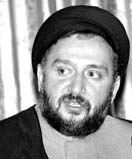 New details are emerging on the casualties of this weekend's bloodbath in Khuzestan, in which Iranian security forces fired on unarmed Ahwazi Arabs.
At least 23 people were killed, 500 injured and 250 arrested in the government's three-day crack-down on Ahwazis demonstrating against the regime. Among the dead were children, including eight-year-old Musa Shamoosi and 13-year-old Ali Sabhani, who were shot down by Iranian soldiers.
According to human rights observers, the Iranian security forces used "helicopter gunships, tear gas canisters and debilitating poison-filled bullets" on Ahwazi civilians.
Several prominent Ahwazi indigenous religious, tribal and community leaders including Haj Ebrahim Ameri and Kazem Mojadam have been arrested, along with most of the leadership of the Islamic Wafagh Party, a legal Iranian political party.
The Qatar-based Al-Jazeera TV has also been banned from Iran and telephone lines have been disconnected, as the regime begins to shut down all lines of communication between Khuzestan and the outside world.
The Ahwazi Arabs were demonstrating against an "ethnic restructuring" programme detailed in a letter leaked from President Khatami's office. The leaked letter - marked "top secret" - has been condemned as a forgery by its author, former Vice President Mohamed Ali Abtahi (pictured). But the British Ahwazi Friendship Society has confirmed its authenticity with a former member of Khatami's staff, who verified the official stamps and signatures on the letter as genuine. The letter and an English translation can be downloaded here .
In recent years, the Iranian government has confiscated more than 90,000 hectares of indigenous Ahwazi farmland and the inhabitants have been forced to leave their homeland and migrate to non-Arab provinces. There are around 4.5 million Ahwazi Arabs in the province of Khuzestan.
Khuzestan is a highly strategic province, both from a point of its oil wealth and sugar plantations and its proximity to Iraq and Kuwait. The regime wants to Persianise the province to consolidate its geopolitical power at a time of increasing economic and political insecurity.
BAFS Chairman Daniel Brett said: "The letter confirmed what many Ahwazis already knew: that they are being subjected to a campaign of ethnic cleansing sanctioned by President.
"The brutality of the government's response to the demonstration this weekend indicates that they have little regard for the human rights of the indigenous Arabs in the province.
"We call on the international community to recognise the persecution of ethnic Ahwazis, give sanctuary to Ahwazis fleeing the government's ethnic cleansing campaign and to put pressure on the UN to act on Iran's appalling human rights record."
Amnesty International is preparing an urgent action campaign on behalf of prisoners of conscience detained in the demonstration.
The Ahwaz Human Rights Organisation (AHRO) has also compiled a list of those killed whose family permitted publication of their names:
1. Musa Shamoosi (8-years old) resident of Ahwaz City in Khuzestan, Iran
2. Nasser Abiat, resident of Ahwaz City in Khuzestan, Iran
3. Mehdi Afrawi, resident of Ahwaz City in Khuzestan, Iran
4. Ali Sabhani (13-year old), resident of Hamidieh, in Khuzestan, Iran
5. Hadi Sabhani, resident of Hamidieh, in Khuzestan, Iran
6. Nasser Khazraji, resident of Malashoeh, Ahwaz-Khuzestan, Iran
7. Ebrahim Ghazi, , resident of Malashoeh, Ahwaz-Khuzestan, Iran
8. Ali Abiat, resident of Malashoeh, Ahwaz-Khuzestan, Iran
9. Nasser Daghalegheh, resident of kut Dayed Saleh, Khuzestan, Iran
10. Sayed Khalaf Mousawi, resident of Kut Sayed Saleh, Khuzestan, Iran
11. Mehdi Hanoon-Haydari, resident of Ahwaz City in Khuzestan, Iran
12. Reza Abiadawi, resident of Ahwaz City in Khuzestan, Iran
13. Alam Khazraji, resident of Maleshiah, in Khuzestan, Iran
14. Naji Abiat (20-years old), Ahwaz, Khuzestan
15. Ali Muhammad, resident of Ahwaz City in Khuzestan, Iran
16. Abed, Nawasseri, resident of Ahwaz City in Khuzestan, Iran
17. Sadegh Nawasseri, resident of Ahwaz City in Khuzestan, Iran
18. Mehdi Abdolhussain, resident of Hamidieh, in Khuzestan, Iran
19. Reza Aboud Hussaini, resident of Hamidieh, in Khuzestan, Iran
20. Mehdi Yazdan-Abiawi, resident of Hamidieh, in Khuzestan, Iran
Labels: intifada
permalink
keywords: ahvaz ahwaz ahwazi arabistan khuzestan khuzistan khuzestani arab arabistan iran iranian human rights security oil news ahmadinejad ethnic cleansing
.......................................................................................
16 April, 2005
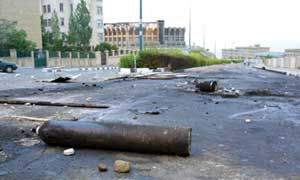 More than 20 Ahwazi Arab demonstrators were killed, 500 injured and 250 arrested during protests in Ahwaz city (Khuzestan) this weekend.
Demonstrations broke out after the publication of a top secret letter from President Khatami's office, which detailed plans for a programme of ethnic "restructuring" in the Iranian-occupied province of Khuzestan. The letter and an English translation can be be downloaded here.
Arabs beseiged
State Security Forces were brought in to halt the protests and began shooting at unarmed demonstrators. The authorities also cut off the power, telephone connections and water supplies to the city's Arab districts of Ahvaz. The districts are now beseiged by the SSF, which is preventing people from entering or leaving.
President Khatami has reportedly ordered the Intelligence Ministry and the Supreme National Security Council to identify those behind the unrest, alleging that "the hands of foreign agents and enemies of the revolution are at work".
Letter details
The plans outlined in the letter include reducing the Arab population to around one-third of the province's total population through forced migration and eliminating all traces of Arab culture and language, including names of streets and towns. The letter, signed by former vice president Mohammad Ali Abtahi and written in 1999, suggests a time-frame of 10 years to accomplish the ethnic restructuring programme.
On his personal website ( www.webneveshteha.com ), Abtahi denied writing the letter saying: "I've never had such a power to issue a directive to change the population." Government officials also claimed the letter was forged.
However, the British Ahwazi Friendship Society (BAFS), which received the letter three weeks ago, gave a copy to a former member of Khatami's staff now living in exile, who has verified its authenticity. BAFS has also obtained video evidence that shows the destruction of Ahwazi Arab homes by the Iranian army and interviews with those who were made homeless. This will be broadcast to Iran via the Al-Ahwaz TV channel. The destruction of houses owned by Ahwazi Arabs appears to be a part of a programme of ethnic cleansing in Khuzestan.
BAFS response
In a statement, the BAFS urged the UN to set up an inquiry into the killings and the problem of human rights abuse in Khuzestan. The BAFS has also called for international solidarity with the Ahwazi people and other ethnic minorities facing similar abuse in Iran.
"Crimes against humanity are being carried out against Ahwazi Arabs and other Iranian minorities," said BAFS Chairman Daniel Brett. "Now we have the irrefutable evidence that President Khatami is directing a policy of ethnic cleansing in Khuzestan. We can prove this letter is genuine and that the orders in Ali Abtahi's letter are being carried out through the use of violent coercion. It is time for the international community to say enough is enough and address this systematic abuse of human rights firmly and decisively."
Labels: intifada
permalink
keywords: ahvaz ahwaz ahwazi arabistan khuzestan khuzistan khuzestani arab arabistan iran iranian human rights security oil news ahmadinejad ethnic cleansing
.......................................................................................
